Kirjojen hintavertailu. Mukana 12 016 292 kirjaa ja 12 kauppaa.

Kirjahaku

Etsi kirjoja tekijän nimen, kirjan nimen tai ISBN:n perusteella.

6 kirjaa tekijältä Nicholas A. Robins

Native Insurgencies and the Genocidal Impulse in the Americas

Native Insurgencies and the Genocidal Impulse in the Americas

Nicholas A. Robins

Indiana University Press
2005
sidottu
This book investigates three Indian revolts in the Americas: the 1680 uprising of the Pueblo Indians against the Spanish; the Great Rebellion in Bolivia, 1780–82; and the Caste War of Yucatan that began in 1849 and was not finally crushed until 1903. Nicholas A. Robins examines their causes, course, nature, leadership, and goals. He finds common features: they were revitalization movements that were both millenarian and exterminatory in their means and objectives; they sought to restore native rule and traditions to their societies; and they were movements born of despair and oppression that were sustained by the belief that they would witness the dawning of a new age. His work underscores the link that may be found, but is not inherent, between genocide, millennialism, and revitalization movements in Latin America during the colonial and early national periods.
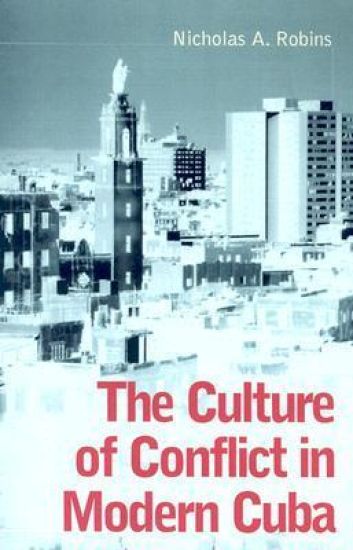
The Culture of Conflict in Modern Cuba

The Culture of Conflict in Modern Cuba

Nicholas A. Robins

McFarland Co Inc
2003
pokkari
Conflict in Cuba is not new. Since early in the Caribbean nation's colonial history a small elite has used centralized power to rule for what they viewed as the common good. Officials often created monopolies which limited accountability, social mobility, fair play and economic development. This work traces this ethos, efforts to change it, and its manifestations in present-day Cuba. The first of seven chapters discusses the history of Cuba's government and economy, and the ongoing conflict of monism and pluralism. Several chapters then detail the insights the author gained through his work in the country: Cubans are only too aware that, with very few exceptions, they have long been under one form of tyranny or another; they hate their chains but fear to lose them; Cubans and their friends and enemies both want and fear a pluralistic Cuba; and Cubans understand that though Cuban rightists in the United States hate Castro, they share many of his principles and methods. In a final chapter, the work explores various possibilities that the future may hold for the island.
Of Love and Loathing

Of Love and Loathing

Nicholas A. Robins

University of Nebraska Press
2015
sidottu
Policies concerning marriage, morality, and intimacy were central to the efforts of the Spanish monarchy to maintain social control in colonial Charcas. The Bourbon Crown depended on the patriarchal, caste-based social system on which its colonial enterprise was built to maintain control over a vast region that today encompasses Bolivia and parts of Peru, Chile, Paraguay, and Argentina. Intimacy became a fulcrum of social control contested by individuals, families, the state, and the Catholic Church, and deeply personal emotions and experiences were unwillingly transformed into social, political, and moral challenges. In Of Love and Loathing, Nicholas A. Robins examines the application of late-colonial Bourbon policies concerning marriage, morality, and intimacy. Robins examines how such policies and the means by which they were enforced highlight the moral, racial, and patriarchal ideals of the time, and, more important, the degree to which the policies were evaded. Not only did free unions, illegitimate children, and de facto divorces abound, but women also had significantly more agency regarding resources, relationships, and movement than has previously been recognized. A surprising image of society emerges from Robins’s analysis, one with considerably more moral latitude than can be found from the perspectives of religious doctrine and regal edicts.
Priest-Indian Conflict in Upper Peru

Priest-Indian Conflict in Upper Peru

Nicholas A. Robins

Syracuse University Press
2007
sidottu
The Great Rebellion claimed tens of thousands of lives and traumatized imperial psyches for decades. It was one of the most devastating political and human disasters in Latin American colonial history. Using extensive primary research, Nicholas A. Robins delves into the fractious relations between Indian communities and their clergy and the role that such tensions played as a major causal factor in the rebellion. Powerful case histories offer rare insights into the daily exercise of power in colonial Andean villages. Compelling archival evidence provides a riveting portrait of clerical abuse in rural villages and reveals how Indian peoples challenged and resisted ruling powers with varying degrees of success.
Priest-Indian Conflict in Upper Peru

Priest-Indian Conflict in Upper Peru

Nicholas A. Robins

Syracuse University Press
2007
nidottu
The Great Rebellion claimed tens of thousands of lives and traumatized imperial psyches for decades. It was one of the most devastating political and human disasters in Latin American colonial history. Using extensive primary research, Nicholas A. Robins delves into the fractious relations between Indian communities and their clergy and the role that such tensions played as a major causal factor in the rebellion. Powerful case histories offer rare insights into the daily exercise of power in colonial Andean villages. Compelling archival evidence provides a riveting portrait of clerical abuse in rural villages and reveals how Indian peoples challenged and resisted ruling powers with varying degrees of success.
Santa Bárbara’s Legacy

Santa Bárbara’s Legacy

Nicholas A. Robins

BRILL
2017
sidottu
In Santa Bárbara’s Legacy: An Environmental History of Huancavelica, Peru, Nicholas A. Robins presents the first comprehensive environmental history of a mercury producing region in Latin America. Tracing the origins, rise and decline of the regional population and economy from pre-history to the present, Robins explores how people’s multifaceted, intimate and often toxic relationship with their environment has resulted in Huancavelica being among the most mercury-contaminated urban areas on earth. The narrative highlights issues of environmental justice and the toxic burdens that contemporary residents confront, especially many of those who live in adobe homes and are exposed to mercury, as well as lead and arsenic, on a daily basis. The work incorporates archival and printed primary sources as well as scientific research led by the author.