Kirjojen hintavertailu. Mukana 11 244 527 kirjaa ja 12 kauppaa.

Kirjahaku

Etsi kirjoja tekijän nimen, kirjan nimen tai ISBN:n perusteella.

8 kirjaa tekijältä Nicholas Boyle

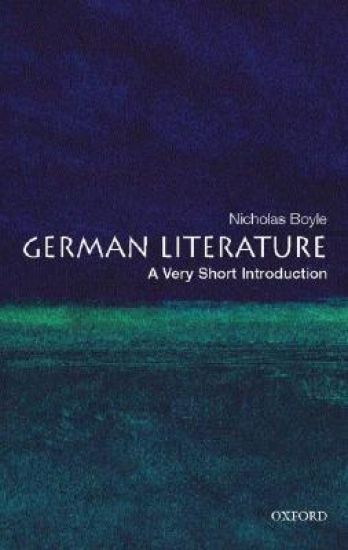
German Literature

German Literature

Nicholas Boyle

Oxford University Press
2008
nidottu
German writers, from Luther and Goethe to Heine, Brecht, and Günter Grass, have had a profound influence on the modern world. This Very Short Introduction presents an engrossing tour of the course of German literature from the late Middle Ages to the present, focussing especially on the last 250 years. Emphasizing the economic and religious context of many masterpieces of German literature, it highlights how they can be interpreted as responses to social and political changes within an often violent and tragic history. The result is a new and clear perspective which illuminates the power of German literature and the German intellectual tradition, and its impact on the wider cultural world. ABOUT THE SERIES: The Very Short Introductions series from Oxford University Press contains hundreds of titles in almost every subject area. These pocket-sized books are the perfect way to get ahead in a new subject quickly. Our expert authors combine facts, analysis, perspective, new ideas, and enthusiasm to make interesting and challenging topics highly readable.
Who Are We Now?

Who Are We Now?

Nicholas Boyle

University of Notre Dame Press
2011
nidottu
Along with the spectacular collapse in 1989 of the perspectives imposed by the Cold War, the false certainties of the national and imperial age which shaped our collective and individual identity fell away as well. As we try to regroup and redefine ourselves and our social bonds, we must take into account two seemingly contradictory forces: the trend toward diversity and pluralism, on the one hand, and the pull toward ever greater unification, on the other. In this book, Nicholas Boyle offers ten studies of the implications of the increasingly integrated world economic structure for our sense of political, cultural, and personal identity. He argues for the deep interconnectedness of politics, religion, philosophy, and literature and their shared inseparability from the economic base. In the process, he uses philosophical and literary ideas to establish systematic grounds for optimism about an emerging supra-national order, aiming to restore the possibility of "grand narrative" to our collective past and future. However, his exploration of the global mind does not ignore the many haunting personal questions raised by the upheaval of the 90s: Are we more than consumers and producers? To what extent do our nationhood, our gender, our religious and cultural affiliations still define us? Is a Christian perspective viable in such a secular world? Can literature and philosophy make sense of individual lives? What role will the intellectual class play? Boyle takes a close look at Germany and Britain, their differences and growing similarity. He discusses, among others, Thatcher, Fukuyama, Hegel, Nietzsche, Heidegger, Derrida, and Seamus Heaney. Boyle asserts that as the world becomes less divided but more disparate, and its order less draconian but more precarious, choosing the paths most likely to lead to justice and peace will reform our shattered sense of identity.
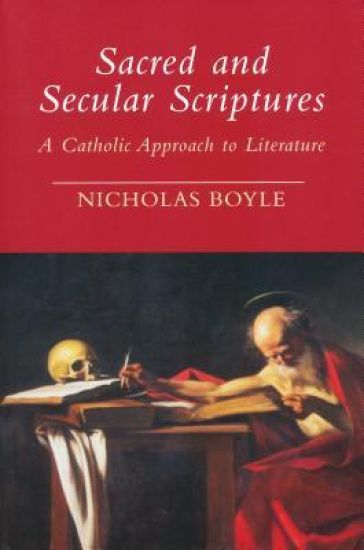
Sacred and Secular Scriptures

Sacred and Secular Scriptures

Nicholas Boyle

University of Notre Dame Press
2004
sidottu
Nicholas Boyle's latest work begins with an observation—from theologian and medievalist Father Marie-Dominique Chenu, O.P.—that the Bible should be seen as a divinely ordained mediation between human culture and divine truth. But how far can we say that the Bible is 'literature'? Chenu is surely right that God is revealed in Scripture not through a system of ideas, but through a vivid historical narrative of people and places. But the Bible is also a sacred book. Expanding on this central dilemma, Boyle demonstrates that biblical scholarship and literary criticism must work together in the largely neglected task of integrating theology and modern secular culture. Boyle explores two lines of thought. In the first series of essays, he discusses a range of writers, primarily philosophers and theologians, who have treated the Bible as literature as a means of reconciling the sacred and the secular. In the second series, Boyle moves to the theme of literature as Bible, seeking a Catholic way of reading secular literature. These sophisticated and learned essays—drawn from the Erasmus Lectures Boyle delivered at the University of Notre Dame in 2003—cover a remarkable range of philosophers, theologians, and writers, including Herder, Schleiermacher, Hegel, Lévinas, Goethe, Austen, Melville, and Tolkien. This volume will reward its reader with penetrating, and often brilliant, insights.
Sacred and Secular Scriptures

Sacred and Secular Scriptures

Nicholas Boyle

University of Notre Dame Press
2004
nidottu
Nicholas Boyle's latest work begins with an observation—from theologian and medievalist Father Marie-Dominique Chenu, O.P.—that the Bible should be seen as a divinely ordained mediation between human culture and divine truth. But how far can we say that the Bible is 'literature'? Chenu is surely right that God is revealed in Scripture not through a system of ideas, but through a vivid historical narrative of people and places. But the Bible is also a sacred book. Expanding on this central dilemma, Boyle demonstrates that biblical scholarship and literary criticism must work together in the largely neglected task of integrating theology and modern secular culture. Boyle explores two lines of thought. In the first series of essays, he discusses a range of writers, primarily philosophers and theologians, who have treated the Bible as literature as a means of reconciling the sacred and the secular. In the second series, Boyle moves to the theme of literature as Bible, seeking a Catholic way of reading secular literature. These sophisticated and learned essays—drawn from the Erasmus Lectures Boyle delivered at the University of Notre Dame in 2003—cover a remarkable range of philosophers, theologians, and writers, including Herder, Schleiermacher, Hegel, Lévinas, Goethe, Austen, Melville, and Tolkien. This volume will reward its reader with penetrating, and often brilliant, insights.
Goethe: Faust Part One

Goethe: Faust Part One

Nicholas Boyle

Cambridge University Press
1986
pokkari
Nicholas Boyle begins with a fascinating survey of earlier versions of the Faust story. He then offers a detailed reading of Faust Part One, emphasising the poetic and dramatic coherence of the work and tracing its links with the thought and culture of Goethe's time. The play emerges as a tragic poem which may, to a certain extent, be read independently of Faust Part Two.
Who Are We Now?: Christian Humanism

Who Are We Now?: Christian Humanism

Nicholas Boyle

T. T.Clark Ltd
2000
nidottu
Theology can no longer exist in isolation from politics, philosophy and literature. This is Nicholas Boyle's basis for an examination of personal and cultural identity in today's world. His exploration of the global mind reveals the continuing importance of a Christian perspective in a secular world. He shows that modern trends towards greater diversity and pluralism and simultaneous trends towards greater unification can be reconciled within the Catholic humanist tradition of theology, philosophy and literature. He identifies Postmodernism as 'the pessimism of an obsolescent class - the salaried official intelligentsia - whose fate is closely bound up with that of the declining nation-state'. In this brilliant book, Dr Boyle gives new grounds for optimism about the emerging new world order
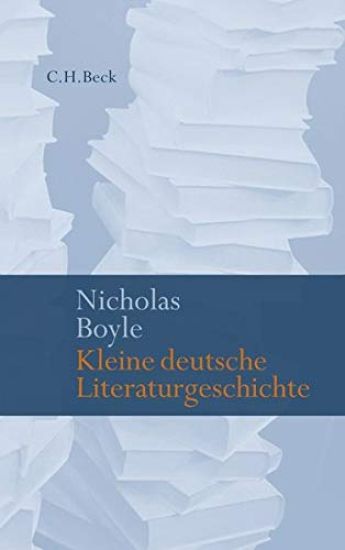
Kleine deutsche Literaturgeschichte

Kleine deutsche Literaturgeschichte

Nicholas Boyle

C.H. BECK
2009
sidottu
Nicholas Boyle stellt in seiner ebenso brillanten wie knapp gefaßten Geschichte der deutschsprachigen Literatur die wichtigsten Autoren und Werke vom frühen Mittelalter bis zur Gegenwart vor. Gleichzeitig zeigt er, wie die Literatur zu allen Zeiten auf politische und soziale, auf religiöse und philosophische Entwicklungen reagiert hat. So erzählt Boyle mit der Geschichte der Literatur auch die Geschichte der Gesellschaft, der die Autoren und die Leser entstammten. Dabei wird deutlich, wieso die Literatur in Deutschland, Österreich und der Schweiz oft ganz unterschiedliche Wege beschritt. Boyle läßt 1200 Jahre deutsche Literatur in ihrer ganzen Vielfalt zur Sprache kommen und verfolgt die Traditionslinien, die auch über scheinbare Brüche und Zäsuren hinwegführten. Sein Buch hebt die literarischen Glanz- und Höhepunkte hervor, die sich einzelnen Persönlichkeiten ebenso verdankten wie der historischen Stunde, und es verzeichnet die Flauten, Sackgassen und verpaßten Chancen. Überall hat Boyle auch die übrige europäische Literatur im Blick, der die deutsche manchmal vorauseilte, manchmal hinterherhinkte. Der gepriesene Goethe-Biograph erweist sich in diesem Buch wieder als der souveräne Kenner, der pointierte Einsichten mit der Kunst der Erzählung zu verbinden versteht.