Kirjojen hintavertailu. Mukana 11 699 587 kirjaa ja 12 kauppaa.

Kirjahaku

Etsi kirjoja tekijän nimen, kirjan nimen tai ISBN:n perusteella.

2 kirjaa tekijältä Nicholas E. Lombardo

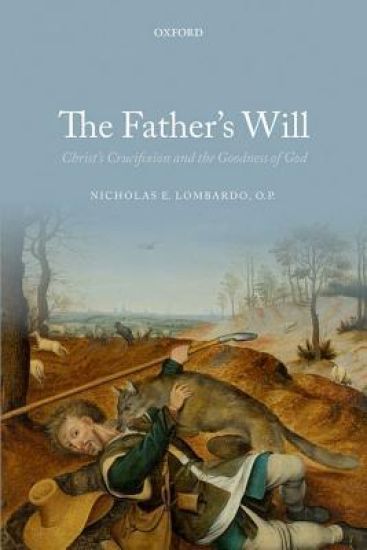
The Father's Will

The Father's Will

Nicholas E. Lombardo

Oxford University Press
2013
sidottu
The night before his crucifixion, in the garden of Gethsemane, Jesus asks his Father to take away the cup of his suffering, but then says, "not my will, but yours, be done." Shortly afterward, Judas arrives, and his arrival reveals something important about the Father's will. Yet much remains obscure. The sheer fact of Christ's crucifixion shows only that God was not willing to spare his Son. It does not shed any light on the positive content of the Father's will. Drawing on philosophical analysis and historical-critical exegesis, The Father's Will sets out to clarify the Father's will for Christ and how it relates to his death on the cross. Then, after considering the theologies of Anselm and Peter Abelard, it argues for the recovery of the early Christian category of ransom. Since Christians look to the crucifixion to make sense of their suffering, the Father's will for Christ relates to many existential questions; it also shapes the place of God the Father in Christian theology and culture. Interpreting the crucifixion as a ransom makes the goodness of God more evident. It also makes it easier to see God the Father as the author of our salvation, rather than a stern judge who must be placated. And since the category of ransom traces back to Jesus' saying in the Gospels about giving his life "as a ransom for many" it has great claim to interpret the crucifixion in the way Jesus himself interpreted it.
The Logic of Desire

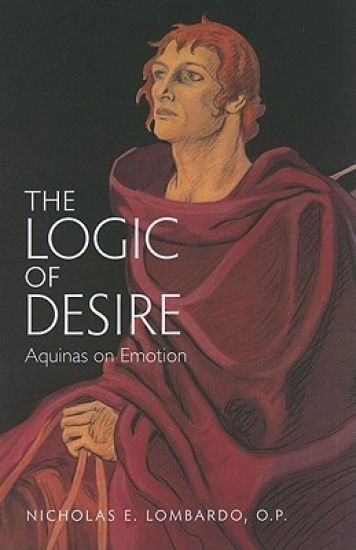
The Logic of Desire

Nicholas E. Lombardo

The Catholic University of America Press
2011
nidottu
When Thomas Aquinas completed his Treatise on the Passions, it was likely the longest sustained discussion of the emotions ever written. His influence on medieval and early modern philosophy was enormous, overshadowing every other medieval author on the topic of emotion. Although Aquinas's account of emotion merits attention for its historical significance and enduring value, it remains neglected by philosophers and theologians. With emotion emerging as a focus of interest in many disciplines, the time is ripe for a reconsideration of Aquinas's contribution. Desire and emotion are central to Aquinas's theological project, and his views on many topics, including the relationship between cognition and emotion, show remarkable prescience in the light of recent developments. Emotion is particularly important to his understanding of virtue and vice. Focusing on the Summa theologiae, Nicholas Lombardo contributes to the recovery, reconstruction, and critique of Aquinas's account of emotion in dialogue with both the Thomist tradition and contemporary analytic philosophy. It considers Aquinas's thought on emotion in its historical context and inner logic, and shows how it bears on larger issues in his anthropology and ethics.