Kirjojen hintavertailu. Mukana 12 595 353 kirjaa ja 12 kauppaa.

Kirjahaku

Etsi kirjoja tekijän nimen, kirjan nimen tai ISBN:n perusteella.

19 kirjaa tekijältä Nicholas Eberstadt

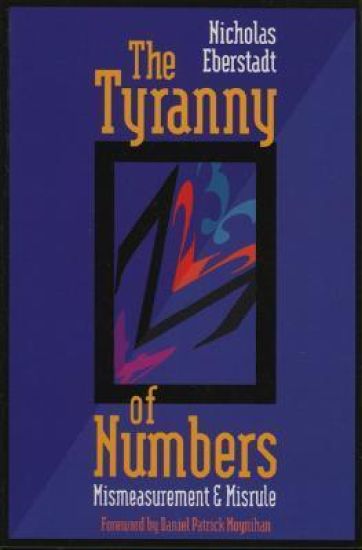
The Tyranny of Numbers

The Tyranny of Numbers

Nicholas Eberstadt

AEI Press
1995
pokkari
In this wide-ranging study, Nicholas Eberstadt demonstrates that some of the most basic of today's domestic and foreign policies have been buttressed or justified by what turns out to be misanalysis or misuse of available facts and figures. The Tyranny of Numbers not only warns about the ways the statistics are being misused in government policy in the United States and abroad but explains how this process can end up injuring vulnerable groups or distorting the workings of the democratic system.
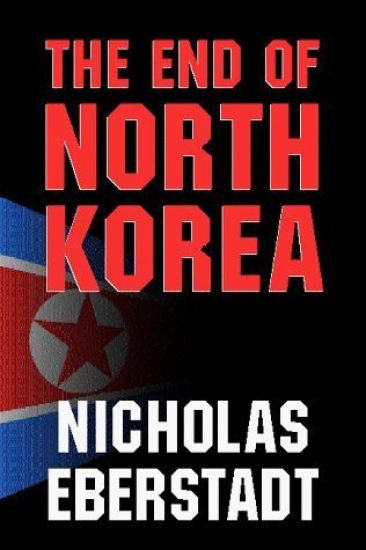
The End of North Korea

The End of North Korea

Nicholas Eberstadt

AEI Press
1999
pokkari
Eberstadt shows that Korean unification is drawing closer, but not on the Democratic People's Republic of Korea's terms. As the economic base beneath the North Korean state falters and the prospect of failure draws closer the incentives toward corruption increase. The author looks at steps that can be taken to raise the chance of a benign outcome.
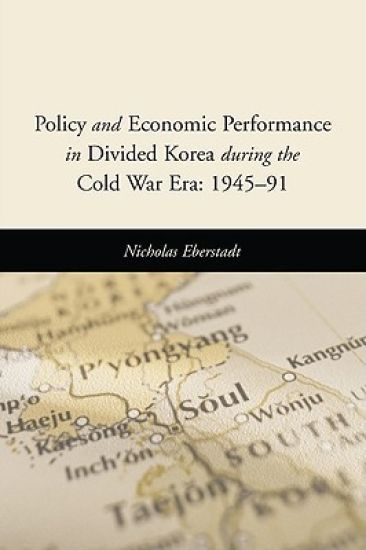
Policy and Economic Performance in Divided Korea during the Cold War Era: 1945-91
The Korean peninsula during the Cold War provided a cruel but historically unparalleled real-world “experiment” in the relationship between polity and material advance: an ethnically and culturally homogenous nation was, in 1945, suddenly divided by an arbitrary boundary line and then subjected to two radically different and adversarial political economies for successive decades on end. Assessing the competition between the North and South Korean economies from partition to the end of the Soviet era, Nicholas Eberstadt argues that the storyline is not quite as simple as the now-prevailing narrative suggests (that centrally-planned economies are doomed to fail against market-oriented alternatives). Rather, he suggests, the race for material progress was just that: a race, the results of which were far from preordained at the outset. In Policy and Economic Performance in Divided Korea during the Cold War Era: 1945–91, Eberstadt presents an impressive compilation of hard-to-find comparative data on economic performance for the Democratic People’s Republic of Korea (DPRK, or North Korea) and the Republic of Korea (ROK, or South Korea) over two critical generations. By a number of indicators, Eberstadt argues, Kim Il Sung’s North Korea actually outperformed South Korea for much of this period—not only in the years immediately following partition, but perhaps also into the 1970s. To explain these surprising results, Eberstadt details the impact of government policies on the course of growth of both economies and offers some unorthodox observations about material performance under these two contending polities. He finds that prevailing economic development theory on such issues as planned-versus- market economies, military burden, and the relationship between material advance and poverty, may require reexamination in light of the experience of the two Koreas between partition and the end of the Cold War.
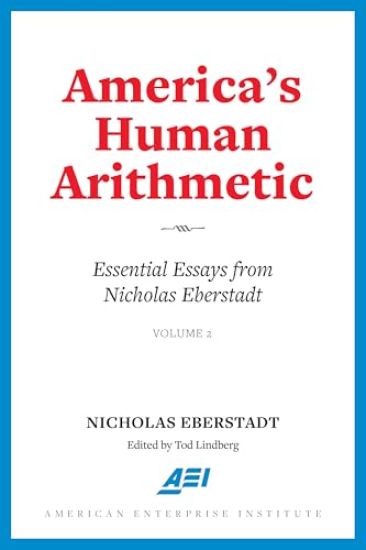
America's Human Arithmetic

America's Human Arithmetic

Nicholas Eberstadt

AEI PRESS
2025
pokkari
As the US approaches its 250th anniversary, American discontent bubbles beneath the impending celebrations. Less confident in their own institutions and increasingly dissatisfied with their country's international commitments, Americans are venting their frustration both at home and abroad. Yet this disaffection rumbles at the same time the US has achieved unparalleled wealth and unmatched global power. Why the disconnect? In this landmark volume, Nicholas Eberstadt answers that pressing question. Drawing on decades of extraordinary scholarship, he lays out the nation's "human arithmetic" in demographic, social, and economic terms. He demonstrates that 21st-century America, for all its marvels and blessings, is nonetheless beset by a "New Misery" the practical and moral dilemmas of wealth in the absence of well-being. New social afflictions hide in plain sight-among them the astonishing flight of millions of men from the workforce and the surge in criminality, with over 20 million former felons living in our midst. In America's Human Arithmetic, Eberstadt offers a compelling and frightening diagnosis of modern social dysfunction. He shows that the United States' best years may yet be to come-but not if Americans are unwilling to face the challenges their human arithmetic lays bare.
The Poverty of Communism

The Poverty of Communism

Nicholas Eberstadt

Transaction Publishers
1988
sidottu
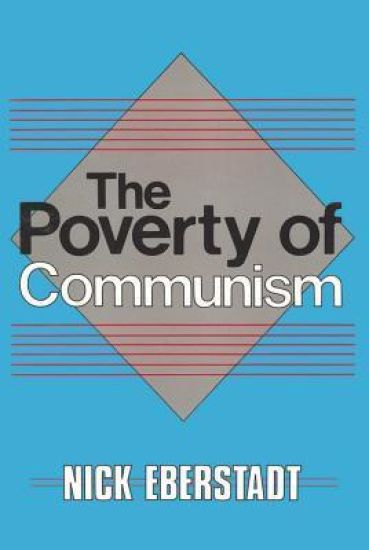
One third of the world's population today lives under governments that consider themselves to be Marxist-Leninist. In many of these places, severe poverty was endemic in the years before Communist authorities came to power. Communist governments claim to have a special understanding into and effectiveness in dealing with problems of poverty. Marxist-Leninist rulers have been in power for nearly thirty years in Cuba, nearly forty years in China, and over sixty-five years in the Soviet Union. How do the poor fare in such places today?Western intellectuals often assume there is an inevitable tradeoff between bread and freedom under communism. What populations lose in the way of civil and political rights, they gain in social guarantees that protect them against material hardship. In The Poverty of Communism, Nick Eberstadt challenges this assumption and shatters it. He shows that Communist governments in a wide variety of settings have been no more successful in attending to the material needs of the most vulnerable segments of the populations they govern than non-Communist governments against which they might most readily be compared. Indeed, measured by the health, literacy, and nutrition of their people, Communist governments may today be less effective in dealing with poverty than are non-Communist governments.The Poverty of Communism is a pathbreaking investigation. In a series of separate studies, Eberstadt analyzes the performance of Communist governments in the Soviet Union, Eastern Europe, China, and Cuba. This is the first scholarly effort to assess the record of Communist governments with respect to poverty in a detailed and comprehensive fashion. Well written, carefully argued, and reflecting a sweeping range of knowledge, The Poverty of Communism will be of interest to specialists in the countries investigated as well as those concerned with comparative economic and political development. Above all, it gives testimony to the plight of voiceless populations about which all too little has been written from an objective standpoint.
The Poverty of Communism

The Poverty of Communism

Nicholas Eberstadt

Transaction Publishers
1988
nidottu
One third of the world's population today lives under governments that consider themselves to be Marxist-Leninist. In many of these places, severe poverty was endemic in the years before Communist authorities came to power. Communist governments claim to have a special understanding into and effectiveness in dealing with problems of poverty. Marxist-Leninist rulers have been in power for nearly thirty years in Cuba, nearly forty years in China, and over sixty-five years in the Soviet Union. How do the poor fare in such places today?Western intellectuals often assume there is an inevitable tradeoff between bread and freedom under communism. What populations lose in the way of civil and political rights, they gain in social guarantees that protect them against material hardship. In The Poverty of Communism, Nick Eberstadt challenges this assumption and shatters it. He shows that Communist governments in a wide variety of settings have been no more successful in attending to the material needs of the most vulnerable segments of the populations they govern than non-Communist governments against which they might most readily be compared. Indeed, measured by the health, literacy, and nutrition of their people, Communist governments may today be less effective in dealing with poverty than are non-Communist governments.The Poverty of Communism is a pathbreaking investigation. In a series of separate studies, Eberstadt analyzes the performance of Communist governments in the Soviet Union, Eastern Europe, China, and Cuba. This is the first scholarly effort to assess the record of Communist governments with respect to poverty in a detailed and comprehensive fashion. Well written, carefully argued, and reflecting a sweeping range of knowledge, The Poverty of Communism will be of interest to specialists in the countries investigated as well as those concerned with comparative economic and political development. Above all, it gives testimony to the plight of voiceless populations about which all too little has been written from an objective standpoint.
Prosperous Paupers and Other Population Problems
In current intellectual and public discourse, the entire modern world-from the affluent United States to the poorest low-income regions-is beset today by a broad and alarming array of "population problems." Around the globe, leading scientists, academics, and political figures attribute poverty, hunger, social tension, and even political conflict to contemporary demographic trends. These authorities assert that the size, composition, and growth rate of population routinely pose direct and major threats to human well-being. They argue for interventions aimed specifically at altering society's demographic rhythms. In this wide-ranging and carefully reasoned book, renowned demographer and social scientist Nicholas Eberstadt challenges these ideas and exposes their glaring intellectual -shortcomings.Eberstadt makes the case that the very conception of "population problems" is inherently ambiguous and arbitrary, lending itself to faulty analysis and inappropriate diagnoses. Careless thinking about population is typically a result of inattention to, or indifference toward, the fundamental unit in all populations: the individual human being. In our time, Eberstadt writes, problems attributed to demographic trends are actually rooted in political and ethical situations. The brave new world of economic reform, far from bringing about the good society, serves only to postpone that society by a cavalier disregard of social and culture factors in human evolution. Eberstadt warns against a melodramatic approach to issues such as hunger and malnutrition. Material advances in the economy and cultural advances in the polity are safeguards against the worst outcomes of current problems in population. His reversal of cause and effect marks this as a volume apart, provocative, controversial, but surefooted in its scholarly sensibility and methods. In an academic world in which demographers are now speaking of the peaking of population rather than its infinite expansion, Eberstadt moves the discussion to family ties and common bonds. Demographers and family planners alike have much to learn from an approach that takes seriously the pitfalls as well as blessings of so-called zero-growth in the world -population.
Prosperous Paupers and Other Population Problems

Prosperous Paupers and Other Population Problems

Nicholas Eberstadt

Transaction Publishers
2000
sidottu
In current intellectual and public discourse, the entire modern world-from the affluent United States to the poorest low-income regions-is beset today by a broad and alarming array of "population problems." Around the globe, leading scientists, academics, and political figures attribute poverty, hunger, social tension, and even political conflict to contemporary demographic trends. These authorities assert that the size, composition, and growth rate of population routinely pose direct and major threats to human well-being. They argue for interventions aimed specifically at altering society's demographic rhythms. In this wide-ranging and carefully reasoned book, renowned demographer and social scientist Nicholas Eberstadt challenges these ideas and exposes their glaring intellectual -shortcomings.Eberstadt makes the case that the very conception of "population problems" is inherently ambiguous and arbitrary, lending itself to faulty analysis and inappropriate diagnoses. Careless thinking about population is typically a result of inattention to, or indifference toward, the fundamental unit in all populations: the individual human being. In our time, Eberstadt writes, problems attributed to demographic trends are actually rooted in political and ethical situations. The brave new world of economic reform, far from bringing about the good society, serves only to postpone that society by a cavalier disregard of social and culture factors in human evolution. Eberstadt warns against a melodramatic approach to issues such as hunger and malnutrition. Material advances in the economy and cultural advances in the polity are safeguards against the worst outcomes of current problems in population. His reversal of cause and effect marks this as a volume apart, provocative, controversial, but surefooted in its scholarly sensibility and methods. In an academic world in which demographers are now speaking of the peaking of population rather than its infinite expansion, Eberstadt moves the discussion to family ties and common bonds. Demographers and family planners alike have much to learn from an approach that takes seriously the pitfalls as well as blessings of so-called zero-growth in the world -population.
Korea Approaches Reunification

Korea Approaches Reunification

Nicholas Eberstadt

M.E. Sharpe
1995
sidottu
This work presents a detailed picture of the divergent socio-economic trends in divided Korea since its 1945 partition. It also covers the social and political situation in the North and South today, and the domestic and international challenges to a successful Korean reunification.
Korea Approaches Reunification

Korea Approaches Reunification

Nicholas Eberstadt

M.E. Sharpe
1995
nidottu
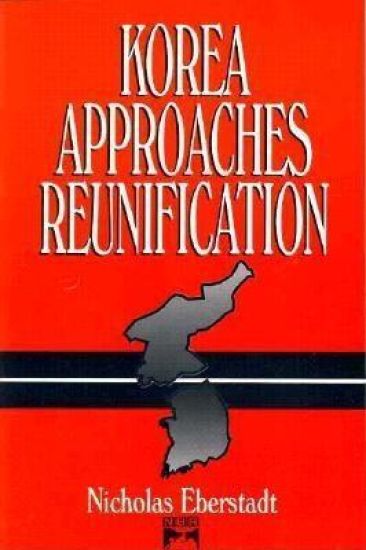
This work presents a detailed picture of the divergent socio-economic trends in divided Korea since its 1945 partition. It also covers the social and political situation in the North and South today, and the domestic and international challenges to a successful Korean reunification.
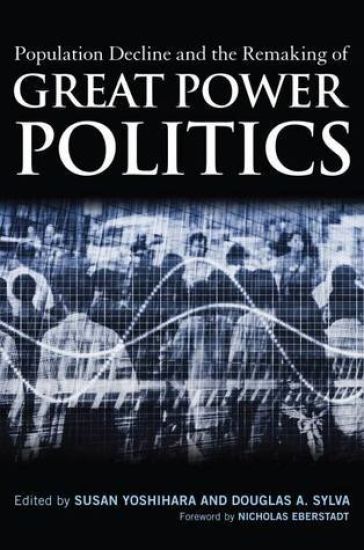
Population Decline and the Remaking of Great Power Politics
Remarkably, most conventional wisdom about the shifting balance of world power virtually ignores one of the most fundamental components of power: population. The studies that do consider international security and demographic trends almost unanimously focus on population growth as a liability. In contrast, the distinguished contributors to this volume—security experts from the Naval War College, the American Enterprise Institute, and other think tanks—contend that demographic decline in key world powers now poses a profound challenge to global stability.The countries at greatest risk are in the developed world, where birthrates are falling and populations are aging. Many have already lost significant human capital, capital that would have helped them innovate and fuel their economy, man their armed forces, and secure a place at the table of world power.By examining the effects of diverging population trends between the United States and Europe and the effects of rapid population aging in Japan, India, and China, this book uncovers increasing tensions within the transatlantic alliance and destabilizing trends in Asian security. Thus, it argues, relative demographic decline may well make the world less, and not more, secure.
A Nation of Takers

A Nation of Takers

Nicholas Eberstadt

TEMPLETON FOUNDATION PRESS,U.S.
2012
pokkari
In A Nation of Takers: America’s Entitlement Epidemic, one of our country’s foremost demographers, Nicholas Eberstadt, details the exponential growth in entitlement spending over the past fifty years. As he notes, in 1960, entitlement payments accounted for well under a third of the federal government’s total outlays. Today, entitlement spending accounts for a full two-thirds of the federal budget. Drawing on an impressive array of data and employing a range of easy-to-read, four-color charts, Eberstadt shows the unchecked spiral of spending on a range of entitlements, everything from Medicare to disability payments. But Eberstadt does not just chart the astonishing growth of entitlement spending, he also details the enormous economic and cultural costs of this epidemic. He powerfully argues that while this spending certainly drains our federal coffers, it also has a very real, long-lasting, negative impact on the character of our citizens. Also included in the book is a response from one of our leading political theorists, William Galston. In his incisive response, he questions Eberstadt’s conclusions about the corrosive effect of entitlements on character and offers his own analysis of the impact of American entitlement growth.
The Optimum Quantity of Money

The Optimum Quantity of Money

Nicholas Eberstadt; Milton Friedman

Routledge
2017
sidottu
This classic set of essays by Nobel Laureate and leading monetary theorist Milton Friedman presents a coherent view of the role of money, focusing on specific topics related to the empirical analysis of monetary phenomena and policy. The early chapters cover factors determining the real quantity of money held in a community and the welfare implications of policies that affect the quantity held. The following chapters formally restate why quantity analysis has become central to the science of economics. Friedman's presidential address to the American Economic Association, included here, provides a general summary of his views on the role of monetary policy, with an emphasis on its limitations and its possibilities. This theoretical framework is used in examining a number of empirical problems: the demand for money, the explanation of price changes in wartime periods, and the role of money in business cycles. These essays summarize some of the most important results of Friedman's extensive research over the course of his lifetime. The chapters on policy that follow survey the positions of earlier economists and deal with the importance of lags and the implications of destabilizing speculation in foreign markets. Taken as a whole, The Optimum Quantity of Money provides a comprehensive view of the body of monetary theory developed in leading centers of monetary analysis. This work is essential reading for economists and graduate students in the field. The volume will be no less important for practicing business and banking personnel as well. The new statement by Michael Bordo, a student of Friedman's and an expert in the field, provides a sense of where the field now stands in the economy and academy.
The Optimum Quantity of Money

The Optimum Quantity of Money

Nicholas Eberstadt; Milton Friedman

AldineTransaction
2005
nidottu
This classic set of essays by Nobel Laureate and leading monetary theorist Milton Friedman presents a coherent view of the role of money, focusing on specific topics related to the empirical analysis of monetary phenomena and policy. The early chapters cover factors determining the real quantity of money held in a community and the welfare implications of policies that affect the quantity held. The following chapters formally restate why quantity analysis has become central to the science of economics. Friedman's presidential address to the American Economic Association, included here, provides a general summary of his views on the role of monetary policy, with an emphasis on its limitations and its possibilities. This theoretical framework is used in examining a number of empirical problems: the demand for money, the explanation of price changes in wartime periods, and the role of money in business cycles. These essays summarize some of the most important results of Friedman's extensive research over the course of his lifetime. The chapters on policy that follow survey the positions of earlier economists and deal with the importance of lags and the implications of destabilizing speculation in foreign markets. Taken as a whole, The Optimum Quantity of Money provides a comprehensive view of the body of monetary theory developed in leading centers of monetary analysis. This work is essential reading for economists and graduate students in the field. The volume will be no less important for practicing business and banking personnel as well. The new statement by Michael Bordo, a student of Friedman's and an expert in the field, provides a sense of where the field now stands in the economy and academy.