Kirjojen hintavertailu. Mukana 11 699 587 kirjaa ja 12 kauppaa.

Kirjahaku

Etsi kirjoja tekijän nimen, kirjan nimen tai ISBN:n perusteella.

6 kirjaa tekijältä Nicholas Freudenberg

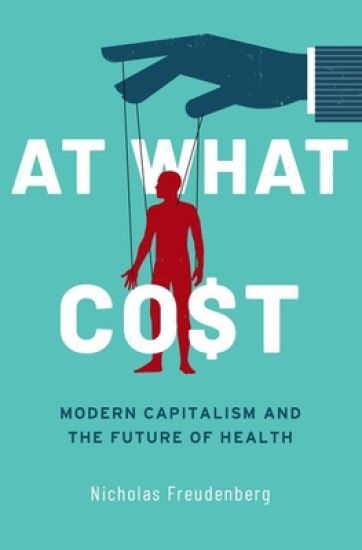
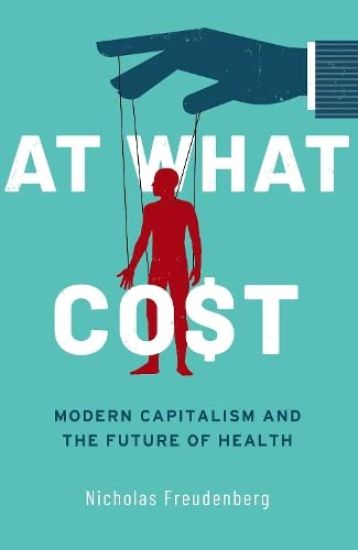
At What Cost

At What Cost

Nicholas Freudenberg

Oxford University Press Inc
2021
sidottu
An incisive and powerful investigation of corporate impact on human and planetary well-being Freedom of choice lies at the heart of American society. Every day, individuals decide what to eat, which doctors to see, who to connect with online, and where to educate their children. Yet, many Americans don't realize that these choices are illusory at best. By the start of the 21st century, every major industrial sector in the global economy was controlled by no more than five transnational corporations, and in about a third of these sectors, a single company accounted for more than 40 percent of global sales. The available options in food, healthcare, education, transportation, and even online presence are largely constructed by corporations, whose sweeping influence have made them the public face and executive agents of 21st-century capitalism. At What Cost confronts how globalization, financial speculation, monopolies, and control of science and technology have enhanced the ability of corporations and their allies to overwhelm influences of government, family, community, and faith. As corporations manipulate demand through skillful marketing and veto the choices that undermine their bottom line, free consumer choice has all but disappeared, and with it, the personal protections guarding our collective health. At What Cost argues that the world created by 21st-century capitalism is simply not fit to solve our most serious public health problems, from climate change to opioid addiction. However, author and public health expert Nicholas Freudenberg also shows that though the road is steep, human and planetary well-being constitute a powerful mobilizing idea for a new social movement, one that will restore the power of individual voice to our democracy. With impeccably detailed research and an eye towards a better future, At What Cost arms ordinary citizens, activists, and health professionals with an understanding of how we've arrived at the precipice, and what we can do to ensure a healthier collective future.
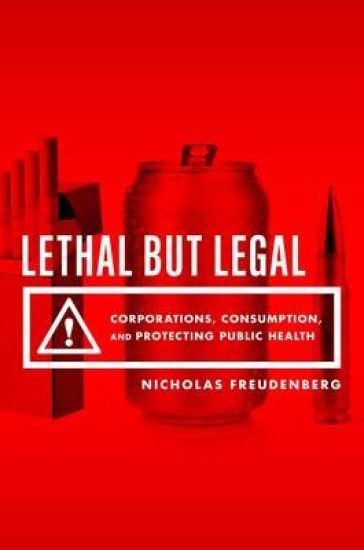
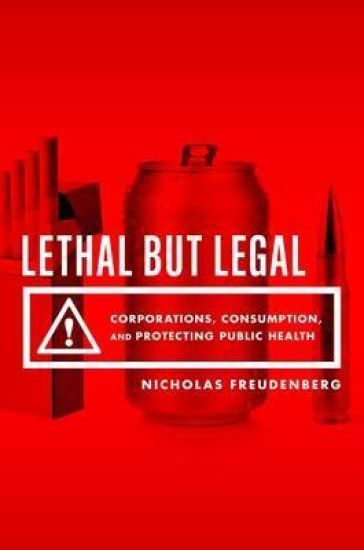
Lethal But Legal

Lethal But Legal

Nicholas Freudenberg

Oxford University Press Inc
2016
nidottu
Decisions made by the food, tobacco, alcohol, pharmaceutical, gun, and automobile industries have a greater impact on today's health than the decisions of scientists and policymakers. As the collective influence of corporations has grown, governments around the world have stepped back from their responsibility to protect public health by privatizing key services, weakening regulations, and cutting funding for consumer and environmental protection. Today's corporations are increasingly free to make decisions that benefit their bottom line at the expense of public health. Lethal but Legal examines how corporations have impacted -- and plagued -- public health over the last century, first in industrialized countries and now in developing regions. It is both a current history of corporations' antagonism towards health and an analysis of the emerging movements that are challenging these industries' dangerous practices. The reforms outlined here aim to strike a healthier balance between large companies' right to make a profit and governments' responsibility to protect their populations. While other books have addressed parts of this story, Lethal but Legal is the first to connect the dots between unhealthy products, business-dominated politics, and the growing burdens of disease and health care costs. By identifying the common causes of all these problems, then situating them in the context of other health challenges that societies have overcome in the past, this book provides readers with the insights they need to take practical and effective action to restore consumers' right to health.
At What Cost

At What Cost

Nicholas Freudenberg

OXFORD UNIVERSITY PRESS INC
2023
nidottu
An incisive and powerful investigation of corporate impact on human and planetary well-being Freedom of choice lies at the heart of American society. Every day, individuals decide what to eat, which doctors to see, who to connect with online, and where to educate their children. Yet, many Americans don't realize that these choices are illusory at best. By the start of the 21st century, every major industrial sector in the global economy was controlled by no more than five transnational corporations, and in about a third of these sectors, a single company accounted for more than 40 percent of global sales. The available options in food, healthcare, education, transportation, and even online presence are largely constructed by corporations, whose sweeping influence have made them the public face and executive agents of 21st-century capitalism. At What Cost confronts how globalization, financial speculation, monopolies, and control of science and technology have enhanced the ability of corporations and their allies to overwhelm influences of government, family, community, and faith. As corporations manipulate demand through skillful marketing and veto the choices that undermine their bottom line, free consumer choice has all but disappeared, and with it, the personal protections guarding our collective health. At What Cost argues that the world created by 21st-century capitalism is simply not fit to solve our most serious public health problems, from climate change to opioid addiction. However, author and public health expert Nicholas Freudenberg also shows that though the road is steep, human and planetary well-being constitute a powerful mobilizing idea for a new social movement, one that will restore the power of individual voice to our democracy. With impeccably detailed research and an eye towards a better future, At What Cost arms ordinary citizens, activists, and health professionals with an understanding of how we've arrived at the precipice, and what we can do to ensure a healthier collective future.
Lethal But Legal

Lethal But Legal

Nicholas Freudenberg

Oxford University Press Inc
2014
sidottu
Decisions made by the food, tobacco, alcohol, pharmaceutical, gun, and automobile industries have a greater impact on today's health than the decisions of scientists and policymakers. As the collective influence of corporations has grown, governments around the world have stepped back from their responsibility to protect public health by privatizing key services, weakening regulations, and cutting funding for consumer and environmental protection. Today's corporations are increasingly free to make decisions that benefit their bottom line at the expense of public health. Lethal but Legal examines how corporations have impacted -- and plagued -- public health over the last century, first in industrialized countries and now in developing regions. It is both a current history of corporations' antagonism towards health and an analysis of the emerging movements that are challenging these industries' dangerous practices. The reforms outlined here aim to strike a healthier balance between large companies' right to make a profit and governments' responsibility to protect their populations. While other books have addressed parts of this story, Lethal but Legal is the first to connect the dots between unhealthy products, business-dominated politics, and the growing burdens of disease and health care costs. By identifying the common causes of all these problems, then situating them in the context of other health challenges that societies have overcome in the past, this book provides readers with the insights they need to take practical and effective action to restore consumers' right to health.
Fighting for New York

Fighting for New York

Nicholas Freudenberg

Columbia University Press
2026
pokkari
What would New York City look like without the hard-won victories of social movements? From the Young Lords campaigns to prevent lead poisoning and tuberculosis in the late 1960s to ACT UP’s fight for people affected by AIDS in the early 1990s through Housing Justice for All’s recent advocacy for tenants, generations of activists have struggled to make the city a healthier and more equal place for all. Fighting for New York is a pragmatic account of health-focused social movements over the past several decades. Nicholas Freudenberg—a longtime public health professional, researcher, and activist—examines a variety of cases, from campaigns for reproductive rights, environmental justice, and free school lunch to the Close Rikers Island and Fight for $15 movements. He analyzes how activist leaders, members, and organizations approach injustices, build coalitions, frame their messages, and define success, considering which strategies worked and which failed to achieve their goals. Fighting for New York synthesizes the lessons of these campaigns into practical guidance for the activists, health professionals, and policy makers of today and tomorrow, suggesting specific strategies gleaned from decades of experience. Highlighting the voices of activists, this book is a riveting account of struggles to improve living conditions and uphold human dignity.
Fighting for New York

Fighting for New York

Nicholas Freudenberg

Columbia University Press
2026
sidottu
What would New York City look like without the hard-won victories of social movements? From the Young Lords campaigns to prevent lead poisoning and tuberculosis in the late 1960s to ACT UP’s fight for people affected by AIDS in the early 1990s through Housing Justice for All’s recent advocacy for tenants, generations of activists have struggled to make the city a healthier and more equal place for all. Fighting for New York is a pragmatic account of health-focused social movements over the past several decades. Nicholas Freudenberg—a longtime public health professional, researcher, and activist—examines a variety of cases, from campaigns for reproductive rights, environmental justice, and free school lunch to the Close Rikers Island and Fight for $15 movements. He analyzes how activist leaders, members, and organizations approach injustices, build coalitions, frame their messages, and define success, considering which strategies worked and which failed to achieve their goals. Fighting for New York synthesizes the lessons of these campaigns into practical guidance for the activists, health professionals, and policy makers of today and tomorrow, suggesting specific strategies gleaned from decades of experience. Highlighting the voices of activists, this book is a riveting account of struggles to improve living conditions and uphold human dignity.