Kirjojen hintavertailu. Mukana 11 342 296 kirjaa ja 12 kauppaa.

Kirjahaku

Etsi kirjoja tekijän nimen, kirjan nimen tai ISBN:n perusteella.

17 kirjaa tekijältä Nicholas Grene

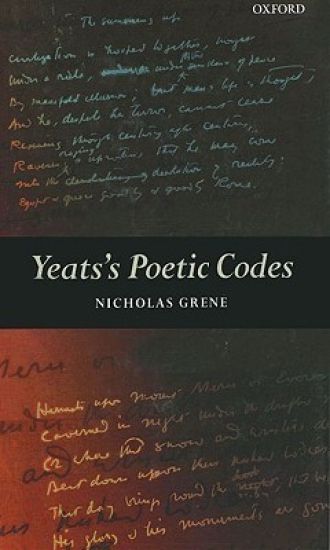
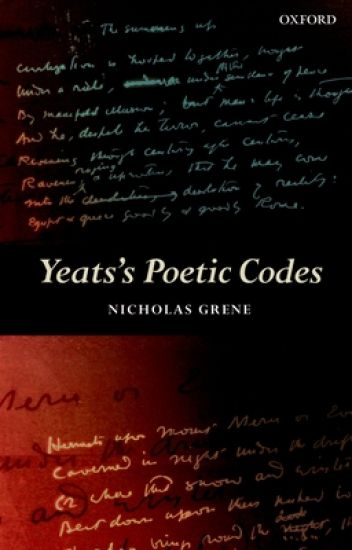
Yeats's Poetic Codes

Yeats's Poetic Codes

Nicholas Grene

Oxford University Press
2022
nidottu
Nicholas Grene explores Yeats's poetic codes of practice, the key words and habits of speech that shape the reading experience of his poetry. Where previous studies have sought to decode his work, expounding its symbolic meanings by references to Yeats's occult beliefs, philosophical ideas or political ideology, the focus here is on his poetic technique, its typical forms and their implications for the understanding of the poems. Grene is concerned with the distinctive stylistic signatures of the Collected Poems: the use of dates and place names within individual poems; the handling of demonstratives and of grammatical tense and mood; certain nodal Yeatsian words ('dream', 'bitter', 'sweet') and images (birds and beasts); dialogue and monologue as the voices of his dramatic lyrics. The aim throughout is to illustrate the shifting and unstable movement between lived reality and transcendental thought in Yeats, the embodied quality of his poetry between a phenomenal world of sight and an imagined world of vision.
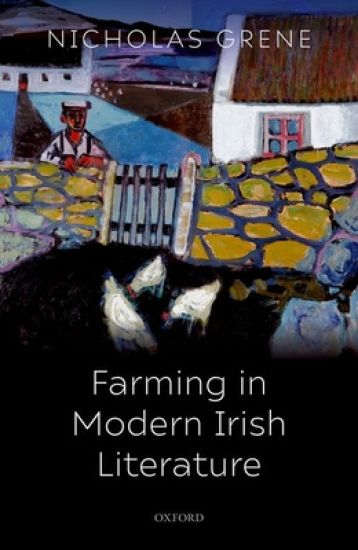
Farming in Modern Irish Literature

Farming in Modern Irish Literature

Nicholas Grene

Oxford University Press
2021
sidottu
This innovative study analyzes the range of representation of farming in Irish literature in the period since independence/partition in 1922, as Ireland moved from a largely agricultural to a developed urban society. In many different forms including poetry, drama, fiction, and autobiography, writers have made literary capital by looking back at their rural backgrounds, even where those may be a generation back. The first five chapters examine some of the key themes: the impact of inheritance on family in the patriarchal system where there could only be one male heir; the struggles for survival in the poorest regions of the West of Ireland; the uses of childhood farming memories whether idyllic or traumatic; and the representation of communities, challenging the homogeneous idealizing images of the Literary Revival; the impact of modernization on successive generations into the twenty-first century. The final three chapters are devoted to three major writers in whose work farming is central: Patrick Kavanagh, the small farmer who had to find an individual voice to express his own unique experience; John McGahern in whose fiction the life of the farm is always posited as alternative to a rootless urban milieu; and Seamus Heaney who re-imagined his farming childhood in so many different modes throughout his career. Farming in Modern Irish Literature yields original insights into the literary iconography of rural Ireland and its interplay with social and cultural history, opening up fresh vistas on the achievements of Irish writers in different genres, styles, and historical eras.
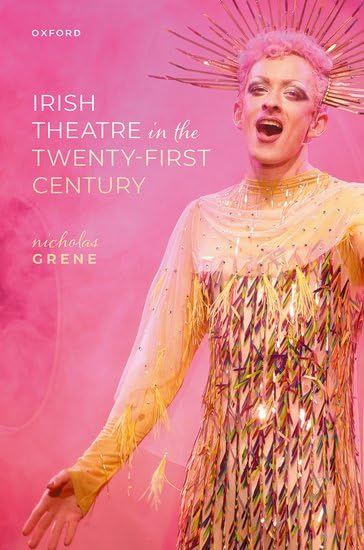
Irish Theatre in the Twenty-First Century

Irish Theatre in the Twenty-First Century

Nicholas Grene

Oxford University Press
2024
sidottu
Irish Theatre in the Twenty-First Century is the first in-depth study of the subject. It analyses the ways in which theatre in Ireland has developed since the 1990s when emerging playwrights Martin McDonagh, Conor McPherson, and Enda Walsh turned against the tradition of lyrical eloquence with a harsh and broken dramatic language. Companies such as Blue Raincoat, the Corn Exchange, and Pan Pan pioneered an avant-garde dramaturgy that no longer privileged the playwright. This led to new styles of production of classic Irish works, including the plays of Synge, mounted in their entirety by Druid. The changed environment led to a re-imagining of past Irish history in the work of Rough Magic and ANU, plays by Owen McCafferty, Stacey Gregg, and David Ireland, dramatizing the legacy of the Troubles, and adaptations of Greek tragedy by Marina Carr and others reflecting the conditions of modern Ireland. From 2015, the movement #WakingTheFeminists led to a sharpened awareness of gender. While male playwrights showed a toxic masculinity on the stage, a generation of female dramatists including Carr, Gregg, and Nancy Harris gave voice to the experiences of women long suppressed in conservative Ireland. For three separate periods, 2006, 2016, 2020-2, the author served as one of the judges for the Irish Times Irish Theatre Awards, attending all new productions across the island of Ireland. This allowed him to provide the detailed overview of the 'state of play' of Irish theatre in each of those times which punctuate the book as one of its most innovative features. Drawing also on interviews with Ireland's leading theatre makers, Grene provides readers with a close-up understanding of Irish theatre in a period when Ireland became for the first time a fully modernized, secular, and multi-ethnic society.
Yeats's Poetic Codes

Yeats's Poetic Codes

Nicholas Grene

Oxford University Press
2008
sidottu
Nicholas Grene explores Yeats's poetic codes of practice, the key words and habits of speech that shape the reading experience of his poetry. Where previous studies have sought to decode his work, expounding its symbolic meanings by references to Yeats's occult beliefs, philosophical ideas or political ideology, the focus here is on his poetic technique, its typical forms and their implications for the understanding of the poems. Grene is concerned with the distinctive stylistic signatures of the Collected Poems: the use of dates and place names within individual poems; the handling of demonstratives and of grammatical tense and mood; certain nodal Yeatsian words ('dream', 'bitter', 'sweet') and images (birds and beasts); dialogue and monologue as the voices of his dramatic lyrics. The aim throughout is to illustrate the shifting and unstable movement between lived reality and transcendental thought in Yeats, the embodied quality of his poetry between a phenomenal world of sight and an imagined world of vision.
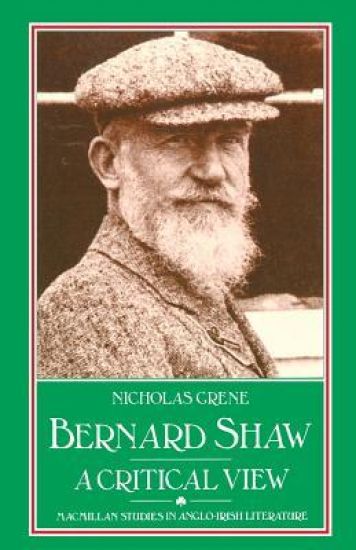
Bernard Shaw: A Critical View

Bernard Shaw: A Critical View

Nicholas Grene

Palgrave Macmillan
1987
nidottu
'...the analysis of individual plays is measured and illuminating. The book will be of interest to all Shavians, to students, and to the many general readers who value Shaw's unsentimental idealism.' British Book News '...Grene's study makes a valuable contribution to a still-developing subject ... His analysis of the plays is well-informed and perceptive, and he is always alert to the exigencies of theatrical performance.' Times Higher Education Supplement
Shakespeare's Tragic Imagination

Shakespeare's Tragic Imagination

Nicholas Grene

Palgrave Macmillan
1991
sidottu
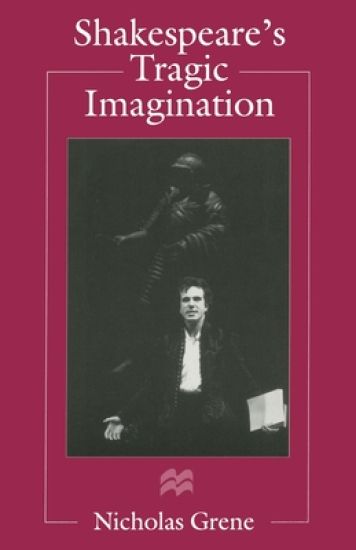
The world of Macbeth, with its absolutes of good and evil, seems very remote from the shifting perspectives of Antony and Cleopatra, or the psychological and political realities of Coriolanus. Yet all three plays share similar thematic concerns and preoccupations: the relation of power to legitimating authority, for instance, or of male and female roles in the imagination of (male) heroic endeavour. In this acclaimed study, Nicholas Grene shows how all nine plays written in Shakespeare's main tragic period display this combination of strikingly different milieu balanced by thematic interrelationships. Taking the English history play as his starting point, he argues that Shakespeare established two different modes of imagining: the one mythic and visionary, the other sceptical and analytic. In the tragic plays that followed, themes and situations are dramatised, alternately, in sacred and secular worlds. A chapter is devoted to each tragedy, but with a continuing awareness of companion plays: the analysis of Julius Caesar informing that of Hamlet, discussion of Troilus and Cressida counterpointed by the critique of Othello and the treatment of King Lear growing out from the limitations of Timon of Athens. The aim is to resist homogenising the plays but to recognise and explore the unique imaginative enterprise from which they arose.
Shakespeare's Tragic Imagination

Shakespeare's Tragic Imagination

Nicholas Grene

Palgrave Macmillan
1996
nidottu
The world of Macbeth, with its absolutes of good and evil, seems very remote from the shifting perspectives of Antony and Cleopatra, or the psychological and political realities of Coriolanus. Yet all three plays share similar thematic concerns and preoccupations: the relations of power to legitimating authority, for instance, or of male and female roles in the imagination of (male) heoric endeavour. In this acclaimed study, Nicholas Grene shows how all nine plays written in Shakespeare's main tragic period display this combination of strikingly different milieu balanced by thematic interrelationships. Taking the English history play as his starting point, he argues that Shakespeare established two different modes of imagining: the one mythic and visionary, the other sceptical and analytic. In the tragic plays that followed, themes and situations are dramatised, alternately, in sacred and secular worlds. A chapter is devoted to each tragedy, but with a continuing awareness of companionplays: the analysis of Julius Caesar informing that of Hamlet, discussion of Troilus and Cressida counterpointed by the critique of Othello and the treatment of King Lear growing out from the limitations of Timon of Athens. The aim is to resist homogenising the plays but to recognise and explore the unique imaginative enterprise from which they arose.
Shakespeare's Serial History Plays

Shakespeare's Serial History Plays

Nicholas Grene

Cambridge University Press
2007
pokkari
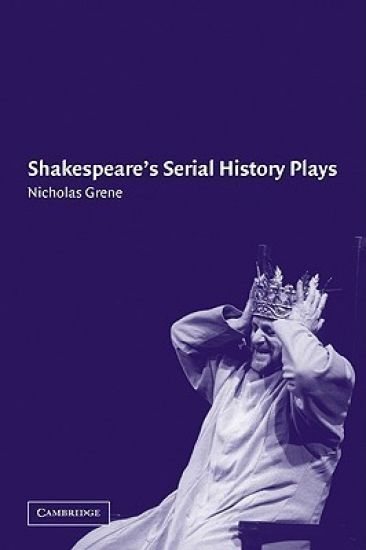
Shakespeare's Serial History Plays provides a re-reading of the two sequences of English history plays, Henry VI-Richard III and Richard II-Henry V. Reconsidering the chronicle sources and the staging practices of Shakespeare's time, Grene argues that the history plays were originally designed for serial performance. He charts the cultural and theatrical conditions that led to serial productions of the histories, in Europe as well as in the English-speaking world, and looks at their original creation in the 1590s and at modern productions or adaptations, from famous stagings such as the Royal Shakespeare Company's 1960s Wars of the Roses through to the present day. Grene focuses on the issues raised by the plays' seriality: the imagination of war, the emergence of character, and the uses of prophecies and curses through the first four; techniques of retrospection, hybrid dramatic forms, and questions of irony and agency in the second.
The Politics of Irish Drama

The Politics of Irish Drama

Nicholas Grene

Cambridge University Press
2000
sidottu
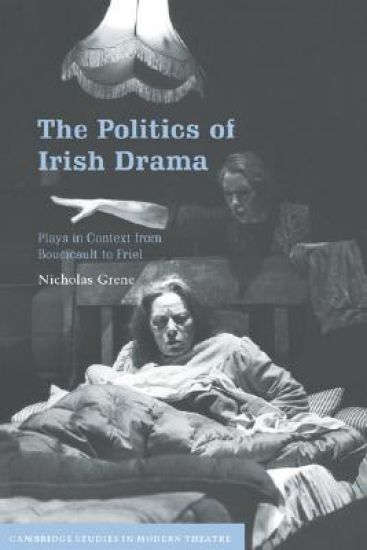
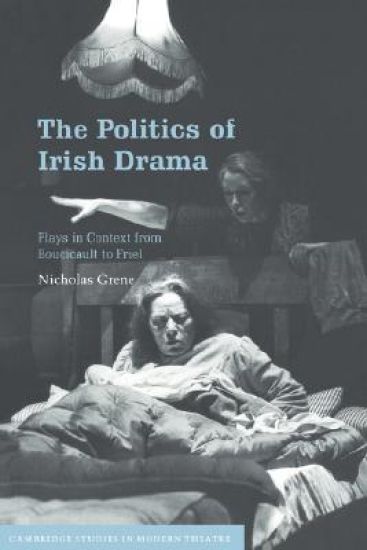
In this book Nicholas Grene explores political contexts for some of the outstanding Irish plays from the nineteenth century to the contemporary period. The politics of Irish drama have previously been considered primarily the politics of national self-expression. Here it is argued that Irish plays, in their self-conscious representation of the otherness of Ireland, are outwardly directed towards audiences both at home and abroad. The political dynamics of such relations between plays and audiences is the book’s multiple subject: the stage interpretation of Ireland from The Shaughraun to Translations; the contentious stage images of Yeats, Gregory and Synge; reactions to revolution from O’Casey to Behan; the post-colonial worlds of Purgatory and All that Fall; the imagined Irelands of Friel and Murphy, McGuinness and Barry. With its fundamental reconception of the politics of Irish drama, this book represents a new view of the phenomenon of Irish drama itself.
The Politics of Irish Drama

The Politics of Irish Drama

Nicholas Grene

Cambridge University Press
2000
pokkari
In this book Nicholas Grene explores political contexts for some of the outstanding Irish plays from the nineteenth century to the contemporary period. The politics of Irish drama have previously been considered primarily the politics of national self-expression. Here it is argued that Irish plays, in their self-conscious representation of the otherness of Ireland, are outwardly directed towards audiences both at home and abroad. The political dynamics of such relations between plays and audiences is the book’s multiple subject: the stage interpretation of Ireland from The Shaughraun to Translations; the contentious stage images of Yeats, Gregory and Synge; reactions to revolution from O’Casey to Behan; the post-colonial worlds of Purgatory and All that Fall; the imagined Irelands of Friel and Murphy, McGuinness and Barry. With its fundamental reconception of the politics of Irish drama, this book represents a new view of the phenomenon of Irish drama itself.
Shakespeare's Serial History Plays

Shakespeare's Serial History Plays

Nicholas Grene

Cambridge University Press
2002
sidottu
Shakespeare's Serial History Plays provides a re-reading of the two sequences of English history plays, Henry VI-Richard III and Richard II-Henry V. Reconsidering the chronicle sources and the staging practices of Shakespeare's time, Grene argues that the history plays were originally designed for serial performance. He charts the cultural and theatrical conditions that led to serial productions of the histories, in Europe as well as in the English-speaking world, and looks at their original creation in the 1590s and at modern productions or adaptations, from famous stagings such as the Royal Shakespeare Company's 1960s Wars of the Roses through to the present day. Grene focuses on the issues raised by the plays' seriality: the imagination of war, the emergence of character, and the uses of prophecies and curses through the first four; techniques of retrospection, hybrid dramatic forms, and questions of irony and agency in the second.
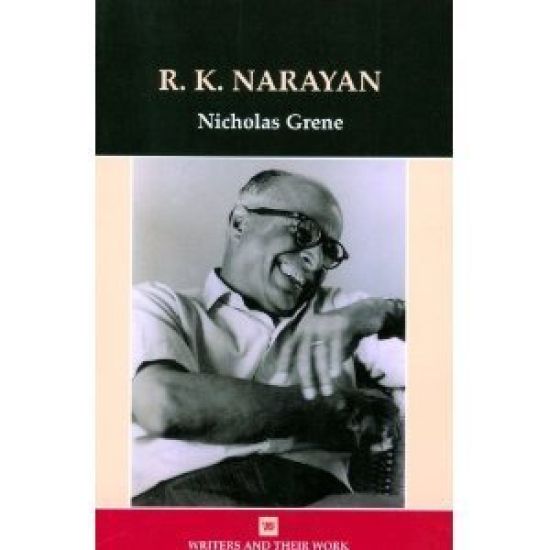
R.K Narayan

R.K Narayan

Nicholas Grene

Northcote House Publishers Ltd
2010
nidottu
The Indian novelist R.K. Narayan was a key figure in the development of a distinctive postcolonial literature. This detailed critical study covers all of Narayan's work, offering an accessible introduction to his life and fiction with detailed analyses of the major novels. Although the chapters take the reader through the successive phases of his career, they are organised on a thematic rather than a chronological basis to allow a focus on the most significant critical issues his work raises. While the introduction sketches the outline of his life, the first chapter explores how his own background was developed into the fictional South Indian small town of Malgudi, the setting for almost all his work. The second chapter deals with the controversial issue of Narayan's politics, and the common criticism of his writing as insufficiently politically engaged. The central chapter of the book focuses on the submerged fables that animate some of his key novels, including his best known, The Guide. The fourth chapter considers Narayan's attitudes toward modernity as reflected in his essays and his fiction. Finally, there is an analysis of Narayan as storyteller and the special styles he devised to tell his elliptical, subtle and understated tales.
Home on the Stage

Home on the Stage

Nicholas Grene

Cambridge University Press
2014
sidottu
As a serious drama set in an ordinary middle-class home, Ibsen's A Doll's House established a new politics of the interior that was to have a lasting impact upon twentieth-century drama. In this innovative study, Nicholas Grene traces the changing forms of the home on the stage through nine of the greatest of modern plays and playwrights. From Chekhov's The Cherry Orchard through to Williams' A Streetcar Named Desire, domestic spaces and personal crises have been employed to express wider social conditions and themes of class, gender and family. In the later twentieth century and beyond, the most radically experimental dramatists created their own challenging theatrical interiors, including Beckett in Endgame, Pinter in The Homecoming and Parks in Topdog/Underdog. Grene analyses the full significance of these versions of domestic spaces to offer fresh insights into the portrayal of the naturalistic environment in modern drama.
Home on the Stage

Home on the Stage

Nicholas Grene

Cambridge University Press
2018
pokkari
As a serious drama set in an ordinary middle-class home, Ibsen's A Doll's House established a new politics of the interior that was to have a lasting impact upon twentieth-century drama. In this innovative study, Nicholas Grene traces the changing forms of the home on the stage through nine of the greatest of modern plays and playwrights. From Chekhov's The Cherry Orchard through to Williams' A Streetcar Named Desire, domestic spaces and personal crises have been employed to express wider social conditions and themes of class, gender and family. In the later twentieth century and beyond, the most radically experimental dramatists created their own challenging theatrical interiors, including Beckett in Endgame, Pinter in The Homecoming and Parks in Topdog/Underdog. Grene analyses the full significance of these versions of domestic spaces to offer fresh insights into the portrayal of the naturalistic environment in modern drama.
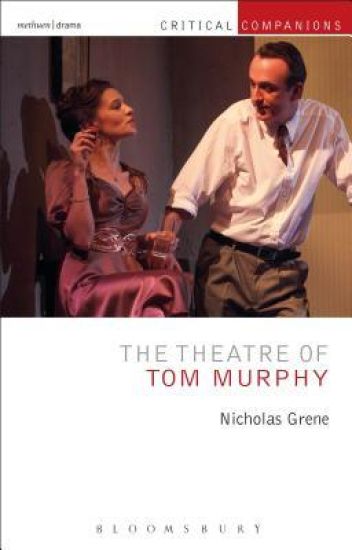
The Theatre of Tom Murphy

The Theatre of Tom Murphy

Nicholas Grene

Methuen Drama
2018
nidottu
Tom Murphy shot to fame with the London production of A Whistle in the Dark in 1961, establishing him as the outstanding Irish playwright of his generation. The international success of DruidMurphy, the 2012-13 staging of three of his major plays by the Druid Theatre Company, served to underline his continuing appeal and importance. This is the first full scale academic study devoted to his theatre, providing an overview of all his work, with a detailed reading of his most significant texts. His powerful and searchingly honest engagement with Irish history and society is reflected in the violent Whistle in the Dark, the epic Famine (1968), the often hilarious Conversations on a Homecoming (1985) and the darkly Chekhovian The House (2000). Folklore and myth figure more prominently in the spiritual drama of The Sanctuary Lamp (1975), the Faustian Gigli Concert (1983) and the women’s stories of Bailegangaire (1985). The range and reach of Murphy’s theatre is demonstrated in this informed reading, supported by key interviews with the playwright himself and his most important theatrical and critical interpreters.
The Theatre of Tom Murphy

The Theatre of Tom Murphy

Nicholas Grene

Methuen Drama
2017
sidottu
Tom Murphy shot to fame with the London production of A Whistle in the Dark in 1961, establishing him as the outstanding Irish playwright of his generation. The international success of DruidMurphy, the 2012-13 staging of three of his major plays by the Druid Theatre Company, served to underline his continuing appeal and importance. This is the first full scale academic study devoted to his theatre, providing an overview of all his work, with a detailed reading of his most significant texts. His powerful and searchingly honest engagement with Irish history and society is reflected in the violent Whistle in the Dark, the epic Famine (1968), the often hilarious Conversations on a Homecoming (1985) and the darkly Chekhovian The House (2000). Folklore and myth figure more prominently in the spiritual drama of The Sanctuary Lamp (1975), the Faustian Gigli Concert (1983) and the women’s stories of Bailegangaire (1985). The range and reach of Murphy’s theatre is demonstrated in this informed reading, supported by key interviews with the playwright himself and his most important theatrical and critical interpreters.