Kirjojen hintavertailu. Mukana 11 717 486 kirjaa ja 12 kauppaa.

Kirjahaku

Etsi kirjoja tekijän nimen, kirjan nimen tai ISBN:n perusteella.

10 kirjaa tekijältä Nicholas Humphrey

The Mind Made Flesh

The Mind Made Flesh

Nicholas Humphrey

Oxford University Press
2002
nidottu
In a series of essays, Nicholas Humphrey invites us to "take another look" at a variety of central and not-so-central issues, including: the evolution of consciousness, multiple personality disorder, cave art, religious miracles, medieval animal trials, and the seductions of dictatorship.
The Inner Eye

The Inner Eye

Nicholas Humphrey

Oxford University Press
2002
nidottu
In 1971 Nicholas Humphrey started to focus on the puzzle of how a human or animal can know what it is like to be itself. This text describes where these speculations led: to his theories of the "social function of intellect" and of human beings as natural-born "mind-readers".
Sentience: The Invention of Consciousness
The story of a quest to uncover the evolutionary history of consciousness from one of the world's leading theoretical psychologists. We feel, therefore we are. Conscious sensations ground our sense of self. They are crucial to our idea of ourselves as psychic beings: present, existent, and mattering. But is it only humans who feel this way? Do other animals? Will future machines? Weaving together intellectual adventure and cutting-edge science, Nicholas Humphrey describes in Sentience his quest for answers: from his discovery of blindsight in monkeys and his pioneering work on social intelligence to breakthroughs in the philosophy of mind. The goal is to solve the hard problem: to explain the wondrous, eerie fact of "phenomenal consciousness"--the redness of a poppy, the sweetness of honey, the pain of a bee sting. What does this magical dimension of experience amount to? What is it for? And why has it evolved? Humphrey presents here his new solution. He proposes that phenomenal consciousness, far from being primitive, is a relatively late and sophisticated evolutionary development. The implications for the existence of sentience in nonhuman animals are startling and provocative.
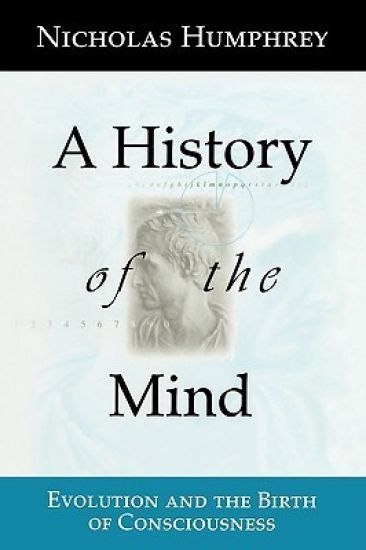
A History of the Mind

A History of the Mind

Nicholas Humphrey

Springer-Verlag New York Inc.
1999
nidottu
This book is a tour-de-force on how human consciousness may have evolved. From the "phantom pain" experienced by people who have lost their limbs to the uncanny faculty of "blindsight," Humphrey argues that raw sensations are central to all conscious states and that consciousness must have evolved, just like all other mental faculties, over time from our ancestors' bodily responses to pain and pleasure. '
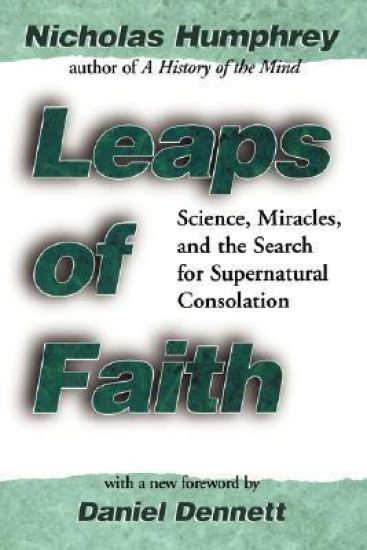
Leaps of Faith

Leaps of Faith

Nicholas Humphrey

Springer-Verlag New York Inc.
1999
nidottu
Leaps of Faith is a compelling and highly praised critique of beliefs in paranormal phenomena, miracles, and the like, written by the noted British psychologist Nicholas Humphrey. The author argues that our beliefs in the supernatural typically originate in anxiety about the future and are sustained by an entrenched belief in the duality of mind and body. More than just a debunking of supernaturalism, Leaps of Faith explores the psychology of the all-too-human tendency for wishful thinking. It explains why we hark after a fantasy world of magic and miracles - even when, arguably, we already live in the only world that offers real hope of fulfillment.
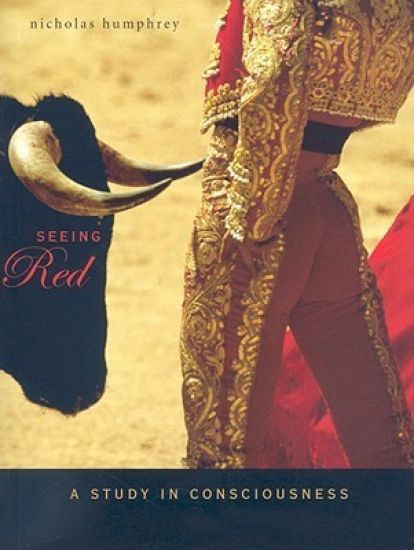
Seeing Red

Seeing Red

Nicholas Humphrey

The Belknap Press
2008
nidottu
"Consciousness matters. Arguably it matters more than anything. The purpose of this book is to build towards an explanation of just what the matter is."Nicholas Humphrey begins this compelling exploration of the biggest of big questions with a challenge to the reader, and himself. What's involved in "seeing red"? What is it like for us to see someone else seeing something red?Seeing a red screen tells us a fact about something in the world. But it also creates a new fact--a sensation in each of our minds, the feeling of redness. And that's the mystery. Conventional science so far hasn't told us what conscious sensations are made of, or how we get access to them, or why we have them at all. From an evolutionary perspective, what's the point of consciousness?Humphrey offers a daring and novel solution, arguing that sensationsare not things that happen to us, they are things we do--originating in our primordial ancestors' expressions of liking or disgust. Tracing the evolutionary trajectory through to human beings, he shows how this has led to sensations playing the key role in the human sense of Self.The Self, as we now know it from within, seems to have fascinating other-worldly properties. It leads us to believe in mind-body duality and the existence of a soul. And such beliefs--even if mistaken--can be highly adaptive, because they increase the value we place on our own and others' lives."Consciousness matters," Humphrey concludes with striking paradox, "because it is its function to matter. It has been designed to create in human beings a Self whose life is worth pursuing."
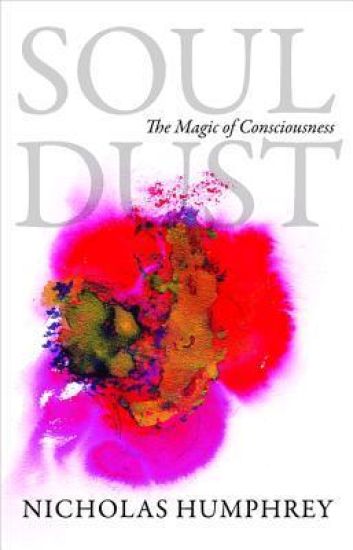
Soul Dust

Soul Dust

Nicholas Humphrey

Princeton University Press
2012
pokkari
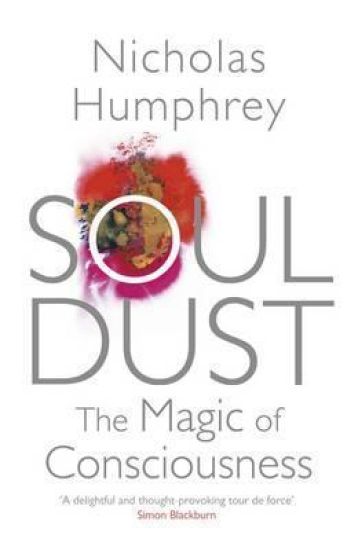
How is consciousness possible? What biological purpose does it serve? And why do we value it so highly? In Soul Dust, the psychologist Nicholas Humphrey, a leading figure in consciousness research, proposes a startling new theory. Consciousness, he argues, is nothing less than a magical-mystery show that we stage for ourselves inside our own heads. This self-made show lights up the world for us and makes us feel special and transcendent. Thus consciousness paves the way for spirituality, and allows us, as human beings, to reap the rewards, and anxieties, of living in what Humphrey calls the "soul niche.? Tightly argued, intellectually gripping, and a joy to read, Soul Dust provides answers to the deepest questions. It shows how the problem of consciousness merges with questions that obsess us all--how life should be lived and the fear of death. Resting firmly on neuroscience and evolutionary theory, and drawing a wealth of insights from philosophy and literature, Soul Dust is an uncompromising yet life-affirming work--one that never loses sight of the majesty and wonder of consciousness.
Soul Dust

Soul Dust

Nicholas Humphrey

Quercus Publishing
2012
pokkari
How is consciousness possible? What biological purpose does it serve? Why do we value it so highly? In Soul Dust the psychologist Nicholas Humphrey, a leading figure in consciousness research, returns to the front-line with a startling new theory. Consciousness, he argues, is nothing less than a magical-mystery show that we stage for ourselves inside our own heads. This self-made show lights up the world for us, making us feel special and transcendent. Tightly argued, intellectually gripping and a joy to read, Soul Dust is a keenly anticipated book that provides answers to the deepest questions. It dovetails the 'hard problem of consciousness' with the matters that obsess us all - the fear of death, how life should be lived. Resting firmly on neuroscience and evolutionary theory, it is an uncompromising yet life-affirming work that never loses sight of the majesty and mystery of consciousness.
How to Solve the Mind-body Problem

How to Solve the Mind-body Problem

Nicholas Humphrey

Imprint Academic
2000
pokkari
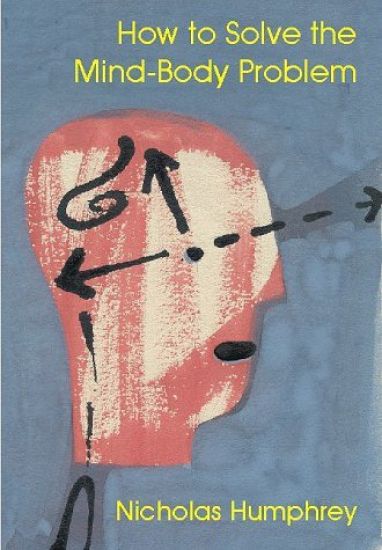
The mind is the brain. Each mental state -- each hope, fear, thought -- can be identified with a particular physical state of the brain, without remainder. So argues Nicholas Humphrey in this highly readable yet scholarly essay. He offers strong support for his "identity theory" from evolution. His controversial claim is discussed and challenged in commentaries by authors such as Andy Clark (Being There, 1997), Daniel Dennett (Consciousness Explained, 1991; Darwin's Dangerous Idea, 1995) and Ralph Ellis (Questioning Consciousness, 1995). Humphrey rounds off the book with a response to his critics. An excellent short introduction to the mind-body problem and the study of consciousness.