Kirjojen hintavertailu. Mukana 11 627 616 kirjaa ja 12 kauppaa.

Kirjahaku

Etsi kirjoja tekijän nimen, kirjan nimen tai ISBN:n perusteella.

4 kirjaa tekijältä Nicholas Millman

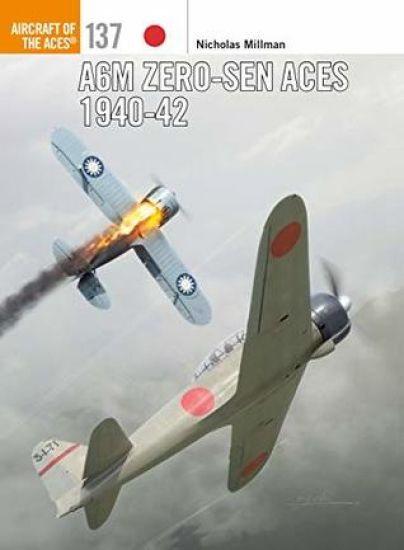
A6M Zero-sen Aces 1940-42

A6M Zero-sen Aces 1940-42

Nicholas Millman

Osprey Publishing
2019
nidottu
The Mitsubishi A6M Zero-sen was Japan’s Spitfire. In continuous development and operational service from the time of the Sino-Japanese war in 1940 to the end of the Pacific War in 1945, it is held in almost mythical awe, similar to Britain’s legendary fighter aircraft. At the time of its operational debut the fighter’s design features offered the revolutionary combination of an all-round vision canopy, cannon armament and a jettisonable drop tank giving it phenomenal range. Together with the flying and tactical proficiency of superbly trained pilots, this made the Zero-sen a true strategic fighter, spearheading Japan’s offensive in the Pacific. It was also the mount of a plethora of successful and flamboyant naval aces engaged in both sea and land campaigns. This volume covers the use of the A6M2 variant from its debut in China to the Solomons Campaign, and also tells the story of the A6M2 fighter aces of the 4th and Tainan Kokutai.
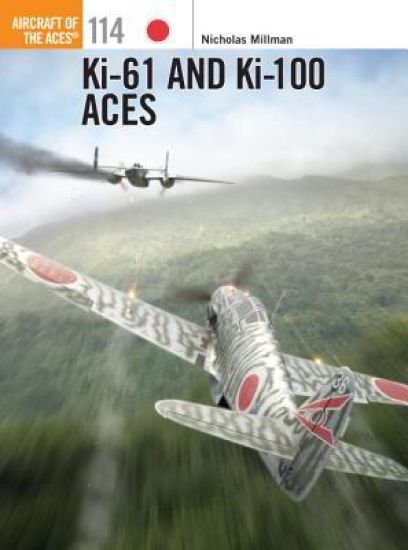
Ki-61 and Ki-100 Aces

Ki-61 and Ki-100 Aces

Nicholas Millman

Osprey Publishing
2015
nidottu
The story of the elite Japanese Army Air force (JAAF) aces that flew the Kawasaki Ki-61 Hien (Swallow), and the Ki-100 Goshikisen in the Pacific Theatre of World War 2.The former, codenamed 'Tony' by the allies, was a technically excellent aircraft, possessing power, stability and a good rate of climb - differing radically from the usual Japanese philosophy of building light, ultra-manoeuvrable fighters. Its pilots soon realised, however, that the type was plagued by a number of dangerous mechanical issues. Then as the war moved relentlessly closer to Japan's doorstep, a desperate, expedient innovation to the Ki-61 airframe by fitting it with a radial instead of inline engine resulted in one of the finest fighters of World War 2 - the Ki-100.This book uses the latest findings to provide a gripping account of some of the most remarkable and hard-pressed fighter pilots of the war. It reveals how these men, unlike so many of their unfortunate late-war colleagues, could surprise Allied aircraft in high-performance fighters and claim successes in the face of enormous odds.
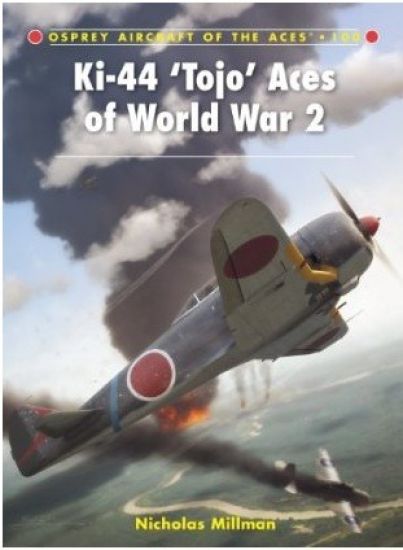
Ki-44 ‘Tojo’ Aces of World War 2

Ki-44 ‘Tojo’ Aces of World War 2

Nicholas Millman

Osprey Publishing
2011
nidottu
The Ki-44 'Tojo' epitomises JAAF air power in defence of the homeland, but was also used extensively in the skies over China. The introduction of the Ki-44 was noted with concern because of its departure from the performance and tactics previously associated with the JAAF. It was a fast-climbing, heavily armed point-defence interceptor that was used successfully in slashing hit-and-run tactics that caught Allied pilots by surprise. Amongst the numerous aces that flew Ki-44's were Major Akira Watanabe of the 33rd Sentai, Captain Yukiyoshi Wakamatsu, the 'Red Nose Ace' of the 85th Sentai and Warrant Officer Rikio Shibata also of the 85th Sentai, a leading ace with claims for 27 aircraft. This book tells the complete story of all of Japan's 'Tojo' aces.
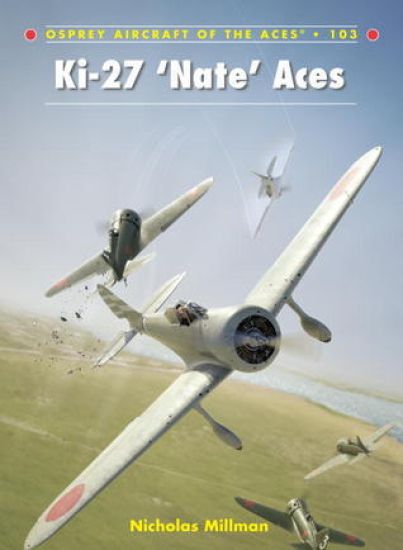
Ki-27 ‘Nate’ Aces

Ki-27 ‘Nate’ Aces

Nicholas Millman

Osprey Publishing
2013
nidottu
The Ki-27 achieved its first successes during the so-called 'China Incident'. These were the glory days for the JAAF and many of the successful 97 Sen pilots went on to become the outstanding leaders and veteran aces of the Pacific War. Initially facing more modern Allied types of fighter, the 97 Sen was more than able to hold its own by exploiting its outstanding aerobatic qualities. But the writing was on the wall for unarmoured aircraft as the Allies consolidated and began their fight back. By 1943 it was considered obsolete but was still being encountered in combat by Allied pilots, especially in the air defence role. The Ki-27 also found an important secondary role as an armed fighter trainer, equipping an important number of training units and flying schools, but was essentially retired from combat. This book tells the complete story of this special aircraft and its part in Japanese military history.