Kirjojen hintavertailu. Mukana 11 244 527 kirjaa ja 12 kauppaa.

Kirjahaku

Etsi kirjoja tekijän nimen, kirjan nimen tai ISBN:n perusteella.

28 kirjaa tekijältä Nicholas Mosley

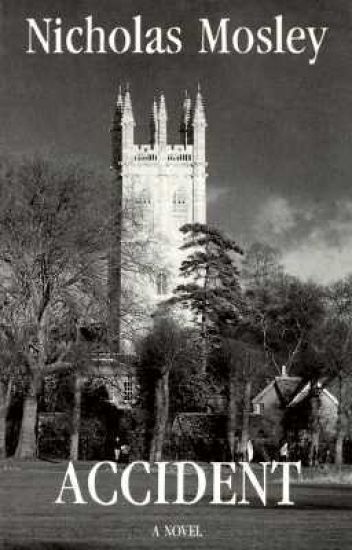
Accident

Accident

Nicholas Mosley

Dalkey Archive Press
1985
nidottu
"Accident," Nicholas Mosley's brilliantly conceived and efficiently structured novel about Oxford University and environs, is a prose poem about marriage and infidelity, as well as the relationship between writing and existence, imagination and action. It is a study of the games academics play both with their students and with themselves, on campus and off, in bed or on the cricket fields or baronial halls of the landed gentry. By probing the mind of one philosopher-don, Stephen, who has second thoughts about what constitutes an "accident," Mosley gives us an unforgettable view of life at the top or tip of the academic heights, in addition to a moving story of love and betrayal.
Judith

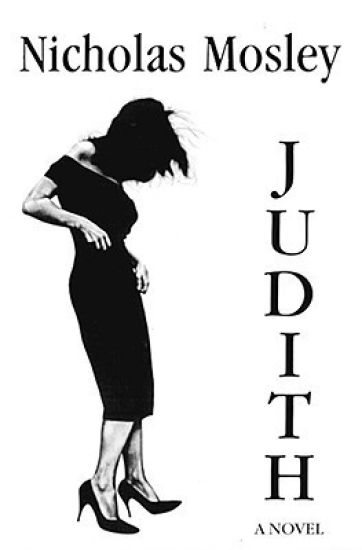
Judith

Nicholas Mosley

Dalkey Archive Press
1992
nidottu
Judith is an aspiring young actress and the mistress of a writer on a popular satirical magazine. We learn of her involvement with drugs and increasing self-delusion. After a crack-up, she seeks healing in an Indian ashram run by an eccentric and possibly mad guru. But what is at the back of appearances; how calculated is the self-destructiveness from which a new order might emerge?
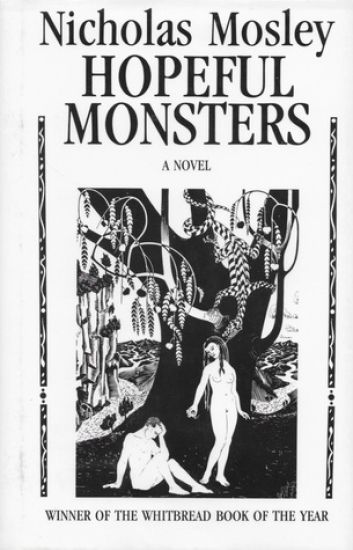
Hopeful Monsters

Hopeful Monsters

Nicholas Mosley

Dalkey Archive Press
1992
sidottu
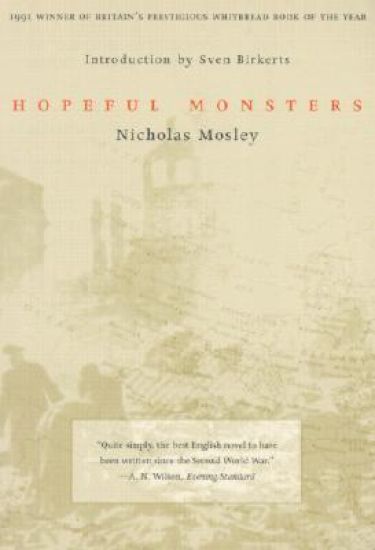
At the center of Hopeful Monsters, a pyrotechnically accomplished novel of ideas--winner of the Whitbread Award--are Max and Eleanor, who meet at an orgiastic clash of Nazi and communist youth in Weimar Germany. Their ensuing love affair takes them across landscapes that range from Stalin's Russia to Los Alamos on the eve of the atomic age and into the orbit of such extraordinary characters as Albert Einstein.
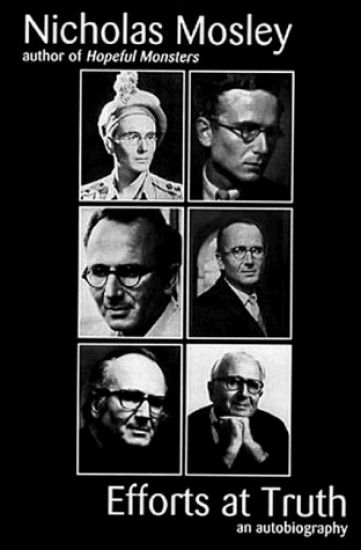
Efforts at Truth

Efforts at Truth

Nicholas Mosley

Dalkey Archive Press
1995
sidottu
Nicholas Mosley brings the unblinking probing of a scientist to bear on the workings of the writer's imagination. The result is a constantly stimulating, frequently startling, and always cheerfully unorthodox autobiography.As a novelist, biographer, editor, and screenwriter, Nicholas Mosley has always been concerned with the central paradox of writing: if by definition fiction is untrue, and biography never complete, is there a form that will enable a writer to get at the truth of a life? In Efforts at Truth Mosley scrutinizes his own life and work, but examines them as a curious observer, fascinated by the constant interaction of reality and the written word.As a life, it has been colorful, in settings ranging from the West Indies to a remote Welsh hill farm, from war action in Italy to battles with Hollywood moguls, from the Colony Room to the House of Lords. In print, the range has been as wide: editor of a controversial religious magazine, author of the acclaimed novel series Catastrophe Practice, screenwriter of his own work with Joe Losey and John Frankenheimer, biographer of his notorious father Oswald Mosley, and, in 1990, winner of the Whitbread Award for his novel Hopeful Monsters.Efforts at Truth, Mosley's distinctive autobiography, brings together the singular life and intricate mind of an important, multifaceted writer.
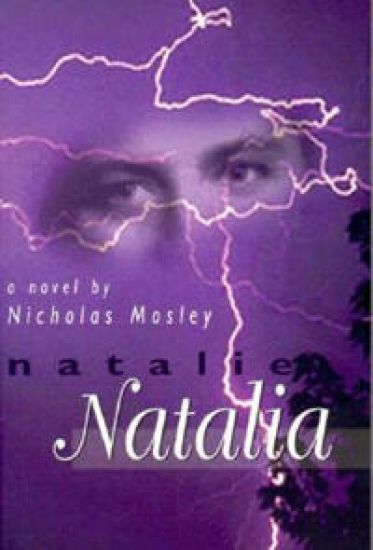
Natalie Natalia

Natalie Natalia

Nicholas Mosley

Dalkey Archive Press
1996
nidottu
"Natalie Natalia"?is Nicholas Mosley's brilliant examination of political life. It revolves around Anthony Greville, a conservative Member of Parliament who is tormented by his ambivalence toward his career, by his religious doubts, and by his adulterous affair with Natalia Jones, the enigmatic wife of a colleague.The course of their affair dramatizes love in its most creative and perilously destructive aspects, the two facets symbolized in the two names he has for his lover: "I sometimes called Natalia Natalie instead of Natalia," Greville says, "when she was the ravenous rather than the angelic angel... What Natalie said was often a code for what Natalia was meaning." Ranging in setting from England to Central Africa, the novel is a remarkable investigation of ethics, with fiction itself as an ethical activity.
Assassins

Assassins

Nicholas Mosley

Dalkey Archive Press
1997
nidottu
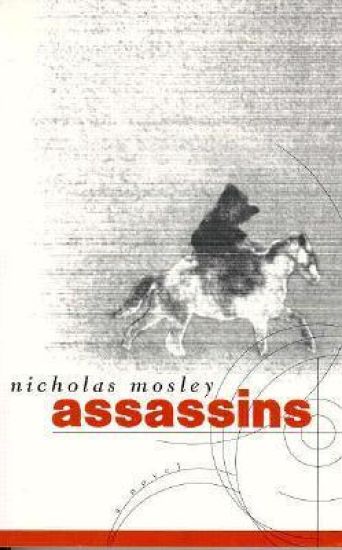
As one of the characters in Assassins says, "Tolstoy was right, you can't beat the Gods. It's the small things - the warp and woof - that make up the pattern. And how much influence do we have over the small? Now that's a theme for a modern writer." And Nicholas Mosley is this writer. Part political thriller and part love story, Assassins explores the "small things" that give shape and meaning to the "big events."
Hopeful Monsters

Hopeful Monsters

Nicholas Mosley

Dalkey Archive Press
2000
nidottu
-- A sweeping, comprehensive epic, Hopeful Monsters tells the story of the love affair between Max, an English student of physics and biology, and Eleanor, a German Jewess and political radical. Together and apart, Max and Eleanor participate in the great political and intellectual movements which shape the twentieth century, taking them from Cambridge and Berlin to the Spanish Civil War, Russia, the Sahara, and finally to Los Alamos to witness the first nuclear test.-- Hopeful Monsters received Britain's prestigious Whitbread Award in 1990.-- Praising Mosley's ability to distill complex modes of thought, the New York Times called Hopeful Monsters a virtual encyclopedia of twentieth century thought, in fictional form.-- First U.S. edition by Dalkey Archive ('90), most recent paperback by Vintage ('93).
Imago Bird

Imago Bird

Nicholas Mosley

Dalkey Archive Press
2000
nidottu
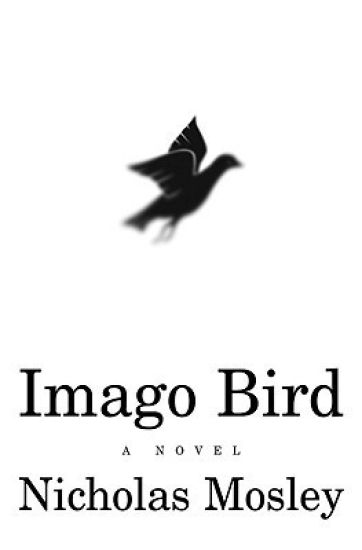
This vivid and strikingly witty novel examines the contradictions between the public face and the private experience. Nephew to the prime minister of England, eighteen-year-old Bert tries to make sense of the grown-up world around him, a colorful crowd of television personalities, politicians, young Trotskyites, pop stars, and eccentric relatives. With the help of his laconic psychoanalyst, Bert questions the relation between exterior and interior reality, while Mosley himself questions art's ability to convey these different realities. Both Bert and Mosley triumph over these challenges by the end of this engaging and innovative novel.
Serpent

Serpent

Nicholas Mosley

Dalkey Archive Press
2000
nidottu
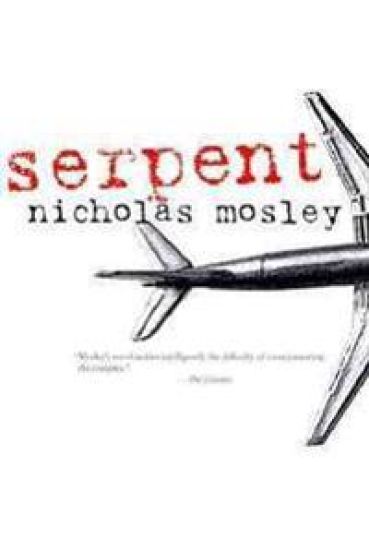
Jason is a scriptwriter working on a film about Masada--the fortress where a thousand Jews killed themselves rather than be taken prisoner by the Romans in A. D. 73. He doubts that a film both honest and popular on such a subject can be made, and, while en route to the production site (Jason, producers and stars in first class--his wife and child in tourist), a dispute about the film and a crisis aboard the plane forces Jason to look at his life, his art, and the world around him in several different ways at once.
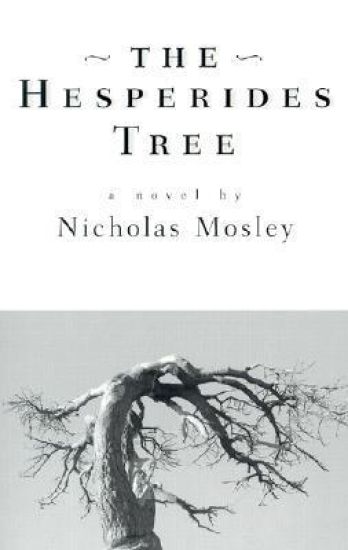
Hesperides Tree

Hesperides Tree

Nicholas Mosley

Dalkey Archive Press
2001
nidottu
Reminiscent in theme and style to his Whitbread Award-winning?"Hopeful Monsters," Nicholas Mosley's?"The Hesperides Tree"?tells of a young man frustrated by the inability of his two chosen courses of study--biology and literature--to adequately define the world. Baffled by several life-shaping coincidences that seem to be part of life itself, he embarks on a physical and intellectual journey in search of a girl he fell in love with years earlier. This journey leads him to a deserted island off the coast of Ireland and, perhaps, to the mythical Garden of the Hesperides, home of the Tree of Life.
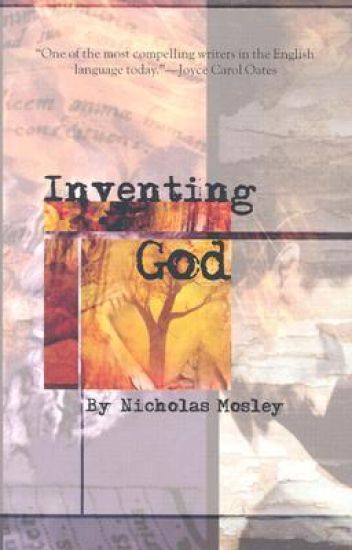
Inventing God

Inventing God

Nicholas Mosley

Dalkey Archive Press
2003
nidottu
Set amid the current tension and violence of the Middle East, Whitbread Award-winning Nicholas Mosley's new novel features over a half-dozen characters searching for a way to quell the selfdestructive impulses of society. As the novel develops, the actions and aspirations of these characters--which include a Muslim student working on the most deadly of biological weapons, a young Israeli girl trapped in a temple's ruins, and an eccentric ex-guru who has mysteriously disappeared--create a textual and philosophical pattern illustrating the role chance and coincidence play in our world. In the vein of Hopeful Monsters and The Hesperides Tree, Mosley mixes science, philosophy and contemporary politics around the question of how individual actions can influence the world.
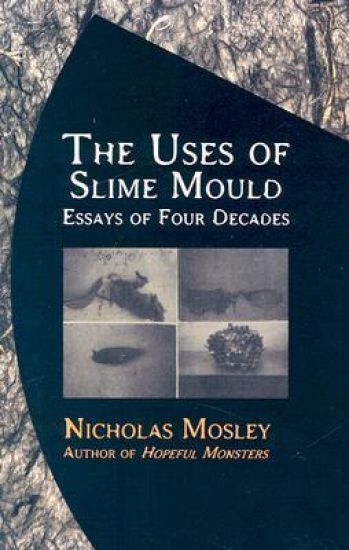
Uses of Slime Mould

Uses of Slime Mould

Nicholas Mosley

Dalkey Archive Press
2004
nidottu
Including pieces on Gregory Bateson, William Faulkner, Philip Pullman, Sir Oswald Mosley's politics, religion and stammering, this diverse collection gathers essays written by Nicholas Mosley over the past forty years. Resembling the behaviour of slime mould - a strange organism made up of separate amoebae that temporarily form a single pillar which then bursts in order to scatter its seeds across the forest floor - the ideas found in these essays converge and disperse, crossing over into other disciplines, and creating a unique way of looking at the world, one echoed in Mosley's fictional writings.
Uses of Slime Mould

Uses of Slime Mould

Nicholas Mosley

Dalkey Archive Press
2004
sidottu
Including pieces on Gregory Bateson, William Faulkner, Philip Pullman, Sir Oswald Mosley's politics, religion and stammering, this diverse collection gathers essays written by Nicholas Mosley over the past forty years. Resembling the behaviour of slime mould - a strange organism made up of separate amoebae that temporarily form a single pillar which then bursts in order to scatter its seeds across the forest floor - the ideas found in these essays converge and disperse, crossing over into other disciplines, and creating a unique way of looking at the world, one echoed in Mosley's fictional writings.
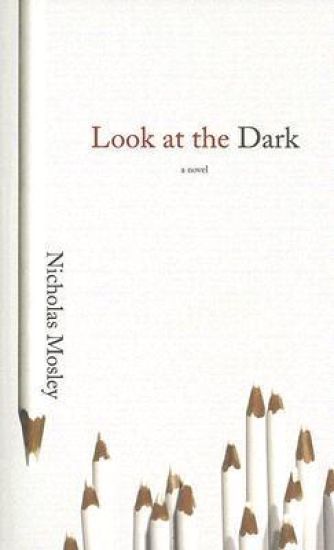
Look at the Dark

Look at the Dark

Nicholas Mosley

Dalkey Archive Press
2006
nidottu
A retired academic and writer is becoming a media celebrity of sorts, appearing on various talk shows to voice his controversial views on human nature and war. While in New York to make such an appearance, he becomes the victim of a hit-and-run--set up by the CIA? the FBI? terrorists?--and ends up confined to a hospital bed. This forced inactivity allows him to reflect on his life--the work he has done, the women he has known--as various people from his life gather around him, including both his first and second wives. Reminiscing about his past while dealing with his present, the man begins to see his provocative ideas about fidelity, sin, and grace play themselves out in a virtuosic way that could only be conceived by Nicholas Mosley.
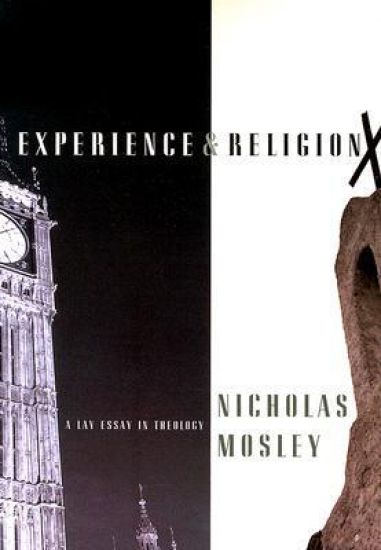
Experience & Religion

Experience & Religion

Nicholas Mosley

Dalkey Archive Press
2006
nidottu
"Religion," this book begins, "is a mistrusted word now," and Nicholas Mosley, in this engaging meditation, seeks to repair that trust. Rather than trying to convince or compel the reader to accept his beliefs, he describes how religion functions in the modern world. Elsewhere, Mosley has written, "There is a subject nowadays which is taboo in the way that sexuality was once taboo, which is to talk about life as if it had any meaning." In this book, he describes religion as the source of that meaning. Despair is the fashionable attitude, but it is one Mosley, here and in his many novels, rejects in favor of a cautious optimism. He writes not to persuade, but to explain a worldview that is refreshing for the hope and intelligence it contains.
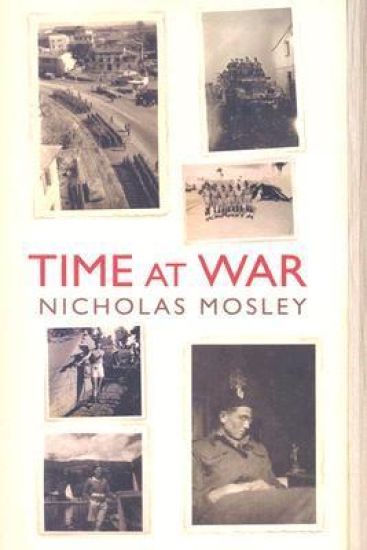
Time at War

Time at War

Nicholas Mosley

Dalkey Archive Press
2006
nidottu
Aged twenty, and with no war experience, Nicholas Mosley found himself in charge of a platoon of men positioned along the Italian front during the Second World War. With his father in prison on charges of treason, he had enlisted primarily in an effort to improve his family image. But the war left Mosley a radically changed man: he had gone in out of personal convenience, and left with a sense of greater purpose. Saved from death by one of his men, holed up in barns and trenches and tents, and marching across Europe, Mosley found in war a certainty that eluded him in peacetime. "War is both senseless and necessary, squalid and fulfilling, terrifying and sometimes jolly," he writes. "This is like life. Humans are at home in war (though they seldom admit this). They feel they know what they have to do." In an interview conducted between 1977 and 1978, Nicholas Mosley said, "When I was young William Faulkner was my great love, not just because of the density of style, but because he seemed to be dealing with the question not of what will happen next but what is happening now. The first Faulkner novel I read was The Sound and the Fury, which I got hold of when we liberated a POW camp in Italy in 1944 and I liberated the Red Cross Library. I was about twenty.... What in god's name, after all, was I doing aged twenty in Italy in a war?"
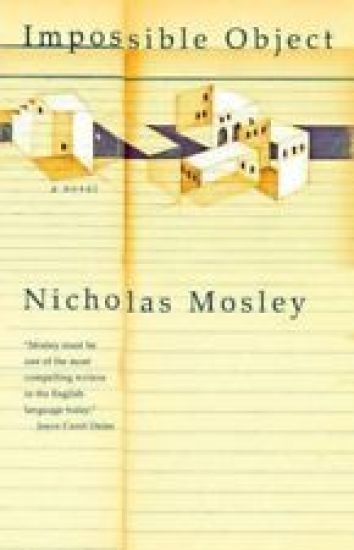
Impossible Object

Impossible Object

Nicholas Mosley

Dalkey Archive Press
1985
nidottu
"The object of life is impossible; one cuts out fabrication and creates reality. A mirror is held to the back of the head and one's hand has to move the opposite way from what was intended." In these closing lines from Impossible Object, one has embodied both Nicholas Mosley's subject of love and imagination, as well as his unmatched lyric style. In eight carefully connected stories that are joined by introspective interludes on related subjects, the author pursues the notion, through the lives of a couple seen by different narrators, that "those who like unhappy ends can have them, and those who don't will have to look for them."
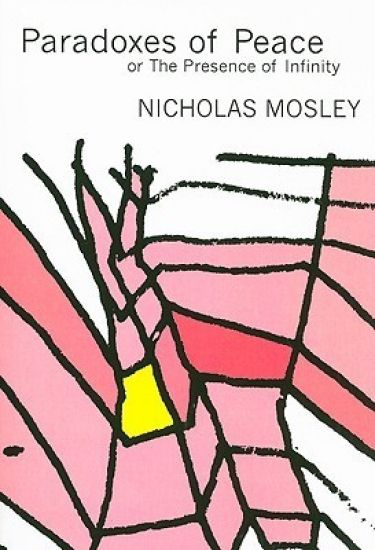
Paradoxes of Peace

Paradoxes of Peace

Nicholas Mosley

Dalkey Archive Press
2009
nidottu
Paradoxes of Peace continues the meditation of Mosley's Time at War, at the end of which he wrote that humans find themselves at home in war because they feel they know what they have to do, whereas in peace they have to discover this. But what should inform them--custom? need? duty? ambition? desire? Forces pull in different directions--fidelity versus adventurousness, probity versus fun. During the war, Mosley found himself having to combine fondness for his father, Oswald Mosley, with the need to speak out against his post-war politics. In times of peace, his love for his wife and children, too, seemed riddled with paradoxes. He sought answers in Christianity, but came to see organized religion as primarily a social institution. How does caring not become a trap?
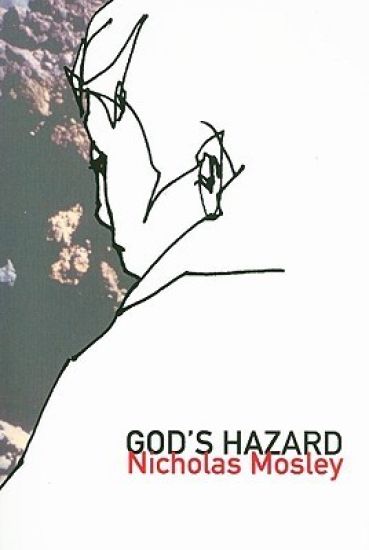
God's Hazard

God's Hazard

Nicholas Mosley

Dalkey Archive Press
2009
nidottu
Paradoxes of Peace continues the meditation of Mosley's Time at War, at the end of which he wrote that humans find themselves at home in war because they feel they know what they have to do, whereas in peace they have to discover this. But what should inform them--custom? need? duty? ambition? desire? Forces pull in different directions--fidelity versus adventurousness, probity versus fun. During the war, Mosley found himself having to combine fondness for his father, Oswald Mosley, with the need to speak out against his post-war politics. In times of peace, his love for his wife and children, too, seemed riddled with paradoxes. He sought answers in Christianity, but came to see organized religion as primarily a social institution. How does caring not become a trap?