Kirjojen hintavertailu. Mukana 11 627 630 kirjaa ja 12 kauppaa.

Kirjahaku

Etsi kirjoja tekijän nimen, kirjan nimen tai ISBN:n perusteella.

17 kirjaa tekijältä Nicholas P. Money

Rise of Yeast: How the Sugar Fungus Shaped Civilization
The great Victorian biologist Thomas Huxley once wrote, "I know of no familiar substance forming part of our every-day knowledge and experience, the examination of which, with a little care, tends to open up such very considerable issues as does yeast." Huxley was right. Beneath the very foundations of human civilization lies yeast--also known as the sugar fungus. Yeast is responsible for fermenting our alcohol and providing us with bread--the very staples of life. Moreover, it has proven instrumental in helping cell biologists and geneticists understand how living things work, manufacturing life-saving drugs, and producing biofuels that could help save the planet from global warming. In The Rise of Yeast, Nicholas P. Money--author of Mushroom and The Amoeba in the Room--argues that we cannot ascribe too much importance to yeast, and that its discovery and controlled use profoundly altered human history. Humans knew what yeast did long before they knew what it was. It was not until Louis Pasteur's experiments in the 1860s that scientists even acknowledged its classification as a fungus. A compelling blend of science, history, and sociology The Rise of Yeast explores the rich, strange, and utterly symbiotic relationship between people and yeast, a stunning and immensely readable account that takes us back to the roots of human history.
Mr. Bloomfield's Orchard

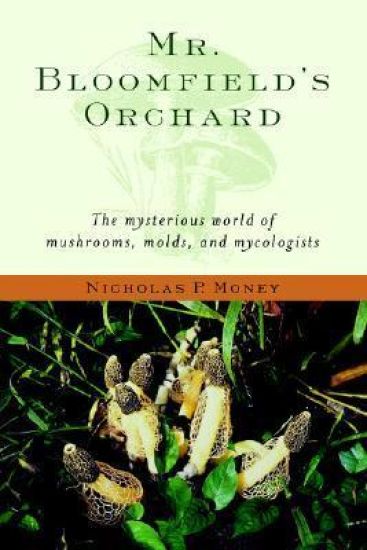
Mr. Bloomfield's Orchard

Nicholas P. Money

Oxford University Press Inc
2004
nidottu
Stinkhorns, puffballs, the "corpse finder," deadly Galerina, Satan's bolete, birch conks, black mold, the old man of the woods--the world of fungi is infinitely varied and not a little weird. Now, in Mr. Bloomfield's Orchard, Nicholas Money introduces readers to a dazzling array of fungi, from brewer's yeast and Penicillium to the highly lethal death cap. We learn of Madurella, which can erode bones until they look moth-eaten; Cordyceps, which wracks insects with convulsions, kills them, then sends a stalk out of the insect's head to release more infectious spores; and Claviceps, the poisonous ergot fungus, which causes hallucinations. Money also showcases the lives of famed mycologists--including Reginald Buller who wore horse blinders as he walked to work, the better to study luminescent fungi in his dark lab, and Charles Tulasne, the Audubon of fungi, whose illustrations of specimens border on art. And he recounts his own childhood introduction to fungi in Mr. Bloomfield's orchard, where trees and fruit were devoured by a rogue's gallery of bitter rot, canker, rust, powdery mildew, rubbery wood, and scab. Replete with historical photographs and simple yet effective illustrations, told with a refreshing sense of humor,Mr. Bloomfield's Orchard will fascinate anyone interested in the natural world.
Carpet Monsters and Killer Spores

Carpet Monsters and Killer Spores

Nicholas P. Money

Oxford University Press Inc
2004
sidottu
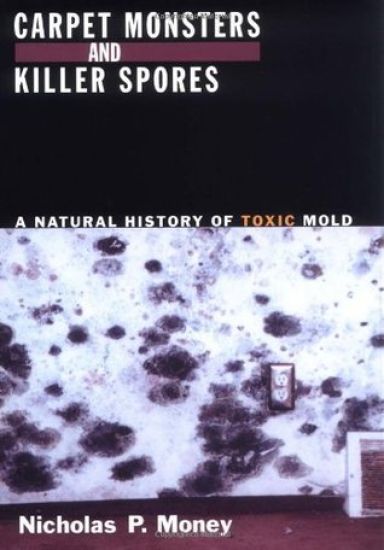
Molds are everywhere: we inhale their microscopic spores from birth to death. But when an investigation in Ohio revealed that babies suffering from a serious lung illness had been exposed to a toxic black mold in their homes, millions of Americans became nervous about patches of mold in their own basements and bathrooms. Before long, lawsuits were filed by the residents of mold-contaminated homes in every state. By failing to address water damage, building contractors, plumbers, and insurance agents were held liable for exposing families to an unprecedented microbiological hazard. The mold crisis soon developed into a fully-fledged media circus. In Carpet Monsters and Killer Spores, Nicholas Money explores the science behind the headlines and courtroom dramas, and profiles the toxin-producing mold that is a common inhabitant of water-damaged buildings. Nicholas Money tells the most important mycological story since potato blight, with his inimitable style of scientific clarity and dark humor.
Triumph of the Fungi

Triumph of the Fungi

Nicholas P. Money

Oxford University Press Inc
2006
sidottu
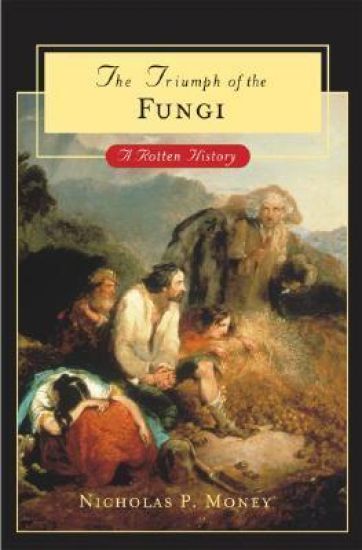
This book is concerned with the most devastating fungal diseases in history. These are the plagues of trees and crop plants, caused by invisible spores that have reshaped entire landscapes and decimated human populations. The Triumph of the Fungi focuses on the fascinating biology of the well- and lesser-known diseases, and also tells the stories of the scientists involved in their study, and of the people directly impacted by the loss of forest trees like the chestnut, and cash crops such as coffee and cacao. In a surprisingly brief time, human knowledge of the fungi that infect plants has evolved from Biblical superstition, to the recognition of the true nature of plant disease, and, more recently, to a sense of awe for the sophistication of these microbes. The crucial issue of human culpability in these fungal epidemics is addressed in the books closing chapter.
The Rise of Yeast

The Rise of Yeast

Nicholas P. Money

Oxford University Press
2018
sidottu
From breakfast toast to evening wine, yeast is the microscopic thing that we cannot live without. We knew what yeast did as an invisible brewer and baker long before we had a clue about the existence of microorganisms. Ten thousand years ago, our ancestors abandoned bush meat and wild fruit in favor of farming animals and cultivating grain. Leaving the forests and grasslands, our desire for beer and wine produced by the fungus was a major stimulus for agricultural settlement. It takes a village to run a brewery or tend a vineyard. We domesticated wild yeast and yeast domesticated us. With the inevitable escape of the fungus from beer vats into bread dough, our marriage with yeast was secured by an appetite for fresh loaves of leavened bread. Over the millennia, we have adapted the technologies of brewing, winemaking, and baking and have come to rely on yeast more and more. Yeast produces corn ethanol and other biofuels and has become the genetically-modified darling of the pharmaceutical business as a source of human insulin and a range of life-saving medicines. These practical uses of yeast have been made possible by advances in our understanding of its biology, and the power of genetic engineering has been used to modify the fungus to do just about anything we wish. We know more about yeast than any other organism built from complex cells like our own. To understand yeast is to understand life. In this book Nicholas P. Money offers a celebration of our favorite microorganism.
The Amoeba in the Room

The Amoeba in the Room

Nicholas P. Money

Oxford University Press
2014
sidottu
Animals and plants rule the world - or do they? A cup of seawater contains 100 million cells which are preyed upon by billions of viruses; a pinch of soil swarms with cryptic microbes whose activities are a mystery; 50 million tons of fungal spores are released into the atmosphere every year and affect the weather; and, human beings are mobile ecosystems that farm, and are farmed by, vast populations of bacteria and viruses involved with almost every aspect of our wellbeing. These are the vast, unnoticed, unmentioned 'elephants in the room' of planet earth. The more we learn about microbial biodiversity, the less important do animals and plants become in our understanding life on earth. The flowering of microbial science is revolutionizing biology and medicine in ways unimagined even a decade or two ago, and is inspiring a new view of what it means to be human. Nicholas P. money explores the extraordinary breadth of the microbial world and the vast swathes of biological diversity that are now becoming recognized using molecular methods. Money argues for nothing less than a revolution in our perception of the living world: the big lumbering forms we see are just froth on a vast ocean of single-celled protists, bacteria, and viruses that constitute most of life on earth.
Microbiology

Microbiology

Nicholas P. Money

Oxford University Press
2014
nidottu
In recent decades we have come to realize that the microbial world is hugely diverse, and can be found in the most extreme environments. Fungi, single-celled protists, bacteria, archaea, and the vast array of viruses and sub-viral particles far outnumber plants and animals. Microbes, we now know, play a critical role in ecosystems, in the chemistry of atmosphere and oceans, and within our bodies. The field of microbiology, armed with new techniques from molecular biology, is now one of the most vibrant in the life sciences. In this Very Short Introduction Nicholas P. Money explores not only the traditional methods of microscopy and laboratory culture but also the modern techniques of genetic detection and DNA sequencing, genomic analysis, and genetic manipulation. In turn he demonstrates how advances in microbiology have had a tremendous impact on the areas of medicine, agriculture, and biotechnology. ABOUT THE SERIES: The Very Short Introductions series from Oxford University Press contains hundreds of titles in almost every subject area. These pocket-sized books are the perfect way to get ahead in a new subject quickly. Our expert authors combine facts, analysis, perspective, new ideas, and enthusiasm to make interesting and challenging topics highly readable.
Fungi

Fungi

Nicholas P. Money

Oxford University Press
2016
nidottu
The variety of the mycological world is far greater than most people imagine. Tens of thousands of fungal species have been described and many more are known only from the abundance of their genes in soil and water. Fungi are hugely important as agents of wood decay in forests, and, as parasites, they have caused the deaths of millions of people by ravaging crops and reshaping natural ecosystems. Fungi perform a variety of essential functions in ecosystems, and are important to both agriculture and biotechnology. Their importance is now becoming better appreciated among scientists, though there is much still to be understood concerning their taxonomy and evolution. This Very Short Introduction highlights the variety and extraordinary natures of fungi, revealing the remarkable facts of fungal biology and the global significance of these enchanting organisms. ABOUT THE SERIES: The Very Short Introductions series from Oxford University Press contains hundreds of titles in almost every subject area. These pocket-sized books are the perfect way to get ahead in a new subject quickly. Our expert authors combine facts, analysis, perspective, new ideas, and enthusiasm to make interesting and challenging topics highly readable.
Mushroom

Mushroom

Nicholas P. Money

Oxford University Press Inc
2012
sidottu
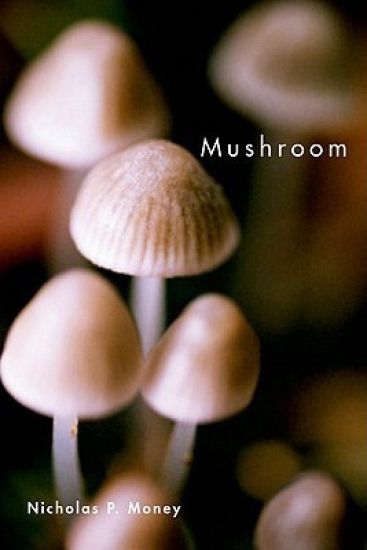
The overnight appearance of mushrooms in a meadow or on a suburban lawn is a marvelous sight. It is one of many awe-inspiring, magical processes that have evolved among the fungi, yet this group remains the least studied and most poorly understood kingdom of organisms. In Mushroom, Nicholas Money offers a vibrant introduction to the world of mushrooms, investigating the science behind these organisms as well as their enduring cultural and imaginative appeal. Beginning with the basics of mushroom biology, Money leads us through a history of mushroom research, painting portraits of the colorful characters involved in their study--among them, Beatrix Potter, the celebrated author and creator of Peter Rabbit, and Captain Charles McIlvaine, a Civil War veteran who engaged in a dangerous quest to determine the edibility of every mushroom in North America. Money also discusses the uses of mushrooms today, exploring their importance as food and medicine, their use as recreational drugs, and as the cause of horrific poisonings. A cultural, natural, and scientific history in one, Mushroom is a must-read for mycophiles, mushroom gatherers, and nature lovers alike.
Molds, Mushrooms, and Medicines

Molds, Mushrooms, and Medicines

Nicholas P. Money

PRINCETON UNIVERSITY PRESS
2024
sidottu
The hidden role of fungi inside and all around usFrom beneficial yeasts that aid digestion to toxic molds that cause disease, we are constantly navigating a world filled with fungi. Molds, Mushrooms, and Medicines explores the amazing ways fungi interact with our bodies, showing how our health and well-being depend on an immense ecosystem of yeasts and molds inside and all around us.Nicholas Money takes readers on a guided tour of a marvelous unseen realm, describing how our immune systems are engaged in continuous conversation with the teeming mycobiome inside the body, and how we can fall prey to serious and even life-threatening infections when this peaceful coexistence is disturbed. He also sheds light on our complicated relationship with fungi outside the body, from wild mushrooms and cultivated molds that have been staples of the human diet for millennia to the controversial experimentation with magic mushrooms in the treatment of depression.Drawing on the latest advances in mycology, Molds, Mushrooms, and Medicines reveals what scientists are learning about the importance of fungi to our lives, from their vital role in supporting the ecosystems on which we depend to their emerging uses in lifesaving medicine.
Fungi and Human Life

Fungi and Human Life

Nicholas P. Money

PRINCETON UNIVERSITY PRESS
2026
pokkari
The incredible, hidden role of fungi in our lives From beneficial yeasts that aid digestion to toxic molds that cause disease, we are constantly navigating a world filled with fungi. Fungi and Human Life explores the amazing ways fungi interact with our bodies, showing how our health and well-being depend on an immense ecosystem of yeasts and molds inside and all around us. Nicholas Money takes readers on a guided tour of a marvelous unseen realm, describing how our immune systems are engaged in continuous conversation with the teeming mycobiome inside the body, and how we can fall prey to serious and even life-threatening infections when this peaceful coexistence is disturbed. He also sheds light on our complicated relationship with fungi outside the body, from wild mushrooms and cultivated molds that have been staples of the human diet for millennia to the controversial experimentation with magic mushrooms in the treatment of depression. Drawing on the latest advances in mycology, Fungi and Human Life reveals what scientists are learning about the importance of fungi to our lives, from their vital role in supporting the ecosystems on which we depend to their emerging uses in lifesaving medicine.
A Is for Amoeba

A Is for Amoeba

Nicholas P. Money

PRINCETON UNIVERSITY PRESS
2026
sidottu
A lively and engaging biography of amoebas that reveals why these tiny amorphous splotches with a spot in the middle have more to teach us than we ever imagined Many of us are introduced to the amoeba in science class at school but know very little about the amazing life of this versatile, shape-shifting cell. A Is for Amoeba is packed with surprising stories that give readers a richer appreciation of these astonishing microbes, revealing what amoebas have to tell us about the natural world and ourselves. Along the way, this entertaining and informative book shows how amoebas influenced figures like Friedrich Nietzsche, who saw in them an expression of the will to power, and Sigmund Freud, who likened the movements of amoebas to the human ego. Nicholas Money describes how amoebas are athletic predators with the rudiments of consciousness and how their sophisticated responses to injury help to explain the origins of pain and suffering in animals. Amoebas have the biggest genomes of any organisms, embodying monumental chronicles of their evolution and survival, and by splitting in half and making copies of themselves, they have mastered a form of genderless immortality. Money explains how white blood cells and metastatic cancer cells in the human body behave like amoebas, curing and causing a range of illnesses, and discusses how research using artificial amoebas has profound implications for AI, robotics, and bioengineering. He also looks at the outsized role of amoebas in pop culture, from movies like The Blob to the cartoons of Gary Larson. A delightful portrait of an iconic microbe, A Is for Amoeba reveals why, from its graceful movements to its astounding problem-solving skills, the amoeba is the perfect guide to the business of being alive on Earth.
Mushrooms

Mushrooms

Nicholas P. Money

Reaktion Books
2017
sidottu
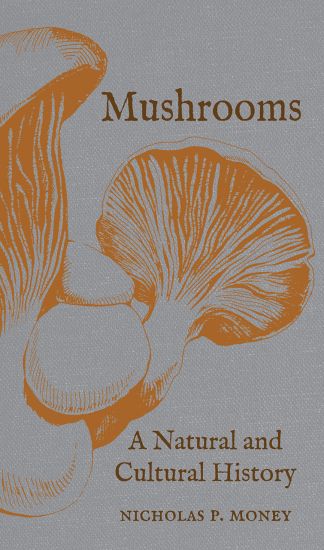
Mushrooms are loved, despised, feared and misunderstood. They have been a familiar part of nature throughout human history and occupy a special place in our consciousness. Nicholas P. Money introduces the mythology and science of the spectacular array of fungi that produce mushrooms, the history of our interactions with these curious and beautiful organisms, and the ways that humans use mushrooms as food, medicine and recreational drugs. Mushrooms are not self-contained organisms like worms or beetles. They are fruit bodies, or reproductive organs, produced by fungi whose feeding colonies, or mycelia, are hidden in soil or rotting wood. These colonies support life on land by decomposing plant and animal debris, fertilizing soils and sustaining plant growth through partnerships called mycorrhizas. Some of the fungi that produce mushrooms cause diseases of trees and shrubs, and the airborne spores of others are a major cause of asthma and hay fever. Mushrooms release so many spores into the atmosphere that they may affect local weather conditions and promote rainfall. Poisonous mushrooms were described by classical writers and edible species were important in Roman cuisine. Mushrooms became the objects of scientific study in the seventeenth century. Pioneers of mushroom science have included paragons of eccentricity, and their remarkable stories are celebrated in this book.
The Selfish Ape

The Selfish Ape

Nicholas P. Money

Reaktion Books
2019
sidottu
Weaving together stories of science and sociology, The Selfish Ape offers a refreshing response to common fantasies about the ascent of humanity. Rather than imagining modern humans as a species with godlike powers, or Homo deus, Nicholas P. Money recasts us as Homo narcissus, paragons of self-absorption. This exhilarating story takes in an immense sweep of modern biology, leading readers from earth's unexceptional location in the cosmos, to the story of our microbial origins, and the workings of the human body. It explores human genetics, reproduction, brain function and ageing, creating an enlightened view of humans as a brilliantly inventive, yet self-destructive animal. This is a book about human biology, the intertwined characteristics of human greatness and failure, and the way that we have plundered the biosphere. Written in a highly accessible style, it is a perfect read for those interested in science, human history, sociology and the environment.
Nature Fast and Nature Slow

Nature Fast and Nature Slow

Nicholas P. Money

Reaktion Books
2021
sidottu
This book is a vision of biology set within the entire timescale of the universe. It is about the timing of life, from microsecond movements to evolutionary changes over millions of years. Human consciousness is riveted to seconds, but a split-second time delay in perception means that we are unaware of anything until it has already happened. We live in the very recent past. Over longer timescales, this book examines the lifespans of the oldest organisms, prospects for human life extension, the evolution of whales and turtles, and the explosive beginning of life 4 billion years ago. With its poetry, social commentary and humour, this book will appeal to everyone interested in the natural world.
Mushrooms

Mushrooms

Nicholas P. Money

REAKTION BOOKS
2022
nidottu
Mushrooms are loved, despised, feared and misunderstood. They have been a familiar part of nature throughout human history and occupy a special place in our consciousness. Now in paperback, Mushrooms introduces the mythology and science of the spectacular array of fungi that produce mushrooms, the history of our interactions with these curious and beautiful organisms, and the ways that humans use mushrooms as food, medicine and recreational drugs.Mushrooms release so many spores into the atmosphere that they may affect local weather conditions and promote rainfall. Poisonous mushrooms were described by classical writers and edible species were important in Roman cuisine. Mushrooms became the objects of scientific study in the seventeenth century. Pioneers of mushroom science have included paragons of eccentricity, and their remarkable stories are celebrated in this book.
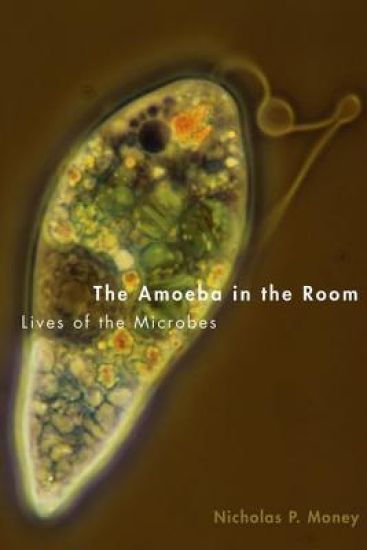
The Amoeba in the Room: Lives of the Microbes

The Amoeba in the Room: Lives of the Microbes

Nicholas P. Money

Oxford University Press
2014
sidottu
A cup of seawater contains 100 million cells, which are preyed upon by billions of viruses. Fifty million tons of fungal spores are released into the atmosphere every year. And the human gut is home to somewhere between 500 and 1,000 species of bacteria. The more we learn about microbial biodiversity, the clearer it becomes that the vast majority of life has long gone unseen, and unobserved. The flowering of microbial science is revolutionizing biology and medicine in ways unimagined only a few years ago, and is inspiring a new view of what it means to be alive. In The Amoeba in the Room, Nicholas Money explores the extraordinary breadth of the microbial world and the vast swathes of biological diversity that can be detected only using molecular methods. Although biologists have achieved a remarkable level of understanding about the way multicellular organisms operate, Money shows that most people continue to ignore the fact that most of life isn't classified as either plant or animal. Significant discoveries about the composition of the biosphere are making it clear that the sciences have failed to comprehend the full spectrum of life on earth, which is far more diverse than previously imagined. Money's engaging work considers this diversity in all its forms, exploring environments from the backyard pond to the ocean floor to the "mobile ecosystem" of our own bodies. A revitalized vision of life emerges from Money's lively narrative of the lowly, one in which we are challenged to reconsider our existence in proper relationship to the single-celled protists, bacteria, and viruses that constitute most of life on earth. Proposing a radical reformulation of biology education and research in the life sciences, The Amoeba in the Room is a compelling romp through the least visible and yet most prodigiously magnificent aspects of life on earth.