Kirjojen hintavertailu. Mukana 11 244 527 kirjaa ja 12 kauppaa.

Kirjahaku

Etsi kirjoja tekijän nimen, kirjan nimen tai ISBN:n perusteella.

8 kirjaa tekijältä Nicholas Rombes

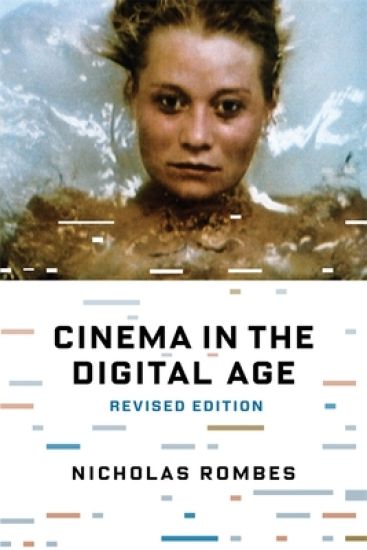
Cinema in the Digital Age

Cinema in the Digital Age

Nicholas Rombes

Columbia University Press
2017
sidottu
Have digital technologies transformed cinema into a new art, or do they simply replicate and mimic analogue, film-based cinema? Newly revised and expanded to take the latest developments into account, Cinema in the Digital Age examines the fate of cinema in the wake of the digital revolution. Nicholas Rombes considers Festen (1998), The Blair Witch Project (1999), Timecode (2000), Russian Ark (2002), and The Ring (2002), among others. Haunted by their analogue pasts, these films are interested not in digital purity but rather in imperfection and mistakes-blurry or pixilated images, shaky camera work, and other elements that remind viewers of the human behind the camera. With a new introduction and new material, this updated edition takes a fresh look at the historical and contemporary state of digital cinema. It pays special attention to the ways in which nostalgia for the look and feel of analogue disrupts the aesthetics of the digital image, as well as how recent films such as The Social Network (2010) and The Girl with the Dragon Tattoo (2011)-both shot digitally-have disguised and erased their digital foundations. The book also explores new possibilities for writing about and theorizing film, such as randomization.
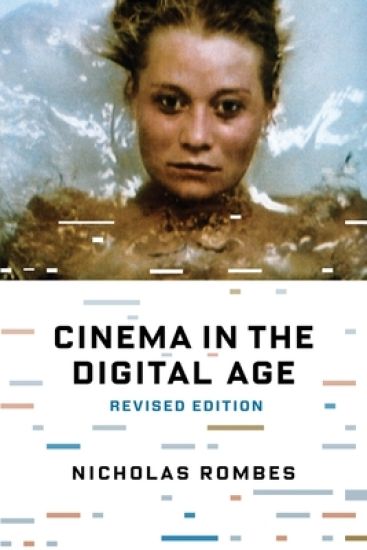
Cinema in the Digital Age

Cinema in the Digital Age

Nicholas Rombes

Columbia University Press
2017
pokkari
Have digital technologies transformed cinema into a new art, or do they simply replicate and mimic analogue, film-based cinema? Newly revised and expanded to take the latest developments into account, Cinema in the Digital Age examines the fate of cinema in the wake of the digital revolution. Nicholas Rombes considers Festen (1998), The Blair Witch Project (1999), Timecode (2000), Russian Ark (2002), and The Ring (2002), among others. Haunted by their analogue pasts, these films are interested not in digital purity but rather in imperfection and mistakes-blurry or pixilated images, shaky camera work, and other elements that remind viewers of the human behind the camera. With a new introduction and new material, this updated edition takes a fresh look at the historical and contemporary state of digital cinema. It pays special attention to the ways in which nostalgia for the look and feel of analogue disrupts the aesthetics of the digital image, as well as how recent films such as The Social Network (2010) and The Girl with the Dragon Tattoo (2011)-both shot digitally-have disguised and erased their digital foundations. The book also explores new possibilities for writing about and theorizing film, such as randomization.
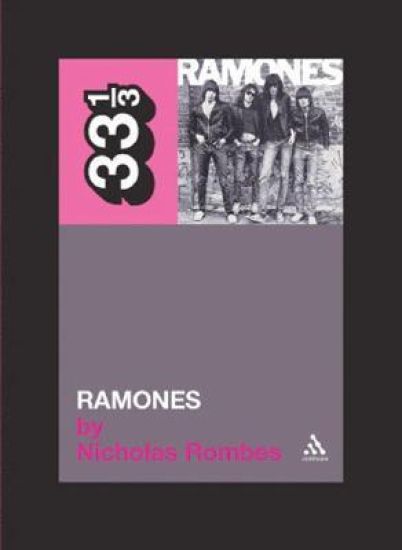
The Ramones' Ramones

The Ramones' Ramones

Nicholas Rombes

Continuum International Publishing Group Ltd.
2005
nidottu
What could be more punk rock than a band that never changed, a band that for decades punched out three-minute powerhouses in the style that made them famous? The Ramones' repetition and attitude inspired a genre, and Ramones set its tone. Nicholas Rombes examines punk history, with the recording of Ramones at its core, in this inspiring and thoroughly researched justification of his obsession with the album.
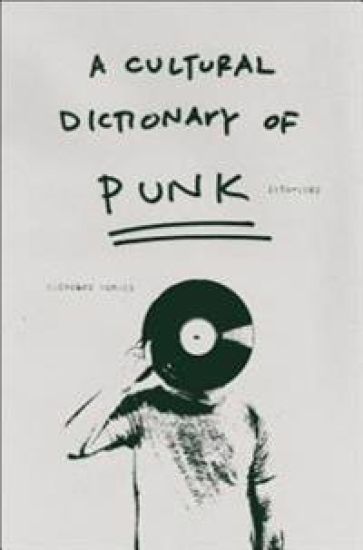
A Cultural Dictionary of Punk

A Cultural Dictionary of Punk

Nicholas Rombes

Continuum International Publishing Group Ltd.
2009
nidottu
This is a fascinating guide to a critical time in music and cultural history. "A Cultural Dictionary of Punk" is a bold book that examines punk as a movement that is best understood by placing it in its cultural field. It contains myriad descriptions of the sounds of the time, but also places those sounds in the context of history. Drawing on hundreds of fanzines, magazines, and newspapers, the book is - in the spirit of punk - an obsessive, exhaustively researched and sometimes deeply personal portrait of the many ways in which punk was an expression of defiance. The format consists of distinct entries on everything from Lester Bangs to The Slits, from Jimmy Carter to Minimalism, from 'Dot Dash' to Bad Brains. Both highly informative and thrillingly idiosyncratic, the book takes a fresh look at how the malaise of the 1970s offered fertile ground for punk - as well as the new wave, post-punk, and hardcore - to emerge as a rejection of the easy platitudes of the dying counter-culture. The organization is accessible and entertaining. Rombes upends notions that the story of punk can be told in a chronological, linear fashion. Meant to be read straight through or opened up and experienced at random, "A Cultural Dictionary of Punk" covers not only many of the well-known, now-legendary punk bands, but the obscure, forgotten ones as well.
Gerry

Gerry

Nicholas Rombes

BLOOMSBURY PUBLISHING PLC
2025
nidottu
A minute-by-minute analysis of Gus Van Sant film, Gerry (2002). Blending film criticism with creative nonfiction, each book in the Timecodes series focuses on one film, exploring it minute by minute beginning with minute one, and ending with the final minute before the closing credits.In the canon of director Gus Van Sant’s films, Gerry (2002) stands out as a singular work, a boldly experimental film that nonetheless is accessible, darkly humorous, and profound. Gerry: Minute by Minute is a non-traditional critical study of this film, a bold, impressionistic series of vignettes that circle around questions which are highly specific to Gerry itself but which are also universal: what is it about certain works of art—films, books, paintings, music—that attach themselves to us so that we carry them with us on our journey through life? What does it mean to walk with these works inside us, as if they are a part of us? The book’s structure unfolds chronologically along with the film, with one moment from each of the film’s 100 minutes serving as the basis for the chapters. Each of the 100 vignette chapters takes on topics ranging from the particulars of the film itself, including: the inventive use of camera movement and sound; the productive nature of collaboration; the driving themes and philosophies that inform the film; the blistering heat, in Death Valley, of its production; the place of Gerry in American cinema and its European influences, especially Béla Tarr; the impact of 9-11 on the cultural landscape of 2001-02, when Gerry was filmed and released; and what it means to “walk” with a film or a book, carrying it our heads as it informs who we are, often in subtle ways invisible to those around us.
Gerry

Gerry

Nicholas Rombes

BLOOMSBURY PUBLISHING PLC
2025
sidottu
A minute-by-minute analysis of Gus Van Sant film, Gerry (2002). Blending film criticism with creative nonfiction, each book in the Timecodes series focuses on one film, exploring it minute by minute beginning with minute one, and ending with the final minute before the closing credits.In the canon of director Gus Van Sant’s films, Gerry (2002) stands out as a singular work, a boldly experimental film that nonetheless is accessible, darkly humorous, and profound. Gerry: Minute by Minute is a non-traditional critical study of this film, a bold, impressionistic series of vignettes that circle around questions which are highly specific to Gerry itself but which are also universal: what is it about certain works of art—films, books, paintings, music—that attach themselves to us so that we carry them with us on our journey through life? What does it mean to walk with these works inside us, as if they are a part of us? The book’s structure unfolds chronologically along with the film, with one moment from each of the film’s 100 minutes serving as the basis for the chapters. Each of the 100 vignette chapters takes on topics ranging from the particulars of the film itself, including: the inventive use of camera movement and sound; the productive nature of collaboration; the driving themes and philosophies that inform the film; the blistering heat, in Death Valley, of its production; the place of Gerry in American cinema and its European influences, especially Béla Tarr; the impact of 9-11 on the cultural landscape of 2001-02, when Gerry was filmed and released; and what it means to “walk” with a film or a book, carrying it our heads as it informs who we are, often in subtle ways invisible to those around us.
10/40/70 – Constraint as Liberation in the Era of Digital Film Theory
In an era of rapid transformation from analog to digital, how can we write about cinema in ways that are as fresh, surprising, and challenging as the best films are? In 10/40/70 Nicholas Rombes proposes one bold possibility: pause a film at the 10, 40, and 70-minute mark and write about the frames at hand, no matter what they are. This method of constraint-by eliminating choice and foreclosing on authorial intention-allows the film itself to dictate the terms of its analysis freed from the tyranny of predetermined interpretation. Inspired by Roland Barthes's notion of the "third meaning" and its focus on the film frame as an image that is neither a photograph nor a moving image, Rombes assumes the role of image detective, searching the frames for clues not only about the films themselves-drawn from a wide range of genres and time periods-but the very conditions of their existence in the digital age.
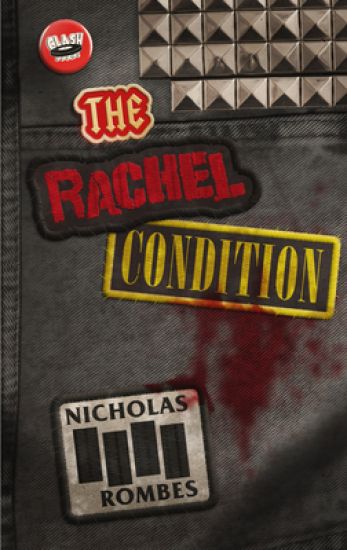
The Rachel Condition

The Rachel Condition

Nicholas Rombes

Clash Books
2024
pokkari
The Rachel Condition is at once a political thriller, a family saga, and a mind-bending love story that plays out through the mysterious byways of Detroit.Antony has ostensibly traveled to Detroit in search of the last copy of a dangerous political novel, but his true purpose is to infiltrate a tight circle of political dissidents. Rachel appears to be working for the Detroit-based insurgency, but her loyalties are complicated. They meet at a dive bar with a dangerous Indiana Jones and the Temple of Doom pinball machine and a malevolent bartender named Paul. There’s also Patti, of the proto-punk band Psycho Femmes; Julia, whose uncle founded the Detroit chapter of the Black Panthers; The Commander, also known as Charlotte; The Colonel, who wears many uniforms so to speak; and Yama, a doom metal band that literally plays eternal, one-note songs. Nothing is as it seems, no one can be trusted, and, as Rachel reminds Antony, everything is different in retrospect. History, as Rachel knows, is written by the victors, and this goes for personal history, too. The Rachel Condition tells a story of tenderness and the power of art to create and destroy in the midst of violence and chaos.