Kirjojen hintavertailu. Mukana 12 016 292 kirjaa ja 12 kauppaa.

Kirjahaku

Etsi kirjoja tekijän nimen, kirjan nimen tai ISBN:n perusteella.

25 kirjaa tekijältä Nicholas Wolterstorff

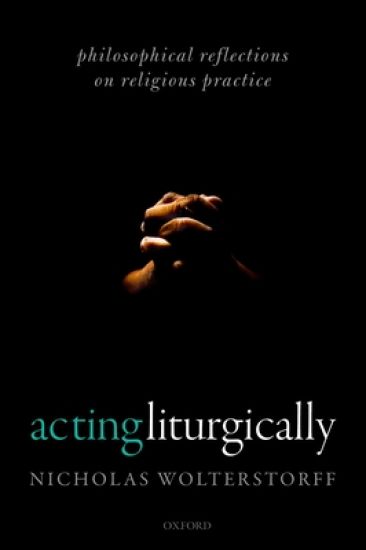
Acting Liturgically

Acting Liturgically

Nicholas Wolterstorff

Oxford University Press
2021
nidottu
Participation in religious liturgies and rituals is a pervasive and remarkably complex form of human activity. This book opens with a discussion of the nature of liturgical activity and then explores various dimensions of such activity. Over the past fifty years there has been a remarkable surge of interest, within the analytic tradition of philosophy, in philosophy of religion. Most of what has been written by participants in this movement deals with one or another aspect of religious belief. Yet for most adherents of most religions, participation in the liturgies and rituals of their religion is at least as important as what they believe. One of the aims of this book is to call the attention of philosophers of religion to the importance of religious practice and to demonstrate how rich a topic this is for philosophical reflection. Another aim is to show liturgical scholars who are not philosophers that a philosophical approach to liturgy casts an illuminating light on the topic that supplements their own approach. Insofar as philosophers have written about liturgy, they have focused most of their attention on its formative and expressive functions. This book focuses instead on understanding what liturgical agents actually do. It is what they do that functions formatively or expressively. What they do is basic.
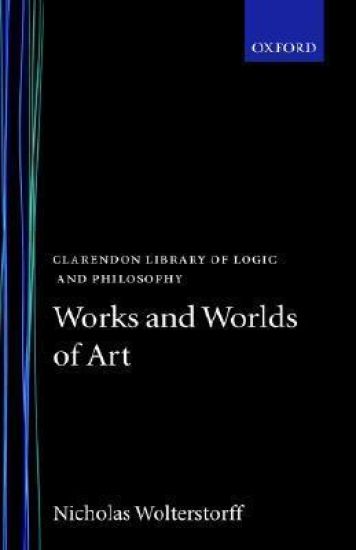
Art Rethought

Art Rethought

Nicholas Wolterstorff

Oxford University Press
2015
sidottu
Human beings engage works of the arts in many different ways: they sing songs while working, they kiss icons, they create and dedicate memorials. Yet almost all philosophers of art of the modern period have ignored this variety and focused entirely on just one mode of engagement, namely, disinterested attention. In the first part of the book Nicholas Wolterstorff asks why philosophers have concentrated on just this one mode of engagement. The answer he proposes is that almost all philosophers have accepted what the author calls the grand narrative concerning art in the modern world. It is generally agreed that in the early modern period, members of the middle class in Western Europe increasingly engaged works of the arts as objects of disinterested attention. The grand narrative claims that this change represented the arts coming into their own, and that works of art, so engaged, are socially other and transcendent. Wolterstorff argues that the grand narrative has to be rejected as not fitting the facts. Wolterstorff then offers an alternative framework for thinking about the arts. Central to the alternative framework that he proposes are the idea of the arts as social practices and the idea of works of the arts as having different meaning in different practices. He goes on to use this framework to analyse in some detail five distinct social practices of art and the meaning that works have within those practices: the practice of memorial art, of art for veneration, of social protest art, of works songs, and of recent art-reflexive art.
Understanding Liberal Democracy

Understanding Liberal Democracy

Nicholas Wolterstorff

Oxford University Press
2016
nidottu
Understanding Liberal Democracy presents notable work by Nicholas Wolterstorff at the intersection between political philosophy and religion. Alongside his influential earlier essays, it includes nine new essays in which Wolterstorff develops original lines of argument and stakes out novel positions regarding the nature of liberal democracy, human rights, and political authority. Taken together, these positions are an attractive alternative to the so-called public reason liberalism defended by thinkers such as John Rawls. The volume will be of interest to philosophers, political theorists, and theologians, engaging a wide audience of those interested in how best to understand the nature of liberal democracy and its relation to religion.
Art Rethought

Art Rethought

Nicholas Wolterstorff

Oxford University Press
2017
nidottu
Human beings engage works of the arts in many different ways: they sing songs while working, they kiss icons, they create and dedicate memorials. Yet almost all philosophers of art of the modern period have ignored this variety and focused entirely on just one mode of engagement, namely, disinterested attention. In the first part of the book Nicholas Wolterstorff asks why philosophers have concentrated on just this one mode of engagement. The answer he proposes is that almost all philosophers have accepted what the author calls the grand narrative concerning art in the modern world. It is generally agreed that in the early modern period, members of the middle class in Western Europe increasingly engaged works of the arts as objects of disinterested attention. The grand narrative claims that this change represented the arts coming into their own, and that works of art, so engaged, are socially other and transcendent. Wolterstorff argues that the grand narrative has to be rejected as not fitting the facts. Wolterstorff then offers an alternative framework for thinking about the arts. Central to the alternative framework that he proposes are the idea of the arts as social practices and the idea of works of the arts as having different meaning in different practices. He goes on to use this framework to analyse in some detail five distinct social practices of art and the meaning that works have within those practices: the practice of memorial art, of art for veneration, of social protest art, of works songs, and of recent art-reflexive art.
Acting Liturgically

Acting Liturgically

Nicholas Wolterstorff

Oxford University Press
2018
sidottu
Participation in religious liturgies and rituals is a pervasive and remarkably complex form of human activity. This book opens with a discussion of the nature of liturgical activity and then explores various dimensions of such activity. Over the past fifty years there has been a remarkable surge of interest, within the analytic tradition of philosophy, in philosophy of religion. Most of what has been written by participants in this movement deals with one or another aspect of religious belief. Yet for most adherents of most religions, participation in the liturgies and rituals of their religion is at least as important as what they believe. One of the aims of this book is to call the attention of philosophers of religion to the importance of religious practice and to demonstrate how rich a topic this is for philosophical reflection. Another aim is to show liturgical scholars who are not philosophers that a philosophical approach to liturgy casts an illuminating light on the topic that supplements their own approach. Insofar as philosophers have written about liturgy, they have focused most of their attention on its formative and expressive functions. This book focuses instead on understanding what liturgical agents actually do. It is what they do that functions formatively or expressively. What they do is basic.
Understanding Liberal Democracy

Understanding Liberal Democracy

Nicholas Wolterstorff

Oxford University Press
2012
sidottu
Understanding Liberal Democracy presents notable work by Nicholas Wolterstorff at the intersection between political philosophy and religion. Alongside his influential earlier essays, it includes nine new essays in which Wolterstorff develops original lines of argument and stakes out novel positions regarding the nature of liberal democracy, human rights, and political authority. Taken together, these positions are an attractive alternative to the so-called public reason liberalism defended by thinkers such as John Rawls. The volume will be of interest to philosophers, political theorists, and theologians, engaging a wide audience of those interested in how best to understand the nature of liberal democracy and its relation to religion.
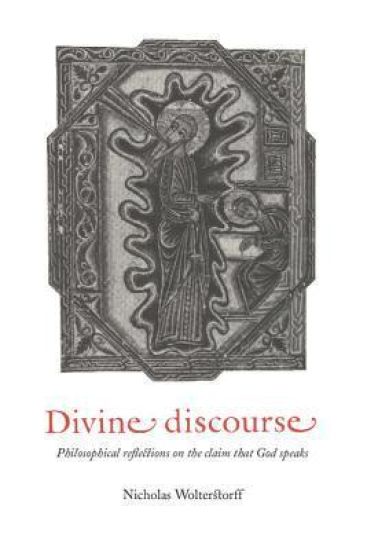
Divine Discourse

Divine Discourse

Nicholas Wolterstorff

Cambridge University Press
1995
pokkari
Prominent in the canonical texts and traditions of Judaism, Christianity, and Islam is the claim that God speaks. Nicholas Wolterstorff argues that contemporary speech-action theory, when appropriately expanded, offers us a fascinating way of interpreting this claim and showing its intelligibility. He develops an innovative theory of double-hermeneutics - along the way opposing the current near-consensus led by Ricoeur and Derrida that there is something wrong-headed about interpreting a text to find out what its author said. Wolterstorff argues that at least some of us are entitled to believe that God has spoken. Philosophers have never before, in any sustained fashion, reflected on these matters, mainly because they have mistakenly treated speech as revelation.
Practices of Belief: Volume 2, Selected Essays

Practices of Belief: Volume 2, Selected Essays

Nicholas Wolterstorff

Cambridge University Press
2010
sidottu
Practices of Belief, the second volume of Nicholas Wolterstorff's collected papers, brings together his essays on epistemology from 1983 to 2008. It includes not only the essays which first presented 'Reformed epistemology' to the philosophical world, but also Wolterstorff's latest work on the topic of entitled (or responsible) belief and its intersection with religious belief. The volume presents five new essays and a retrospective essay that chronicles the changes in the course of philosophy over the last fifty years. Of interest to epistemologists, philosophers of religion, and theologians, Practices of Belief should engage a wide audience of those interested in the topic of whether religious belief can be responsibly formed and maintained in the contemporary world.
Inquiring about God: Volume 1, Selected Essays

Inquiring about God: Volume 1, Selected Essays

Nicholas Wolterstorff

Cambridge University Press
2010
sidottu
Inquiring about God is the first of two volumes of Nicholas Wolterstorff's collected papers. This volume collects Wolterstorff's essays on the philosophy of religion written over the last thirty-five years. The essays, which span a range of topics including Kant's philosophy of religion, the medieval (or classical) conception of God, and the problem of evil, are unified by the conviction that some of the central claims made by the classical theistic tradition, such as the claims that God is timeless, simple, and impassible, should be rejected. Still, Wolterstorff contends, rejecting the classical conception of God does not imply that theists should accept the Kantian view according to which God cannot be known. Of interest to both philosophers and theologians, Inquiring about God should give the reader a lively sense of the creative and powerful work done in contemporary philosophical theology by one of its foremost practitioners.
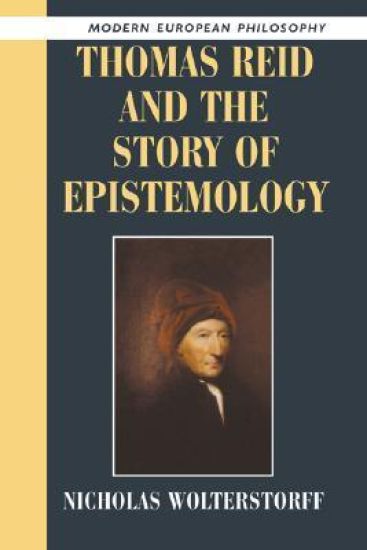
Thomas Reid and the Story of Epistemology

Thomas Reid and the Story of Epistemology

Nicholas Wolterstorff

Cambridge University Press
2004
pokkari
The two great philosophical figures at the culminating point of the Enlightenment are Thomas Reid in Scotland and Immanuel Kant in Germany. Reid was by far the most influential across Europe and the United States well into the nineteenth century. Since that time his fame and influence have been eclipsed by his German contemporary. This important book by one of today’s leading philosophers of knowledge and religion will do much to reestablish the significance of Reid for philosophy today. Nicholas Wolterstorff has produced the first systematic account of Reid’s epistemology. Relating Reid’s philosophy to present-day epistemological discussions the author demonstrates how they are at once remarkably timely, relevant, and provocative. No other book both uncovers the deep pattern of Reid’s thought and relates it to contemporary philosophical debate. This book should be read by historians of philosophy as well as all philosophers concerned with epistemology and the philosophy of mind.
John Locke and the Ethics of Belief

John Locke and the Ethics of Belief

Nicholas Wolterstorff

Cambridge University Press
1996
pokkari
Nicholas Wolterstorff discusses the ethics of belief which Locke developed in Book IV of his Essay Concerning Human Understanding, where Locke finally argued his overarching aim: how we ought to govern our belief, especially on matters of religion and morality. Wolterstorff shows that this concern was instigated by the collapse, in Locke’s day, of a once-unified moral and religious tradition in Europe into warring factions. His was thus a culturally and socially engaged epistemology. This view of Locke invites a new interpretation of the origins of modern philosophy. He maintained that instead of following tradition we ought to let ‘reason be our guide.’ Accordingly, after discussing Hume’s powerful attack on Locke’s recommended practice, Wolterstorff argues for Locke’s originality and emphasizes his contribution to the ‘modernity’ of post-sixteenth-century philosophy.
Justice

Justice

Nicholas Wolterstorff

Princeton University Press
2010
pokkari
Wide-ranging and ambitious, Justice combines moral philosophy and Christian ethics to develop an important theory of rights and of justice as grounded in rights. Nicholas Wolterstorff discusses what it is to have a right, and he locates rights in the respect due the worth of the rights-holder. After contending that socially-conferred rights require the existence of natural rights, he argues that no secular account of natural human rights is successful; he offers instead a theistic account. Wolterstorff prefaces his systematic account of justice as grounded in rights with an exploration of the common claim that rights-talk is inherently individualistic and possessive. He demonstrates that the idea of natural rights originated neither in the Enlightenment nor in the individualistic philosophy of the late Middle Ages, but was already employed by the canon lawyers of the twelfth century. He traces our intuitions about rights and justice back even further, to Hebrew and Christian scriptures. After extensively discussing justice in the Old Testament and the New, he goes on to show why ancient Greek and Roman philosophy could not serve as a framework for a theory of rights. Connecting rights and wrongs to God's relationship with humankind, Justice not only offers a rich and compelling philosophical account of justice, but also makes an important contribution to overcoming the present-day divide between religious discourse and human rights.
Until Justice and Peace Embrace

Until Justice and Peace Embrace

Nicholas Wolterstorff

William B Eerdmans Publishing Co
1983
nidottu
Calling Christians to be true to God's shalom in all dimensions of life, philosopher Nicholas Wolterstorff brings the religious vision of the Reformation to bear on such urgent matters as world poverty, nationalism, urban ugliness, and the tragedy of liturgy in Protestantism.
Hearing the Call

Hearing the Call

Nicholas Wolterstorff

William B Eerdmans Publishing Co
2011
nidottu
What is the Word of the Lord for a world of injustice? What does it mean to hear the cries of the oppressed? What does liturgy have to do with justice? These questions have been at the heart of Nicholas Wolterstorff's work for over forty years. In this collection of essays, he brings together personal, historical, theological, and contemporary perspectives to issue a passionate call to work for justice and peace. An essential complement to his now classic Until Justice and Peace Embrace, the forthcoming Love and Justice, and Justice, this book makes clear why Wolterstorff is one of the church's most incisive and compelling voices. Between the Times invites us not simply into new ways of thinking, but a transformational way of life.
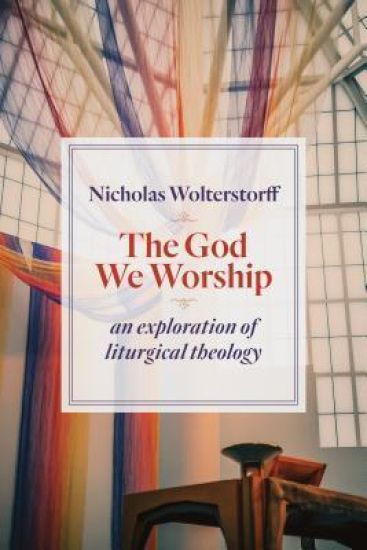
God We Worship

God We Worship

Nicholas Wolterstorff

William B Eerdmans Publishing Co
2015
nidottu
In The God We Worship, Nicholas Wolterstorff takes a ground-up approach to liturgical theology, examining the oft-hidden implications of traditional elements of liturgy. Given that "no liturgy has ever been composed from scratch," Wolterstorff argues that the assumptions taken into worship are key to perceiving the real depths of historical Christianity's understanding of God.Across the liturgies of the Orthodox, Catholic, Episcopal, Lutheran, and Reformed churches, Wolterstorff highlights theologically neglected elements of God, such as an implicit liturgical understanding of God as listener. A dissection of liturgy is not only interesting, Wolterstorff argues, but crucial for reconciling differences between the God studied by theologians and the God worshiped by churchgoers on Sunday.
Justice in Love

Justice in Love

Nicholas Wolterstorff

William B Eerdmans Publishing Co
2015
nidottu
Love and justice have long been prominent themes in the moral culture of the West, yet they are often considered to be almost hopelessly at odds with each other. In this book acclaimed Christian philosopher Nicholas Wolterstorff shows that justice and love are perfectly compatible at heart, and he argues that the commonly perceived tension between them reveals something faulty in our understanding of each.This paperback publication adds a new preface and Scripture index to the original hardcover edition. Building upon Wolterstorff's expansive discussion of justice in his earlier Justice: Rights and Wrongs and charitably engaging alternate views, this book focuses in profound ways on the complex yet ultimately harmonious relation between justice and love.
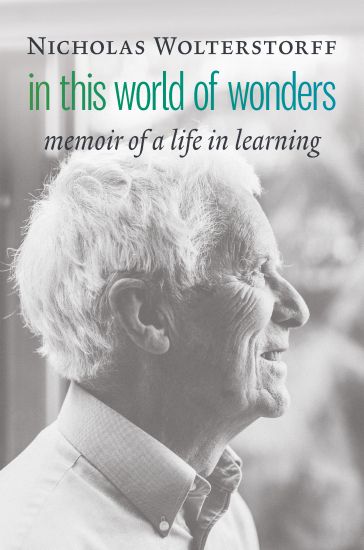
In This World of Wonders

In This World of Wonders

Nicholas Wolterstorff

William B. Eerdmans Publishing Company
2019
sidottu
World-renowned Christian philosopher. Beloved professor. Author of the classic Lament for a Son. Nicholas Wolterstorff is all of these and more. His memoir, In This World of Wonders, opens a remarkable new window into the life and thought of this remarkable man.Written not as a complete life story but as a series of vignettes, Wolterstorff's memoir moves from his humble beginnings in a tiny Minnesota village to his education at Calvin College and Harvard University, to his career of teaching philosophy and writing books, to the experiences that prompted some of his writing--particularly his witnessing South African apartheid and Palestinian oppression firsthand.In This World of Wonders is the story of a thoughtful and grateful Christian whose life has been shaped by many loves--love of philosophy, love of family, love of art and architecture, love of nature and gardening, and more. It's a lovely, wonderful story.
Religion in the Public Square

Religion in the Public Square

Nicholas Wolterstorff

Rowman Littlefield
1996
sidottu
This vigorous debate between two distinguished philosophers presents two views on a topic of worldwide importance: the role of religion in politics. Audi argues that citizens in a free democracy should distinguish religious and secular considerations and give them separate though related roles. Wolterstorff argues that religious elements are both appropriate in politics and indispensable to the vitality of a pluralistic democracy. Each philosopher first states his position in detail, then responds to and criticizes the opposing viewpoint. Written with engaging clarity, Religion in the Public Square will spur discussion among scholars, students, and citizens.