Kirjahaku
Etsi kirjoja tekijän nimen, kirjan nimen tai ISBN:n perusteella.
11 kirjaa tekijältä Nick Holmes

The follow up to TIME SPENT FALLING. Comprised of pieces spanning many years, centered around the joy of desire as well as the fear of loss, this collection expounds upon the humanity of lust, the catalysts for passion, love, sex, and all the sordid gaps between.A collection of poems in nine chapters.
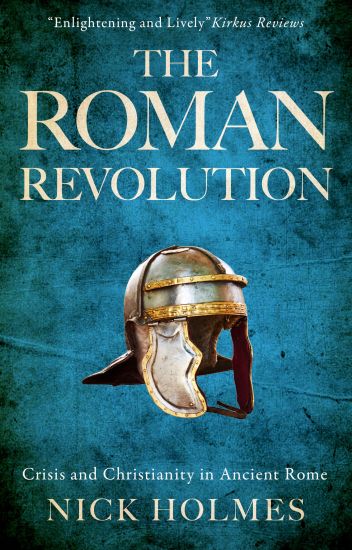
It was the fall before the fall. The Roman Revolution describes the little known "crisis of the third century". Long before the collapse of the Roman Empire in the fifth century, in the years between AD 235-275, barbarian invasions, civil war and plague devastated ancient Rome. Out of this ordeal, a revolutionary new order arose. Nick Holmes challenges conventional thinking, suggesting that the classical Roman Empire 'fell' as early as the third century when it was replaced by a radical new Christian Roman Empire, ruled from Constantinople. He presents the near collapse of the Roman Empire in the third century as a world-changing event. It was the first step in the history of the Fall of the Roman Empire and the beginning of the modern world.This book is the first of a four-volume series that will chart the full course of the Fall of the Roman Empire. The second book, due out in 2023, will cover the fall of the Western Roman Empire in the fifth century. The last two books will look at the Roman reconquest of Italy and North Africa under the Emperor Justinian in the sixth century, followed by the rise of Islam and the demise of the Eastern Roman Empire in the seventh century.
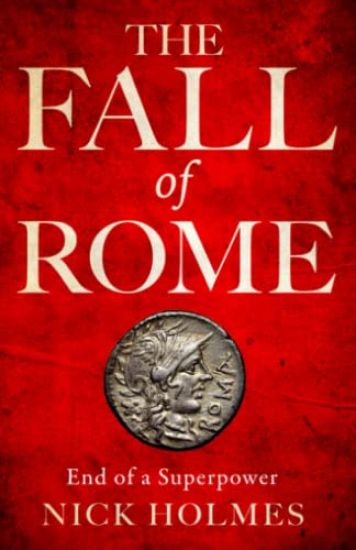
WHY DID ROME FALL?In this gripping retelling of one of the most momentous chapters in history, Nick Holmes presents a new interpretation of an old story. The fate of Rome was decided not just by emperors, soldiers and barbarians but also by an environmental disaster.A catastrophic megadrought on the Asian steppes in the fourth century AD forced the migration of entire peoples - Huns, Goths, Vandals and others - west into the Roman Empire. They met an empire weakened from war with Persia. Rome's misfortunes multiplied as it made tactical errors on the battlefield. Civil war, religious unrest and political incompetence compounded a worsening situation. The result was one of the greatest disasters in the ancient world - the sack of Rome by the Goths in AD 410. This is the second book in a multi-volume series on the Fall of the Roman Empire. The first book, The Roman Revolution, describes 'the crisis of the third century' and Rome's adoption of Christianity. The third book, due out later in 2023, will continue with the fall of the western empire and the rise of Attila the Hun. Praise for The Roman Revolution and other books by Nick Holmes"An enlightening and lively interpretation of an important but neglected historical period." Kirkus Reviews about The Roman Revolution."Clear, succinct and compelling..." AudioFile Magazine about The Byzantine World War."A thrilling blend of historical rigor and dramatic storytelling." Kirkus Reviews about The Byzantine World War.
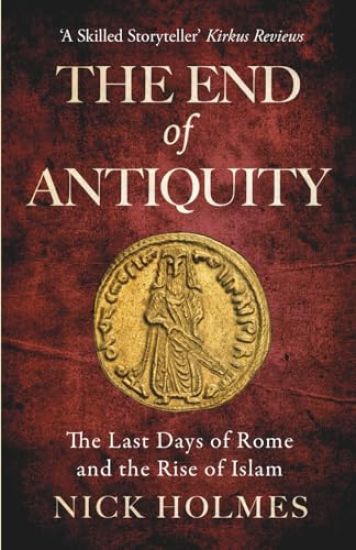
IN THE REIGN OF JUSTINIAN, THE ROMANS FOUGHT BACK.It was an age of glory. Justinian's general, Belisarius, recovered North Africa and Italy from the barbarians. An impressive new law code was inaugurated that would endure to this day. Astonishing building projects, like the iconic Hagia Sophia, rivalled the great monuments of Old Rome. But all that glitters is not gold. Drawing on the contemporary sources, especially those of the chronicler Procopius, Nick Holmes reveals a darker side to Justinian - a ruthless opportunist, whose costly conquests and misguided priorities drained the empire's wealth and critically weakened its army.Rather than restoring Rome's greatness did he in fact pave the way for its catastrophic collapse less than a century after his death? This is the fourth volume in Nick Holmes' series on the Fall of the Roman Empire. The first three books trace the empire's story from the 'crisis of the third century', through its reinvention by Constantine as a Christian state, and then onto the fall of its western half. A fifth volume will tell of its rapid demise in the seventh century AD, when the first Islamic Caliphate became the new superpower of western Eurasia.Praise for Nick Holmes' Books'A riveting account of Rome's decline' Kirkus Reviews'Clear, succinct and compelling' AudioFile Magazine'Perhaps the best historical story-teller alive' Amazon Reviewer
The Crusades shook the world. But why did they happen? Their origins are revealed in a new light. As part of a medieval world war that stretched from Asia to Europe. At its centre was an ancient empire – Byzantium. Told for the first time as a single, linked narrative are three great events that changed history: the fall of Byzantium in the eleventh century, the epic campaign of the First Crusade and the origins of modern Turkey. Nick Holmes not only presents the First Crusade in a wider global context but he also puts forwards new interpretations of the original sources, suggesting that its success was in fact largely accidental, and that the central role of Byzantium in the Crusades has been underestimated.

Porcupine Tree began in 1987 as a solo project for Steven Wilson writing and recording music in his bedroom, but became a four piece band when Steven was joined by Richard Barbieri, Colin Edwin, and Chris Maitland (later replaced by Gavin Harrison). Their first live gig was in a pub in High Wycombe, England in 1993 but by 2010 the band had toured Europe and America extensively and ended up playing to thousands of fans at a sold-out Royal Albert Hall in London. The band was nominated for two Grammy awards, and their last album ‘The Incident’ charted in the top 30 in both the UK and the US. Although often labelled as a progressive rock band, Porcupine Tree constantly innovated, and changed style. Beginning playing psychedelic music, Porcupine Tree experimented with space rock, dance, trance, melodic pop as well as prog rock. In their last few albums, the band created a new hybrid of progressive metal riffs, melodic strength and rich vocal harmonies, with strong lyrics and powerful concepts. This aspect of the band has provided their most enduring legacy. This books analyses Porcupine Tree’s ten studio albums and two EPs in forensic detail, illuminating them for existing and potential new fans alike.

Steven Wilson has been described by The Telegraph as 'probably the most successful British musician most people have never heard of'. His last three solo albums have made the top five in the UK, and he played to over a quarter of a million people on his last tour. A self-taught musician, songwriter and producer, Wilson grew up wanting to be a pop star. His early band No-Man signed for a major label but instead, he gained a dedicated following and chart success with his band Porcupine Tree, who eventually sold out the Royal Albert Hall in London in 2010 before a 12-year revival in 2022. Porcupine Tree are the subject of Nick Holmes' first book in this series. Wilson became known as the 'King of Prog' when some of his solo albums featured long-form songs, virtuosic musicians and complex concepts. But he has always enjoyed surprising his fans, and his solo work also includes jazz, indie rock, pop and electronic music. Whatever the genre, his music shares strong melodies, profound lyrics, thoughtful concepts and high production values. Including Wilson's latest album The Harmony Codex, this book is a forensic and illuminating analysis of Wilson's solo albums, EPs and bonus tracks.

Porcupine Tree began in 1987 as a solo project for Steven Wilson but became a four-piece band when Steven was later joined by Richard Barbieri, Colin Edwin, and Chris Maitland (who was later replaced by Gavin Harrison). Their first live gig was in a pub in High Wycombe, England, in 1993, but by 2010 the band had toured Europe and America extensively, ending up by playing to thousands of fans at a sold-out Royal Albert Hall in London. The band was nominated for two Grammy awards, and their last album before their hiatus, The Incident, made the top 30 in both the UK and the US. Although often labelled as a progressive rock band, Porcupine Tree constantly changed style. Beginning by playing psychedelic music, Porcupine Tree experimented with space rock, dance, trance and melodic pop as well as prog rock. In their last few albums, the band created a new hybrid of progressive metal riffs, melodic strength and rich vocal harmonies, with strong lyrics and powerful concepts. This aspect of the band has provided their most enduring legacy. This book analyses all of Porcupine Tree's studio albums and Eps, including the hugely successful reunion album Closer/Continuation, in forensic detail, providing illuminating insight into the band's music for existing and new fans alike