Kirjojen hintavertailu. Mukana 12 363 183 kirjaa ja 12 kauppaa.

Kirjahaku

Etsi kirjoja tekijän nimen, kirjan nimen tai ISBN:n perusteella.

3 kirjaa tekijältä Nicole M. Rizzuto

Insurgent Testimonies

Insurgent Testimonies

Nicole M. Rizzuto

FORDHAM UNIVERSITY PRESS
2015
sidottu
During the second half of the nineteenth century and the first half of the twentieth, insurgencies erupted in imperial states and colonies around the world, including Britain's. As Nicole Rizzuto shows, the writings of Ukrainian-born Joseph Conrad, Anglo-Irish Rebecca West, Jamaicans H. G. de Lisser and V. S. Reid, and Kenyan Ng gi wa Thiong'o testify to contested events in colonial modernity in ways that question premises underlying approaches in trauma and memory studies and invite us to reassess divisions and classifications in literary studies that generate such categories as modernist, colonial, postcolonial, national, and world literatures. Departing from tenets of modernist studies and from methods in the field of trauma and memory studies, Rizzuto contends that acute as well as chronic disruptions to imperial and national power and the legal and extra-legal responses they inspired shape the formal practices of literatures from the modernist, colonial, and postcolonial periods.
Insurgent Testimonies

Insurgent Testimonies

Nicole M. Rizzuto

Fordham University Press
2015
pokkari
During the second half of the nineteenth century and the first half of the twentieth, insurgencies erupted in imperial states and colonies around the world, including Britain's. As Nicole Rizzuto shows, the writings of Ukrainian-born Joseph Conrad, Anglo-Irish Rebecca West, Jamaicans H. G. de Lisser and V. S. Reid, and Kenyan Ng gi wa Thiong'o testify to contested events in colonial modernity in ways that question premises underlying approaches in trauma and memory studies and invite us to reassess divisions and classifications in literary studies that generate such categories as modernist, colonial, postcolonial, national, and world literatures. Departing from tenets of modernist studies and from methods in the field of trauma and memory studies, Rizzuto contends that acute as well as chronic disruptions to imperial and national power and the legal and extra-legal responses they inspired shape the formal practices of literatures from the modernist, colonial, and postcolonial periods.
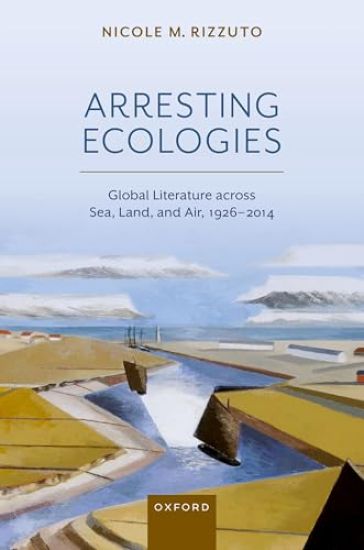
Arresting Ecologies: Global Literature across Air, Land, and Sea, 1926^–^2014
It is a truism that the last one hundred years have been defined by the accelerated and increased propulsion of people and information across seas, land, and air. Also a truism is that literature and art reflect this enhanced mobility in their formal composition, from modernism's transoceanic voyages and the avant-garde's images of racing automobiles and gyrating wheels to postcolonial narratives of migration and cultural transmissions broadcast across the planet. Arresting Ecologies challenges these truisms. It argues that writers and artists from around the world drew inspiration from experiences of stalled and impeded mobility and used them to critique the accelerative impulses of the Anthropocene. It provides an alternative literary history of the twentieth and twenty-first century Anglophone novel. The book examines a multi-genre archive from the interwar era through today from Britain, Europe, the Caribbean, and Africa, illustrating how novels, travel guides, paintings, and photographs respond to distinct shifts in energy and telecommunication regimes. These works are set on merchant ships and harbors confronting coal shortages and slumping international trade. They are located at forgotten but once important sites of oil and asphalt extraction and refinement. They take place on islands conscripted into Cold War battles from the skies and airwaves, in pirate states located along the world's busiest shipping corridor, and at remote deserts being harnessed for wind power by neocolonial governments. What connects them is a pervading affect of uncertainty during transitional moments: moments in which seas, land, and air were re-codified by states and private entities under the banner of development. All of them betray skepticism toward promises of social progress, environmental sustainability, and global connection. Skepticism toward myths of more egalitarian and prosperous futures used to justify new extractive and communication systems is encoded through the breakdown of developmental genres and sub-genres, and the revision of anti-developmental ones. The overlooked formal preoccupation with stalled mobility among both neglected and well as canonical and well-known figures of major literary and artistic movements from modernist to contemporary periods reveals how climate- and communications solutions to environmental and social problems failed to convince those at frontiers of capitalist growth.