Kirjojen hintavertailu. Mukana 11 244 527 kirjaa ja 12 kauppaa.

Kirjahaku

Etsi kirjoja tekijän nimen, kirjan nimen tai ISBN:n perusteella.

9 kirjaa tekijältä Nigel Askey

Operation Barbarossa

Operation Barbarossa

Nigel Askey

Nigel Askey
2017
sidottu
In June 1941 the German Wehrmacht launched Operation Barbarossa: the attack on the USSR and the largest land invasion in recorded history. The titanic battles that followed led to the greatest loss of life ever experienced in a military campaign. Since the end of WWII there has been intense discourse about the key operational and strategic decisions made by the German and Soviet high commands on the East-Front, especially during the critical period from July to September 1941.Operation Barbarossa: the Complete Organisational and Statistical Analysis, and Military Simulation focuses on 1941 - when the USSR came closest to defeat. It includes full analyses of the belligerents' armed forces, weapons, equipment, personnel, transport, logistics, war-production, mobilisation and replacements. Uniquely, the work formalises a sophisticated military simulation methodology extending from the tactical to the strategic level, and applies this methodology to each of the belligerents. Volume I, the first of six volumes, is primarily concerned with the structure of this methodology, but uses many of the events and weapons from Operation Barbarossa as illustrative case studies. The complete work represents the most historically accurate, advanced and comprehensive quantitative analysis yet, of the 1941 campaign on the East-Front.Operation Barbarossa: the Complete Organisational and Statistical Analysis, and Military Simulation is the culmination of over ten years of research and collation. It brings together an immense amount of information from many published and unpublished sources, and presents it with contextual history and analyses. The professional researcher or amateur scholar of WWII is provided with a comprehensive data source, containing the details of all the armed forces involved on the East-Front during 1941, as well as the relevant economic and logistical support. Currently no other single work provides a comparable reference of the actual Soviet and Axis land, air and naval forces involved in what was the most decisive and destructive campaign of WWII.
Operation Barbarossa

Operation Barbarossa

Nigel Askey

Nigel Askey
2017
sidottu
Operation Barbarossa: the Complete Organisational and Statistical Analysis, and Military Simulation includes full analyses of the Axis and Soviet armed-forces organisation, weapons, equipment, personnel, transport, logistics, war-production, mobilisation and replacements during 1941. Uniquely, the work employs a sophisticated military simulation methodology extending from the tactical to the strategic level, and applies this methodology to each of the belligerents. Volume IIA is concerned with the Wehrmacht. All the significant German weapon systems and combat squads used in the campaign are analysed using the quantitative methodology detailed in Volume I, along with the contextual history. An assessment of each weapon system's inherent 'combat power' is provided, as well as attributes such as the relative anti-tank, anti-personnel and anti-aircraft values. Volume IIA then focuses on the detailed Kriegstarkenachweisungen (KStN, or TOE) for German land units (including those in the West), as well as the unit's actual organisation and equipment. All significant units in the German Army, Waffen SS, Luftwaffe and security forces are included; ranging from the largest panzer divisions, down to small anti-aircraft companies, military-police units, Landesschutzen battalions, and rail-road and construction companies. In all cases the data is presented in detailed tables, using the weapon systems and combat squads previously analysed. Operation Barbarossa: the Complete Organisational and Statistical Analysis, and Military Simulation collates an immense amount of information from many sources, and presents it with contextual history and analyses. The professional researcher or amateur scholar is provided with a comprehensive data source, containing the details of all the armed forces involved on the East-Front during 1941, as well as the relevant economic and logistical support. The complete work represents the most accurate, advanced and comprehensive quantitative analysis yet, of the East-Front campaign. Currently no other single work provides a comparable reference on the actual Soviet and Axis land, air and naval forces involved in what was the most decisive campaign of WWII.
Operation Barbarossa

Operation Barbarossa

Nigel Askey

Nigel Askey
2018
sidottu
Volume IIB is the second volume relating to (and completing) the Wehrmacht, and the German mobilisation and war-economy, from June to December 1941. It includes the most detailed Orders of Battle ever published on the German Heer, Luftwaffe, Waffen SS and Kriegsmarine, in all areas of the Reich, between 22nd June and 4th July 1941. Even small and obscure units are included, such as: flak companies, artillery HQs, observation battalions, bridging columns, Landessch tzen battalions, MP battalions, railroad companies, and Luftwaffe Kurierstaffeln, Verbindungsstaffeln and Sanit tsflugbereitschaften. The Luftwaffe OOBs also include details on aircraft types and strengths in each air unit.Also scrutinised in detail are: the personnel and equipment allocated to combat-units in each army, army-group or reserve-force, in all areas across the Reich during the initial phase of Barbarossa; the ground and air units used as reinforcements as well as those newly mobilised; the total available military personnel and equipment in the Reich from June to December 1941; the Replacement Army; the overall mobilisation process and resources used; the available replacements and those sent east; the logistical supply of the Wehrmacht (i.e. the changing Supply Distribution Efficiency); the Kriegsmarine forces in the East; and the Wehrmacht and Waffen SS casualties from June 1941 to February 1942. The latter includes details on killed, wounded, missing/POW, sick and unfit, and recuperated casualties.Operation Barbarossa: the Complete Organisational and Statistical Analysis collates an immense amount of information from many sources, and presents it with contextual history and analyses. The professional or amateur scholar is provided with comprehensive details of all the armed forces on the East Front during 1941, as well as the relevant economic and logistical support. The complete work represents the most accurate and comprehensive quantitative analysis yet, of the East-Front campaign. Currently no other single work provides a comparable reference on what was the most decisive and destructive campaign of WWII.
Operation Barbarossa

Operation Barbarossa

Nigel Askey

Nigel Askey
2018
sidottu
Volume IIIA is the first of two volumes relating to the Soviet armed forces, mobilisation and war-economy from June to December 1941. All the significant Soviet weapon systems and combat squads used in the campaign are analysed using the quantitative methodology detailed in Volume I, along with the contextual history. An assessment of each weapon system's inherent 'combat power' is provided, as well as attributes such as the relative anti-tank, anti-personnel and anti-aircraft values.Volume IIIA then focuses on the detailed Shtaty (TOEs) for all the Soviet land unit types fielded across the USSR during 1941. All significant units in the RKKA (Red Army), VVS, VMF, PVO and NKVD are included; ranging from the largest mechanised corps and tank divisions, down to small mortar battalions, PVO anti-aircraft battalions and NKVD security companies. In all cases the data is presented in detailed tables, using the weapon systems and combat squads previously analysed. Volume IIIA also includes the most detailed Orders of Battle ever published on the Red Army, PVO and NKVD forces on 22nd June 1941. Even small and obscure units are included down to battalion and company level. Lastly, Volume IIIA examines in detail every unit's actual personnel and equipment in each of the USSR's Western Military Districts when the Axis forces invaded.Operation Barbarossa: the Complete Organisational and Statistical Analysis collates an immense amount of information from many sources, and presents it with contextual history and analyses. The professional or amateur scholar is provided with comprehensive details of all the armed forces on the East Front during 1941, as well as the relevant economic and logistical support. The complete work represents the most accurate and comprehensive quantitative analysis yet, of the East-Front campaign. Currently no other single work provides a comparable reference on what was the most decisive and destructive campaign of WWII.
Operation Barbarossa

Operation Barbarossa

Nigel Askey

NVA Publications
2020
sidottu
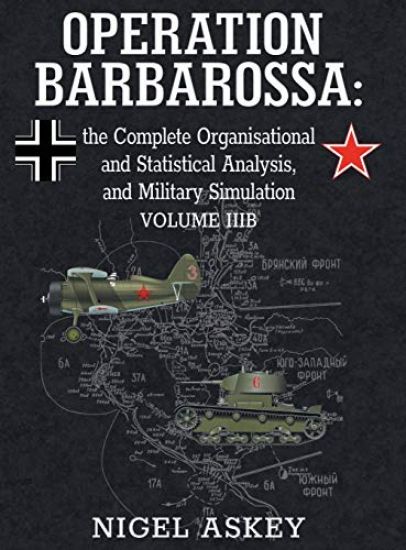
Operation Barbarossa: the Complete Organisational and Statistical Analysis, and Military Simulation, Volume IIIB is the second of two volumes relating to (and completing) the Soviet armed forces, mobilisation and war-economy from June to December 1941. The Soviet mobilisation that followed the start of Operation Barbarossa remains the largest and fastest mobilisation ever carried out in human history; involving some 11,790,000 conscripts and reservists. Volume IIIB represents the first ever complete and comprehensive quantitative analysis of this immense Soviet mobilisation program. Every major Soviet combat unit formed in the Red Army, Air Force, Navy, NKVD and PVO is included, along with minor units down to HQ and battalion level. All the combat units mobilised, along with the resources used, are presented in a precisely documented and structured fashion.Volume IIIB also includes the most detailed study published to date of the Soviet Air Forces (the VVS and PVO) fielded during 1941. It includes: the VVS command and authorised air-unit structures, detailed Orders of Battle (including aircraft types, strengths and readiness) in each VVS command area in June 1941, air-unit reinforcements, and overall aircraft usage, production, replacements and losses during the second half of 1941. The Soviet Navy (the VMF) is similarity treated, with every significant naval vessel accounted for (including those lost and newly commissioned) in each of the USSR's naval command areas during 1941.Also analysed to the same level of detail are: the actual strength and deployment of Soviet forces in the USSR's internal military districts and Stavka Reserves on 22nd June 1941, pre-war stockpiles and war production of all types of weapon systems and transport, the personnel and equipment used in the formation of newly mobilised forces, the personnel and equipment replacements used by existing combat units, logistical supply of the Soviet armed forces during 1941 (i.e. the changing Supply Distribution Efficiency) and a detailed examination of the Soviet military casualties. The latter includes details on killed, wounded, missing, POW and unfit casualties during 1941, and also reviews the losses from 1942 to 1945.Operation Barbarossa: the Complete Organisational and Statistical Analysis collates an immense amount of information from many sources, and presents it with contextual history and analyses. The professional or amateur scholar is provided with comprehensive details of all the armed forces on the East Front during 1941, as well as the relevant economic and logistical support. The complete work represents the most accurate and comprehensive quantitative analysis yet, of the East-Front campaign. Currently no other single work provides a comparable reference on what was the most decisive and destructive campaign of WWII.
Operation Barbarossa: the Complete Organisational and Statistical Analysis, and Military Simulation Volume I
In June 1941 the Wehrmacht launched Operation Barbarossa: the attack on the USSR and the largest land invasion in recorded history. Operation Barbarossa: the Complete Organisational and Statistical Analysis, and Military Simulation focuses on 1941 - when the USSR came closest to defeat. It includes full analyses of the belligerents' armed forces, weapons, equipment, personnel, transport, logistics, war-production, mobilisation and replacements. The work employs a unique military simulation methodology, extending from the tactical to the strategic level, and applies this methodology to each of the belligerents. Volume I, the first of six volumes, is primarily concerned with the structure of this methodology, but uses many of the events and weapons from Operation Barbarossa as illustrative case studies. The complete work represents the most historically accurate, advanced and comprehensive analysis of the first six months of the largest and most decisive military campaign of WWII.
Operation Barbarossa: the Complete Organisational and Statistical Analysis, and Military Simulation Volume IIA
Operation Barbarossa: Volume IIA concerns the Wehrmacht. All the significant German weapon systems and combat squads used in the campaign are analysed using the quantitative methodology detailed in Volume I, along with the contextual history. An assessment of each weapon system's inherent 'combat power' is provided, as well as attributes such as the relative anti-tank, anti-personnel and anti-aircraft values. Volume IIA then focuses on the detailed Kriegstarkenachweisungen (KStN, or TOE) for German land units (including those in the West), as well as the unit's actual organisation and equipment. All significant units in the German Army (Heer), Waffen SS, Luftwaffe and security forces are included; ranging from the largest panzer divisions, down to small anti-aircraft companies, military-police units, Landesschutzen battalions, and rail-road and construction companies. In all cases the data is presented in detailed tables, using the weapon systems and combat squads previously analysed.
Operation Barbarossa: the Complete Organisational and Statistical Analysis, and Military Simulation Volume Iib
Volume IIB completes the Wehrmacht, and the German mobilisation and war-economy, in 1941. It includes the most detailed Orders of Battle ever published on the German Army (Heer), Luftwaffe and Waffen SS (across the whole Reich) in June-July 1941. Even the smallest and most obscure ground and air units are included, while the Luftwaffe OOBs include details on aircraft types and strengths. Also scrutinised are: the personnel and equipment assigned to combat-units in each army or reserve-force in all areas of the Reich; the ground and air unit reinforcements as well as those newly mobilised; the military personnel and equipment that became available in the Reich during 1941; the Replacement Army; the mobilisation process and resources used; the available replacements and those sent east; the logistical supply of the Wehrmacht (the varying Supply Distribution Efficiency); the Kriegsmarine forces in the east; and the Wehrmacht killed, wounded, missing/POW, unfit and recuperated casualties.
Operation Barbarossa: the Complete Organisational and Statistical Analysis, and Military Simulation Volume Iiia
Volume IIIA relates to the Soviet armed forces, mobilisation and war-economy during 1941. All significant Soviet weapon systems and combat squads used in the campaign are analysed, along with a contextual history. An assessment of each weapon system's inherent 'combat power' is provided, as well as attributes such as the relative anti-tank and anti-personnel values. Volume IIIA then focuses on the detailed Shtaty (TOEs) for all the Soviet land unit types fielded during 1941. All significant units in the RKKA (Red Army), VVS, VMF, PVO and NKVD are included; ranging from the largest mechanised corps and tank divisions, down to small mortar battalions and NKVD security companies. Also included are the most detailed Orders of Battle ever published on the Red Army, PVO and NKVD forces in June 1941. Even small and obscure units are included down to battalion and company level. Lastly, Volume IIIA examines in detail every unit's actual personnel and equipment in each of the USSR's Western Military Districts.