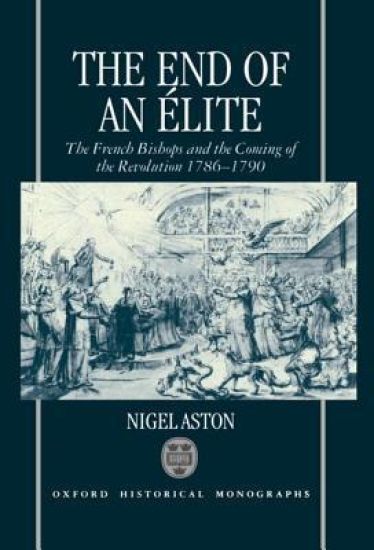
The End of an Élite is the first scholarly study in English of the bishops of the French church at the outbreak of the French Revolution. The 130 members of the episcopate formed an élite within an élite, the First Estate of France. Nigel Aston explores the role of the episcopate in national and provincial politics in the last years of the ancien régime. He traces the policies and patronage of episcopal ministers such as Lomiénie de Brienne and J.-M. Champion de Cicé, who were as much politicians as pastors, and examines their relationships with their fellow bishops. Dr Aston emphasizes the leading role of the bishops in the Assemblies of Notables and offers a fresh interpretation of clerical elections to the Estates-General of 1789. This is an intensively researched and immensely readable account, which will be invaluable to all historians of late eighteenth-century France.
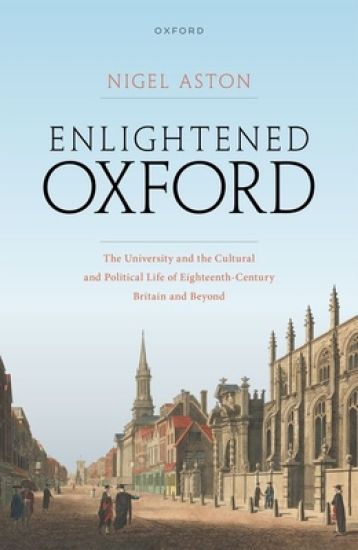
Enlightened Oxford aims to discern, establish, and clarify the multiplicity of connections between the University of Oxford, its members, and the world outside; to offer readers a fresh, contextualised sense of the University's role in the state, in society, and in relation to other institutions between the Williamite Revolution and the first decade of the nineteenth century, the era loosely describable (though not without much qualification) as England's ancien regime. Nigel Aston asks where Oxford fitted in to the broader social and cultural picture of the time, locating the University's importance in Church and state, and pondering its place as an institution that upheld religious entitlement in an ever-shifting intellectual world where national and confessional boundaries were under scrutiny. Enlightened Oxford is less an inside history than a consideration of an institutional presence and its place in the life of the country and further afield. While admitting the degree of corporate inertia to be found in the University, there was internal scope for members so inclined to be creative in their teaching, open new research lines, and be unapologetic Whigs rather than unrepentant Tories. For if Oxford was a seat of learning rooted in its past - and with an increasing antiquarian awareness of its inheritance - yet it had a surprising capacity for adaptation, a scope for intellectual and political pluralism that was not incompatible with enlightened values.
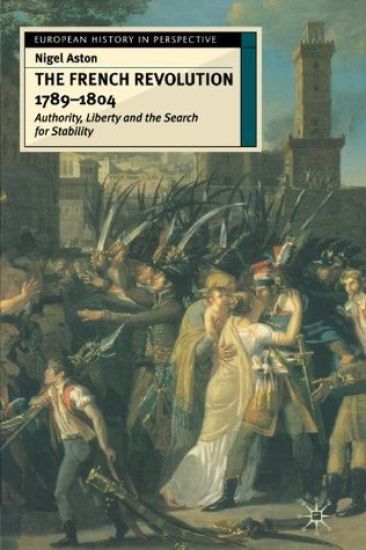
What was the appeal of the values of the Revolution? When did disillusionment set in, and why? Why did so few women identify with the Revolution? These are some of the questions which recur in this fresh study which focuses on some of the major themes at the heart of the current debate on the French Revolution and the Counter-Revolution. The French Revolution, 1789-1804: - Examines the human cost of Revolutionary change and the political ruthlessness of its key players - Explores the continuities and ruptures in the unfolding of the Revolution up to 1804 and Napoleon's coronation as emperor - Discusses the emergence of a new political culture, institutions, political participation and rhetoric - Considers the social history of the 1790s with an assessment of the militarisation of France, violence and vandalism, and the social effects of economic changes - Adopts a wide perspective and looks at the reception of Revolutionary values in Europe, the French colonies, and the United States Nigel Aston's concise study is essential reading for all those with an interest in this crucial moment in the creation of the modern world.
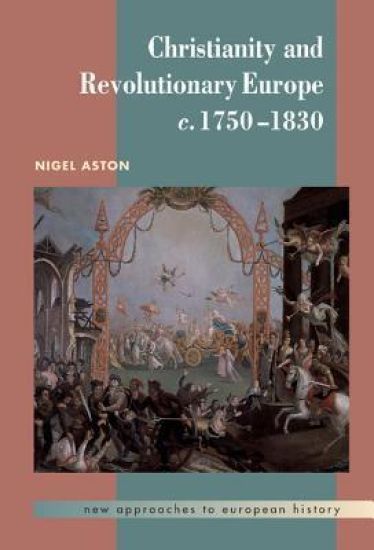
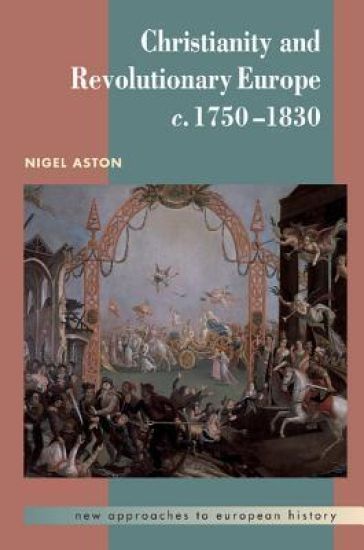
Christianity and Revolutionary Europe, 1750–1830, first published in 2003, provides a comprehensive and accessible summary of the role of the churches during this turbulent period in European history. How did the churches survive the political and intellectual challenges posed by the French Revolution, despite institutional upheaval and the widespread questioning of dogma and tradition? Nigel Aston answers this question by drawing on three decades of research, and argues that pre-Revolutionary Christianity had a vitality and resilience that should not be underestimated. Aston takes the story forward to 1830, dealing with both the immediate aftermath of the Revolution and its longer-term impact and offering comprehensive guidance to the complicated strands of change and continuity. The text is supported by illuminating illustrations, and a glossary of unfamiliar terms gives further help to the student reader. It will be of key interest to all those following courses on religious history and the French Revolution.
Christianity and Revolutionary Europe, 1750–1830, first published in 2003, provides a comprehensive and accessible summary of the role of the churches during this turbulent period in European history. How did the churches survive the political and intellectual challenges posed by the French Revolution, despite institutional upheaval and the widespread questioning of dogma and tradition? Nigel Aston answers this question by drawing on three decades of research, and argues that pre-Revolutionary Christianity had a vitality and resilience that should not be underestimated. Aston takes the story forward to 1830, dealing with both the immediate aftermath of the Revolution and its longer-term impact and offering comprehensive guidance to the complicated strands of change and continuity. The text is supported by illuminating illustrations, and a glossary of unfamiliar terms gives further help to the student reader. It will be of key interest to all those following courses on religious history and the French Revolution.
While the French Revolution has been much discussed and studied, its impact on religious life in France is rather neglected. Yet, during this brief period, religion underwent great changes that affected everyone: clergy and laypeople, men and women, Catholics, Protestants, and Jews. The 'Reigns of Terror' of the Revolution drove the Church underground, permanently altering the relationship between Church and State.In this book, Nigel Aston offers a readable guide to these tumultuous events. While the structures and beliefs of the Catholic Church are central, it does not neglect minority groups like Protestants and Jews. Among other features, the book discusses the Constitutional Church, the end of state support for Catholicism, the 'Dechristianization' campaign and the Concordat of 1801-2.Key themes discussed include the capacity of all the Churches for survival and adaptation, the role of religion in determining political allegiances during the Revolution, and the turbulence of Church-State relations.In this masterly study, based on the latest evidence, Aston sheds new light on a dynamic period in European history and its impact on the next 200 years of religious life in France.ABOUT THE AUTHOR:Nigel Aston is senior lecturer in modern history at the University of Luton.PRAISE FOR THE BOOK:""As a synthesis both of recent work and of older studies in religious history, it is a tour de force. . . . The great contribution of this book is to the history of the French Revolution, and here the picture of events that emerges from Aston's account is in certain respects an unfamiliar one. . . . Those of us who teach courses on Enlightenment and French Revolution, as well as general readers wanting a detailed, well-written synthesis of the religious history of this complex period, are very much in Nigel Aston's debt.""--H-France Reviews""A comprehensive survey of the religious history of France from the eve of the Revolution through the early years of the nineteenth century. It is work of great erudition, drawing on an immense array of secondary materials and printed sources. . . . The book is undoubtedly the best general study of religion in the French Revolution to appear in English since John McManner's short synthesis of 1968.""--Catholic Historical Review""This will be the book on the subject. It is based on a great deal of the author's own primary research on the topic, and draws on an enormous body of secondary sources. It is very-well written, and is an excercise in a humane kind of social history...a splendid book.""--Prof. Colin Jones, University of Warwick""Nigel Aston brings ideal credentials to the writing of this useful and important book. . . . [His] fine and valuable book is . . . the first comprehensive history of religion and the French Revolution to appear in English. . . . A fine and highly important and useful book. Strongly recommended for inclusion in all libraries, academic or public, that have any interest in either the history of the French Revolution or post-Enlightenment religion.""--History: Reviews of New Books ""Aston's study promises to be extremely useful for scholars of Jews in the modern period. The author strikes a nice balance between synthesis and detail in achieving an extremely readable summary of the large literature on Christianity and the Revolution. Scholars of the Haskalah interested in parallel movements within French Christianity will thus find this text an extremely convenient starting point. Moreover, Aston deserves special praise for making an effort to normalize the history of Protestants and Jews by including them alongside the Catholic Church.""--Alyssa Goldstein Sepinwall, Jewish Quarterly Review