Kirjojen hintavertailu. Mukana 12 016 292 kirjaa ja 12 kauppaa.

Kirjahaku

Etsi kirjoja tekijän nimen, kirjan nimen tai ISBN:n perusteella.

14 kirjaa tekijältä Nigel Barley

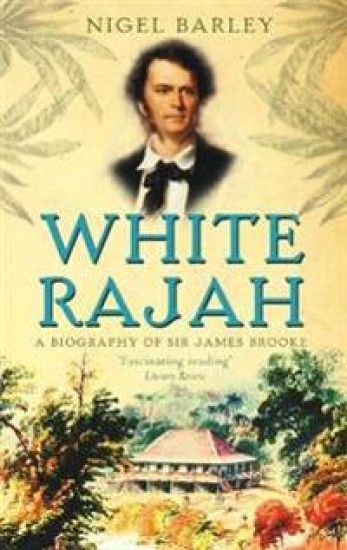
White Rajah

White Rajah

Nigel Barley

Abacus
2003
pokkari
Sir James Brooke was an extraordinary 'eminent' Victorian, whose life was the stuff of legend.His curious career began in 1841 when he was caught up in a war in Brunei which had started because a party of local Dayaks had refused to furl their umbrellas in the presence of the Sultan. Brooke was an opportunist who, with the Sultan's backing, made war on the Dayaks tribespeople and eventually found himself ruling over Sarawak - a kingdom the size of England - as a result. How he achieved it is a romantic, sometimes horrifying story. Brooke is someone that George Macdonald Fraser would scarcely dare to invent. Errol Flynn wanted to play him in a movie, seventy years after his death and his dynasty is remembered throughout South-East Asia.
Symbolic Structures

Symbolic Structures

Nigel Barley

Cambridge University Press
2009
pokkari
Many opposing theories have been elaborated by different anthropologists in an attempt to explain the nature of symbolism. In this work Nigel Barley uses a particular ethnographic case to examine the relevance and limitations of these existing theories and to develop a new alternative approach which draws on areas of linguistics and folkloristics at one time neglected by symbolic theorists. The book is a detailed study of the symbolic universe of the Dowayos of north Cameroon, as displayed in their ritual and beliefs. Considering matters as diverse as their oral literature, their material culture and their festivals, Dr Barley's analysis develops by unfolding sequentially a map of the symbolic structures that underlie Dowayo culture and shape their apperception of the world about them. This book will be particularly useful for students. It will also interest all anthropologists concerned with the study of symbolism and with the application to anthropology of models derived from linguistics and folklore.
Over The Hills: The Welsh Great Escape

Over The Hills: The Welsh Great Escape

Nigel Barley

Independently Published
2019
nidottu
Everyone has heard of The Great Escape. In March 1944, seventy-six mainly British and Commonwealth airmen tunnelled out of the PoW camp, Stalag Luft III, in Poland and escaped, triggering a vast manhunt throughout occupied Europe. Of the seventy-three subsequently recaptured, forty-one were shot by the SS in cold blood. The incident became an icon of British decency in the face of Nazi barbarity.Yet only a year later, seventy German prisoners of war, including SS officers, returned the compliment by using a very similar tunnel to escape from Island Farm PoW camp in Wales. The two cases, superficially so similar, could not have been more different. The complex ingenuities of British prisoners in Germany have been heavily documented whereas historical attention to the Welsh breakout has focused almost entirely on the very British search for the escapees that followed this event, a sort of cross between Dad's Army and an Ealing comedy, full of good intentions and pratfalls. This book tells both the before and after of the Welsh Great Escape, filling in the blanks of a strange and mostly forgotten story.
Not a Hazardous Sport

Not a Hazardous Sport

Nigel Barley

Eland Publishing Ltd
2018
nidottu
Nigel Barley travels to the island of Sulawesi in Indonesia to live among the Torajan people, known for their spectacular buildings and elaborate ancestor cults. At last he is following his own advice to students, to do their anthropological fieldwork `somewhere where the inhabitants are beautiful, friendly, where you would like the food and there are nice flowers. With his customary wit and delight in the telling detail, he takes the reader deep into this complex but adaptable society. The mutual warmth of his friendships allows Barley to reverse the habitual patterns of anthropology. He becomes host to four Torajan carvers in London, invited to build a traditional rice barn at the Museum of Mankind. The observer becomes the observed, and it is Barley s turn to explain the absurd complexities of an English city to his bemused but tolerant guests in a magnificent, self critical finale. Not a Hazardous Sport provides a magnificent end to a trilogy of anthropological journeys that began with The Innocent Anthropologist and A Plague of Caterpillars (both published by Eland). A postscript, penned thirty years after these adventures had been concluded, confirms the rich arc of this storyline of role reversals.
A Plague of Caterpillars

A Plague of Caterpillars

Nigel Barley

Eland Publishing Ltd
2018
nidottu
This very failure, compounded by the plague of caterpillars of the book s title allows Nigel Barley to concentrate on everyday life in Dowayoland and the tattered remnants of an overripe French colonial legacy. Witchcraft fills the Cameroonian air; add an earnest German traveller showing explicit birth?control propaganda to the respectable Dowayos, an interest in the nipple?mutilating practices of highlanders, unanswered questions of the link between infertility and circumcision and you have the ingredients of a comic masterpiece. But beneath all the joy and shared laughter there is a skilful and wise reflection on the problems of different cultures ever understanding one another. The Dowayos are a mountain people that perform their elaborate, fascinating and fearsome ceremony at six or seven year intervals. It was an opportunity that was too good to miss, a key moment to test the balance of tradition and modernity. Yet, like much else in this hilarious book the circumcision ceremony was to prove frustratingly elusive.
The Innocent Anthropologist

The Innocent Anthropologist

Nigel Barley

Eland Publishing Ltd
2011
nidottu
The wittiest introduction to the life of a social anthropologist ever written. Studying in the Cameroons for his first experience of fieldwork, Barley discovers that the society of the Dowayo people refuses to conform to the rules of his new discipline. Although set amongst a little-known tribe in the Cameroons, this slim volume reaches out to a vast audience who would otherwise never look at a travel book about West Africa, let alone an anthropological field study. A seminal text for any student in search of a laugh. Witty, hilarious and unconventional, but also a remarkable intellectual achievement; Barley manages to turn the western science of anthropology on its head, so that for once the laugh is on the professional practitioners not the observed.
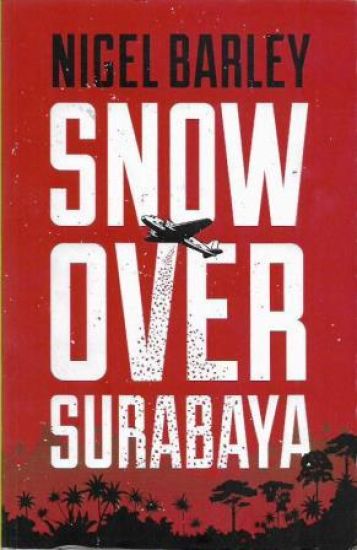
Snow over Surabaya

Snow over Surabaya

Nigel Barley

Monsoon Books
2017
nidottu
Not many British schoolgirls have grown up to become revolutionary heroes of distant, eastern nations but Muriel Stewart Walker did just that. Under a multitude of different names - 'K'tut Tantri' and 'Surabaya Sue' being the best know - she joined in the struggle for Indonesian independence after the Second World War and broadcast its revolutionary message to the world on Rebel Radio. But she did more and smuggled arms, and probably drugs, to help finance the new Republic and experienced bloody battle in the British attack on Surabaya that some have seen as a war crime. She went on to become an intimate of the revolutionary leaders and finally lived to see Indonesia take its place amongst the free nations of the world. Glaswegian 'Surabaya Sue' is virtually unknown in the West and, even in Indonesia, there have always been doubts about her version of events that many have dismissed outright as a blatant mixture of outrageous fantasy and dishonest omissions. Snow over Surabaya happily embraces those doubts and brings a new, spirited account of her adventures in that tempestuous world.
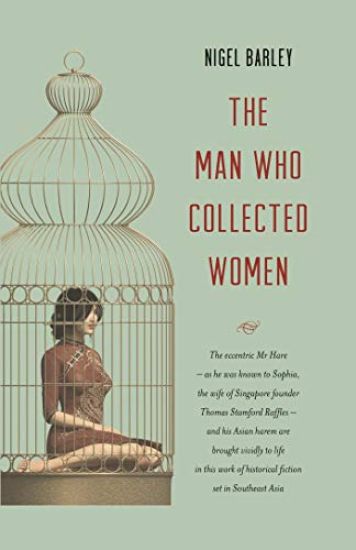
The Man who Collected Women

The Man who Collected Women

Nigel Barley

Monsoon Books
2020
nidottu
A novel about eccentric 19th-century Englishman Alexander Hare: a trader and slave-owner in the East and a friend of Thomas Stamford Raffles, the founder of Singapore, but Hare’s chief claim to fame is as the creator of a harem of women from throughout Asia.
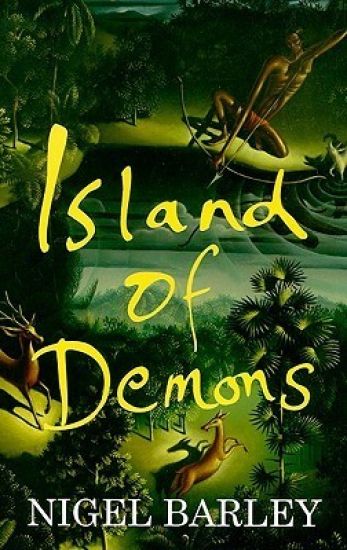
Island of Demons

Island of Demons

Nigel Barley

monsoon
2009
pokkari
Many men dream of running away to a tropical island and living surrounded by beauty and exotic exuberance. Walter Spies did more than dream. He actually did it. In the 1920s and 30s, Walter Spies - ethnographer, choreographer, film maker, natural historian and painter - transformed the perception of Bali from that of a remote island to become the site for Western fantasies about Paradise and it underwent an influx of foreign visitors. The rich and famous flocked to Spies' house in Ubud and his life and work forged a link between serious academics and the visionaries from the Golden Age of Hollywood. Charlie Chaplin, Noel Coward, Miguel Covarrubias, Vicki Baum, Barbara Hutton and many others sought to experience the vision Spies offered while Margaret Mead and Gregory Bateson, the foremost anthropologists of their day, attempted to capture the secret of this tantalizing and enigmatic culture. Island of Demons is a fascinating historical novel, mixing anthropology, the history of ideas and humour. It offers a unique insight into that complex and multi-hued world that was so soon to be swept away, exploring both its ideas and the larger than life characters that inhabited it.
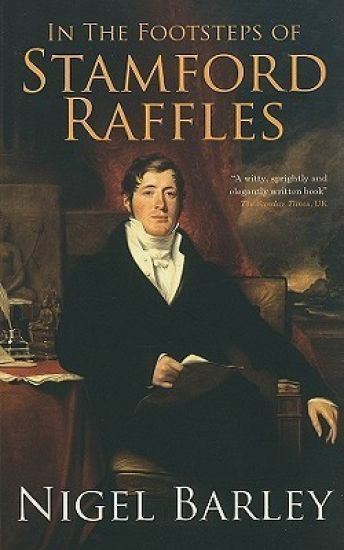
In the Footsteps of Stamford Raffles
Stamford Raffles was born into genteel poverty in the UK in 1781. He joined the East India Company at the age of fourteen and worked his way up to become Lieutenant Governor of Java when the British seized that island for some five years in 1811. There he fell in love with all things Javanese and vaunted it as a place of civilization as he discovered himself as a man of science as well as commerce. A humane and ever-curious figure, his administration was a period of energetic reform and boisterous research that culminated in his History of Java in 1817 and it remains the starting-point of all subsequent studies of Indonesian culture. Personal tragedy and ill-health stalked his final years in the East. Yet, though dying at the early age of 44 and dogged by the hostility of lesser men, he would still find time to found the city-state of Singapore and guide it through its first dangerous years. Here, mythologised by the British and demonised by the Dutch, he is more than a remote founding father and remains a charter for its independence and its enduring values.In this intriguing book, part history, part travelogue, Nigel Barley re-visits the places that were important in the life of Stamford Raffles and evaluates his heritage in an account that is both humorous and insightful.
The Devil's Garden

The Devil's Garden

Nigel Barley

Monsoon Books
2012
pokkari
In 1942 Japanese-occupied Singapore, where violence and starvation stalk the streets, a bizarre tranquillity reigns between warring nations in the Singapore Botanic Gardens. This sensitive and humorous work of historical fiction explores a real, and complicated, chapter of Singapore's history in which British scientists avoided jail during WWII and worked with their Japanese counterparts in the pursuit of science, only to be accused of collaboration following the War.
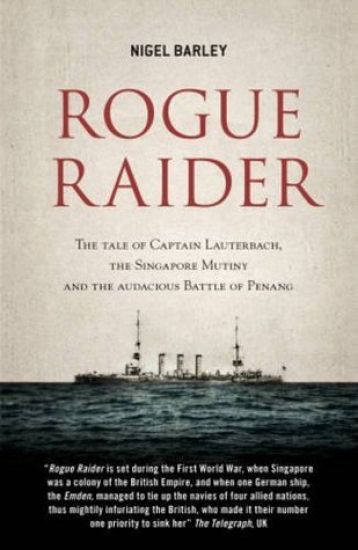
Rogue Raider

Rogue Raider

Nigel Barley

Monsoon Books
2013
isokokoinen pokkari
It is the First World War and the Flashmanesque German naval reserve captain, Julius Lauterbach, is a prisoner of war in Singapore. He is also a braggart, a womaniser and a heavy drinker and through his bored fantasies he unwittingly triggers a mutiny by Muslim troops of the British garrison and so throws the whole course of the war in doubt. The British lose control of the city, its European inhabitants flee to the ships in the harbour and it is only with the help of Japanese marines that the Empire is saved. Rogue Raider is the adventure story of how one ship, the Emden, ties up the navies of four nations only to be sunk at The Battle of Cocos by the Royal Australian Navy light cruiser HMAS Sydney, and how one man eludes Allied Forces in a desperate chase across Asia to America as he attempts to regain his native land. It is fictionalised history but a true history that was deliberately suppressed by the British authorities of the time as too embarrassing and dangerous to be known. Revealed here, it brings vividly to life the Southeast Asia of the period, its sights, its sounds and its rich mix of peoples.And through it an unwilling participant in the war becomes an accidental hero.
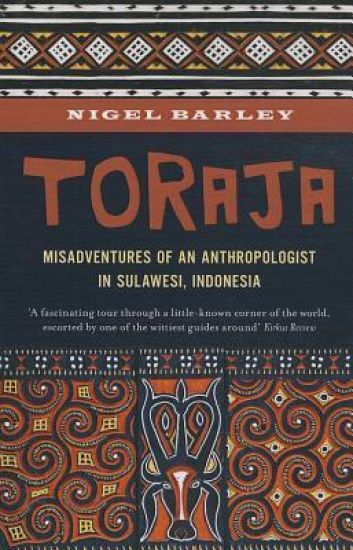
Toraja

Toraja

Nigel Barley

monsoon
2013
pokkari
In 1985, Dr. Nigel Barley, senior anthropologist at The British Museum, set off for the relatively unknown Indonesian island of Sulawesi in search of the Toraja, a people whose culture includes headhunting, transvestite priests and the massacre of buffalo. In witty and finely crafted prose, Barley offers fascinating insight into the people of Sulawesi and he recounts the tale of the four Torajan woodcarvers he invites back to London to construct an Indonesian rice barn in The British Museum. Previously published as "Not a Hazardous Sport."