Kirjojen hintavertailu. Mukana 11 547 576 kirjaa ja 12 kauppaa.

Kirjahaku

Etsi kirjoja tekijän nimen, kirjan nimen tai ISBN:n perusteella.

4 kirjaa tekijältä Nigel Blagg

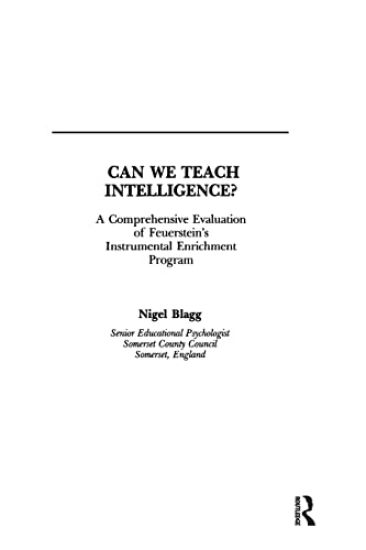
Can We Teach Intelligence?

Can We Teach Intelligence?

Nigel Blagg

Routledge Member of the Taylor and Francis Group
1990
sidottu
This compelling book provides one of the most comprehensive and detailed evaluations of a very popular cognitive skills course -- Reuven Feuerstein's Instrumental Enrichment Programme. Feuerstein claims that his program, a model for diagnosing and remedying cognitive deficiencies in poor attainers, can equip pupils with the basic prerequisites of thinking, thereby enabling them to become more effective learners. Combining innovative and traditional experimental techniques, this text analyzes both teacher and pupil outcomes on a wide range of issues including abilities, accomplishments, and behavioral characteristics. The implications of the study are set against theoretical and practical issues involved in other popular intellectual skills training programs. "Real world" concerns that have been largely ignored by research literature are addressed, as are their effects on the teaching of thinking skills.

School Phobia and its Treatment (1987)
This book was first published in 1987. School phobia (or school refusal) is a puzzling problem that is still insufficiently understood. It is quite different from truancy and can lead to long-term adjustment difficulties if ignored or inappropriately treated.The purpose of this book is three-fold: first, to describe the nature of school phobia; secondly, to review the treatment literature exposing the common elements of the most successful, though theoretically different, approaches; thirdly, to provide a detailed step-by-step guide to the diagnosis and treatment of school phobia involving a rapid return to school and comprehensive behavioural management. The techniques and principles discussed are illustrated in a series of case studies.The book is aimed at parents and those professionals who regularly come into contact with children with school phobia, such as educational and clinical psychologists, child psychotherapists, behaviour therapists and family therapists, psychiatrists, paediatricians and family doctors, and teachers and researchers from all phases of education. If these professional groups could achieve a common understanding of school phobia, many more children could be treated quickly and effectively.
School Phobia and its Treatment (1987)
This book was first published in 1987. School phobia (or school refusal) is a puzzling problem that is still insufficiently understood. It is quite different from truancy and can lead to long-term adjustment difficulties if ignored or inappropriately treated.The purpose of this book is three-fold: first, to describe the nature of school phobia; secondly, to review the treatment literature exposing the common elements of the most successful, though theoretically different, approaches; thirdly, to provide a detailed step-by-step guide to the diagnosis and treatment of school phobia involving a rapid return to school and comprehensive behavioural management. The techniques and principles discussed are illustrated in a series of case studies.The book is aimed at parents and those professionals who regularly come into contact with children with school phobia, such as educational and clinical psychologists, child psychotherapists, behaviour therapists and family therapists, psychiatrists, paediatricians and family doctors, and teachers and researchers from all phases of education. If these professional groups could achieve a common understanding of school phobia, many more children could be treated quickly and effectively.
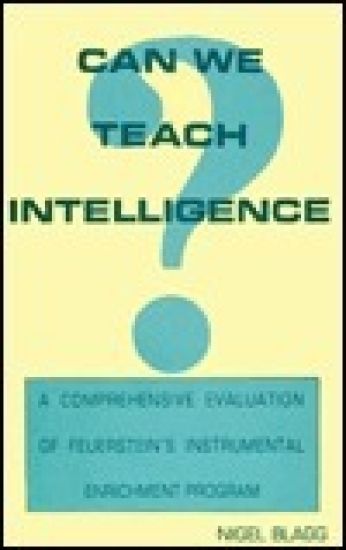
Can We Teach Intelligence?

Can We Teach Intelligence?

Nigel Blagg

Routledge
2016
nidottu
This compelling book provides one of the most comprehensive and detailed evaluations of a very popular cognitive skills course -- Reuven Feuerstein's Instrumental Enrichment Programme. Feuerstein claims that his program, a model for diagnosing and remedying cognitive deficiencies in poor attainers, can equip pupils with the basic prerequisites of thinking, thereby enabling them to become more effective learners. Combining innovative and traditional experimental techniques, this text analyzes both teacher and pupil outcomes on a wide range of issues including abilities, accomplishments, and behavioral characteristics. The implications of the study are set against theoretical and practical issues involved in other popular intellectual skills training programs. "Real world" concerns that have been largely ignored by research literature are addressed, as are their effects on the teaching of thinking skills.