Kirjojen hintavertailu. Mukana 11 627 220 kirjaa ja 12 kauppaa.

Kirjahaku

Etsi kirjoja tekijän nimen, kirjan nimen tai ISBN:n perusteella.

6 kirjaa tekijältä Nigel Eltringham

Accounting for Horror

Accounting for Horror

Nigel Eltringham

Pluto Press
2004
pokkari
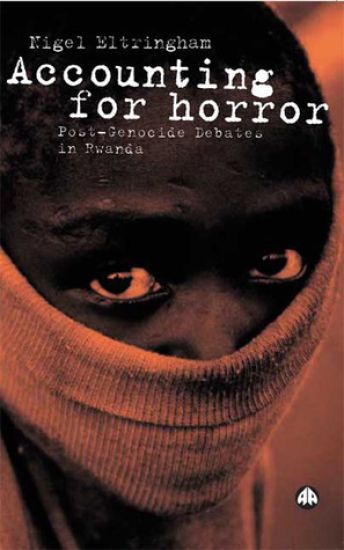
The 1994 Rwandan genocide was a monumental atrocity in which at least 500,000 Tutsi and tens of thousands of Hutu were murdered in less than four months. Since 1994, members of the Rwandan political class who recognise those events as genocide have struggled to account for it and bring coherence to what is often perceived as irrational, primordial savagery. Most people agree on the factors that contributed to the genocide -- colonialism, ethnicity, the struggle to control the state. However, many still disagree over the way these factors evolved, and the relationship between them. This continuing disagreemnt raises questions about how we come to understand historical events -- understandings that underpin the possibility of sustainable peace. Drawing on extensive research among Rwandese in Rwanda and Europe, and on his work with a conflict resolution NGO in post-genocide Rwanda, Nigel Eltringham argues that conventional modes of historical representation are inadequate in a case like Rwanda. Single, absolutist narratives and representations of genocide actually reinforce the modes of thinking that fuelled the genocide in the first place. Eltringham maintains that if we are to understand the genocide, we must explore the relationship between multiple explanations of what happened and interrogate how -- and why -- different groups within Rwandan society talk about the genocide in different ways.
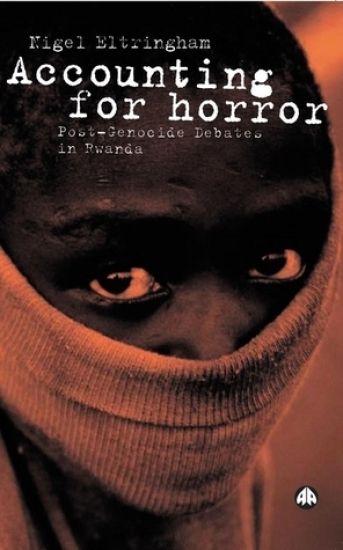
Accounting for Horror: Post-Genocide Debates in Rwanda
The 1994 Rwandan genocide was a monumental atrocity in which at least 500,000 Tutsi and tens of thousands of Hutu were murdered in less than four months. Since 1994, members of the Rwandan political class who recognise those events as genocide have struggled to account for it and bring coherence to what is often perceived as irrational, primordial savagery.Most people agree on the factors that contributed to the genocide -- colonialism, ethnicity, the struggle to control the state. However, many still disagree over the way these factors evolved, and the relationship between them. This continuing disagreemnt raises questions about how we come to understand historical events -- understandings that underpin the possibility of sustainable peace.Drawing on extensive research among Rwandese in Rwanda and Europe, and on his work with a conflict resolution NGO in post-genocide Rwanda, Nigel Eltringham argues that conventional modes of historical representation are inadequate in a case like Rwanda. Single, absolutist narratives and representations of genocide actually reinforce the modes of thinking that fuelled the genocide in the first place. Eltringham maintains that if we are to understand the genocide, we must explore the relationship between multiple explanations of what happened and interrogate how -- and why -- different groups within Rwandan society talk about the genocide in different ways.
The Anthropology of Peace and Reconciliation

The Anthropology of Peace and Reconciliation

Nigel Eltringham

CRC Press Inc
2021
sidottu
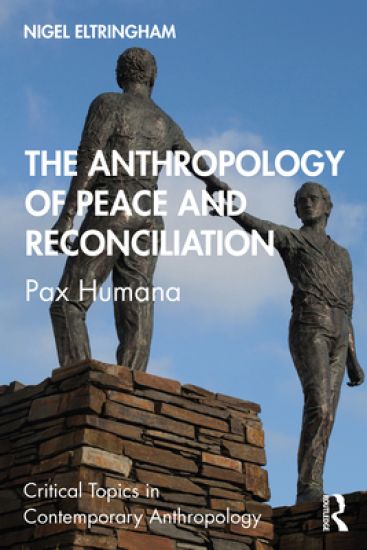
This book offers a uniquely comparative, case-study perspective on the anthropology of peace and reconciliation. In the contemporary world, the end of violent conflict often gives way to one, or a combination, of five interventions designed to strengthen “peace” and facilitate “reconciliation”. These interventions are: the reinvigoration of “traditional” conflict management mechanisms; the collection and preservation of testimony; truth commissions; international criminal trials; and memorialisation. Social anthropologists have challenged the received wisdom on which these interventions are based, arguing that they fail to adequately take into account and sensitively manage the needs and expectations of those who have lived through conflict. Exploring the five interventions through detailed ethnographic accounts from around the world, this book demonstrates that although social anthropologists adopt a critical stance, they do not dismiss “received wisdom” out of hand; rather, they advocate that interventions should be subject to continuous evaluation according to the evolving, often contradictory, needs and wishes of those who strive to survive among the ruins of their former lives.This is essential reading for scholars of peace studies, conflict resolution studies and those taking an anthropological approach to conflict, violence, human rights and law.
The Anthropology of Peace and Reconciliation

The Anthropology of Peace and Reconciliation

Nigel Eltringham

CRC Press Inc
2021
nidottu
This book offers a uniquely comparative, case-study perspective on the anthropology of peace and reconciliation. In the contemporary world, the end of violent conflict often gives way to one, or a combination, of five interventions designed to strengthen “peace” and facilitate “reconciliation”. These interventions are: the reinvigoration of “traditional” conflict management mechanisms; the collection and preservation of testimony; truth commissions; international criminal trials; and memorialisation. Social anthropologists have challenged the received wisdom on which these interventions are based, arguing that they fail to adequately take into account and sensitively manage the needs and expectations of those who have lived through conflict. Exploring the five interventions through detailed ethnographic accounts from around the world, this book demonstrates that although social anthropologists adopt a critical stance, they do not dismiss “received wisdom” out of hand; rather, they advocate that interventions should be subject to continuous evaluation according to the evolving, often contradictory, needs and wishes of those who strive to survive among the ruins of their former lives.This is essential reading for scholars of peace studies, conflict resolution studies and those taking an anthropological approach to conflict, violence, human rights and law.
Genocide Never Sleeps

Genocide Never Sleeps

Nigel Eltringham

Cambridge University Press
2019
sidottu
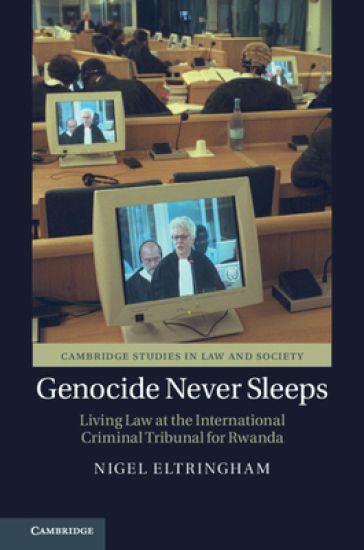
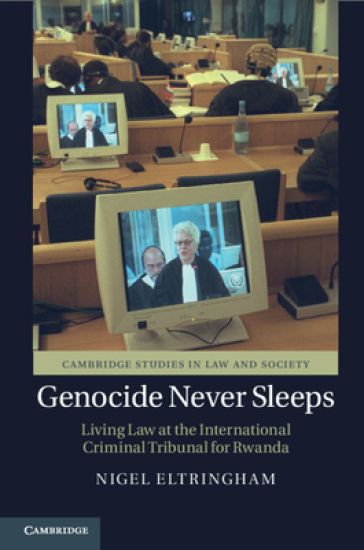
Accounts of international criminal courts have tended to consist of reflections on abstract legal texts, on judgements and trial transcripts. Genocide Never Sleeps, based on ethnographic research at the International Criminal Tribunal for Rwanda (ICTR), provides an alternative account, describing a messy, flawed human process in which legal practitioners faced with novel challenges sought to reconfigure long-standing habits and opinions while maintaining a commitment to 'justice'. From the challenges of simultaneous translation to collaborating with colleagues from different legal traditions, legal practitioners were forced to scrutinise that which normally remains assumed in domestic law. By providing an account of this process, Genocide Never Sleeps not only provides a unique insight into the exceptional nature of the ad hoc, improvised ICTR and the day-to-day practice of international criminal justice, but also holds up for fresh inspection much that is naturalised and assumed in unexceptional, domestic legal processes.
Genocide Never Sleeps

Genocide Never Sleeps

Nigel Eltringham

Cambridge University Press
2021
pokkari
Accounts of international criminal courts have tended to consist of reflections on abstract legal texts, on judgements and trial transcripts. Genocide Never Sleeps, based on ethnographic research at the International Criminal Tribunal for Rwanda (ICTR), provides an alternative account, describing a messy, flawed human process in which legal practitioners faced with novel challenges sought to reconfigure long-standing habits and opinions while maintaining a commitment to 'justice'. From the challenges of simultaneous translation to collaborating with colleagues from different legal traditions, legal practitioners were forced to scrutinise that which normally remains assumed in domestic law. By providing an account of this process, Genocide Never Sleeps not only provides a unique insight into the exceptional nature of the ad hoc, improvised ICTR and the day-to-day practice of international criminal justice, but also holds up for fresh inspection much that is naturalised and assumed in unexceptional, domestic legal processes.