Kirjojen hintavertailu. Mukana 12 016 292 kirjaa ja 12 kauppaa.

Kirjahaku

Etsi kirjoja tekijän nimen, kirjan nimen tai ISBN:n perusteella.

7 kirjaa tekijältä Nigel Leask

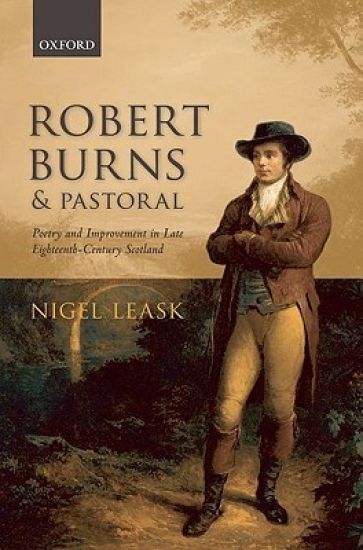
Robert Burns and Pastoral

Robert Burns and Pastoral

Nigel Leask

Oxford University Press
2015
nidottu
Robert Burns and Pastoral is a full-scale reassessment of the writings of Robert Burns (1759-1796), arguably the most original poet writing in the British Isles between Pope and Blake, and the creator of the first modern vernacular style in British poetry. Although still celebrated as Scotland's national poet, Burns has long been marginalised in English literary studies worldwide, due to a mistaken view that his poetry is linguistically incomprehensible and of interest to Scottish readers only. Nigel Leask challenges this view by interpreting Burns's poetry as an innovative and critical engagement with the experience of rural modernity, namely to the revolutionary transformation of Scottish agriculture and society in the decades between 1760 and 1800, thereby resituating it within the mainstream of the Scottish and European enlightenments. Detailed study of the literary, social, and historical contexts of Burns's poetry explodes the myth of the 'Heaven-taught ploughman', revealing his poetic artfulness and critical acumen as a social observer, as well as his significance as a Romantic precursor. Leask discusses Burns's radical decision to write 'Scots pastoral' (rather than English georgic) poetry in the tradition of Allan Ramsay and Robert Fergusson, focusing on themes of Scottish and British identity, agricultural improvement, poetic self-fashioning, language, politics, religion, patronage, poverty, antiquarianism, and the animal world. The book offers fresh interpretations of all Burns's major poems and some of the songs, the first to do so since Thomas Crawford's landmark study of 1960. It concludes with a new assessment of his importance for British Romanticism and to a 'Four Nations' understanding of Scottish literature and culture.
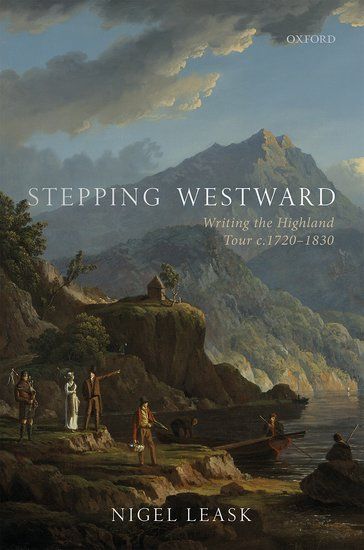
Stepping Westward

Stepping Westward

Nigel Leask

Oxford University Press
2020
sidottu
Stepping Westward is the first book dedicated to the literature of the Scottish Highland tour of 1720-1830, a major cultural phenomenon that attracted writers and artists like Pennant, Johnson and Boswell, William and Dorothy Wordsworth, Coleridge, Scott, Hogg, Keats, Daniell, and Turner, as well as numerous less celebrated travellers and tourists. Addressing more than a century's worth of literary and visual representations of the Highlands, the book casts new light on how the tour developed a modern literature of place, acting as a catalyst for thinking about improvement, landscape, and the shaping of British, Scottish, and Gaelic identities. It pays attention to the relationship between travellers and the native Gaels, whose world was plunged into crisis by rapid and forced social change. At the book's core lie the best-selling tours of Pennant and Dr Johnson, associated with attempts to 'improve' the intractable Gaidhealtachd in the wake of Culloden. Alongside the Ossian craze and Gilpin's picturesque, their books stimulated a wave of 'home tours' from the 1770s through the romantic period, including writing by women like Sarah Murray and Dorothy Wordsworth. The incidence of published Highland Tours (many lavishly illustrated), peaked around 1800, but as the genre reached exhaustion, the 'romantic Highlands' were reinvented in Scott's poems and novels, coinciding with steam boats and mass tourism, but also rack-renting, sheep clearance, and emigration.
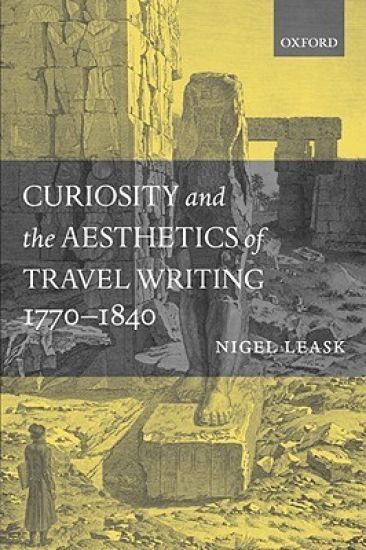
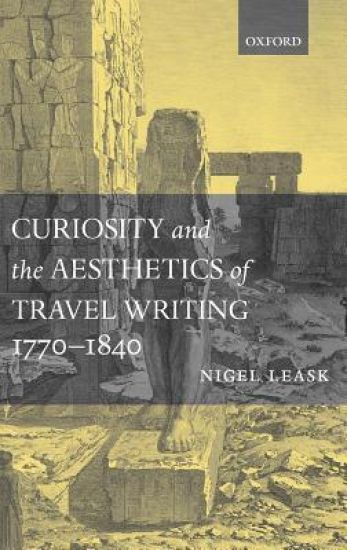
Curiosity and the Aesthetics of Travel-Writing, 1770-1840
The decades between 1770 and 1840 are rich in exotic accounts of the ruin-strewn landscapes of Ethiopia, Egypt, India, and Mexico. Yet it is a field which has been neglected by scholars and which - unjustifiably - remains outside the literary canon. In this pioneering book, Nigel Leask studies the Romantic obsession with these 'antique lands', drawing generously on a wide range of eighteenth- and nineteenth-century travel books, as well as on recent scholarship in literature, history, geography, and anthropology. Viewing the texts primarily as literary works rather than 'transparent' adventure stories or documentary sources, he sets out to challenge the tendency in modern academic work to overemphasize the authoritative character of colonial discourse. Instead, he addresses the relationship between narrative, aesthetics, and colonialism through the unstable discourse of antiquarianism, exploring the effects of problems of creditworthiness, and the nebulous epistemologicial claims of 'curiosity' (a leitmotif of the accounts studied here), on the contemporary status of travel writing. Attentive to the often divergent idioms of elite and popular exoticism, Curiosity and the Aesthetics of Travel Writing plots the transformation of the travelogue through the period, as the baroque particularism of curiosity was challenged by picturesque aesthetics, systematic 'geographical narrative', and the emergence of a 'transcendental self' axiomatic to Romantic culture. In so doing it offers an important reformulation of the relations between literature, aesthetics, and empire in the late Enlightenment and Romantic periods.
Curiosity and the Aesthetics of Travel-Writing, 1770-1840
The decades between 1770 and 1840 are rich in exotic accounts of the ruin-strewn landscapes of Ethiopia, Egypt, India, and Mexico. Yet it is a field which has been neglected by scholars and which - unjustifiably - remains outside the literary canon. In this pioneering book, Nigel Leask studies the Romantic obsession with these 'antique lands', drawing generously on a wide range of eighteenth and nineteenth-century travel books, as well as on recent scholarship in literature, history, geography, and anthropology. Viewing the texts primarily as literary works rather than 'transparent' adventure stories or documentary sources, he sets out to challenge the tendency in modern academic work to overemphasize the authoritative character of colonial discourse. Instead, he addresses the relationship between narrative, aesthetics, and colonialism through the unstable discourse of antiquarianism, exploring the effects of problems of credit worthiness, and the nebulous epistemological claims of 'curiosity' (a leitmotif of the accounts studied here), on the contemporary status of travel writing. Attentive to the often divergent idioms of elite and popular exoticism, Curiosity and the Aesthetics of Travel Writing plots the transformation of the travelogue through the period, as the baroque particularism of curiosity was challenged by picturesque aesthetics, systematic 'geographical narrative', and the emergence of a 'transcendental self' axiomatic to Romantic culture. In so doing it offers an important reformulation of the relations between literature, aesthetics, and empire in the late Enlightenment and Romantic periods.
Robert Burns and Pastoral

Robert Burns and Pastoral

Nigel Leask

Oxford University Press
2010
sidottu
Robert Burns and Pastoral is a full-scale reassessment of the writings of Robert Burns (1759-1796), arguably the most original poet writing in the British Isles between Pope and Blake, and the creator of the first modern vernacular style in British poetry. Although still celebrated as Scotland's national poet, Burns has long been marginalised in English literary studies worldwide, due to a mistaken view that his poetry is linguistically incomprehensible and of interest to Scottish readers only. Nigel Leask challenges this view by interpreting Burns's poetry as an innovative and critical engagement with the experience of rural modernity, namely to the revolutionary transformation of Scottish agriculture and society in the decades between 1760 and 1800, thereby resituating it within the mainstream of the Scottish and European enlightenments. Detailed study of the literary, social, and historical contexts of Burns's poetry explodes the myth of the 'Heaven-taught ploughman', revealing his poetic artfulness and critical acumen as a social observer, as well as his significance as a Romantic precursor. Leask discusses Burns's radical decision to write 'Scots pastoral' (rather than English georgic) poetry in the tradition of Allan Ramsay and Robert Fergusson, focusing on themes of Scottish and British identity, agricultural improvement, poetic self-fashioning, language, politics, religion, patronage, poverty, antiquarianism, and the animal world. The book offers fresh interpretations of all Burns's major poems and some of the songs, the first to do so since Thomas Crawford's landmark study of 1960. It concludes with a new assessment of his importance for British Romanticism and to a 'Four Nations' understanding of Scottish literature and culture.
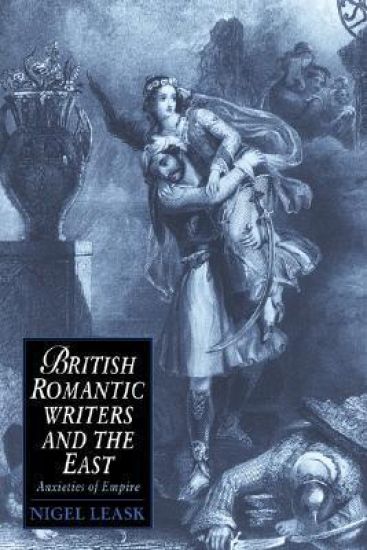
British Romantic Writers and the East

British Romantic Writers and the East

Nigel Leask

Cambridge University Press
2004
pokkari
The recent turn to political and historical readings of Romanticism has given us a more complex picture of the institutional, cultural and sexual politics of the period. There has been a tendency, however, to confine such study to the European scene. In this book, Nigel Leask sets out to study the work of Byron, Shelley and De Quincey (together with a number of other major and minor Romantic writers, including Robert Southey and Tom Moore) in relation to Britain's imperial designs on the 'Orient'. Combining historical and theoretical approaches with detailed analyses of specific works, it examines the anxieties and instabilities of Romantic representations of the Ottoman Empire, India, China and the Far East. It argues that these anxieties were not marginal but central to the major concerns of British Romantic writers. The book is illustrated with a number of engravings from the period, giving a visual dimension to the discussion of Romantic representations of the East.