Kirjojen hintavertailu. Mukana 11 627 064 kirjaa ja 12 kauppaa.

Kirjahaku

Etsi kirjoja tekijän nimen, kirjan nimen tai ISBN:n perusteella.

6 kirjaa tekijältä Nigel Nicholson

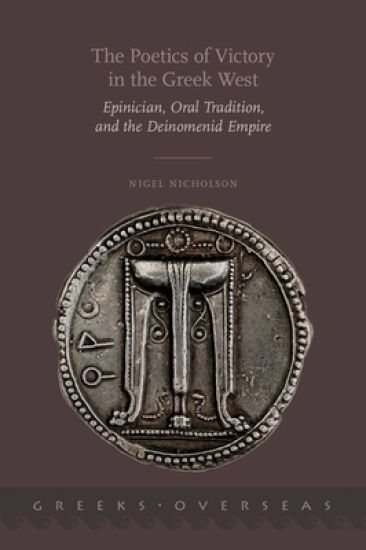
The Poetics of Victory in the Greek West

The Poetics of Victory in the Greek West

Nigel Nicholson

Oxford University Press Inc
2015
sidottu
The Poetics of Victory in the Greek West examines the relationship between epinician and the heroizing narratives about athletes, or "hero-athlete narratives, " that circulated orally in Sicily and Italy in the late archaic and early classical period. Drawing on the colorful stories told about athletes in later sources, the fragments of Simonides and the surviving odes of Pindar and Bacchylides, it argues that epinician was formed in opposition to orally transmitted narratives and that these two forms-epinician and the "hero-athlete narrative "-promoted opposed political visions, with epinician promoting the Deinomenid empire and its structures and the hero-athlete narrative opposing Deinomenid rule. Combining an intimate knowledge of the material culture of the Greek West with an innovative use of available source material, The Poetics of Victory in the Greek West exposes the rich intersections between athletics and politics in Sicily and Italy, offering a new and compelling account of Deinomenid self-promotion and of the varied and complex communities that operated under Deinomenids' control or within their shadow. Further, by establishing models of production and interpretation for the orally transmitted narratives and bringing them into dialogue with epinician, The Poetics of Victory in the Greek West reveals much about epinician as a form, how it developed in the West, what meanings it already carried and what meanings it accrued as it was appropriated by Hieron after Gelon's death.
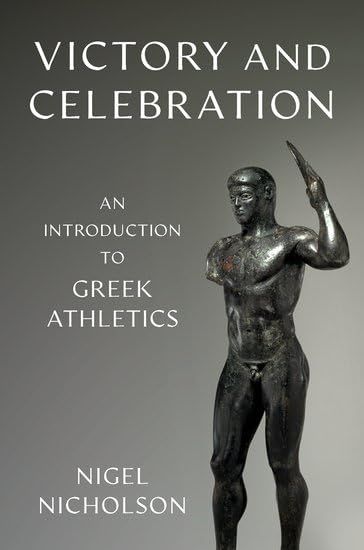
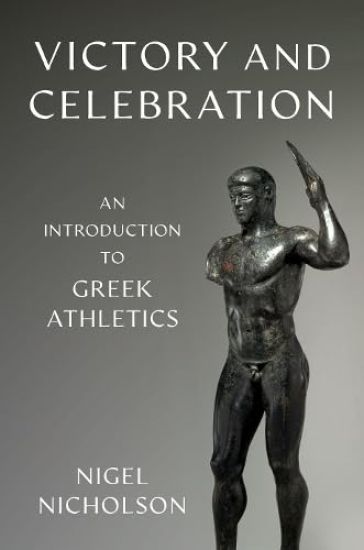
Victory and Celebration

Victory and Celebration

Nigel Nicholson

OXFORD UNIVERSITY PRESS INC
2025
sidottu
Victory and Celebration traces how athletic success was transformed into broader social and political capital in ancient Greece in the sixth and fifth centuries BCE--how being a good boxer or wrestler, or having a fast son or superior horses was made into something of significance beyond the stadium or hippodrome. Athletic success did not speak for itself. Its meanings had to be produced and defended, and this was the work of the victory memorials--the poems, statues, and other dedications produced to commemorate the athletic victories. Through readings of these victory memorials, Victory and Celebration explores, first, how Greek athletics was intertwined with general ideas of excellence, beauty, and a closeness to gods and heroes, and second, how the memorials communicated more directly political visions of leadership, inherited ability, and the victor's place in their city and the wider world. Finally, the book examines how specific events, such as boxing, contests for youths, and chariot and horse races were shaped and made valuable, or kept valuable, by the memorials. The significance of athletic victory was not a given; by addressing what meanings were attributed to athletic success, and the often-innovative ways in which these meanings were made to seem true, Victory and Celebration emphasizes how much work had to be done to make that success count.
Victory and Celebration

Victory and Celebration

Nigel Nicholson

OXFORD UNIVERSITY PRESS INC
2025
nidottu
Victory and Celebration traces how athletic success was transformed into broader social and political capital in ancient Greece in the sixth and fifth centuries BCE--how being a good boxer or wrestler, or having a fast son or superior horses was made into something of significance beyond the stadium or hippodrome. Athletic success did not speak for itself. Its meanings had to be produced and defended, and this was the work of the victory memorials--the poems, statues, and other dedications produced to commemorate the athletic victories. Through readings of these victory memorials, Victory and Celebration explores, first, how Greek athletics was intertwined with general ideas of excellence, beauty, and a closeness to gods and heroes, and second, how the memorials communicated more directly political visions of leadership, inherited ability, and the victor's place in their city and the wider world. Finally, the book examines how specific events, such as boxing, contests for youths, and chariot and horse races were shaped and made valuable, or kept valuable, by the memorials. The significance of athletic victory was not a given; by addressing what meanings were attributed to athletic success, and the often-innovative ways in which these meanings were made to seem true, Victory and Celebration emphasizes how much work had to be done to make that success count.
Aristocracy and Athletics in Archaic and Classical Greece

Aristocracy and Athletics in Archaic and Classical Greece

Nigel Nicholson

Cambridge University Press
2005
sidottu
Athletics represented an important institution through which the Greek aristocracies sought to maintain their privileged political position. Victory, however, had always involved the use of others, such as charioteers, jockeys, and trainers, and in the late archaic and early classical period the relationship between the victors and these helpers changed radically. This threatened the political value of athletics and thus undermined the utility of the institution for aristocrats. Nigel Nicholson examines how aristocrats responded to these changes through a study of victory memorials. New Historicist in method, the book draws on odes, dedications, vases, and coins, as well as anecdotes about the victors. It asks how the vulgar details of winning are represented by the memorials, and it assumes that the value of athletics was always under threat, from groups both inside and outside the elite. The result is a fascinating look at one area of social struggle in ancient Greece.
Aristocracy and Athletics in Archaic and Classical Greece

Aristocracy and Athletics in Archaic and Classical Greece

Nigel Nicholson

Cambridge University Press
2011
pokkari
Athletics represented an important institution through which the Greek aristocracies sought to maintain their privileged political position. Victory, however, had always involved the use of others, such as charioteers, jockeys, and trainers, and in the late archaic and early classical period the relationship between the victors and these helpers changed radically. This threatened the political value of athletics and thus undermined the utility of the institution for aristocrats. Nigel Nicholson examines how aristocrats responded to these changes through a study of victory memorials. New Historicist in method, the book draws on odes, dedications, vases, and coins, as well as anecdotes about the victors. It asks how the vulgar details of winning are represented by the memorials, and it assumes that the value of athletics was always under threat, from groups both inside and outside the elite. The result is a fascinating look at one area of social struggle in ancient Greece.
The "I" of Leadership

The "I" of Leadership

Nigel Nicholson

John Wiley Sons Inc
2013
sidottu
This is the leadership book you have to read: a barn-storming new take on what makes a versatile, integrated, and effective leader Using stories and examples from the lives of leaders, from the sports stadium to the White House to the office of the CEO, Nicholson shows vividly how the capacity of leaders to see what others do not see frames their actions and allows them to transform, build, destroy, or stabilize. Leaders fail through lack of insight—into themselves and into the worlds they inhabit. The strategic challenge of leadership is to find the right balance between impact and versatility and the successful crafting of an identity that merges the leader and the surrounding culture or 'zeitgeist.' Leaders covered in the book include: George Bush, Tony Blair, George S Patton, Warren Buffet, Steve Jobs, Josef Stalin, Hannibal, Elizabeth I, Nelson Mandela, Edith Cowan, Abraham Lincoln, Mohandas Gandhi, Henry Ford, Ernest Shackleton, Barack Obama, Robert Maxwell, JFK, Pope John XXIII, Margaret Thatcher, and Samuel Pepys. This book resonates with insights and searching questions on the nature of human leadership. It will be an invaluable guide to managers, consultants, and people everywhere.