Kirjojen hintavertailu. Mukana 11 433 406 kirjaa ja 12 kauppaa.

Kirjahaku

Etsi kirjoja tekijän nimen, kirjan nimen tai ISBN:n perusteella.

4 kirjaa tekijältä Nigel Raab

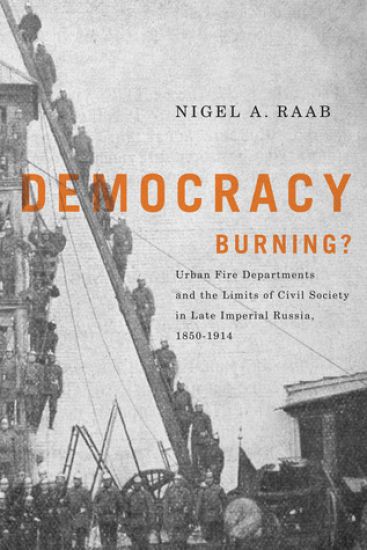
Democracy Burning?

Democracy Burning?

Nigel Raab

McGill-Queen's University Press
2011
sidottu
Nineteenth-century commentators often claimed that Russia burned to the ground every thirty years. In an empire whose cities were built of wood, firefighters had a visible presence throughout Russia's urban centres and became politically active across the country. Democracy Burning? studies the political, cultural, and social values of volunteer firefighters and reveals the ways in which their public organizations cooperated with the authoritarian state.
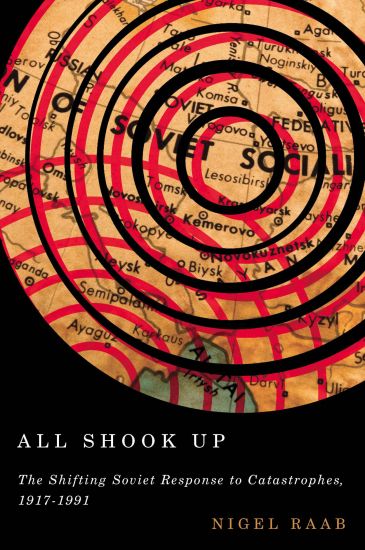
All Shook Up

All Shook Up

Nigel Raab

McGill-Queen's University Press
2017
sidottu
Earthquakes, nuclear accidents, and floods were among the many unexpected tragedies that struck the Soviet Union over its history. Requiring the immediate mobilization of vast resources and aid, and embedded within a specific context and time, these catastrophes provide critical insights into the nature of the twentieth-century Communist state. All Shook Up takes a close look at the representation in film, the political repercussions, and the social opportunities of large-scale catastrophes in separate Soviet epochs, including the 1927 earthquake in the Crimean peninsula, the 1948 earthquake in Ashgabat, the Tashkent earthquake in 1966, the Chernobyl explosion in 1986, and the Armenian earthquake in 1988. Juxtaposing various disaster responses and demonstrating the ways both Soviet authorities and citizens molded them to their own cultural needs, Nigel Raab highlights the radical shifts in disaster policy from one leader to the next. Given the opportunity to act outside regular parameters, Soviet residents not only rebuilt their devastated cities, but also experimented with new values and crafted their own worldview while the state struggled to return the situation to normal. Based on archival research conducted in Russia and Ukraine, All Shook Up fills a gap in a global literature and challenges stereotypical representations of the Soviet Union as a monolithic state.
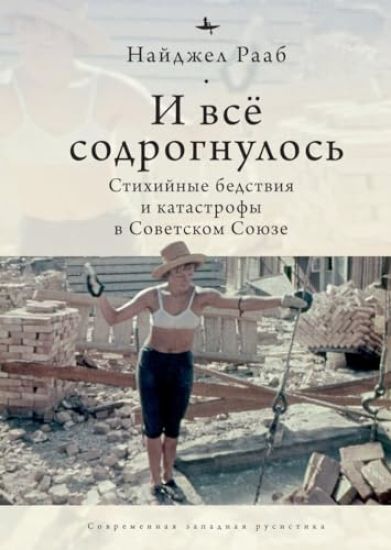
All Shook Up

All Shook Up

Nigel Raab

Academic Studies Press
2021
sidottu
All Shook Up is the first full-length study to explore how the Soviet government and citizens responded to major disasters. Although traditional disaster studies focus on scientific aspects, All Shook Up looks at political repercussions and social opportunities that emerged after disasters. By juxtaposing the response to earthquakes in the Central Asian republics to nuclear catastrophe in Ukraine, Nigel Raab shows how Soviet citizens not only rebuilt devastated cities but also experimented with new values. After the Tashkent earthquake in 1966, architects experimented with Western design and youth underwent their own version of a sexual revolution. This study of Soviet disasters challenges stereotypical representations of the Soviet Union as a monolithic state.
Bits of Time

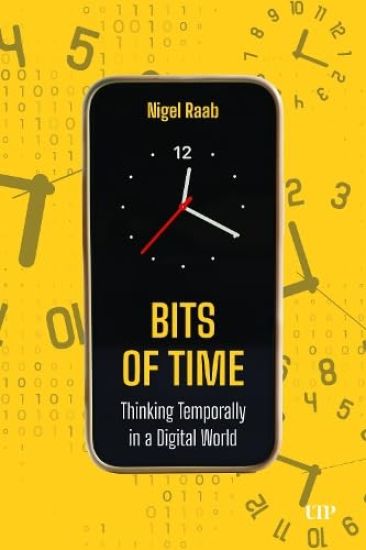
Bits of Time

Nigel Raab

UNIVERSITY OF TORONTO PRESS
2026
sidottu
Bits of Time explores how the digital age reshapes our understanding of time. Tracing the long and complex history of temporal thought, the book situates today’s digital timekeeping within centuries of evolving social, cultural, and scientific practices – from Galileo’s separation of time from its social context to the regimented use of schedules to the repetitive rhythms of the digital timekeeper. In the digital world, time becomes fragmented, recorded, and endlessly reordered. Each timestamp, archive, or captured webpage reflects an obsessive impulse to measure and preserve the fleeting present. Drawing on examples from Einstein’s relativity and Walter Benjamin’s reflections on mechanical reproduction to the longue durée of the Annales School, Bits of Time shows how digital temporality transforms foundational humanist concepts. Challenging the dominance of spatial frameworks in digital humanities, historian Nigel Raab restores time to the center of critical inquiry. The book reveals how digital technology's discrete, flexible, and repetitive treatment of time reshapes not only how we record the world but how we think within it.