Kirjojen hintavertailu. Mukana 11 699 587 kirjaa ja 12 kauppaa.

Kirjahaku

Etsi kirjoja tekijän nimen, kirjan nimen tai ISBN:n perusteella.

8 kirjaa tekijältä Nigel Simeone

Jancek's Works

Jancek's Works

Nigel Simeone

Clarendon Press
1997
sidottu
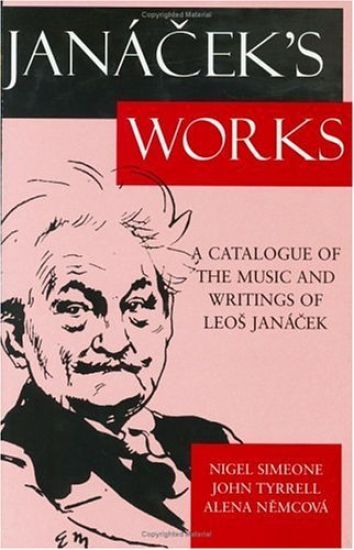
Leos Janacek (1854-1928) is one of the few great opera composers of the twentieth century; his operas, orchestral, chamber, and vocal works are all part of the international repertory. This catalogue is by far the most comprehensive to appear in any language, with up-to-date and reliable information on all his works. Each entry provides detailed information on date of composition (and shows on what basis dating has been arrived at); source of text orprogramme; performing forces; duration; manuscripts and their locations; publication (a complete listing); performances and productions; dedication; literature. A special feature is the explanation of terms which may be unfamiliar to the western reader such as 'Glagolitic', 'Varyto', 'Lachian', and 'Indian ClubSwinging'. This catalogue is also the first to include a complete, annotated list of the composer's varied and extensive writings.
Paris--A Musical Gazetteer

Paris--A Musical Gazetteer

Nigel Simeone

Yale University Press
2000
pokkari
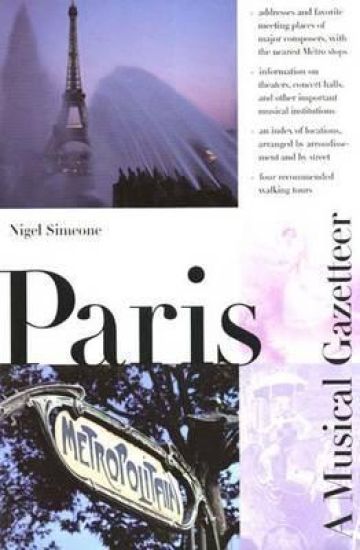
This essential guidebook is designed for all travelers interested in exploring the historic musical sites of Paris—in person or from an armchair. Paris is a uniquely rich music capital, its streets echoing with centuries of great music that has been created and performed there. Virtually every neighborhood boasts a concert hall, church, museum, or home that has played a significant role in the extraordinary musical tradition of the city. This gazetteer will guide you to the important musical landmarks in Paris and explain why each is noteworthy. Nearly all the celebrated French composers of the last four centuries have called Paris home, and dozens of other eminent composers—Chopin, Liszt, Mozart, Prokofiev, Stravinsky, Verdi, and Wagner among them—have spent extended periods there as well. They, along with performers, teachers, instrument makers, and publishers, have bequeathed to the city a wealth of historic landmarks, ranging from the opulent grandeur of the Opéra to Erik Satie’s tiny room in Montmartre.Featured in the gazetteer:• biographical portraits of major composers, all their known Paris addresses and favorite meeting places, with the nearest Métro stops• locations of monuments and graves of composers• information on churches, theaters, concert venues, and important musical institutions• listings of libraries, museums, and galleries holding materials related to music• an index of locations, arranged by arrondissement and by street• four recommended walking tours• more than 120 contemporary and historical photographs
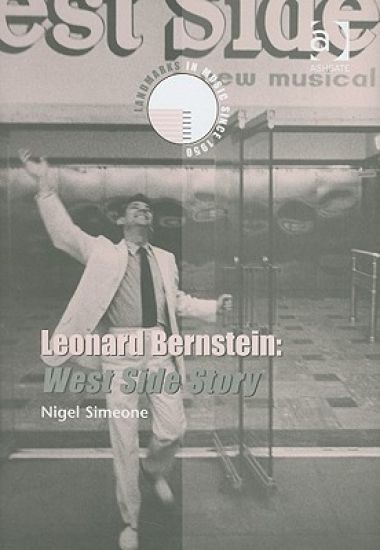
Leonard Bernstein: West Side Story

Leonard Bernstein: West Side Story

Nigel Simeone

Ashgate Publishing Limited
2009
sidottu
One of the Broadway musicals that can genuinely claim to have transformed the genre, West Side Story has been featured in many books on Broadway, but it has yet to be the focus of a scholarly monograph. Nigel Simeone begins by exploring the long process of creating West Side Story, including a discussion of Bernstein's sketches, early drafts of the score and script, as well as cut songs. The core of the book is a commentary on the music itself. West Side Story is one of the very few Broadway musicals for which there is a complete published orchestral score, as well as two different editions of the piano-vocal score. The survival of the original copied orchestral score, and the reminiscences of Sid Ramin and Irwin Kostal, reveal details of the orchestration process, and the extent to which Bernstein was involved in this. Simeone's commentary considers: musical characteristics and compositional techniques used to mirror the drama (for example, the various uses of the tritone), motivic development, the use and reinvention of Broadway and other conventions, the creation of dramatic continuity in the score through the use of motifs and other devices, the unusual degree of dissonance and rhythmic complexity (at least for the time), and the integration of Latin-American dance forms (Mambo, Huapango and so on). Simeone also considers the reception of West Side Story in the contemporary press. The stir the show caused included the response that it was the angular, edgy score that made it a remarkable achievement. Not all reviews were uncritical. Finally, the book looks in detail at the making of the original Broadway cast recording, made in just one day, included on the accompanying downloadable resources.
Leonard Bernstein: West Side Story

Leonard Bernstein: West Side Story

Nigel Simeone

Routledge
2017
nidottu
One of the Broadway musicals that can genuinely claim to have transformed the genre, West Side Story has been featured in many books on Broadway, but it has yet to be the focus of a scholarly monograph. Nigel Simeone begins by exploring the long process of creating West Side Story, including a discussion of Bernstein's sketches, early drafts of the score and script, as well as cut songs. The core of the book is a commentary on the music itself. West Side Story is one of the very few Broadway musicals for which there is a complete published orchestral score, as well as two different editions of the piano-vocal score. The survival of the original copied orchestral score, and the reminiscences of Sid Ramin and Irwin Kostal, reveal details of the orchestration process, and the extent to which Bernstein was involved in this. Simeone's commentary considers: musical characteristics and compositional techniques used to mirror the drama (for example, the various uses of the tritone), motivic development, the use and reinvention of Broadway and other conventions, the creation of dramatic continuity in the score through the use of motifs and other devices, the unusual degree of dissonance and rhythmic complexity (at least for the time), and the integration of Latin-American dance forms (Mambo, Huapango and so on). Simeone also considers the reception of West Side Story in the contemporary press. The stir the show caused included the response that it was the angular, edgy score that made it a remarkable achievement. Not all reviews were uncritical. Finally, the book looks in detail at the making of the original Broadway cast recording, made in just one day, included on the accompanying downloadable resources.
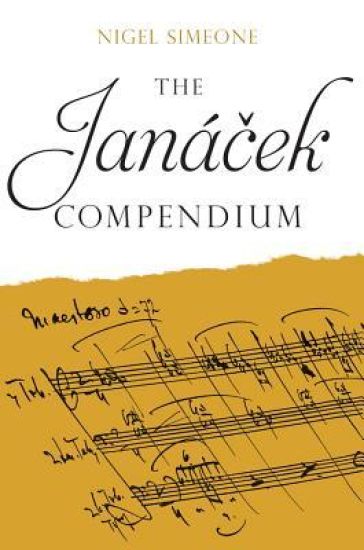
The Janácek  Compendium

The Janácek Compendium

Nigel Simeone

The Boydell Press
2019
sidottu
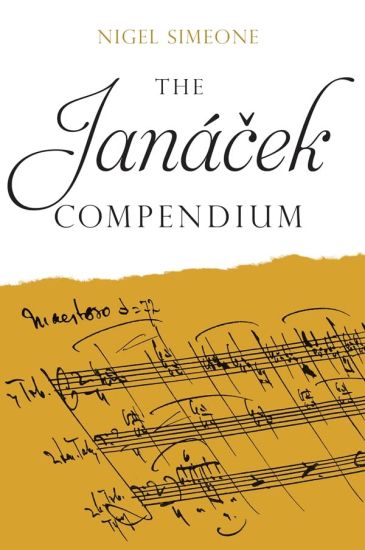
Leos Janácek (1854-1928) occupied a pre-eminent position in Moravian (and wider Czech) culture, not only as a composer but also as a folksong collector, journalist, educator and nationalist. One of the greatest and most original composers of the early twentieth century, Leos Janácek (1854-1928) occupied a pre-eminent position in Moravian culture, not only as a composer but also as a folksong collector, journalist, educator and nationalist. His friends and associates included artists, writers, ethnographers and politicians, as well as conductors, singers and instrumentalists. Janácek's many pupils included the conductor Bretislav Bakala and thecomposer Pavel Haas. He had important associations with publishers in Vienna and Prague and with the earliest years of Czech Radio. Janácek was strongly attached to particular places - Hukvaldy, Brno, Luhacovice - and had professional links with Prague, Berlin, London and beyond. The Janácek Compendium includes nearly 300 entries on every aspect of Janácek's life and works, with detailed notes on all his significant compositions - above all the operas - providing the latest information to emerge about some of his most famous pieces. An extensive bibliography supports the entries, which are cross-referenced to enable wider exploration of particular topics. NIGELSIMEONE is a widely respected writer and lecturer on music, with a lifelong interest in Czech music. His books include Janacek's Works (Oxford University Press, 1997, co-authored with John Tyrrell and Alena Nemcová), TheLeonard Bernstein Letters (Yale University Press, 2013), and Charles Mackerras (Boydell Press, 2015, co-edited with John Tyrrell). He is a regular broadcaster on BBC radio.
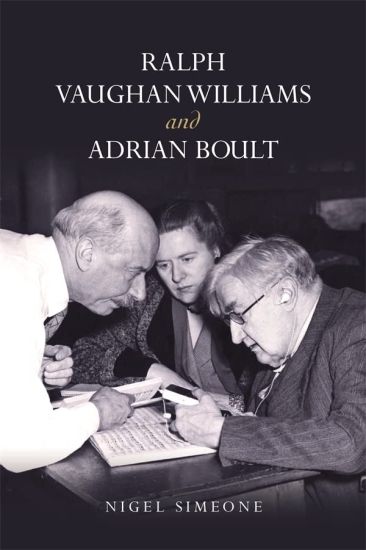
Ralph Vaughan Williams and Adrian Boult

Ralph Vaughan Williams and Adrian Boult

Nigel Simeone

BOYDELL BREWER LTD
2022
sidottu
The first detailed study of the working relationship and productive friendship between Ralph Vaughan Williams (1872-1958) and Adrian Boult (1889-1983). From 1918 onwards, Boult became one of Vaughan Williams's most important interpreters, giving the world premieres of the Pastoral, Fourth and Sixth Symphonies, performing almost all his major works (not only at home but with some of the world's greatest orchestras), and working in close collaboration with the composer on major projects including the first complete recording of Vaughan Williams's symphonies. Boult continued to be the most devoted advocate of Vaughan Williams's music to the end of his long career. As this book shows, Boult's scores include numerous annotations derived from conversations and correspondence with Vaughan Williams and these provide important evidence of the composer's wishes including adjustments to orchestration, comments on interpretation, dynamics, phrasing and revisions to Vaughan Williams's notoriously unreliable metronome marks. The evidence of these scores is considered alongside the extensive correspondence between Vaughan Williams and Boult, Boult's private diaries and other relevant documents including contemporary press reports. The book includes three substantial supplements: a detailed description of Boult's marked scores, a comprehensive list of Boult's Vaughan Williams performances and a discography including surviving recordings of unpublished broadcasts. It will be indispensable reading for scholars and students of Vaughan Williams and historical conducting, Vaughan Williams enthusiasts and those interested in the history of recorded music.
Edward Elgar and Adrian Boult

Edward Elgar and Adrian Boult

Nigel Simeone

BOYDELL BREWER LTD
2025
sidottu
Considers Boult's interpretations of Elgar's major works by drawing on their correspondence, Boult's annotated scores, broadcast performances, commercial recordings and press reviews, ranging from the composer's lifetime to Boult's final public appearances. Edward Elgar (1857-1934) and Adrian Boult (1889-1983) first met in 1904 and they saw each other frequently over the next thirty years. This book documents how Boult's Elgar interpretations evolved and the ways in which Boult drew on his experience of Elgar's own performances as well as their personal contacts. It provides fascinating biographical context, with a particular focus on the role played by the charismatic music patron Frank Schuster. A misunderstanding led to Elgar and Boult falling out in 1924 and it was not until 1931 that Elgar sought to restore their friendship. The book considers Boult's interpretations of Elgar's major works, drawing on a variety of sources including Boult's annotated scores as well as his broadcasts and commercial recordings of Elgar's music, ranging from those made in the composer's last years to Boult's final public appearances in 1978. The view of contemporary critics provides further evidence. All the works with which Boult was closely associated are considered in detail: the two symphonies, The Dream of Gerontius, The Kingdom and The Apostles and orchestral works including the Enigma Variations, Falstaff and the Violin and Cello Concertos. The text is complemented by appendices including a chronology of performances and a discography. These provide invaluable information for anyone interested in this fascinating composer-conductor relationship, and in Boult's advocacy of Elgar's music throughout his long career.
The Janácek  Compendium

The Janácek Compendium

Nigel Simeone

BOYDELL BREWER LTD
2026
pokkari
Leos Janácek (1854-1928) occupied a pre-eminent position in Moravian (and wider Czech) culture, not only as a composer but also as a folksong collector, journalist, educator and nationalist. One of the greatest and most original composers of the early twentieth century, Leos Janácek (1854-1928) occupied a pre-eminent position in Moravian culture, not only as a composer but also as a folksong collector, journalist, educator and nationalist. His friends and associates included artists, writers, ethnographers and politicians, as well as conductors, singers and instrumentalists. Janácek's many pupils included the conductor Bretislav Bakala and thecomposer Pavel Haas. He had important associations with publishers in Vienna and Prague and with the earliest years of Czech Radio. Janácek was strongly attached to particular places - Hukvaldy, Brno, Luhacovice - and had professional links with Prague, Berlin, London and beyond. The Janácek Compendium includes nearly 300 entries on every aspect of Janácek's life and works, with detailed notes on all his significant compositions - above all the operas - providing the latest information to emerge about some of his most famous pieces. An extensive bibliography supports the entries, which are cross-referenced to enable wider exploration of particular topics.