Kirjojen hintavertailu. Mukana 11 342 296 kirjaa ja 12 kauppaa.

Kirjahaku

Etsi kirjoja tekijän nimen, kirjan nimen tai ISBN:n perusteella.

36 kirjaa tekijältä Nigel West

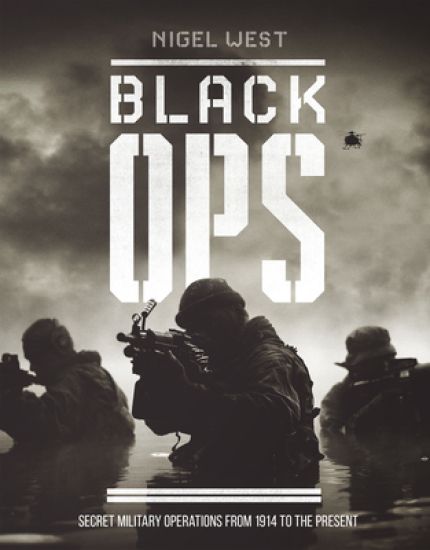
Black Ops

Black Ops

Nigel West

Welbeck Publishing Group
2020
sidottu
Black Ops is a thrilling compendium of undercover warfare from around the world. Here you will meet the most hardened soldiers and operatives facing extraordinary dangers deep behind enemy lines. The book features many amazing stories from World War II, such as the assassination of Holocaust architect Reinhard Heydrich by Britain's Special Operations Executive, which in 1940 received its mission from Churchill to 'set Europe ablaze' in the battle against Nazi tyranny. Also told are the stories of Stalin's favourite spy; the little-known account of how Japanese military codes were cracked; and Operation Mincemeat, which led to the invasion of Sicily. Written by a leading military intelligence expert, Black Ops ranges across a century of remarkable clandestine operations. Starting with Hans Carl Lody, the first German spy during World War I, we also have the plot to assassinate Lenin; the origins of strategic deception; and the Cold War defection of Oleg Gordievsky from the Soviet Union. The book is brought right up to date with the plot to assassinate Osama bin Laden by Navy SEALS in 2011, and the attempted assassination of the Skripals in the UK in 2018, leading to fears that the world is on the brink of a new Cold War. A compelling anthology of spies, soldiers, mercenaries and assassins, Black Ops tells the secret history of 20th- and 21st-century warfare.
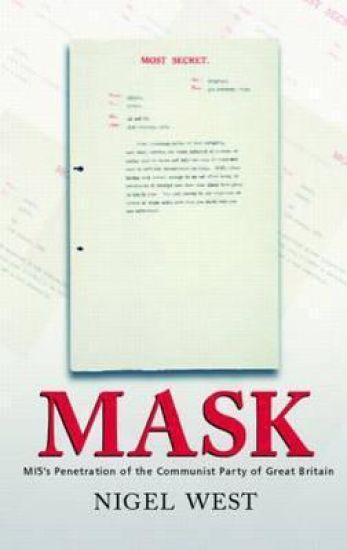
Mask

Mask

Nigel West

Routledge
2005
sidottu
MI5’s dramatic interception of secret signals to Moscow from a hidden base in Wimbledon uncovered the true extent of Soviet espionage in Britain. Intelligence expert Nigel West reveals how MASK, the codename for one of the most secretive sources ever run by British intelligence, enabled Stanley Baldwin and his cabinet to monitor the activities of the Communist Party of Great Britain and track wireless traffic between the Soviet Union and its Comintern representatives abroad, in countries as far apart as the United States, China and Austria. The Government Code and Cipher School was one of the most secret branches of Whitehall, under the command of the Secret Intelligence Service, and used its covert intercept station in Denmark Hill, South London to make vital advances in the intelligence war. This gripping account exposes for the first time how the Communist Party of Great Britain was infiltrated and the actual contents of its communications with the Soviets.
The Guy Liddell Diaries, Volume I: 1939-1942
This is the first volume of Nigel West's acclaimed presentation of these fascinating diaries from the heart of Britain's Second World War intelligence operations.'No intelligence buff can be without this volume and anyone interested in British twentieth century history needs it too.' M.R.D. Foot, The Spectator'Regarded by historians as the most important military intelligence documents from the whole of the Second World War.' Irish Independent '[A] unique insight into the espionage secrets of the Second World War. Its historical importance is enhanced by the editing of Nigel West who, apart from decoding several obscure references to the secret war, persuaded the Security Service to break their rule of maintaining an agent's anonymity.' BBC History MagazineWALLFLOWERS is the codename given to one of the Security Service's most treasured possessions, the daily journal dictated from August 1939 to June 1945 by MI5's Director of Counter Espionage, Guy Liddell, to his secretary, Margo Huggins. The document was considered so highly classified that it was retained in the safe of successive Directors General, and special permission was required to read it.No other member of the Security Service is known to have maintained a diary and the twelve volumes of this journal represent a unique record of the events and personalities of the period, a veritable tour d'horizon of the entire subject. As Director, B Division, Liddell supervised all the major pre-war and wartime espionage investigations, maintained a watch on suspected pro-Nazis and laid the foundations of the famous 'double cross system' of enemy double agents. He was unquestionably one of the most reclusive and remarkable men of his generation, and a legend within his own organization.
The Guy Liddell Diaries, Volume I: 1939-1942
This is the first volume of Nigel West's acclaimed presentation of these fascinating diaries from the heart of Britain's Second World War intelligence operations.'No intelligence buff can be without this volume and anyone interested in British twentieth century history needs it too.' M.R.D. Foot, The Spectator'Regarded by historians as the most important military intelligence documents from the whole of the Second World War.' Irish Independent '[A] unique insight into the espionage secrets of the Second World War. Its historical importance is enhanced by the editing of Nigel West who, apart from decoding several obscure references to the secret war, persuaded the Security Service to break their rule of maintaining an agent's anonymity.' BBC History MagazineWALLFLOWERS is the codename given to one of the Security Service's most treasured possessions, the daily journal dictated from August 1939 to June 1945 by MI5's Director of Counter Espionage, Guy Liddell, to his secretary, Margo Huggins. The document was considered so highly classified that it was retained in the safe of successive Directors General, and special permission was required to read it.No other member of the Security Service is known to have maintained a diary and the twelve volumes of this journal represent a unique record of the events and personalities of the period, a veritable tour d'horizon of the entire subject. As Director, B Division, Liddell supervised all the major pre-war and wartime espionage investigations, maintained a watch on suspected pro-Nazis and laid the foundations of the famous 'double cross system' of enemy double agents. He was unquestionably one of the most reclusive and remarkable men of his generation, and a legend within his own organization.
Mask

Mask

Nigel West

Routledge
2012
nidottu
MI5’s dramatic interception of secret signals to Moscow from a hidden base in Wimbledon uncovered the true extent of Soviet espionage in Britain. Intelligence expert Nigel West reveals how MASK, the codename for one of the most secretive sources ever run by British intelligence, enabled Stanley Baldwin and his cabinet to monitor the activities of the Communist Party of Great Britain and track wireless traffic between the Soviet Union and its Comintern representatives abroad, in countries as far apart as the United States, China and Austria. The Government Code and Cipher School was one of the most secret branches of Whitehall, under the command of the Secret Intelligence Service, and used its covert intercept station in Denmark Hill, South London to make vital advances in the intelligence war. This gripping account exposes for the first time how the Communist Party of Great Britain was infiltrated and the actual contents of its communications with the Soviets.
Secret War For The Falklands

Secret War For The Falklands

Nigel West

Little, Brown Book Group
1998
pokkari
First published on the 15th anniversary of the Falklands War of 1982, this work provides a secret history of the conflict. It focuses on "Operation Corporate", the task force assigned to retake the Falklands, and on the clandestine efforts to deny General Galtieri the Exocet missile.
Historical Dictionary of Cold War Counterintelligence
The defection of Igor Gouzenko in September 1945, more so than any other single event, alerted the West to the nature and scale of the Soviet espionage offensive being waged by the Kremlin. Apart from the dozen or so defendants convicted of spying, Gouzenko wrecked an organization that had taken years to develop, exposed the penetration of the Manhattan atomic weapons project, and demonstrated the very close relationship between the Canadian Communist Party and Moscow. Many credit this event as sparking the bitter but secretive struggle fought between the intelligence agencies of the East and West for nearly half a century. The Historical Dictionary of Cold War Counterintelligence tells the story of both sides' fierce efforts to penetrate and subvert the opponent while desperately trying to avoid a similar fate. Through a chronology, an introduction, appendixes, a bibliography, and hundreds of cross-referenced dictionary entries on the organizations, operations, events, and personalities that influenced counterintelligence during the Cold War, the world of double agents, spies, and moles is explained in the most comprehensive reference currently available.
Historical Dictionary of World War II Intelligence
In the years immediately following World War II, information was disclosed about what has been termed the shadow war of the existence of hitherto secret agencies. In Germany it was the Abwehr and the Sicherheitsdienst; in Britain it was MI5, the Secret Intelligence Service (MI6) and Special Operations Executive (SOE); in the United States it was the Office of Strategic Services (OSS) and the Special Intelligence Service (SIS) of the Federal Bureau of Investigation (FBI); in Japan it was the Kempet'ai; and in Italy the Servicio di Informazione Militare (SIM). Sixty years after World War II secrets are still being revealed about the covert activities that took place. Many countries had secret agencies maintaining covert operations, but even ostensibly neutral countries also conducted secret operations. Changes in American, British, and even Soviet official attitudes to declassification in the 1980s allowed thousands of secret documents to be made available for public examination, and the result was extensive revisionism of the conventional histories of the conflict, which previously had excluded references to secret intelligence sources. The Historical Dictionary of World War II Intelligence tells the emerging history of the intelligence world during World War II. This is done through a chronology, an introduction, a bibliography, and hundreds of cross-referenced dictionary entries on the secret agencies, operations, and events. The world of double agents, spies, and moles during WWII is explained in the most comprehensive reference currently available.
Historical Dictionary of Ian Fleming's World of Intelligence
Twelve novels and nine short stories define one of the most extraordinary fictional characters of all time, creating the basis for the most successful movie series in cinematographic history, watched by more than half the world's population. The single person probably more responsible than any other for glamorizing the murky world of espionage is Ian Fleming, the creator of James Bond, who himself lived a remarkable double life of spy and writer. Everyone has an opinion on why 007 became so successful, but one possible explanation is the ingenious formula of fact, fiction, and sheer fantasy. Certainly the author drew on friends and places he knew well to provide the backdrop for his drama, but what proportion of his output is authentic, and what comes directly from the author's imagination? These questions and more are examined in the Historical Dictionary of Ian Fleming’s World of Intelligence: Fact and Fiction. This is done through a chronology, an introduction, a bibliography, and hundreds of cross-referenced dictionary entries on actual cases of espionage, real-life spies, MI5, SIS, CIA, KGB, and others. It also contains entries on Ian Fleming's novels and short stories, family and friends, his employers and colleagues, and other notable characters.
Historical Dictionary of Naval Intelligence
Naval intelligence is one of the most vital, and sometimes decisive, forms of intelligence. Over the centuries, and with particular velocity over recent decades, the techniques of detecting and destroying military (and commercial) shipping have improved, leapfrogging the equally frantic race to keep ahead of them and safeguard the huge investments involved. Today the new challenges range from an increasingly aggressive strategy adopted by Pyongyang's submarine fleet and the exclusion of illegal immigrants heading for Australia and southern Europe to the capture of cocaine-laded submarines in the Caribbean and the interdiction of Somali pirates off the Gulf of Aden. Any accurate assessment of the comparative threat these activities pose is just as dependent on good intelligence today as it was to Admiral Lord Nelson in the days of sail. The Historical Dictionary of Naval Intelligence relates the long and fascinating history of naval intelligence through a chronology, an introduction, a bibliography, and hundreds of cross-referenced dictionary entries on the organizations, operations, and events that made Naval intelligence what it is today.
The A to Z of British Intelligence

The A to Z of British Intelligence

Nigel West

Scarecrow Press
2009
nidottu
The A to Z of British Intelligence offers insight into the history and operations of British Intelligence through its more than 1,800 entries, covering a vast and varied cast of characters: the spies and their handlers, the moles and defectors, the political leaders, the top brass, the techniques and jargon, and the many different offices and organizations. Covered also are the agencies; leading individuals and prominent personalities; operations, including double agent and deception campaigns; and events, using the most up-to-date declassified material, but written in a style for the professional and general reader alike. This text features 16 black-and-white photographs, an extensive chronology, and a comprehensive bibliography.
The A to Z of Sexspionage

The A to Z of Sexspionage

Nigel West

Scarecrow Press
2009
nidottu
In a surprising number of espionage cases sex has played a significant role—often only in the background—possibly as a reason why a particular individual has lived beyond his means and is in desperate need of cash. FBI agent Earl Pitts sold secrets to the Soviets to ease his financial burdens, which came from his habitually heavy use of male and female prostitutes. Yuri Nosenko collaborated with the CIA after having misappropriated KGB funds to entertain expensive women while on official duties in Geneva, and Aleksandr Ogorodnik of the Soviet foreign ministry was persuaded to become a spy by his pregnant Spanish lover, an agent recruited by the CIA. In the realm of human behavior, sex can be the catalyst for risky or reckless conduct. The A to Z of Sexspionage explores this behavior through a chronology, an introduction, a bibliography, and hundreds of cross-referenced dictionary entries on the secret agencies, operations, and events. From Delilah's seduction of Samson in 1161 BC to State Department official Donald Keyser's conviction of passing secrets to Isabelle Cheng, a Taiwanese intelligence officer, in 2007, Nigel West recounts the history of sexspionage.
Historical Dictionary of Signals Intelligence
Signals Intelligence (SIGINT) encompasses the various disciplines of wireless interception, cryptanalysis, communications intelligence, electronic intelligence, direction-finding, and traffic analysis. It has become the basis upon which all combat operations are undertaken. It is now widely recognized as an absolutely vital dimension to modern warfare and it has proved to be a vital component in the counter-intelligence war fought between the West and Soviet bloc intelligence agencies. The Historical Dictionary of Signals Intelligence covers the history of SIGINT through a chronology, an introductory essay, an appendix, and an extensive bibliography. The dictionary section has over 300 cross-referenced entries on key personnel, SIGINT technology, intelligence operations, and agencies, as well as the tradecraft and jargon. This book is an excellent access point for students, researchers, and anyone wanting to know more about Signals Intelligence.
Historical Dictionary of British Intelligence
British Intelligence is the oldest, most experienced organization of its kind in the world, the unseen hand behind so many world events, and glamorized by James Bond. Despite the change in role, from a global power controlling an Empire that covered much of the world, to a mere partner in the North Atlantic Treaty Organization (NATO) and the European Union, the country’s famed security and intelligence apparatus continues largely intact, and recognized as “punching above its weight.” Feared by the Soviets, admired and trusted by the Central Intelligence Agency (CIA), British Intelligence has provided the hidden dimension to the conduct of domestic and foreign policy, with the added mystique of Whitehall secrecy, a shroud that for years protected the identities of the shadowy figures who recruited the sources, broke the codes, and caught the spies. This second edition of Historical Dictionary of the British Intelligence covers the history through a chronology, an introductory essay, appendixes, and an extensive bibliography. The dictionary section has over 1,000 cross-referenced entries on specific operations, spies and their handlers, the moles and defectors, top leaders, and main organizations. This book is an excellent access point for students, researchers, and anyone wanting to know more about the British Intelligence.
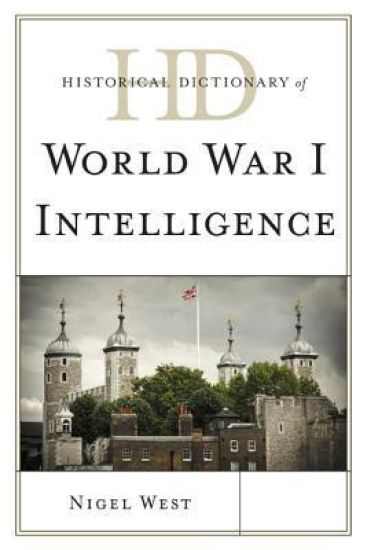
Historical Dictionary of World War I Intelligence
Known as “the Great War,” the world’s first truly global conflict is remarkable in what might now be termed modern espionage. World War I was witness to plenty of ”firsts.” Apart from the contribution made by aerial reconnaissance and the interception of wireless telegraphy, telephone and cable traffic, there was the scientific aspect, with new machines of war, such as the submarine, sea-mine, torpedo, airship, barbed wire, armored tank and mechanized cavalry in a military environment that included mustard gas, static trench warfare, the indiscriminate bombardment of civilian population centers and air-raids. Large-scale sabotage and propaganda, the manipulation of news and of radio broadcasts, and censorship, were all features of a new method of engaging in combat, and some ingenious techniques were developed to exploit the movement of motor and rail transport, and the transmission of wireless signals. The hitherto unknown disciplines of train-watching, bridge-watching, airborne reconnaissance and radio interception would become established as routine collection methods, and their impact on the conflict would prove to be profound. The Historical Dictionary of World War I Intelligence relates this history through a chronology, an introductory essay, an appendix, and an extensive bibliography. The dictionary section has over 400 hundred cross-referenced entries on intelligence organizations, the spies, and the major cases and events of World War I. This book is an excellent access point for students, researchers, and anyone wanting to know more about the world of intelligence in World War I.
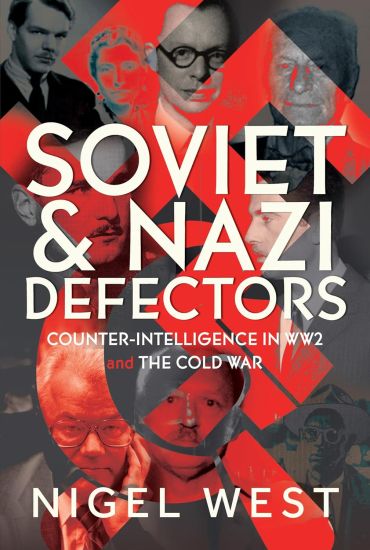
Soviet and Nazi Defectors

Soviet and Nazi Defectors

Nigel West

PEN SWORD BOOKS LTD
2024
sidottu
A well-informed defector is the most dangerous counter-intelligence commodity because it takes a spy to catch a spy. Very occasionally, an agent, especially a mole or an intelligence professional, will make a mistake and incriminate themselves, but usually it is a denunciation, a tip, or a vague clue from a defector that will provide the vital information required to expose the source of a leak. Relying on recently-declassified intelligence files and interviews with defectors, their handlers, their families, and their victims, Nigel West has analysed nine examples of wartime and postwar defections to shed new light on the phenomenon. Defectors are notoriously difficult to handle, and resettle, because of the range of genuine or invented motives that led them to take such drastic action. Some will provide a noble political motive, seeking to impress their host, while others may be driven by less worthy compulsions – perhaps greed, revenge, career disappointment, envy, anger, or nothing more complicated that a desire to start a life afresh with a different partner. Defectors are the stock-in-trade for all counter-intelligence specialists who seek the background and context of corridor gossip and water-cooler chat cannot be substituted by any amount of technical surveillance, overhead reconnaissance or hard to-interpret intercepted communications. This is the essence of Human Intelligence, and goes to the heart of loyalty, trust, betrayal and deception – the very DNA of espionage. These nine examples of switching sides all involve intelligence professionals who followed the example of Erich Vermehren. Because of his religious convictions, Vermehren felt compelled to desert the Abwehr in January 1944, even though this meant the arrest of his parents and siblings who were consigned to Sachsenhausen concentration camp. West traced Vermehren, then living under an alias in Switzerland, to hear his story first-hand. He then interviewed the British MI6 officer who had engineered the covert exfiltration from Istanbul of both the German and his wife. Sometimes a defection may be the result of a period of cultivation, as happened with Vladimir Petrov, who was gently persuaded over many months by his Polish dentist to abandon his clandestine role as rezident in Canberra for a chicken farm. The intermediary, Dr Michael Bialoguski, admitted to the author that right up to the moment of his defection, he and his Australian Security Intelligence Organisation colleagues were not entirely sure of Petrov’s true status. Once resettled, a defector’s life has daily challenges, as was explained by Yuri Rastvorov’s widow, herself a CIA counter-intelligence officer, who recalled the day she had to tell their two daughters that their father was not a Czech tennis coach, but an NKVD defector who had been based in Tokyo.
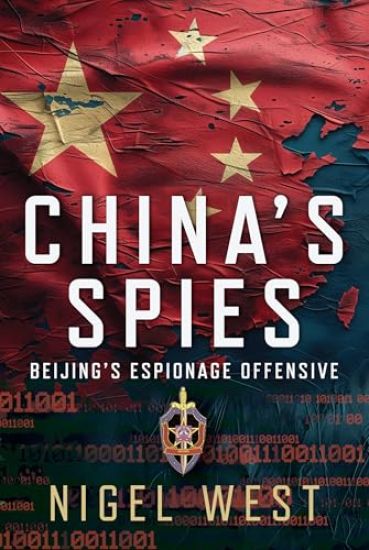
China's Spies

China's Spies

Nigel West

PEN SWORD BOOKS LTD
2025
sidottu
While many of President Xia Jinping’s increasingly aggressive foreign policies, manifested by expansion into the South China Sea, trade confrontation with Australia, and political suppression in Hong Kong, have become obvious, there has been a covert dimension that has gone largely unreported outside the Allied intelligence community. Beijing’s Ministry of State Security, or MSS, has increasingly shifted its priorities to hostile penetration of the CIA. That this is the case has been demonstrated by the recent cases of individuals such as Glenn Shriver, Jerry Chun Shing Lee, Ron Rockwell Hansen, Kevin Mallory, Dickson Yeo, and Alexander Yuk Ching Ma. Of these, Shriver, an American student studying in China, became, as the FBI itself points out, ‘a target of Chinese intelligence services and crossed the line when he agreed to participate in espionage-type activity’. For his actions, in 2019 Ron Rockwell Hansen, a former Defense Intelligence Agency officer, pleaded guilty to attempting to spying for the People’s Republic of China and was sentenced to ten years in prison. Similarly, Jerry Chun Shing Lee, a former CIA case officer, was sentenced to nineteen years in prison for conspiring to communicate, deliver and transmit sensitive US information to the People’s Republic of China. Hitherto the MSS had concentrated, at the direction of the Chinese Communist Party, on the collection of foreign technology and proprietary information, while also monitoring political dissidents, Tibetan and Taiwanese nationalists, and Uyghur and Falun Gong religious activists. The MSS also tended to recruit ethnic Chinese and were less interested in the collection of political intelligence or mounting influence operations. However, as Nigel West reveals, the MSS has undergone a radical change in doctrine, and, having consolidated its grip on supposedly independent commercial joint ventures and academic research institutions, is leveraging control over these ostensibly legitimate enterprises to access intelligence agencies now perceived as adversaries, such as the CIA and FBI. As the rhetoric and tensions between the West and China mounts, and with the current US administration calling America’s relationship with Beijing ‘the biggest geopolitical test of the 21st century’, China’s unseen espionage offensive is one of the most serious developments in recent times. Its extent and effectiveness are explored in this absorbing – and chilling – new exposé.
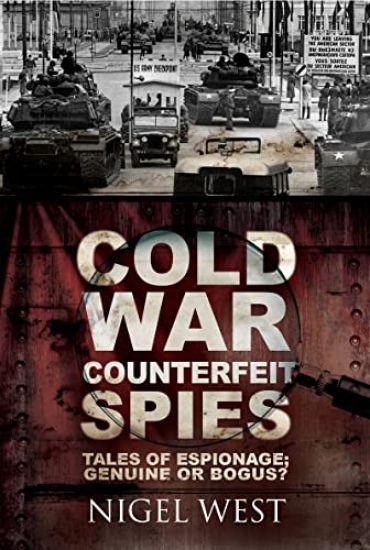
Cold War Counterfeit Spies

Cold War Counterfeit Spies

Nigel West

PEN SWORD BOOKS LTD
2022
nidottu
The Cold War, with its air of mutual fear and distrust and the shadowy world of spies and secret agents, gave publishers the chance to produce countless stories of espionage, treachery and deception. What Nigel West has discovered is that the most egregious deceptions were in fact the stories themselves. In this remarkable investigation into the claims of many who portrayed themselves as key players in clandestine operations, the author has exposed a catalogue of misrepresentations and falsehoods. Did Greville Wynne really exfiltrate a GRU defector from Odessa? Was the frogman Buster Crabb abducted during a mission in Portsmouth Harbour? Did the KGB run a close-guarded training facility, as described by J. Bernard Hutton in School for Spies, which was modelled on a typical town in the American mid-west, so agents could be acclimatised to a non-Soviet environment? With the help of witnesses with first-hand experience, and recently declassified documents, Nigel West answers these and other fascinating questions from a time when secrecy and suspicion allowed the truth to be concealed.
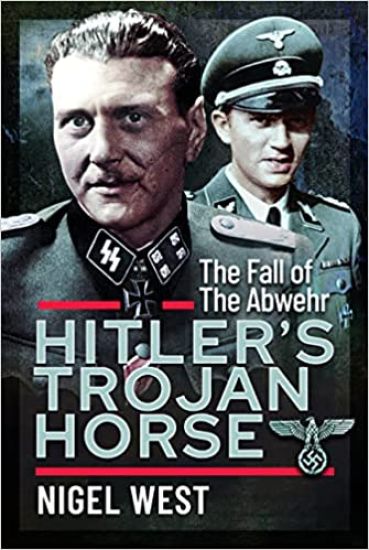
Hitler's Trojan Horse

Hitler's Trojan Horse

Nigel West

PEN SWORD BOOKS LTD
2022
sidottu
As the Second World War progressed and defeat for Hitler's Third Reich in all theatres became ever more certain, the tight Abwehr network, built so effectively by its head, Admiral Canaris, began to unravel. High-level defections to the Allies and bitter disputes with the Sicherheitsdienst (SD) added to a collapse in morale. Most notably was the increasing opposition within the officer ranks of the Army to Hitler fermented by Canaris and his deputy Generalmajor Hans Oster. The final years of the Abwehr were marked by the Abwehr's efforts to undermine the regime, which came to a bloody conclusion following the Valkyrie assassination attempt of 20 July 1944. This saw the arrest of many Abwehr officials and the execution of Canaris and Oster. In this penetrating study of the final years of the Abwehr, Nigel West, a world-renowned specialist in the field, pieces together the gradual decline in the organisation's role and importance with Hitler and his acolytes paying little heed to reports that were increasingly cautionary. Among the many previously undisclosed stories are details gleaned from recently opened files which tell of a hitherto unknown spy-swap. This was the exchange of Berthold Shulze-Holthus, a German spy detained in Iran, for Ferdinand Rodriguez, a British radio operator captured in France. This was the only such exchange that took place during the whole of the Second World War - though the fact that the swap took place at all suggests that a previously unsuspected degree of communication existed between the Allies and Nazi Germany. Perhaps most tantalizingly of all, is the new night light thrown upon the role the British Secret Intelligence Service, MI6, had, in league with the Abwehr, in the Valkyrie bombing which almost killed Hitler.