Kirjojen hintavertailu. Mukana 11 244 527 kirjaa ja 12 kauppaa.

Kirjahaku

Etsi kirjoja tekijän nimen, kirjan nimen tai ISBN:n perusteella.

6 kirjaa tekijältä Nikita Mathias

Disaster Cinema in Historical Perspective

Disaster Cinema in Historical Perspective

Nikita Mathias

TAYLOR FRANCIS LTD
2025
nidottu
How do we experience disaster films in cinema? And where does disaster cinema come from? The two questions are more closely related than one might initially think. For the framework of the cinematic experience of natural disasters has its roots in the mid-eighteenth century when the aesthetic category of the sublime was re-established as the primary mode for appreciating nature's violent forces. In this book, the sublime is understood as a complex and culturally specific meeting point between philosophical thought, artistic creation, social and technical development, and popular imagination. On the one hand, the sublime provides a receptive model to uncover how cinematic disaster depictions affect our senses, bodies and minds. On the other hand, this experiential framework of disaster cinema is only one of the most recent agents within the historical trajectory of sublime disasters, which is traced in this book among a broad range of media: from landscape and history painting to a variety of pictorial devices like Eidophusikon, Panorama, Diorama, and, finally, cinema.
Edvard Munch

Edvard Munch

Nikita Mathias

Munch Museum
2025
nidottu
Edvard Munch (1863–1944) is one of the most influential figures in modern art. His career spanned more than 60 years, from his debut in the 1880s right up until his death in 1944. Munch was part of the Symbolist movement in the 1890s and was a key forerunner of the Expressionist movement that emerged at the start of the 20th century. His continually experimental approach to painting, printmaking, drawing, sculpture and photography earned him a unique position in Norwegian and international art history. Munch bequeathed almost all the artworks in his possession at the time of his death to the City of Oslo. This bequest, which comprised approximately 26,500 original works, became the basis of the Munch Museum’s collection. The museum opened in 1963, one hundred years after Munch’s birth. Today the collection includes more than half of all Munch’s paintings and examples of almost all his original prints. This book contains posters of 16 paintings that were of crucial importance in Edvard Munch’s artistic career, accompanied by brief but informative texts. Iconic images such as The Scream, Madonna and The Vampire are just some of the pictures you can hang on your wall.
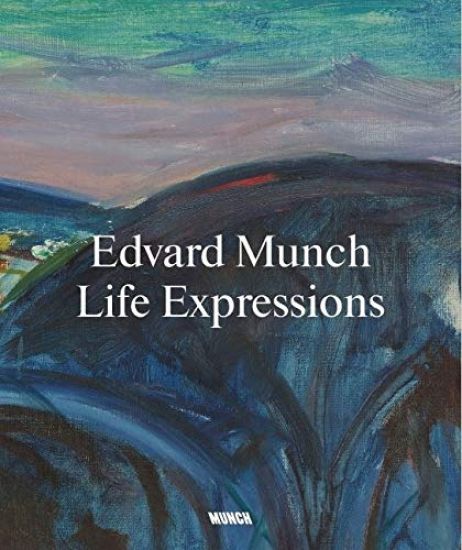
Edvard Munch: Life Expressions

Edvard Munch: Life Expressions

Nikita Mathias

Munch Museum
2024
nidottu
Edvard Munch (1863-1944) was a visionary and obsessive artist who would not rest until he had captured human existence in its entirety, both in its beauty and in its inner conflicts and contradictions. Today, paintings such as Madonna, The Scream, and Vampire are known worldwide and shared online and on social media in the millions. Munch has become a part of popular culture. This book gives a concise, accessible and illuminating introduction to Munch’s life and art. It is generously illustrated, including a large selection of images from all stages of Munch’s career.
Disaster Cinema in Historical Perspective

Disaster Cinema in Historical Perspective

Nikita Mathias

Amsterdam University Press
2020
sidottu
How do we experience disaster films in cinema? And where does disaster cinema come from? The two questions are more closely related than one might initially think. For the framework of the cinematic experience of natural disasters has its roots in the mid-eighteenth century when the aesthetic category of the sublime was re-established as the primary mode for appreciating nature's violent forces. In this book, the sublime is understood as a complex and culturally specific meeting point between philosophical thought, artistic creation, social and technical development, and popular imagination. On the one hand, the sublime provides a receptive model to uncover how cinematic disaster depictions affect our senses, bodies and minds. On the other hand, this experiential framework of disaster cinema is only one of the most recent agents within the historical trajectory of sublime disasters, which is traced in this book among a broad range of media: from landscape and history painting to a variety of pictorial devices like Eidophusikon, Panorama, Diorama, and, finally, cinema.