Kirjojen hintavertailu. Mukana 11 717 486 kirjaa ja 12 kauppaa.

Kirjahaku

Etsi kirjoja tekijän nimen, kirjan nimen tai ISBN:n perusteella.

12 kirjaa tekijältä Niles Eldredge

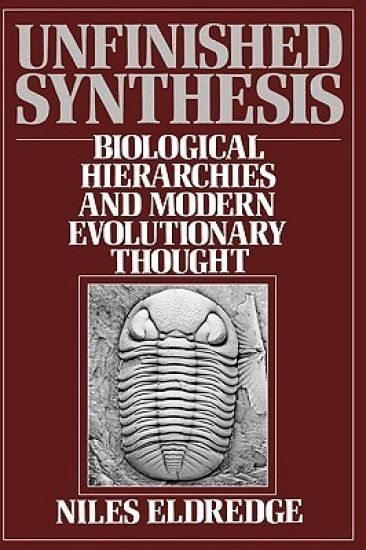
Unfinished Synthesis

Unfinished Synthesis

Niles Eldredge

Oxford University Press Inc
1986
sidottu
This provocative study provides a stimulating critique of contemporary evolutionary thought, analysing the Modern Synthesis first developed by Theodosius Dobzhansky, Ernst Mayr, and George Gaylord Simpson. Written by an eminent evolutionary biologist (the co-founder of the theory of punctuated equilibria), this highly readable book argues that only genes and organisms are taken as historic 'individuals' in conventional theory. Eldredge proposes that species, higher taxa, and ecological entities such as populations and communities should also be construed as individuals - an approach yielding the ecological and genealogical hierarchies that interact to produce evolution. This clearly stated, controversial work will provoke much debate among evolutionary biologists, systematicists, palaeontologists and ecologists, as well as lay readers.
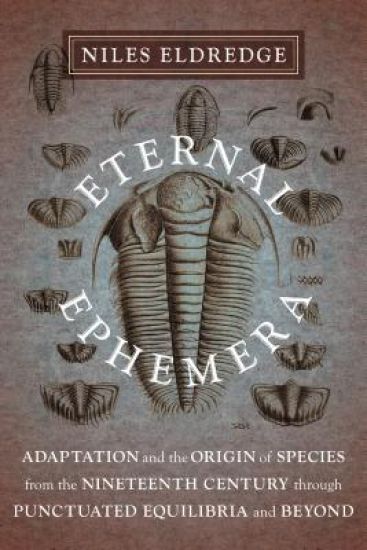
Eternal Ephemera

Eternal Ephemera

Niles Eldredge

Columbia University Press
2015
sidottu
All organisms and species are transitory, yet life endures. The origin, extinction, and evolution of species-interconnected in the web of life as "eternal ephemera"-are the concern of evolutionary biology. In this riveting work, renowned paleontologist Niles Eldredge follows leading thinkers as they have wrestled for more than two hundred years with the eternal skein of life composed of ephemeral beings, revitalizing evolutionary science with their own, more resilient findings. Eldredge begins in France with the naturalist Jean-Baptiste Lamarck, who in 1801 first framed the overarching question about the emergence of new species. The Italian geologist Giambattista Brocchi followed, bringing in geology and paleontology to expand the question. In 1825, at the University of Edinburgh, Robert Grant and Robert Jameson introduced the astounding ideas formulated by Lamarck and Brocchi to a young medical student named Charles Darwin. Who can doubt that Darwin left for his voyage on the Beagle in 1831 filled with thoughts about these daring new explanations for the "transmutation" of species. Eldredge revisits Darwin's early insights into evolution in South America and his later synthesis of knowledge into a theory of the origin of species. He then considers the ideas of more recent evolutionary thinkers, such as George Gaylord Simpson, Ernst Mayr, and Theodosius Dobzhansky, as well as the young and brash Niles Eldredge and Steven Jay Gould, who set science afire with their concept of punctuated equilibria. Filled with insights into evolutionary biology and told with a rich affection for the scientific arena, this book celebrates the organic, vital relationship between scientific thinking and its subjects.
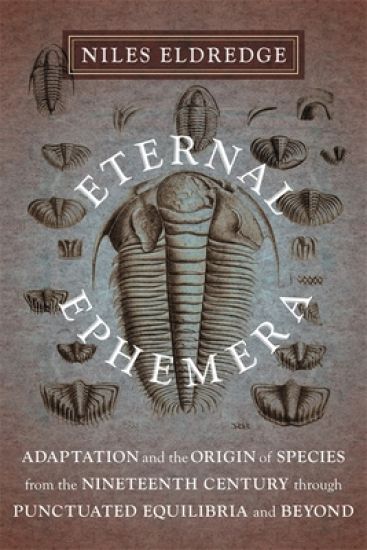
Eternal Ephemera

Eternal Ephemera

Niles Eldredge

Columbia University Press
2016
pokkari
All organisms and species are transitory, yet life endures. The origin, extinction, and evolution of species-interconnected in the web of life as "eternal ephemera"-are the concern of evolutionary biology. In this riveting work, renowned paleontologist Niles Eldredge follows leading thinkers as they have wrestled for more than two hundred years with the eternal skein of life composed of ephemeral beings, revitalizing evolutionary science with their own, more resilient findings. Eldredge begins in France with the naturalist Jean-Baptiste Lamarck, who in 1801 first framed the overarching question about the emergence of new species. The Italian geologist Giambattista Brocchi followed, bringing in geology and paleontology to expand the question. In 1825, at the University of Edinburgh, Robert Grant and Robert Jameson introduced the astounding ideas formulated by Lamarck and Brocchi to a young medical student named Charles Darwin. Who can doubt that Darwin left for his voyage on the Beagle in 1831 filled with thoughts about these daring new explanations for the "transmutation" of species. Eldredge revisits Darwin's early insights into evolution in South America and his later synthesis of knowledge into a theory of the origin of species. He then considers the ideas of more recent evolutionary thinkers, such as George Gaylord Simpson, Ernst Mayr, and Theodosius Dobzhansky, as well as the young and brash Niles Eldredge and Steven Jay Gould, who set science afire with their concept of punctuated equilibria. Filled with insights into evolutionary biology and told with a rich affection for the scientific arena, this book celebrates the organic, vital relationship between scientific thinking and its subjects.
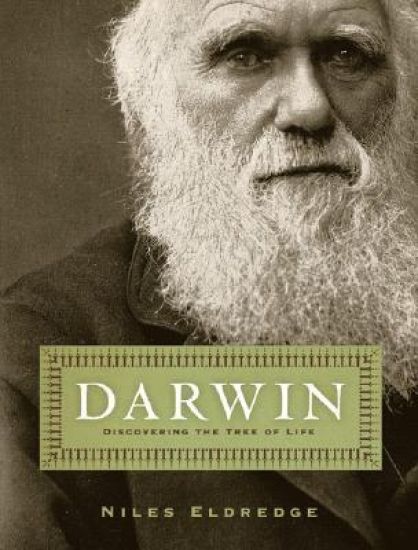
Darwin

Darwin

Niles Eldredge

WW Norton Co
2006
sidottu
Charles Darwin's ideas resonate deeply in Western culture today, and his theory still lies at the heart of modern scientific evolutionary research. As other nineteenth-century figures fade, Darwin's theory of evolution still provokes controversy, spilling over into curriculum battles at state and local school boards in the United States and around the world. In exploring the everyday artifacts of Darwin's life, his notebooks, and early manuscripts, Niles Eldredge "a candid, no-punches-pulled interpreter of the core ideas of evolutionary biology" (Science News) provides a rare glimpse into the mind of this highly intuitive, creative scientist. The celebration of Charles Darwin's 200th birthday in 2009 begins in November 2005 with the opening of a major exhibition at the American Museum of Natural History in New York, curated by Eldredge, that will travel across the nation. More than a companion book to the exhibit, Darwin is a rich and inspiring reconstruction of Darwin's life through his writings and discoveries.
Why We Do It

Why We Do It

Niles Eldredge

WW Norton Co
2005
nidottu
An evolutionary biologist argues against the belief that sexual behavior is governed by genes, identifying an intricate interplay among humans that involves day-to-day survival, reproduction, and learned cultural factors. Reprint.
Reinventing Darwin: The Great Debate at the High Table of Evolutionary Theory
An insider's provocative account of one of the most contentious debates in science today When Niles Eldredge and Stephen Jay Gould, two of the world's leading evolutionary theorists, proposed a bold new theory of evolution--the theory of "punctuated equilibria"--they stood the standard interpretation of Darwin on its head. They also ignited a furious debate about the true nature of evolution. On the one side are the geneticists. They contend that evolution proceeds slowly but surely, driven by competition among organisms to transmit their genes from generation to generation. On the other are the paleontologists, like Eldredge and Gould, who show in the fossil record that in fact evolution proceeds only sporadically. Long periods of no change--equilibria--are "punctuated" by episodes of rapid evolutionary activity. According to the paleontologists, this pattern shows that evolution is driven far more by environmental forces than by genetic competition. How can the prevailing views on evolution be so different? In Reinventing Darwin, Niles Eldredge offers a spirited account of the dispute and an impressive case for the paleontologists' side of the story. With the mastery that only a leading contributor to the debate can provide, he charts the course of theory from Darwin's day to the present and explores the fundamental mysteries and crucial questions that underlie the current quarrels. Is evolution fired by a gentle and persistent motor and fueled by the survival instincts of "selfish genes"? Or does it proceed in fits and starts, as the fossil record seems to show? What is the role of environmental changes such as habitat destruction and of cataclysmic events like meteor impacts? Are most species inherently stable, changing only very little until they succumb to extinction? Or are species highly adaptable, changing all the time? Eldredge sorts through the major findings and interpretations and presents a lively introduction to the leading edge of evolutionary theory today. Reinventing Darwin offers a rare insider's view of the sometimes contentious, but always stimulating work of scientific inquiry. PRAISE FOR NILES ELDREDGE'S PREVIOUS BOOKS The Miner's Canary: Unraveling the Mysteries of Extinction "The Miner's Canary rings with integrity. The author takes care to present opposing views. Some readers, indeed, might view Mr. Eldredge as a little too self-effacing; he is, after all, one of the world's leading experts in his field."--The New York Times Book Review Fossils: The Evolution and Extinction of Species ". . . an important and informative book. It is also delightfully idiosyncratic. This is no scholarly treatise defending academic argument. It is an essay for everyone interested in the story of earthly life."--The Christian Science Monitor Life Pulse: Episodes from the Story of the Fossil Record "This is Earth history on a grand scale; those who enjoy the works of Stephen Jay Gould will appreciate Life Pulse."--Publishers Weekly
Dominion

Dominion

Niles Eldredge

University of California Press
1997
pokkari
Overpopulation, depletion of natural resources, hunting of nonhuman species to extinction: paleontologist Niles Eldredge questions the long term survival of humans, given our propensity for living beyond our ecological means. In Dominion he reviews the relation between biological and cultural evolution, showing how the agricultural revolution freed humans from dependence on local ecosystems and allowed us to assert our dominion, as the Christian Bible has it, over the beasts of the field. Unless we quickly change our homocentric ways, we'll irretrievably destroy our own habitat.
The Miner's Canary

The Miner's Canary

Niles Eldredge

Princeton University Press
1994
pokkari
Like the bird whose death signaled dangerous conditions in a mine, the demise of animals that once flourished should give humans pause. How is our fate linked to the earth's creatures, and the cycle of flourishing and extinction? Which are the simple workings of nature's order, and which are omens of ecological disaster? Does human activity accelerate extinction? What really causes it? In an illuminating and elegantly written account of the widespread reduction of the world's wildlife, renowned paleontologist Niles Eldredge poses these questions and examines humankind's role in the larger life cycles of the earth, composing a provocative general theory of extinction.
Life in the Balance

Life in the Balance

Niles Eldredge

Princeton University Press
2000
nidottu
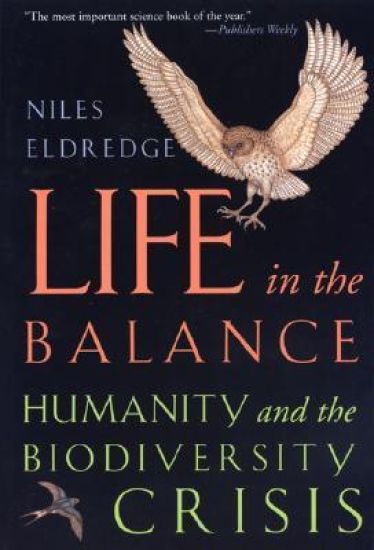
In Life in the Balance, Niles Eldredge argues that the Earth is confronting a disaster in the making--an ecological crisis that, if left unresolved, could ultimately lead to mass extinction on the scale of that which killed the dinosaurs sixty-five million years ago. Writing for general readers, he reviews compelling evidence for this "biodiversity crisis," showing that species are dying out at an unnaturally rapid rate. He demonstrates the importance of maintaining biodiversity, taking the reader on a journey that reveals the twin faces of biodiversity--over thirteen million living species and the ecosystems through which these species transform the sun's energy into life-sustaining matter. Throughout, Eldredge shows how our own fate is intricately linked with that of other species. Eldredge, one of the world's foremost paleontologists, begins by taking us to the heart of Botswana's Okavango Delta, considered by many to be among the last "Edens" left on Earth--a place where a rich assortment of organisms exist in natural equilibrium.However, it is also a place where the results of human activity--pollution, clear-cutting, water-diversion, encroaching agriculture, disease--now pose the same ecological threats that, on a worldwide scale, put the entire planet at risk. Eldredge then leads us on a fascinating exploration of the Earth's organisms--animals, plants, fungi, the microbes that underpin all life--and of the diverse ecosystems from the tundra to the tropics in which these organisms live. It is a journey that demonstrates the inherent value of the millions of species and ecosystems on Earth, and the importance of biodiversity to the entire biosphere and to humans' continued existence. Eldredge concludes that humans not only are responsible for the biodiversity crisis but also hold the key to preventing an impending Sixth Extinction. He argues that we must, among other strategies, pledge ourselves to sustainable development and the conservation of wild places. An eloquent and passionate account by one of today's leading scientists, Life in the Balance will draw new attention to one of the most pressing problems now facing the world.In this book, Eldredge explores the same themes that illuminate The American Museum of Natural History's new Hall of Biodiversity, for which he is Scientific Curator. The Hall is scheduled to open in spring 1998.
Time Frames

Time Frames

Niles Eldredge

Princeton University Press
2014
pokkari
Scientists have recently begun to question one of the pillars of modern thought--Charles Darwin's theory of evolution. Certainly evolution occurs; but if it is a slow, continuous process by which one species gradually modifies itself into a new one, as Darwin believed, why are there so many missing links in the fossil records? Two eminent scientists, Niles Eldredge and Stephen Jay Gould, startled the world by challenging Darwin's cherished beliefs proposing instead that once a species has evolved it rarely undergoes change, and that the evolution of new species occurs only periodically, in relatively rapid spurts. In Time Frames Niles Eldredge explains how his own work with trilobite fossils led him to this unexpected conclusion, and describes the fascinating development of the new theory of punctuated equilibria. Originally published in 1989. The Princeton Legacy Library uses the latest print-on-demand technology to again make available previously out-of-print books from the distinguished backlist of Princeton University Press. These editions preserve the original texts of these important books while presenting them in durable paperback and hardcover editions.The goal of the Princeton Legacy Library is to vastly increase access to the rich scholarly heritage found in the thousands of books published by Princeton University Press since its founding in 1905.
Time Frames: The Evolution of Punctuated Equilibria

Time Frames: The Evolution of Punctuated Equilibria

Niles Eldredge

PRINCETON UNIVERSITY PRESS
2016
sidottu
Scientists have recently begun to question one of the pillars of modern thought--Charles Darwin's theory of evolution. Certainly evolution occurs; but if it is a slow, continuous process by which one species gradually modifies itself into a new one, as Darwin believed, why are there so many missing links in the fossil records? Two eminent scientists, Niles Eldredge and Stephen Jay Gould, startled the world by challenging Darwin's cherished beliefs proposing instead that once a species has evolved it rarely undergoes change, and that the evolution of new species occurs only periodically, in relatively rapid spurts. In Time Frames Niles Eldredge explains how his own work with trilobite fossils led him to this unexpected conclusion, and describes the fascinating development of the new theory of punctuated equilibria. Originally published in 1989. The Princeton Legacy Library uses the latest print-on-demand technology to again make available previously out-of-print books from the distinguished backlist of Princeton University Press. These editions preserve the original texts of these important books while presenting them in durable paperback and hardcover editions. The goal of the Princeton Legacy Library is to vastly increase access to the rich scholarly heritage found in the thousands of books published by Princeton University Press since its founding in 1905.
Extinction and Evolution

Extinction and Evolution

Niles Eldredge

Firefly Books Ltd
2014
sidottu
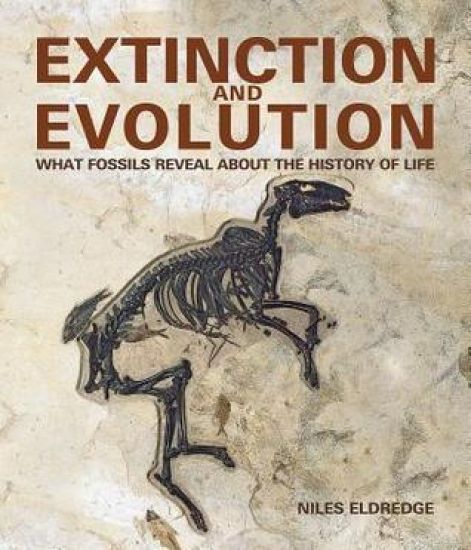
Extinction and Evolution recounts the work and discoveries of Niles Eldredge, one of the world's most renowned paleontologists, whose research overturned Charles Darwin's theory of evolution as a slow and inevitable process, as published in On the Origin of Species in 1859. Darwin had concluded that evolutionary changes happened very slowly over millions of years. Eldredge's work, however, convinced him that Darwin was wrong and that major evolution of life forms does not happen to any significant degree until after a mass extinction event, thus disproving the traditional view of evolution. Eldredge's groundbreaking work is now accepted as the definitive statement of how life as we know it evolved on Earth. This book chronicles how Eldredge made his discoveries and traces the history of life through the lenses of paleontology, geology, ecology, anthropology, biology, genetics, zoology, mammalogy, herpetology, entomology and botany. While rigorously accurate, the text is accessible, engaging and free of jargon. Extinction and Evolution features 160 beautiful colour plates that bridge the gap between science and art. More than 200 different fossil specimens are shown, including photographs of some of the most significant fossil discoveries of recent years. This is a book with appeal to a broad general audience, including natural history readers and students.