Contents 1. The Truth of Berkeley: From Primary to Secondary to Mentality 2. Cogito Ergo Distinctio 3. The Syntax of the Real 4. Is the Real 'Lawless' and Impossible? 5. Existence is Numerical 6. Space and Time 7. Science of the Real 8. VR is our Very Reality 9. You, Me, and Rainbows 10. Indeterminacy and Incomputability: Do Programs Halt? 11. Algorithmic Reason 12. Existence in the Name of God 13. Critique of Algorithmic Reason 14. What Would a Deconstruction of Set Theory Look Like? 15. There is an Inaccessible Cardinal 16. The Book and the Continuum 17. A New Theory of the Event 18. Computational Theocracy
"It is time that we turn to the divine Other outside of correlationism, to discover again its nature and to witness its truth as creator and sustainer of worlds . . . Only on the basis of divine creation can the radical contingency of the world and its openness to its own miraculous nature be fully thought."What should philosophical theology look like after the critique of Onto-theo-logy, after Phenomenology, and in the age of Speculative Realism? What does Kabbalah have to say to Philosophy? Since Kant and especially since Husserl, philosophy has only permitted itself to speak about how one relates to God in terms of the intentionality of consciousness and not of how God is in himself. This meant that one could only ever speak to God as an addressed and yearned-for holy Thou, but not to God as infinite creator of all.In this book-length essay, the author argues that reality itself is made up of the Holy Name of God. Drawing upon the set-theoretical ontology of Alain Badiou, the computational theory of Stephen Wolfram, the physics of Frank Tipler, the psychoanalytical theory of Jacques Lacan, and the genius of Georg Cantor, the author works to demonstrate that the universe is a computer processing the divine Name and that all existence is made of information (the bit). As a result of this ontic pan-computationalism, it is shown that the future resurrection of the dead can take place and how it may in fact occur. Along the way, the book also offers compelling critiques of several significant theories of reality, including the phenomenological theologies of Emmanuel Levinas and Jean-Luc Marion, Process Theology, and Object-Oriented Ontology. Reality in the Name of God explores how the concepts of Jewish mysticism can be articulated and deployed as philosophical theses within current metaphysical debates. It provides a new and dynamic Structural Realist ontology of information. Ultimately, the book aims to deal a death blow to the restriction of philosophy and theology in relation to elaborations of a how a believer relates to a God outside the mind and to return thought to a direct encounter with the divine nature of reality itself and its creator.INTRODUCTION: From Kabbalah to Correlationism and Beyond 1. Creation and Infinity 2. Cognitio Dei Experimentalis 3. Our Dear Friend AtheismCHAPTER ONE: Critique of Philosophical Theology 4. The Critique of Onto-theo-logy 5. The Levinasian Lure 6. The Thought of Jean-Luc Marion: Being Given (only to human consciousness) 7. Contra the Process Theologians 8. An Imperfect Logic: Charles Hartshorne's PanentheismCHAPTER TWO: The Kabbalah of Being 9. Badiou's First Thesis: Being is Sets 10. What is an Extensional Set? 11. The Second Thesis: 'The One is Not' 12. The Infinite Made Finite: The Meaning of the Transfinite 13. Creation from Numbers (Sets/Letters): The Sefirot 14. Creation from Letters (Sets/Names): Sefer Yetzirah 15. The God of Cantorianism 16. The Ontological/Modal Proof of Divine Insistence 17. Divine Insistence 18. Nothingness/The Void and its Mark: The Holy Name of God 19. Tzimtzum: Creation of Nothing to Create from Nothing 20. The Name and the NamesCHAPTER THREE: 'From It to Bit': Informational Ontology 21. All is Mathematizable 22: The Holy Name as the Primordial Bit: An Ontology of Information 23. Against the Ontology of the Virtual (For it as Epistemology) 24. Information Inside-Out: Mind and Matter 25. Is Stephen Wolfram's New Kind of Science a Science of Kabbalistic Creation?CHAPTER FOUR: The Resurrection of the Dead and the Event of the Name 26. Free Will 27. Critique and Application: Quentin Meillassoux and the Contingency of Creation 28. The Resurrection of the Dead 29. The Event of the NameEPILOGUE 30. 'On that Day, God and God's Name will be One' 31. The Name of Prayerpunctumbooks.com
Mentation is ostensibly an attempt to synthesize the best current theory we have about consciousness (Hameroff and Penrose's Orch OR theory), about the mind (the computational theory of the mind-in particular as articulated by Jerry Fodor), and about the fundamental nature of the brain (Karl Pribram's holonomic theory) into a single philosophy of mind. As part of this synthesis, this text advocates that the very neural correlate of consciousness has been discovered (and notes the consequences) and that fundamentally the mind makes use of, what the author calls, wave form computation. Various aspects of the mind such as memory, dreams, the unity of consciousness, free will, etc. are reinterpreted in the light of the wave form computation that forms the basis of the mind. In doing so, competing theories of consciousness and mind such as the information-theoretic theory, higher-order theory, Ned Block's theory, Daniel Dennett's, and Jesse Prinz's amongst others are critically evaluated. A full computational approach is developed in order to analyze the cyborgs being built today, the purpose of consciousness, our relation to the divine, and other topics. Ultimately, the model of the mind as neural software is articulated as a fundamentally new discourse on the nature of the one-multiple. Table of Contents 1. Introduction: The Origin of Mentality 2. Fast Fourier Transformations: The Waveform and Mentation 3. The Computational Theory of Mind 4. Criticisms of the Computational Theory of Mind 5. The Neural Correlate of Consciousness 6. The Orch OR Theory of Consciousness 7. From Penrose to G del: The Incomputable 8. The Unity of Consciousness 9. The Information-Theoretic Theory of Consciousness: A Rejection 10. Why Consciousness? 11. The Self: Being Some One 12. Memory 13. The Confabulatory Mind: Computational Freud 14. A Return to the Hard Problem: The Conscious and the Unconscious 15. The Split Within 16. Not HOT: From Self-Reflection to Emotion 17. A Theory of Free Will 18. Today's Cyborgs: Input, Output, and the Mind's Blackbox 19. Conclusion: From the Resurrection to Divine Intuition
Critique of Chaos is a conceptual polemic aimed at those the text dubs 'ontological anarchists'-today's advocates of metaphysical chaos and confusion, of chance and indeterminacy. In place of a philosophy of disorder, a pancomputational realist interpretation of existence is proposed and defended. This realist vision is marshaled against the computational anti-realism of philosophers like John Searle and Hilary Putnam. Such a pancomputationalist theory relies in particular on the most fundamental insight of Stephen Wolfram's ongoing research into the nature of computing-that rules themselves give rise to intrinsic randomness. In this way, a Pythagorean view of existence is articulated to delimit the true meaning of randomness and the concepts put forth in the name of 'complexity theory' (the butterfly effect, attractors, fractals, etc.) and Quantum Mechanics in particular. The significance of entropy and the fundamental role of incomputability are explored. The manner in which the basic programs of reality are encrypted is outlined along with the possibility of deciphering those fundamental names. In the end, the ultimate future of the computation of the universe is explored via an engagement with John Smart's 'transcension hypothesis'. Table of Contents 1. Introduction: A Critique of Chaos 2. Pythagorean Preliminaries 3. Against Materialism 4. The Anti-Realist Interpretation of Computation: A Rejection 5. Programming 'Constraints' 6. Not Fractal 7. The Meaning of Attractors 8. Randomness 9. The Significance of Entropy 10. The Truth of Pseudo-Randomness 11. An Interpretation of Quantum Mechanics 12. The So-Called 'Butterfly Effect' 13. The De-Encryption of the Names 14. Incomputables: On 'Speculative Computation' 15. The Importance of the Planck Level 16. Autoevolution: The Convergence and Homology of Code 17. The Big Break 18. The Transcension Hypothesis
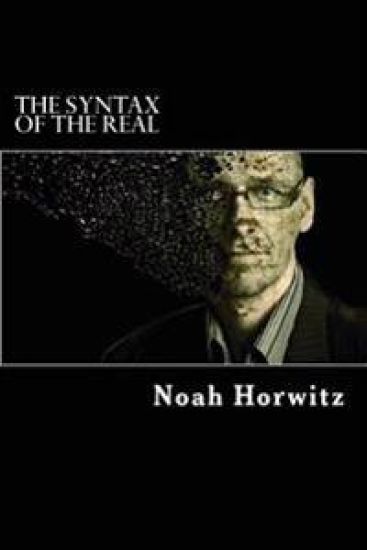
If the old existentialism said that existence precedes essence, the new existentialism articulated by The Syntax of the Real says that syntax precedes semantics. As opposed to the history of philosophy, which has been dominated semantico-centric ontologies, The Syntax of Real endeavors to articulate (perhaps the first) syntactic ontology. One of the most important theses of our time was articulated by the late John Haugeland. This thesis states that if you take care of the syntax, the semantics come for free. While Haugeland understood this thesis as one intervening in philosophy of mind and relating to the nature of artificial intelligence, The Syntax of Real both critiques of Haugeland's understand of his own thesis and articulates its actual ontological implications beyond its relevance to the nature of the mental. Our understanding of syntax must be broadened beyond the linguistic determination of this term if we are to grasp the nature of the real. After detailing the inherent problems of semantic ontologies, this manuscript deduces the very nature of the real from the point of departure of all post-Cartesian thought-the cogito. Semantic nihilism is not advocated. Rather as opposed to other theories of the semantic, a theory of operational semantics is elucidated. The Syntax of the Real articulates its vision both via engagement with well-known philosophers (for instance, the neo-Meinongian theories of the wunderkinder of contemporary European Philosophy, Markus Gabriel and Tristan Garcia, are subjected to critique) as well as pop culture (for example, an episode of the original Star Trek is analyzed and an engagement with the recent film Arrival makes up the conclusion). Warning: This text is not an attempt to articulate or analyze the obscurantist onto-babble of Francois Laruelle. Its orientation, if anything, is Lacanian. Table of Contents 1. Beyond the Semantico-centrism of Philosophy: Towards a Syntactic Ontology 2. If You Get the Syntax Right, the Semantics Come for Free 3. Syntax from the Perspective of Linguistics 4. Semantico-centrism in Linguistics 5. The Primacy of the Syntactic 6. Semanticist Ontology 7. The Problems with Semanticism 8. The Computational Theory of Mind 9. Fodor's Mistaken Guide to the Mind 10. The Actuality of Thought: From Criticisms of the Computational Theory of Mind to Existence in Itself 11. Where It Thinks, I Am Not: Deducing the Syntax of the Real 12. The Syntax of the Real 13. The Misadventures of Captain Obvious: John Searle, the Current Balding King of Semanticism 14. Deconstruction is the Deconstruction of Semantics 15. Structural Semantics 16. Operational Semantics 17. The Implications of Hegelian Anti-Platonism: Dialectical Semanticism 18. The Failure of Hegelian Anti-Pythagoreanism 19. Tzimtzum 20. Bidding Adieu to Badiou: A Critique of the Ontology of the Event 21. Fields of Semantic Sense: The Wunderkind Returns Us to Semanticism 22. Neo-Meinongianism 23. The Return of the Bishop: Berkeleyianism Today 24. Not Even Nietzscheanism is Dead 25. Nominalism 26. The Truth of Saussure 27. On the Origins of Language 28. The Arrival of the Brain Code