Kirjojen hintavertailu. Mukana 11 699 587 kirjaa ja 12 kauppaa.

Kirjahaku

Etsi kirjoja tekijän nimen, kirjan nimen tai ISBN:n perusteella.

9 kirjaa tekijältä Noah Tsika

Screening the Police

Screening the Police

Noah Tsika

OXFORD UNIVERSITY PRESS INC
2021
sidottu
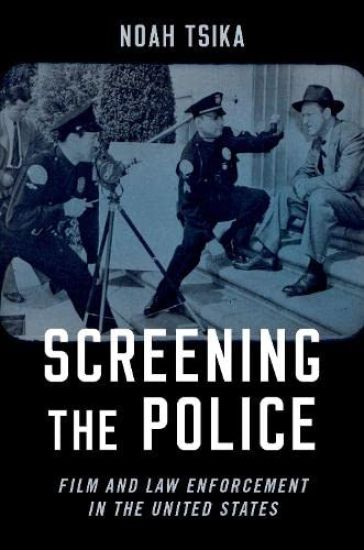
American police departments have presided over the business of motion pictures since the end of the nineteenth century. Their influence is evident not only on the screen but also in the ways movies are made, promoted, and viewed in the United States. Screening the Police explores the history of film's entwinement with law enforcement, showing the role that state power has played in the creation and expansion of a popular medium. For the New Jersey State Police in the 1930s, film offered a method of visualizing criminality and of circulating urgent information about escaped convicts. For the New York Police Department, the medium was a means of making the agency world-famous as early as 1896. Beat cops became movie stars. Police chiefs made their own documentaries. And from Maine to California, state and local law enforcement agencies regularly fingerprinted filmgoers for decades, amassing enormous records as they infiltrated theatres both big and small. As author Noah Tsika demonstrates, understanding the scope of police power in the United States requires attention to an aspect of film history that has long been ignored. Screening the Police reveals the extent to which American cinema has overlapped with the politics and practices of law enforcement.
Screening the Police

Screening the Police

Noah Tsika

OXFORD UNIVERSITY PRESS INC
2021
nidottu
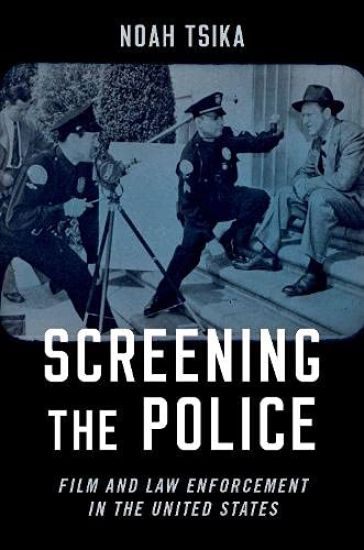
American police departments have presided over the business of motion pictures since the end of the nineteenth century. Their influence is evident not only on the screen but also in the ways movies are made, promoted, and viewed in the United States. Screening the Police explores the history of film's entwinement with law enforcement, showing the role that state power has played in the creation and expansion of a popular medium. For the New Jersey State Police in the 1930s, film offered a method of visualizing criminality and of circulating urgent information about escaped convicts. For the New York Police Department, the medium was a means of making the agency world-famous as early as 1896. Beat cops became movie stars. Police chiefs made their own documentaries. And from Maine to California, state and local law enforcement agencies regularly fingerprinted filmgoers for decades, amassing enormous records as they infiltrated theatres both big and small. As author Noah Tsika demonstrates, understanding the scope of police power in the United States requires attention to an aspect of film history that has long been ignored. Screening the Police reveals the extent to which American cinema has overlapped with the politics and practices of law enforcement.

Traumatic Imprints

Traumatic Imprints

Noah Tsika

University of California Press
2018
sidottu
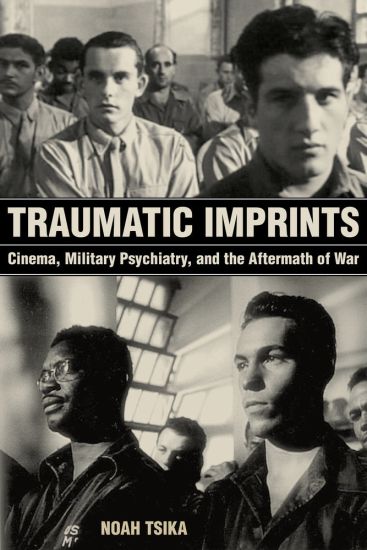
Forced to contend with unprecedented levels of psychological trauma during World War II, the United States military began sponsoring a series of nontheatrical films designed to educate and even rehabilitate soldiers and civilians alike. Traumatic Imprints traces the development of psychiatric and psychotherapeutic approaches to wartime trauma by the United States military, along with links to formal and narrative developments in military and civilian filmmaking. Offering close readings of a series of films alongside analysis of period scholarship in psychiatry and bolstered by research in trauma theory and documentary studies, Noah Tsika argues that trauma was foundational in postwar American culture. Examining wartime and postwar debates about the use of cinema as a vehicle for studying, publicizing, and even what has been termed “working through” war trauma, this book is an original contribution to scholarship on the military-industrial complex.
Traumatic Imprints

Traumatic Imprints

Noah Tsika

University of California Press
2018
pokkari
Forced to contend with unprecedented levels of psychological trauma during World War II, the United States military began sponsoring a series of nontheatrical films designed to educate and even rehabilitate soldiers and civilians alike. Traumatic Imprints traces the development of psychiatric and psychotherapeutic approaches to wartime trauma by the United States military, along with links to formal and narrative developments in military and civilian filmmaking. Offering close readings of a series of films alongside analysis of period scholarship in psychiatry and bolstered by research in trauma theory and documentary studies, Noah Tsika argues that trauma was foundational in postwar American culture. Examining wartime and postwar debates about the use of cinema as a vehicle for studying, publicizing, and even what has been termed “working through” war trauma, this book is an original contribution to scholarship on the military-industrial complex.
Cinematic Independence

Cinematic Independence

Noah Tsika

University of California Press
2022
pokkari
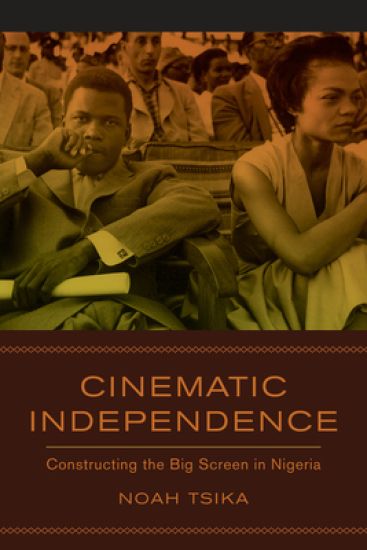
A free open access ebook is available upon publication. Learn more at www.luminosoa.org.Cinematic Independence traces the emergence, demise, and rebirth of big-screen film exhibition in Nigeria. Film companies flocked to Nigeria in the years following independence, beginning a long history of interventions by Hollywood and corporate America. The 1980s and 1990s saw a shuttering of cinemas, which were almost entirely replaced by television and direct-to-video movies. However, after 1999, the exhibition sector was revitalized with the construction of multiplexes. Cinematic Independence is about the periods that straddle this disappearing act: the immediate decades bracketing independence in 1960, and the years after 1999. At stake is the Nigerian postcolony’s role in global debates about the future of the movie theater. That it was eventually resurrected in the flashy form of the multiplex is not simply an achievement of commercial real estate, but also a testament to cinema’s persistence—its capacity to stave off annihilation or, in this case, come back from the dead.
I'm Not There

I'm Not There

Noah Tsika

UNIVERSITY OF TEXAS PRESS
2023
nidottu
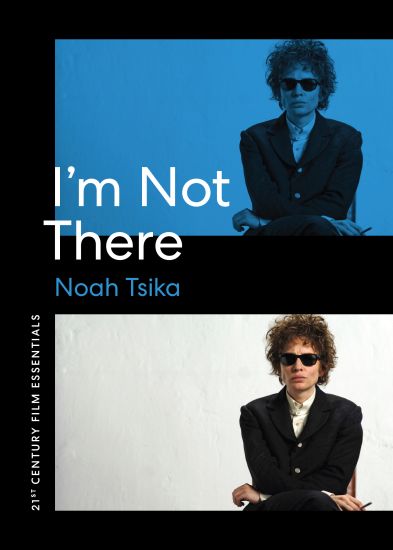
An examination of director Todd Haynes and his Bob Dylan biopic. As the first and only Bob Dylan “biopic,” I’m Not There caused a stir when released in 2007. Offering a surreal retelling of moments from Dylan’s life and career, the film is perhaps best known for its distinctive approach to casting, including Cate Blanchett and Marcus Carl Franklin, a Black child actor, as versions of Dylan though none of the characters bear his name. Greenlit by Bob Dylan himself, the film uses Dylan’s music as a score, a triumph for famed queer filmmaker Todd Haynes after encountering issues with copyright in previous projects. Noah Tsika eloquently characterizes all the ways that Dylan and Haynes harmonize in their methods and sensibilities, interpreting the rule-breaking film as a biography that refuses chronology, disdains factual accuracy, flirts with libel, and cannibalizes Western cinema. Fitting the film’s inspiration, creation, and reception alongside its continuing afterlife, Tsika examines Dylan’s music in the film through the context of intellectual property, raising questions about who owns artistic material and artistic identities and how such material can be reused and repurposed. Tsika’s adventurous analysis touches on gender, race, queerness, celebrity, popular culture, and the law, while offering much to Haynes and Dylan fans alike.
I'm Not There

I'm Not There

Noah Tsika

UNIVERSITY OF TEXAS PRESS
2023
sidottu
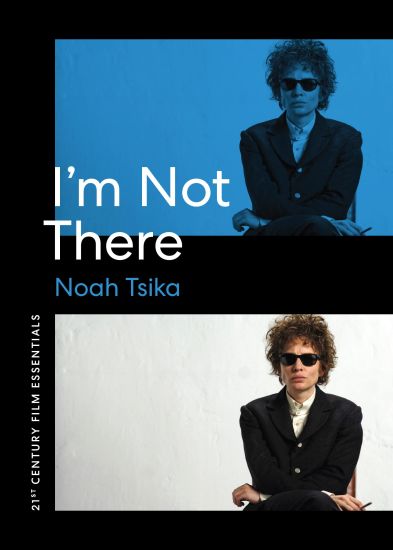
An examination of director Todd Haynes and his Bob Dylan biopic. As the first and only Bob Dylan “biopic,” I’m Not There caused a stir when released in 2007. Offering a surreal retelling of moments from Dylan’s life and career, the film is perhaps best known for its distinctive approach to casting, including Cate Blanchett and Marcus Carl Franklin, a Black child actor, as versions of Dylan though none of the characters bear his name. Greenlit by Bob Dylan himself, the film uses Dylan’s music as a score, a triumph for famed queer filmmaker Todd Haynes after encountering issues with copyright in previous projects. Noah Tsika eloquently characterizes all the ways that Dylan and Haynes harmonize in their methods and sensibilities, interpreting the rule-breaking film as a biography that refuses chronology, disdains factual accuracy, flirts with libel, and cannibalizes Western cinema. Fitting the film’s inspiration, creation, and reception alongside its continuing afterlife, Tsika examines Dylan’s music in the film through the context of intellectual property, raising questions about who owns artistic material and artistic identities and how such material can be reused and repurposed. Tsika’s adventurous analysis touches on gender, race, queerness, celebrity, popular culture, and the law, while offering much to Haynes and Dylan fans alike.
African Media in an Age of Extraction

African Media in an Age of Extraction

Noah Tsika

AMSTERDAM UNIVERSITY PRESS
2025
sidottu
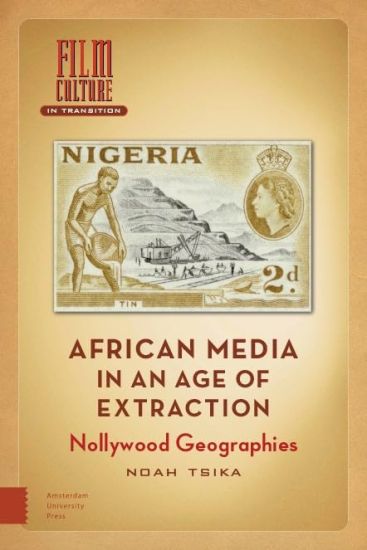
African Media in an Age of Extraction takes a fresh, site-specific look at the relationship between moving images and the mining of natural resources, arguing that where we “place” Nollywood and other industries has important practical and conceptual consequences. Such locations are not just spatial metaphors but also tangible geographies with material connections to extractive economies. Sites of film production are often spaces of oil prospecting, timber harvesting, and mineral extraction—natural environments continuously transformed by capital. African Media in an Age of Extraction links such absolute spaces—reclaimed lands, razed forests, petroleum zones, abandoned coal mines collecting moss, vast tin fields inspiring illegal dredging by populations locked out of the licit economy—to the abstract and lived dimensions of film villages, shooting locations, and exhibition centers. The geographies of African media industries are not fixed locations cleanly separated from surrounding areas or from the wider world (including Hollywood), nor are they fully detachable from the mineral and hydrocarbon resources that also define them. Considering multiple scales—the local, the national, the regional, the continental, the planetary—this book takes stock of the physical terrain and extractive objects that Nollywood shares with other industries and that structure screen media more broadly. Topographies, political economies, national identities, and natural resources are entwined in ways that cinema makes intelligible and that carry the potential to transform the way we see the medium itself.
Soleil Ô

Soleil Ô

Noah Tsika

BLOOMSBURY PUBLISHING PLC
2026
nidottu
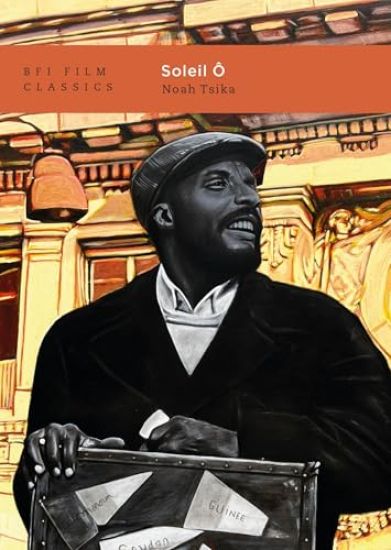
Med Hondo’s debut feature, Soleil Ô (1970), follows an unnamed African immigrant as he travels to Paris in search of work and a better life. Instead, he faces unemployment, exploitation and a deep sense of isolation from French society. Told through a non-linear structure and blending surrealist and satirical elements, the film is a searing critique of racism and the broader legacies of colonialism. Noah Tsika’s study situates Soleil Ô within its historical and political contexts, as well as within Hondo’s broader career and lifelong commitment to anti-colonial principles. He considers the film’s depiction of the modern exilic experience as a cinematic response to anti-immigrant rhetoric and nativist sentiment in France. Tsika also traces the film’s lengthy five-year production, examining Hondo’s guerrilla film-making tactics through which he staged scripted scenes on the teeming streets of Paris and captured the immediate reactions of perplexed passers-by. In doing so, Tsika suggests that by using the devices of documentary to tell a fictional story, and the devices of fiction to document a precise, seismic moment in world history, Soleil Ô daringly extends the techniques of film-makers such as Paulin Soumanou Vieyra and Ousmane Sembene into narrative, thematic and political terrain not previously encountered in African cinemas.