Kirjojen hintavertailu. Mukana 11 699 587 kirjaa ja 12 kauppaa.

Kirjahaku

Etsi kirjoja tekijän nimen, kirjan nimen tai ISBN:n perusteella.

13 kirjaa tekijältä Noel Malcolm

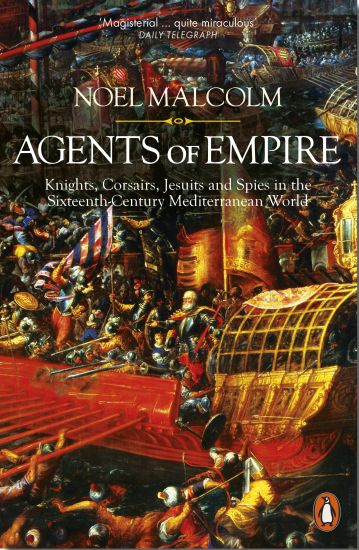
Agents of Empire

Agents of Empire

Noel Malcolm

Penguin Books Ltd
2016
pokkari
In the second half of the sixteenth century, most of the Christian states of Western Europe were on the defensive against a Muslim superpower - the Empire of the Ottoman sultans. There was violent conflict, from raiding and corsairing to large-scale warfare, but there were also many forms of peaceful interaction across the surprisingly porous frontiers of these opposing power-blocs. Agents of Empire describes the paths taken through the eastern Mediterranean and its European hinterland by members of a Venetian-Albanian family, almost all of them previously invisible to history. They include an archbishop in the Balkans, the captain of the papal flagship at the Battle of Lepanto, the power behind the throne in the Ottoman province of Moldavia, and a dragoman (interpreter) at the Venetian embassy in Istanbul.Through the life-stories of these adventurous individuals over three generations, Noel Malcolm casts the world between Venice, Rome and the Ottoman Empire in a fresh light, illuminating subjects as diverse as espionage, diplomacy, the grain trade, slave-ransoming and anti-Ottoman rebellion. He describes the conflicting strategies of the Christian powers, and the extraordinarily ambitious plans of the sultans and their viziers. Few works since Fernand Braudel's classic account of the sixteenth-century Mediterranean, published more than sixty years ago, have ranged so widely through this vital period of Mediterranean and European history. A masterpiece of scholarship as well as story-telling, Agents of Empire builds up a panoramic picture, both of Western power-politics and of the interrelations between the Christian and Ottoman worlds.
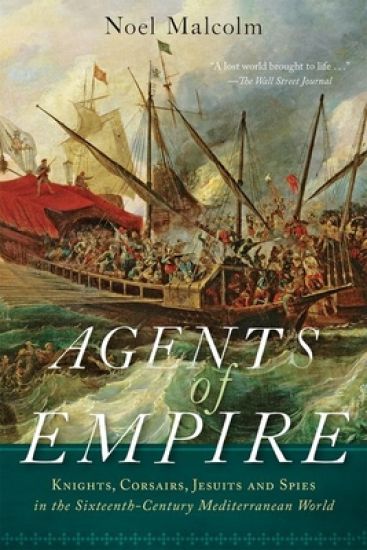
Agents of Empire: Knights, Corsairs, Jesuits, and Spies in the Sixteenth-Century Mediterranean World
In the late sixteenth century, a prominent Albanian named Antonio Bruni composed a revealing document about his home country. Historian Sir Noel Malcolm takes this document as a point of departure to explore the lives of the entire Bruni family, whose members included an archbishop of the Balkans, the captain of the papal flagship at the Battle of Lepanto--at which the Ottomans were turned back in the Eastern Mediterranean--in 1571, and a highly placed interpreter in Istanbul, formerly Constantinople, the capital of the Eastern Roman Empire that fell to the Turks in 1453. The taking of Constantinople had profoundly altered the map of the Mediterranean. By the time of Bruni's document, Albania, largely a Venetian province from 1405 onward, had been absorbed into the Ottoman Empire. Even under the Ottomans, however, this was a world marked by the ferment of the Italian Renaissance. In Agents of Empire, Malcolm uses the collective biography of the Brunis to paint a fascinating and intimate picture of Albania at a moment when it represented the frontier between empires, cultures, and religions. The lives of the polylingual, cosmopolitan Brunis shed new light on the interrelations between the Ottoman and Christian worlds, characterized by both conflict and complex interdependence. The result of years of archival detective work, Agents of Empire brings to life a vibrant moment in European and Ottoman history, challenging our assumptions about their supposed differences. Malcolm's book guides us through the exchanges between East and West, Venetians and the Ottomans, and tells a story of worlds colliding with and transforming one another.
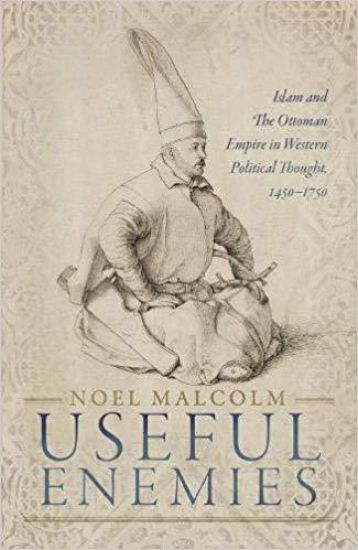
Useful Enemies

Useful Enemies

Noel Malcolm

Oxford University Press
2019
sidottu
From the fall of Constantinople in 1453 until the eighteenth century, many Western European writers viewed the Ottoman Empire with almost obsessive interest. Typically they reacted to it with fear and distrust; and such feelings were reinforced by the deep hostility of Western Christendom towards Islam. Yet there was also much curiosity about the social and political system on which the huge power of the sultans was based. In the sixteenth century, especially, when Ottoman territorial expansion was rapid and Ottoman institutions seemed particularly robust, there was even open admiration. In this path-breaking book Noel Malcolm ranges through these vital centuries of East-West interaction, studying all the ways in which thinkers in the West interpreted the Ottoman Empire as a political phenomenon - and Islam as a political religion. Useful Enemies shows how the concept of 'oriental despotism' began as an attempt to turn the tables on a very positive analysis of Ottoman state power, and how, as it developed, it interacted with Western debates about monarchy and government. Noel Malcolm also shows how a negative portrayal of Islam as a religion devised for political purposes was assimilated by radical writers, who extended the criticism to all religions, including Christianity itself. Examining the works of many famous thinkers (including Machiavelli, Bodin, and Montesquieu) and many less well-known ones, Useful Enemies illuminates the long-term development of Western ideas about the Ottomans, and about Islam. Noel Malcolm shows how these ideas became intertwined with internal Western debates about power, religion, society, and war. Discussions of Islam and the Ottoman Empire were thus bound up with mainstream thinking in the West on a wide range of important topics. These Eastern enemies were not just there to be denounced. They were there to be made use of, in arguments which contributed significantly to the development of Western political thought.
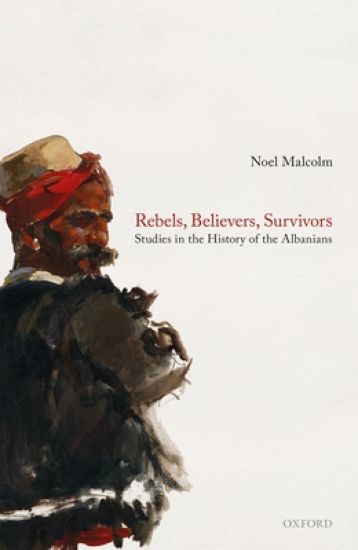
Rebels, Believers, Survivors

Rebels, Believers, Survivors

Noel Malcolm

Oxford University Press
2020
sidottu
Thanks to its half-century under Communism, as well as its little-known language, Albania has suffered from neglect and a sense of isolation. Yet, as this study helps to show, the Albanian lands have a long history of interaction with others. They have been a meeting-ground of Christianity and Islam; a channel through which Venice connected with the Ottoman Balkans; a place of interest to the Habsburgs; and a focus for the ambitions of neighbouring powers in the late Ottoman period. Albanians themselves could have many different identities. The studies in this volume, by one of the world's leading experts on Albanian history, range from the fifteenth century to the twentieth, taking in politics, social history, religion and diplomacy. Each is based on original research; the longest, on Ali Pasha, uses a wealth of manuscript material to tell, for the first time, the full story of the vital role he played in the international politics of the Napoleonic Wars. Other studies bring to life ordinary individuals hitherto unknown to history: women hauled before the Inquisition, for example, or the author of the first Albanian autobiography. Some of these studies have been printed before (several in hard-to-find publications, and one only in Albanian), but the greater part of this book appears here for the first time. This is not only a landmark publication for readers interested in south-east European history. It also engages with many broader issues, including religious conversion, 'crypto-Christianity' among Muslims, methods of enslavement within the Ottoman Empire, and the nature of modern myth-making about national identity.
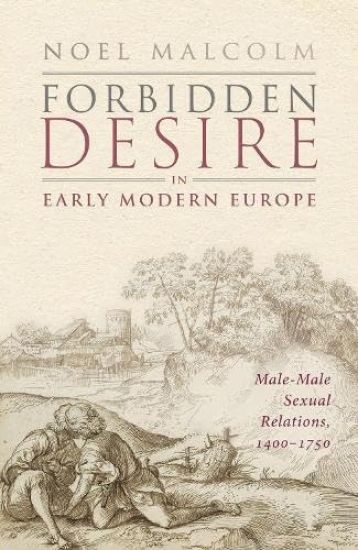
Forbidden Desire in Early Modern Europe

Forbidden Desire in Early Modern Europe

Noel Malcolm

Oxford University Press
2024
sidottu
A landmark study of the history of male-male sex in early modern Europe, including the European colonies and the Ottoman world. Until quite recently, the history of male-male sexual relations was a taboo topic. But when historians eventually explored the archives of Florence, Venice and elsewhere, they brought to light an extraordinary world of early modern sexual activity, extending from city streets and gardens to taverns, monasteries and Mediterranean galleys. Typically, the sodomites (as they were called) were adult men seeking sex with teenage boys. This was something intriguingly different from modern homosexuality: the boys ceased to be desired when they became fully masculine. And the desire for them was seen as natural; no special sexual orientation was assumed. The rich evidence from Southern Europe in the Renaissance period was not matched in the Northern lands; historians struggled to apply this new knowledge to countries such as England or its North American colonies. And when good Northern evidence did appear, from after 1700, it presented a very different picture. So the theory was formed - and it has dominated most standard accounts until now - that the 'emergence of modern homosexuality' happened suddenly, but inexplicably, at the beginning of the eighteenth century. Noel Malcolm's masterly study solves this and many other problems, by doing something which no previous scholar has attempted: giving a truly pan-European account of the whole phenomenon of male-male sexual relations in the early modern period. It includes the Ottoman Empire, as well as the European colonies in the Americas and Asia; it describes the religious and legal norms, both Christian and Muslim; it discusses the literary representations in both Western Europe and the Ottoman world; and it presents a mass of individual human stories, from New England to North Africa, from Scandinavia to Peru. Original, critical, lucidly written and deeply researched, this work will change the way we think about the history of homosexuality in early modern Europe.
Forbidden Desire in Early Modern Europe

Forbidden Desire in Early Modern Europe

Noel Malcolm

Oxford University Press
2026
nidottu
A landmark study of the history of male-male sex in early modern Europe, including the European colonies and the Ottoman world. Until quite recently, the history of male-male sexual relations was a taboo topic. But when historians eventually explored the archives of Florence, Venice and elsewhere, they brought to light an extraordinary world of early modern sexual activity, extending from city streets and gardens to taverns, monasteries and Mediterranean galleys. Typically, the sodomites (as they were called) were adult men seeking sex with teenage boys. This was something intriguingly different from modern homosexuality: the boys ceased to be desired when they became fully masculine. And the desire for them was seen as natural; no special sexual orientation was assumed. The rich evidence from Southern Europe in the Renaissance period was not matched in the Northern lands; historians struggled to apply this new knowledge to countries such as England or its North American colonies. And when good Northern evidence did appear, from after 1700, it presented a very different picture. So the theory was formed - and it has dominated most standard accounts until now - that the 'emergence of modern homosexuality' happened suddenly, but inexplicably, at the beginning of the eighteenth century. Noel Malcolm's masterly study solves this and many other problems, by doing something which no previous scholar has attempted: giving a truly pan-European account of the whole phenomenon of male-male sexual relations in the early modern period. It includes the Ottoman Empire, as well as the European colonies in the Americas and Asia; it describes the religious and legal norms, both Christian and Muslim; it discusses the literary representations in both Western Europe and the Ottoman world; and it presents a mass of individual human stories, from New England to North Africa, from Scandinavia to Peru. Original, critical, lucidly written and deeply researched, this work will change the way we think about the history of homosexuality in early modern Europe.
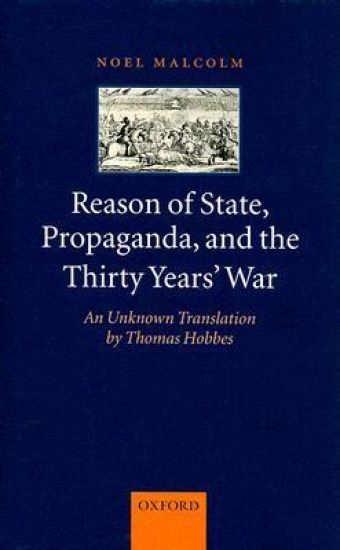
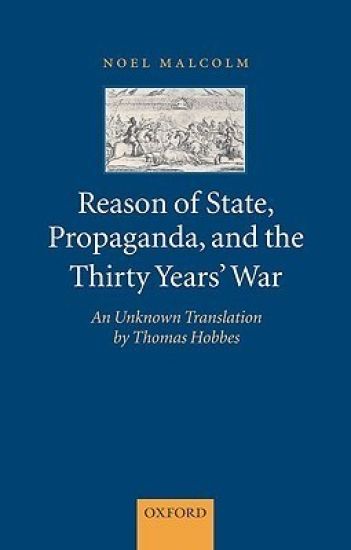
Reason of State, Propaganda, and the Thirty Years' War
Acclaimed writer and historian Noel Malcolm presents his sensational discovery of a new work by Thomas Hobbes (1588-1679): a propaganda pamphlet on behalf of the Habsburg side in the Thirty Years' War, translated by Hobbes from a Latin original. Malcolm's book explores a fascinating episode in seventeenth-century history, illuminating both the practice of early modern propaganda and the theory of "reason of state".
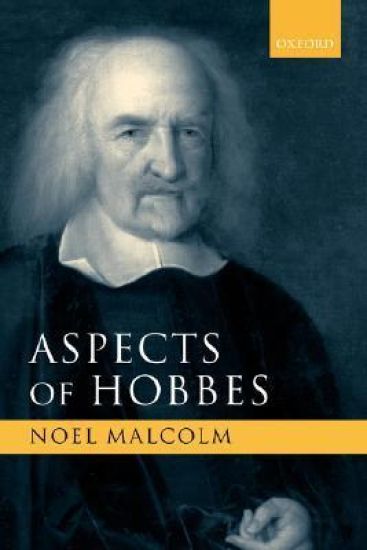
Aspects of Hobbes

Aspects of Hobbes

Noel Malcolm

Clarendon Press
2004
nidottu
Noel Malcolm, one of the world's leading experts on Thomas Hobbes, presents a set of extended essays on a wide variety of aspects of the life and work of this giant of early modern thought. Malcolm offers a succinct introduction to Hobbes's life and thought, as a foundation for his discussion of such topics as his political philosophy, his theory of international relations, the development of his mechanistic world-view, and his subversive Biblical criticism. Several of the essays pay special attention to the European dimensions of Hobbes's life, his sources and his influence; the longest surveys the entire European reception of his work from the 1640s to the 1750s. All the essays are based on a deep knowledge of primary sources, and many present striking new discoveries about Hobbes's life, his manuscripts, and the printing history of his works. Aspects of Hobbes will be essential reading not only for Hobbes specialists, but also for all those interested in seventeenth-century intellectual history more generally, both British and European.
Reason of State, Propaganda, and the Thirty Years' War
Acclaimed writer and historian Noel Malcolm presents his sensational discovery of a new work by Thomas Hobbes (1588-1679): a propaganda pamphlet on behalf of the Habsburg side in the Thirty Years' War, translated by Hobbes from a Latin original. Malcolm's book explores a fascinating episode in seventeenth-century history, illuminating both the practice of early modern propaganda and the theory of "reason of state".
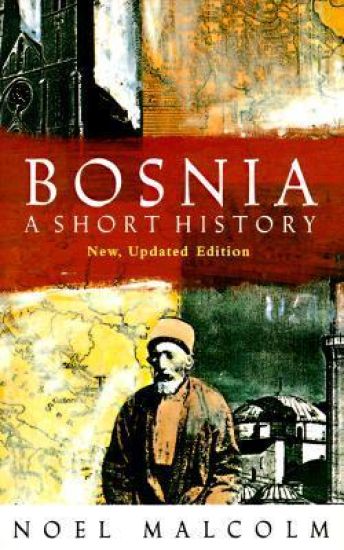
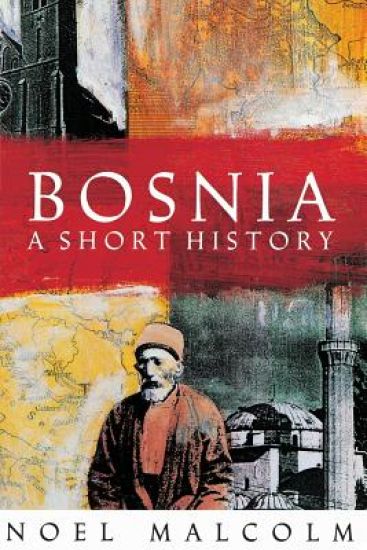
Bosnia

Bosnia

Noel Malcolm

New York University Press
1996
pokkari
This updated edition of Noel Malcolm's highly-acclaimed Bosnia: A Short History provides the reader with the most comprehensive narrative history of Bosnia in the English language. Malcolm examines the different religious and ethnic inhabitants of Bosnia, a land of vast cultural upheaval where the empires of Rome, Charlemagne, the Ottomans, and the Austro-Hungarians overlapped. Clarifying the various myths that have clouded the modern understanding of Bosnia's past, Malcolm brings to light the true causes of the country's destruction. This expanded edition of Bosnia includes a new epilogue by the author examining the failed Vance-Owen peace plan, the tenuous resolution of the Dayton Accords, and the efforts of the United Nations to keep the uneasy peace. What went wrong in the country where Christians and Muslims mingled and tolerated each other for over five centuries? It was a land with a vibrant political and cultural history, unlike any other in Europe, where great powers and religions-the empires of Rome, Charlemagne, the Ottomans; the faiths of Roman Catholicism, Eastern Orthodoxy, Judaism, and Islam overlapped and combined.In this first English-language history of Bosnia, Noel Malcolm provides a narrative chronicle of the country from its beginnings to its tragic end. Clarifying the various myths that have clouded the modern understanding of Bosnia's past, Malcolm brings to light the true causes of the country's destruction: the political strategy of the Serbian leadership, the conflict between the city and the countryside, the fatal inaction and miscalculations of Western politicians. Putting the Bosnia war into perspective, this volume celebrates the complex history of a country whose past, as well as its future, has been all but erased. At last, here is the guide for the general reader seeking a comprehensive and accessible account of the war in the former Yugoslavia. Table of Contents A Note on Names and Pronunciations Maps Introduction 1. Races, myths and origins: Bosnia to 1180 2. The medieval Bosnian state, 1180-1463 3. The Bosnian Church 4. War and the Ottoman system, 1463-1606 5. The Islamicization of Bosnia 6. Serbs and Vlachs 7. War and politics in Ottoman Bosnia, 1606-1815 8. Economic life, culture and society in Ottoman Bosnia, 1606-1815 9. The Jews and the Gypsies of Bosnia 10.Resistance and reform, 1815-1878 11. Bosnia under Austro-Hungarian rule, 1878-1914 12. War and the kingdom: Bosnia 1914-1941 13. Bosnia and the second world war, 1941-1945 14. Bosnia in Titoist Yugoslavia, 1945-1989 15. Bosnia and the death of Yugoslavia: 1989-1992 16. The destruction of Bosnia: 1992-1993 Notes Glossary Bibliography Index
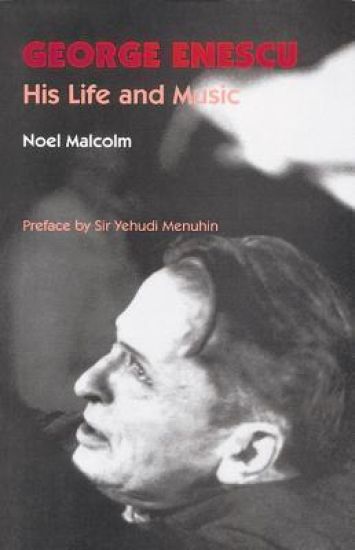
George Enescu

George Enescu

Noel Malcolm

Toccata Press
1999
pokkari
First full-length study of the composer George Enescu [1881-1955]. The Romanian composer George Enescu (1881-1955] is one of the neglected giants of the twentieth century. Prodigiously gifted, he became best known in America as a conductor (where he was considered as a successor to Toscanini in New York) and in Europe as one of the greatest violinists of the century. But he was first and foremost a composer; and, tragically, his mature works - works of extraordinary emotional depth and intricate beauty - remain almost unknown outside Romania. This, the first full-length study of Enescu and his music to be written in the West, tells the story of his life and development as a composer. All of Enescu's published compositions, and many unpublished works, are discussed, and there is a detailed list of Enescu's compositions and a list of all his known recordings as conductor, violinist and pianist. The book is intended for the non-specialist reader as well as the musicologist. NOEL MALCOLM, the historian, philosopher and journalist, is the leading authority on Enescu.
Bosnia

Bosnia

Noel Malcolm

Pan Books
2016
pokkari
Bosnia: A Short History was celebrated on its first publication as a brilliant work of history which set the terrible war in the Balkans in its full historical and political context. This revised edition has been updated with a new chapter that covers the events of 1993-1995 and remains the definitive work on the complex history of Bosnia. 'A quite brilliant piece of historical record-straightening. Everyone who wishes to have an opinion about Bosnia must read this book.' Niall Ferguson, Daily Mail 'Clear-sighted, authoritative and eloquent.' Dimitri Obolensky, Times Literary Supplement 'A Triumph of clarity, learning and balance.' Adrian Hastings, New Statesman and Society 'Excellent.' Paddy Ashdown, Sunday Times 'This is a splendid work of synthesis on a very complex subject, written with insight and sympathy: the best, indeed the only, informed book on a history that has become both topical and tragic.' Hugh Trevor-Roper, Sunday Telegraph 'A marvellous book, a work of great scholarship.' Margaret Thatcher
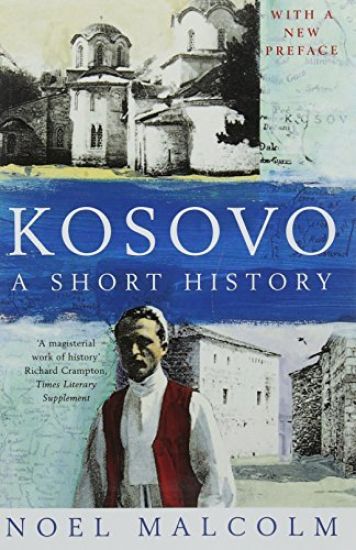
Kosovo: a Short History

Kosovo: a Short History

Noel Malcolm

Pan Books
2018
pokkari
By the early-1980s Kosovo had reached a state of permanent crisis and military occupation, and it became the main focus for the revival of Serbian nationalism. This book traces the history of Kosovo, examining the Yugoslavian conflict, and the part played by Western Europe in its destruction. 'This is a profound and important book, essential reading for those who wish to understand either the complex history or the present politics of Yugoslavia.' Hugh Trevor-Roper, SUNDAY TELEGRAPH 'A dreadnought of a book, all big guns, covering the whole history of Kosovo, with an authority that is often breathtaking and never oppressive.' Norman Stone, SUNDAY TIMES