Kirjojen hintavertailu. Mukana 11 717 486 kirjaa ja 12 kauppaa.

Kirjahaku

Etsi kirjoja tekijän nimen, kirjan nimen tai ISBN:n perusteella.

6 kirjaa tekijältä Norbert Hornstein

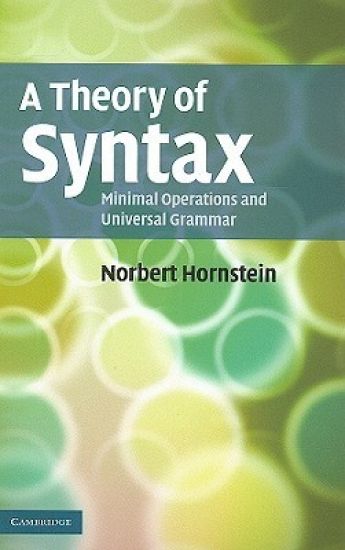
A Theory of Syntax

A Theory of Syntax

Norbert Hornstein

Cambridge University Press
2008
sidottu
Human language seems to have arisen roughly within the last 50-100,000 years. In evolutionary terms, this is the mere blink of an eye. If this is correct, then much of what we consider distinctive to language must in fact involve operations available in pre-linguistic cognitive domains. In this book Norbert Hornstein, one of the most influential linguists working on syntax, discusses a topical set of issues in syntactic theory, including a number of original proposals at the cutting edge of research in this area. He provides a theory of the basic grammatical operations and suggests that there is only one that is distinctive to language. If this theory is correct then this narrows the evolutionary gap between verbal and non-verbal primates, thus facilitating the rapid evolutionary emergence of our linguistic capacity.
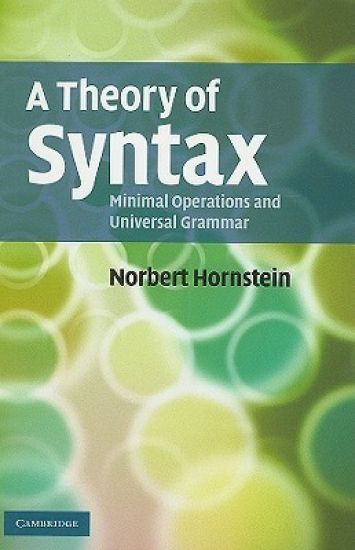
A Theory of Syntax

A Theory of Syntax

Norbert Hornstein

Cambridge University Press
2008
pokkari
Human language seems to have arisen roughly within the last 50-100,000 years. In evolutionary terms, this is the mere blink of an eye. If this is correct, then much of what we consider distinctive to language must in fact involve operations available in pre-linguistic cognitive domains. In this book Norbert Hornstein, one of the most influential linguists working on syntax, discusses a topical set of issues in syntactic theory, including a number of original proposals at the cutting edge of research in this area. He provides a theory of the basic grammatical operations and suggests that there is only one that is distinctive to language. If this theory is correct then this narrows the evolutionary gap between verbal and non-verbal primates, thus facilitating the rapid evolutionary emergence of our linguistic capacity.
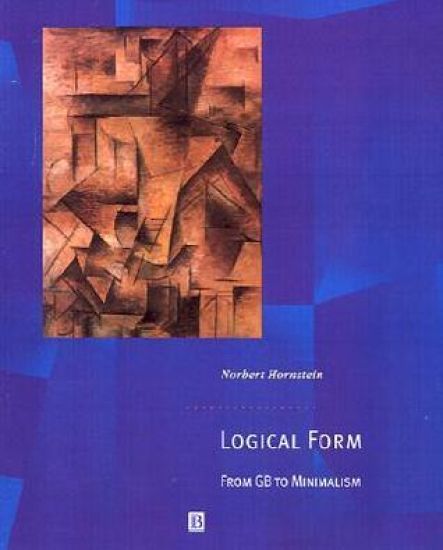
Logical Form

Logical Form

Norbert Hornstein

Blackwell Publishers
1995
nidottu
This book critically reviews grammatical research into logical form over the past 20 years and reconsiders some of its major themes in the light of recent theoretical innovations. In the late 1970s generative grammarians proposed the existence of an abstract syntactic level of grammatical representation derived from surface structure which was phonetically invisible. This level, dubbed logical form, has been thought of as the information that the grammar contributes to semantic interpretation. The first part of the book reviews the standard arguments for the existence of LF and its format.
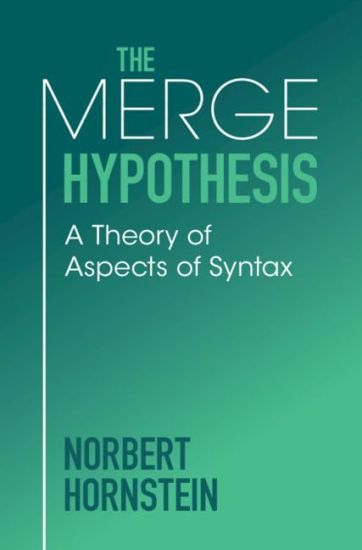
The Merge Hypothesis

The Merge Hypothesis

Norbert Hornstein

Cambridge University Press
2024
sidottu
The Merge Hypothesis is the central empirical theoretical contribution of the Minimalist Program (MP) to syntactic theory. This book offers an accessible overview of the MP, debunking common sixty years of Generative research, culminating in GB theory. He introduces The Fundamental Principle of Grammar, which advocates including labels as part of the Merge Operation and centring the notion of the constituent as the key domain of syntactic commerce. The early chapters identify the goals of the MP, how they arose from earlier descriptive and explanatory successes of the mentalist tradition within Generative Grammar, and how to develop them in future work to expand its descriptive and explanatory range. It is essential reading for anyone interested in contemporary syntactic theory.
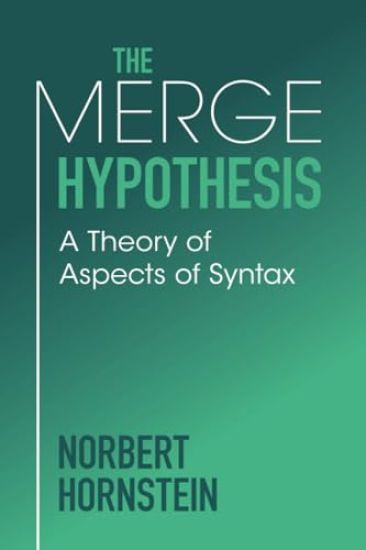
The Merge Hypothesis

The Merge Hypothesis

Norbert Hornstein

Cambridge University Press
2024
pokkari
The Merge Hypothesis is the central empirical theoretical contribution of the Minimalist Program (MP) to syntactic theory. This book offers an accessible overview of the MP, debunking common sixty years of Generative research, culminating in GB theory. He introduces The Fundamental Principle of Grammar, which advocates including labels as part of the Merge Operation and centring the notion of the constituent as the key domain of syntactic commerce. The early chapters identify the goals of the MP, how they arose from earlier descriptive and explanatory successes of the mentalist tradition within Generative Grammar, and how to develop them in future work to expand its descriptive and explanatory range. It is essential reading for anyone interested in contemporary syntactic theory.