

Kirjahaku
Etsi kirjoja tekijän nimen, kirjan nimen tai ISBN:n perusteella.
42 kirjaa tekijältä Norbert Wolf
One of the art world's most recognisable and popular styles, Impressionism is also one of the most complex. In this sumptuous overview Norbert Wolf lends his attention to all aspects of Impressionism: its historical precursors, contemporary rivals and the movements it inspired. Over 200 large format reproductions of entire works and highlighted details introduce readers to the Impressionists' aesthetics and techniques. Wolf draws insightful parallels between these paintings and other contemporary works of music, photography, and literature. Tracing the movement's expansion from France to the rest of Europe and North America, this volume shines a spotlight on the main protagonists not only highlighting the French pioneers--Claude Monet, Gustave Caillebotte, Edouard Manet, Pierre-Auguste Renoir, Camille Pissarro, and others--but also Max Liebermann, Lovis Corinth, John Singer Sargent, Mary Cassatt, William Merritt Chase, and James McNeill Whistler, to name a few. As luxurious as it is authoritative, this wide-ranging investigation of a momentous period in art history reveals works and ideas that will surprise even the most seasoned aficionado.
One of the art world’s most recognizable and popular styles, Impressionism is also one of the most complex. In this sumptuous overview Norbert Wolf lends his attention to all aspects of Impressionism: its historical precursors, contemporary rivals, and the movements it inspired. Over 200 reproductions of entire works and highlighted details introduce readers to the Impressionists’ aesthetics and techniques. Wolf draws insightful parallels between these paintings and other contemporary works of music, photography, and literature. Charting the movement’s expansion from France to the rest of Europe and North America, this volume shines a spotlight on the main protagonists who were key in the development of Impressionism. It highlights not only the French pioneers— Claude Monet, Gustave Caillebotte, Édouard Manet, Pierre- Auguste Renoir, Camille Pissarro, and others—but also Max Liebermann, Lovis Corinth, John Singer Sargent, Mary Cassatt, William Merritt Chase, and James McNeill Whistler. Authoritative and illuminating, this wide-ranging exploration of Impressionism’s astounding impact on art history will surprise even the most seasoned aficionado.
The Art Nouveau movement became an international phenomenon at the beginning of the twentieth century that ushered in the era of modernity in almost every aspect of cultural life. For decades critics have argued that Art Nouveau was not an artistic period in its own right, but an amalgam of artists and styles that served as a bridge between neoclassicism and modernism. In this comprehensive, authoritative and copiously illustrated book, art historian Norbert Wolf explores Art Nouveau as a logical outgrowth of the historic forces in which it arose. This book focuses on the movement's wide variety of applications and reclaims its prominence in the pantheon of modern art history. Chapters on aesthetics, spirituality and the cult of beauty offer luminous examples of works by Mucha, Gaudi, Hoffmann, Klimt, Horta, Munch and Tiffany, among many others. Wolf's text is both informed and accessible, providing an exciting narrative that brings the Art Nouveau movement into clear focus. Beautifully produced to appeal to a wide range of readers, this new edition gives one of the world's most popular styles the serious consideration it deserves.
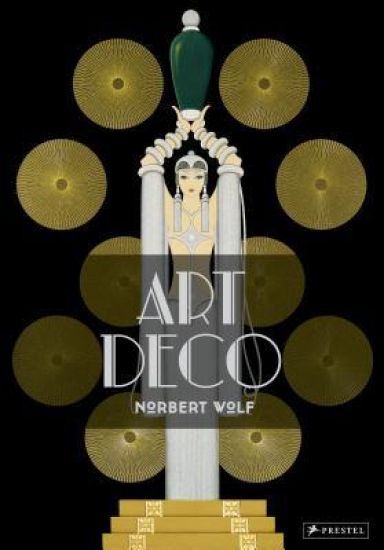
The Art Deco style is so recognisable and widespread that its original impact on the culture in which it emerged has been all but lost in the clutter of imitation. This book draws our attention back to the birth of Art Deco—a period between two devastating world wars when industrialisation was flourishing, interest in archaeology was peaking and movements such as Cubism, Constructivism, Futurism and Modernism were turning the art world on its head. Brilliantly designed to reflect the style it celebrates, Art Deco is filled with hundreds of examples of painting, architecture, interiors, jewelry, crafts, furniture and fashion. Author Norbert Wolf traces the chronology of the Art Deco style by looking at the politics and culture of Europe in the 1920s and early 30s and the artistic movements that paralleled its popularity. He follows Art Deco’s influence in Europe and its spread to the Americas and Asia. Most importantly, this wide-ranging volume looks beyond the era of Art Deco’s origination to the present day. Pointing to the numerous revivals and contemporary echoes in painting and even literature, this beautiful volume demonstrates the style’s lasting importance.
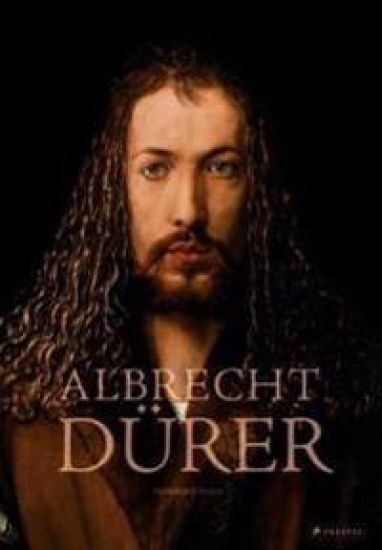
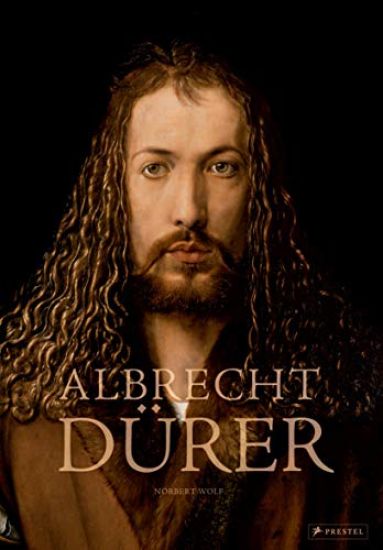
Albrecht Durer's prints and drawings have inspired hundreds of artists, both during his life and after his death. Yet his talent as a painter and colorist, and his enthusiasm for the scientific world have not been widely appreciated. Durer's influence was both international and intergenerational-indeed Picasso claimed to have been inspired by the 16th-century artist. Reproduced in stunning detail and including illustrations of Durer's most famous prints and drawings, a catalog raisonne of his paintings, and biographical research, this book presents a Durer for the 21st century. Producing more self-portraits than any other artist of his day; mass marketing his best-selling prints; even inventing his own monogram logo; Albrecht Du rer was commercially astute long before today's generation of self-promoting and financially-savvy artists. There are 55 extant Durer paintings, of which 17 are in dispute. Using scientific research, this book puts all arguments to bed resulting in the definitive catalog raisonne of the paintings. Drawing on in-depth research, this book reveals the truth behind Durer and his art.
Das Goldene Zeitalter der niederländischen Malerei im 17. Jahrhundert
Norbert Wolf
PRESTEL VERLAG
2019
sidottu
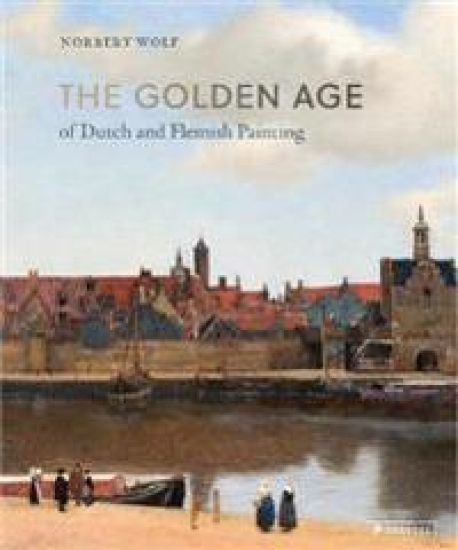
The Golden Age in Holland and Flanders roughly spanned the 17th century and was a period of enormous advances in the fields of commerce, science—and art. Still lifes, landscape paintings, and romantic depictions of everyday life became valued by the increasingly wealthy merchant classes in the Dutch provinces, while religious and historic paintings as well as portraits continued to appeal to the Flemish patronage. The Golden Age brought us Rembrandt, Vermeer, Rubens, and Van Dyck, but it was also the period of Frans Hals’ revolutionary portraiture, Adriaen Brouwer’s depictions of the working class at play, Jan Brueghel’s velvety miniatures, and Hendrick Avercamp’s lively winter landscapes. Norbert Wolf applies his vast understanding of the interplay between history, culture, and art to explore the forces that led to the Golden Age in Holland and Flanders and how this period influenced later generations of artists. Accompanied by luminous color illustrations, Wolf’s accessible text considers the complex political, religious, social, and economic situation that led to newfound prosperity and, thus, to an enormous artistic output that we continue to marvel at and enjoy today.
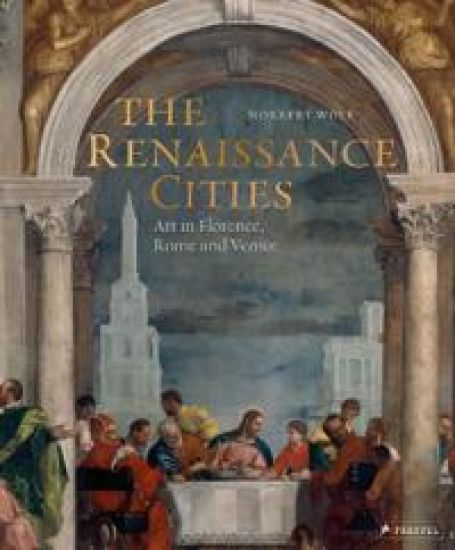
The idea of “renaissance,” or rebirth, arose in Italy as a way of reviving the art, science, and scholarship of the Classical era. It was also powered by a quest to document artistic “reality” according to newly discovered scientific and mathematical principles. By the late 15th century, Italy had become the recognised European leader in the fields of painting, architecture, and sculpture. But why was Florence the centre of this burgeoning creativity, and how did it spread to other Italian cities? Brimming with vivid reproductions of works by Leonardo, Michelangelo, Botticelli, Raphael, Titian, and others, this book showcases the creative achievements that traveled from Florence to Rome to Venice. Art historian Norbert Wolf explores the influence of secular and religious patronage on artistic development; how the urban structure and way of life allowed for such a rich exchange of ideas; and how ideas of humanism informed artists reaching toward the future while clinging to the ideals of the past. Insightful, accessible, and fascinating, this thoroughly researched book highlights the connections and mutual influences of Florence, Rome, and Venice as well as their intriguing rivalries and interdependencies.

This richly illustrated volume invites readers to explore the phenomenon and fascination of Romanticism, a movement that shaped the cultural and aesthetic landscape of the nineteenth century and continues to resonate in modern consciousness. The Romantic era ignited a profound shift in the arts, celebrating imagination, emotion, and the sublime power of nature. The book offers a nuanced view of Romanticism’s revolutionary impact. It journeys through the movement’s origins in the experimental ferment of the eighteenth century, its apex in German, French, and British painting, and its later echoes across Europe and North America. The author examines key figures such as Caspar David Friedrich, J.M.W. Turner, Euge`ne Delacroix, and The´odore Ge´ricault, exploring their transformative approaches to landscape, light, and human passion. The narrative also unravels the movement’s intricate relationship with themes of melancholy, the sublime, and the spiritual reconciliation of the individual with the universal. Acclaimed art historian Norbert Wolf illuminates Romanticism’s capacity to evoke longing, its poeticization of life through art, and its engagement with profound contradictions— an embrace of both light and shadow. By tracing the stylistic and cultural trajectories of Romantic painting, from Germany’s High Romanticism to the North American Hudson River School, he situates these works within broader artistic and intellectual traditions. Filled with breathtaking reproductions of major works, and backed by impeccable scholarship, Romanticism reveals a movement that transcended national boundaries and bridged the intersection of emotion, imagination, and the sublime.

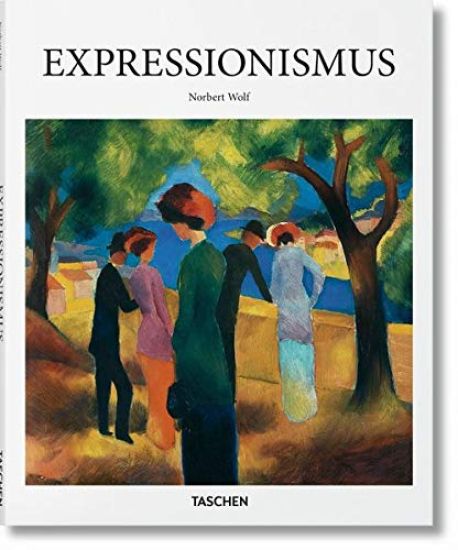
Through panoramas of mood, ideas, and emotions, Expressionism stands as one of the most reactionary and influential movements of the early twentieth century. This introduction assesses the groupâ??s stylistic tendencies, influences, and pursuit of authenticity.
Sharp angles, strange forms, lurid colors, and distorted perspectives are classic hallmarks of Expressionism, the twentieth century movement that prioritized emotion over objective reality. Though particularly present in Germany and Austria, the movement’s approach flourished internationally and is today hailed as one of the most influential shifts in art history. With leading groups Die Brücke (The Bridge) and Der Blaue Reiter (The Blue Rider), and key players such as Wassily Kandinsky, Egon Schiele,and Emil Nolde, the Expressionists disowned Impressionism, which they regarded as “man lowered to the position of a gramophone record of the outer world”, to depict instead a raw and visceral experience of life as it was felt, rather than seen on the surface. Their paintings brim with emotive force, conveyed in particular through intense and non-naturalistic color palettes, loose brushwork, and thick textures. Covering the group’s stylistic tendencies, influences, and most important protagonists, this introductory book explores the Expressionist panorama of moods, ideas, and emotions and their abiding quest for deep authenticity.
Sharp angles, strange forms, lurid colors, and distorted perspectives are classic hallmarks of Expressionism, the twentieth century movement that prioritized emotion over objective reality. Though particularly present in Germany and Austria, the movement’s approach flourished internationally and is today hailed as one of the most influential shifts in art history. With leading groups Die Brücke (The Bridge) and Der Blaue Reiter (The Blue Rider), and key players such as Wassily Kandinsky, Egon Schiele,and Emil Nolde, the Expressionists disowned Impressionism, which they regarded as “man lowered to the position of a gramophone record of the outer world”, to depict instead a raw and visceral experience of life as it was felt, rather than seen on the surface. Their paintings brim with emotive force, conveyed in particular through intense and non-naturalistic color palettes, loose brushwork, and thick textures. Covering the group’s stylistic tendencies, influences, and most important protagonists, this introductory book explores the Expressionist panorama of moods, ideas, and emotions and their abiding quest for deep authenticity.
Sharp angles, strange forms, lurid colors, and distorted perspectives are classic hallmarks of Expressionism, the twentieth century movement that prioritized emotion over objective reality. Though particularly present in Germany and Austria, the movement’s approach flourished internationally and is today hailed as one of the most influential shifts in art history. With leading groups Die Brücke (The Bridge) and Der Blaue Reiter (The Blue Rider), and key players such as Wassily Kandinsky, Egon Schiele,and Emil Nolde, the Expressionists disowned Impressionism, which they regarded as “man lowered to the position of a gramophone record of the outer world”, to depict instead a raw and visceral experience of life as it was felt, rather than seen on the surface. Their paintings brim with emotive force, conveyed in particular through intense and non-naturalistic color palettes, loose brushwork, and thick textures. Covering the group’s stylistic tendencies, influences, and most important protagonists, this introductory book explores the Expressionist panorama of moods, ideas, and emotions and their abiding quest for deep authenticity.
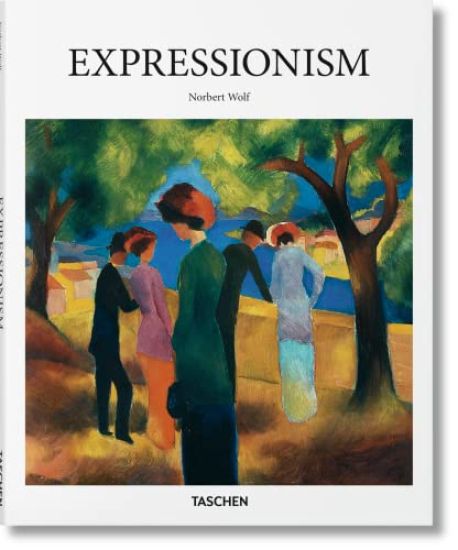
Sharp angles, strange forms, lurid colors, and distorted perspectives are classic hallmarks of Expressionism, the twentieth century movement that prioritized emotion over objective reality. Though particularly present in Germany and Austria, the movement’s approach flourished internationally and is today hailed as one of the most influential shifts in art history. With leading groups Die Brücke (The Bridge) and Der Blaue Reiter (The Blue Rider), and key players such as Wassily Kandinsky, Egon Schiele,and Emil Nolde, the Expressionists disowned Impressionism, which they regarded as “man lowered to the position of a gramophone record of the outer world”, to depict instead a raw and visceral experience of life as it was felt, rather than seen on the surface. Their paintings brim with emotive force, conveyed in particular through intense and non-naturalistic color palettes, loose brushwork, and thick textures. Covering the group’s stylistic tendencies, influences, and most important protagonists, this introductory book explores the Expressionist panorama of moods, ideas, and emotions and their abiding quest for deep authenticity.
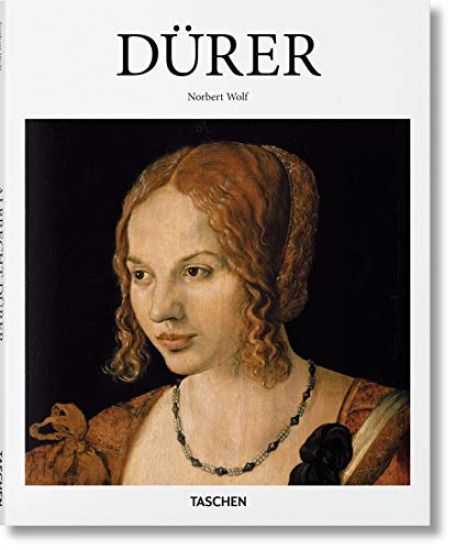
A polymath of the German Renaissance, Albrecht Dürer (1471–1528) was a prolific artist, theorist, and writer whose works explored everything from religion to art theory to philosophy. His vast body of work includes altarpieces, portraits, self-portraits, watercolors, and books, but is most celebrated for its astonishing collection of woodcut prints, which transformed printmaking from an artisan practice into a whole new art form. Dürer’s woodcuts astonish in scale as much as detail. Through works such as Apocalypse and the Triumphal Arch for Emperor Maximilian I, he created dense, meticulous compositions that were much larger, much more finely cut, and far more complex than any earlier woodcut efforts. With an ambitious tonal and dynamic range, he introduced a new level of conceptual, emotional, and spiritual intensity. His two major woodcut series on Christ’s Passion, named The Large Passion and The Small Passion after their size, are particularly remarkable for their vivid human treatment of the Christian narrative. In his copper engraving, Melancholia I, meanwhile, Dürer created a startling vision of emotional ennui, often cited as a defining early image of a depressive or melancholic state. Ever inquisitive, Dürer absorbed ideas not only from masters and fellow artists in Germany but also from Italy, while his own influence extended across Europe for generations to come. In this essential TASCHEN introduction, we explore this pioneering figure’s complex practice, his omnivorous intellect, and the key works which shaped his enduring legacy.