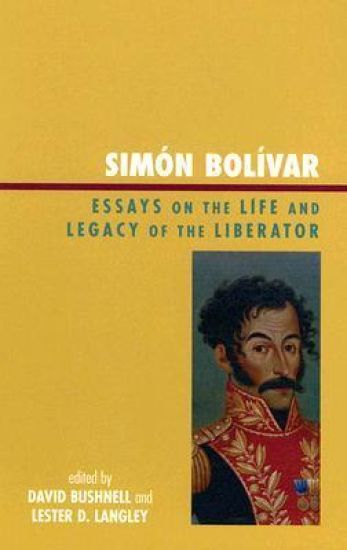
Simón Bolívar was without a doubt the most famous and most controversial leader of the Spanish American wars of independence. Much is known of his biography: he led an army that liberated an expanse of South America equivalent to that conquered by Napoleon; crafted the union of Venezuela, New Granada, and Ecuador into the republic of Gran Colombia; outlined the plan for a defensive league of former Spanish-American colonies; and wrote the first Bolivian constitution. He also died in exile after the rejection of his arbitrary and dictatorial rule in Colombia. This volume takes a step back from both glorification and vilification to reassess Bolívar's life and legacy. A distinguished group of historians takes a fresh look at the impact of "the Liberator" as warrior, political thinker and leader, internationalist, continentalist, reformer, and revolutionary. They make a powerful statement about the importance of biography and the relevance of the individual in explaining historical events. A balanced yet critical appraisal of Bolívar's role in the Spanish-American wars of independence, this in-depth collection offers a persuasive explanation of why the Bolívarian legend and cult has persisted. It is essential reading for anyone who wants to understand Simón Bolívar—the man and the legacy. Contributions by: David Bushnell, Germán Carrera Damas, Simon Collier, Judith Ewell, Iván Jaksic, Lester D. Langley, John V. Lombardi, Karen Racine, Frank Safford, and Hermes Tovar Pinzón