Kirjojen hintavertailu. Mukana 11 342 296 kirjaa ja 12 kauppaa.

Kirjahaku

Etsi kirjoja tekijän nimen, kirjan nimen tai ISBN:n perusteella.

58 kirjaa tekijältä Norman Mailer

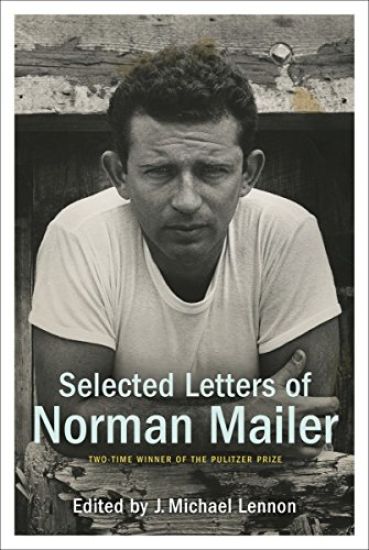
Selected Letters of Norman Mailer

Selected Letters of Norman Mailer

Norman Mailer

Potter Style
2015
pokkari
A genuine literary event--an illuminating collection of correspondence from one of the most acclaimed American writers of all time Over the course of a nearly sixty-year career, Norman Mailer wrote more than 30 novels, essay collections, and nonfiction books. Yet nowhere was he more prolific--or more exposed--than in his letters. All told, Mailer crafted more than 45,000 pieces of correspondence (approximately 20 million words), many of them deeply personal, keeping a copy of almost every one. Now the best of these are published--most for the first time--in one remarkable volume that spans seven decades and, it seems, several lifetimes. Together they form a stunning autobiographical portrait of one of the most original, provocative, and outspoken public intellectuals of the twentieth century. Compiled by Mailer's authorized biographer, J. Michael Lennon, and organized by decade, "Selected Letters of Norman Mailer" features the most fascinating of Mailer's missives from 1940 to 2007--letters to his family and friends, to fans and fellow writers (including Truman Capote, James Baldwin, and Philip Roth), to political figures from Henry Kissinger to Bill and Hillary Clinton, and to such cultural icons as John Lennon, Marlon Brando, and even Monica Lewinsky. Here is Mailer the precocious Harvard undergraduate, writing home to his parents for the first time and worrying that his acceptances by literary magazines were "all happening too easy." Here, too, is Mailer the soldier, confronting the violence of war in the Pacific, which would become the subject of his masterly debut novel, "The Naked and the Dead" " I'm] amazed how casually it fits into . . . daily life, how very unhorrible it all is." Mailer the international celebrity pledges to William Styron, "I'm going to write every day, and like Lot's Wife I'm consigning myself to a pillar of salt if I dare to look back," while the 1980s Mailer agonizes over the fallout from his ill-fated friendship with Jack Henry Abbott, the murderer who became his literary protege. ("The continuation of our relationship was depressing for both of us," he confesses to Joyce Carol Oates.) At last, he finds domestic--and erotic--bliss in the arms of his sixth wife, Norris Church ("We bounce into each other like sunlight"). Whether he is reflecting on the Kennedy assassination, assessing the merits of authors from Fitzgerald to Proust, or threatening to pummel William Styron, the brilliant, pugnacious Norman Mailer comes alive again in these letters. The myriad faces of this artist and activist, lover and fighter, public figure and private man, are laid bare in this collection as never before. Praise for "Selected Letters of Norman Mailer"" ""As massive as the life they document . . . the autobiography Mailer] never wrote . . . a kind of map, from the hills and rice paddies of the Philippines through every victory and defeat for the rest of the century and beyond."--"Esquire" "The shards and winks at Mailer's own past that are scattered throughout the letters . . . are so tantalizing. They glitter throughout like unrefined jewels that Mailer took to the grave."--"The New Yorker" "Indispensable . . . a subtle document of an unsubtle man's wit and erudition, even (or especially) when it's wielded as a weapon."--"New York" " "Selected Letters of Norman Mailer" has] umpteen pleasures to pluck out and roll between your teeth, like seeds from a pomegranate."--"The New York Times" "From the Hardcover edition."

Norman Mailer: The 1960s Collection

Norman Mailer: The 1960s Collection

Norman Mailer

The Library of America
2018
sidottu
Fifty years after the turmoil of 1968, modern America's most turbulent decade comes to life though the collected writings of its greatest literary provocateur No writer plunged more wholeheartedly into the chaotic energies of the 1960s than Norman Mailer, as he fearlessly revolutionized literary norms and genres to capture the political, social, and sexual explosions of an unsettled era. Here, in a deluxe two-volume Library of America boxed set, are two novels, two book-length masterpieces of new journalism, and thirty-three essays. Four Books of the 1960s presents An American Dream, Mailer's hallucinatory voyage through the dark night of an America awash in money, sex, and violence; Why Are We in Vietnam?, in which a motor-mouthed 18-year-old Texan on the eve of military service recounts with manic and obscene exuberance a grizzly bear hunt in Alaska that exposes the macho roots of the war; and the acclaimed "non-fiction novel" The Armies of the Night(winner of the Pulitzer Prize and National Book Award) and its follow-up Miami and the Siege of Chicago, on-the-scene/in-the-scene accounts of an antiwar march on the Pentagon and the party conventions of 1968. In these revolutionary books Mailer cast himself as a player in the drama he reports, bringing a sharp and merciless eye on the decade's political upheavals. In Collected Essays of the 1960s acclaimed Mailer biographer J. Michael Lennon gathers for the first time all the essential essays from the classic collections The Presidential Papers (1963), Cannibals and Christians (1966), and Existential Errands (1972), each a fascinating window on one of the most extraordinary and tumultuous decades in the nation's history. Whether writing about Jackie Kennedy or Sonny Liston, the realist tradition in America or the internal culture wars of the Republican Party, the death of Ernest Hemingway or the battle against censorship, Mailer was always ready to intervene in what he called "the years of the plague." LIBRARY OF AMERICA is an independent nonprofit cultural organization founded in 1979 to preserve our nation's literary heritage by publishing, and keeping permanently in print, America's best and most significant writing. The Library of America series includes more than 300 volumes to date, authoritative editions that average 1,000 pages in length, feature cloth covers, sewn bindings, and ribbon markers, and are printed on premium acid-free paper that will last for centuries.
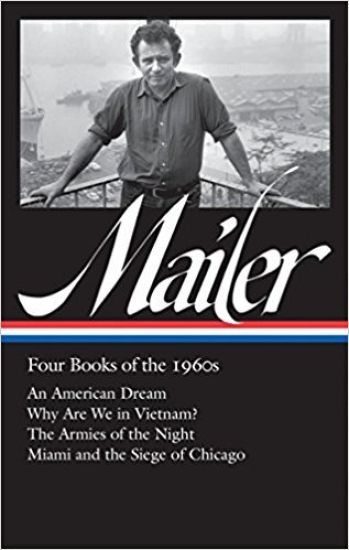
Norman Mailer: Four Books Of The 1960s (loa #305)

Norman Mailer: Four Books Of The 1960s (loa #305)

Norman Mailer

The Library of America
2018
sidottu
Four Mailer classics in one volume for the first time, books that crackle with the creative energy and raw passions of America's most turbulent decade No writer plunged more wholeheartedly into the chaotic energies of the 1960s than Norman Mailer, as he fearlessly revolutionized literary norms and genres to capture the political, social, and sexual explosions of an unsettled era. Here, for the first time in one volume, are his unforgettable books of the 1960s: two disruptive and visionary novels, and two radically innovative journalistic masterpieces. War hero, television star, existential hipster, seducer, murderer: such is the protagonist of An American Dream, Mailer's hallucinatory voyage through the dark night of an America awash in money, sex, and violence. In Why Are We in Vietnam? a motor-mouthed 18-year-old Texan on the eve of military service recounts with manic and obscene exuberance a grizzly bear hunt in Alaska that exposes the macho roots of the war. The acclaimed "non-fiction novel" The Armies of the Night (winner of the Pulitzer Prize and National Book Award) and its follow-up Miami and the Siege of Chicago are on-the-scene, in-the-scene accounts of an antiwar march on the Pentagon and the party conventions of 1968, as Mailer casts himself as a player in the drama he reports, bringing a sharp and merciless eye on the decade's political upheavals. LIBRARY OF AMERICA is an independent nonprofit cultural organization founded in 1979 to preserve our nation's literary heritage by publishing, and keeping permanently in print, America's best and most significant writing. The Library of America series includes more than 300 volumes to date, authoritative editions that average 1,000 pages in length, feature cloth covers, sewn bindings, and ribbon markers, and are printed on premium acid-free paper that will last for centuries.
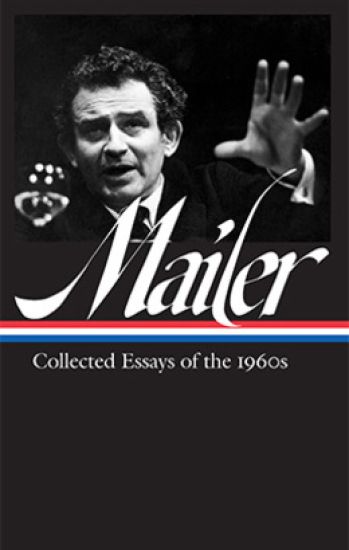
Norman Mailer: Collected Essays Of The 1960s (loa #306)
Politics, war, sex, boxing, and the art of writing: an era's most controversial writer at his slashing and provocative best The electric and fearless essays of Norman Mailer were essential to the intellectual climate of 1960s America. Here, gathered into one volume for the first time by acclaimed Mailer biographer J. Michael Lennon, are all the essential essays from the classic collections The Presidential Papers (1963), Cannibals and Christians (1966), and Existential Errands (1972), each a fascinating window on one of the most extraordinary and tumultuous decades in the nation's history. A self-appointed exorcist of the culture's demons and an unrestrained mythologizer of his own identity, Mailer contemplated and often skewered icons of politics and literature, charted psychosexual undercurrents and covert power plays, and gloried in the exercise of a pugnacious prose style that was all his own. Whether writing about Jackie Kennedy or Sonny Liston, the realist tradition in America or the internal culture wars of the Republican Party, the death of Ernest Hemingway or the battle against censorship, Mailer was always ready to intervene in what he called "the years of the plague." LIBRARY OF AMERICA is an independent nonprofit cultural organization founded in 1979 to preserve our nation's literary heritage by publishing, and keeping permanently in print, America's best and most significant writing. The Library of America series includes more than 300 volumes to date, authoritative editions that average 1,000 pages in length, feature cloth covers, sewn bindings, and ribbon markers, and are printed on premium acid-free paper that will last for centuries.
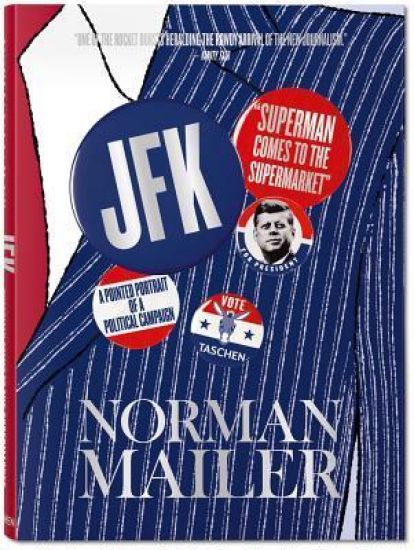
Norman Mailer. JFK. Superman Comes to the Supermarket
With his Hollywood good looks, boundless enthusiasm, and mesmeric media presence, John F. Kennedy was destined to capture the imaginations of the more than 70 million Americans who watched the nation’s first televised presidential debate. Just days after beating out Richard Nixon by the narrowest margin in history, Kennedy himself said, “It was the TV more than anything else that turned the tide.” But one man begged to differ: writer Norman Mailer, who bragged that his pro-Kennedy treatise, “Superman Comes to the Supermarket,” had “won the election for Kennedy.” The article, published in Esquire magazine just weeks before polls opened, redefined political reporting with Mailer's frank, first-person voice identifying Kennedy as the “existential hero” who could awaken the nation from its postwar slumber and conformist Eisenhower years. Both Kennedy and New Journalism had arrived. Now, TASCHEN reimagines and interprets this no-holds-barred portrait of Kennedy on his path to the White House, publishing Mailer’s essay in book form alongside 300 photographs that bring the campaign and the candidate’s family to life. These images were captured by some of the great photojournalists of the day—including Cornell Capa, Henri Dauman, Jacques Lowe, Lawrence Schiller, Paul Schutzer, Stanley Tretick, Hank Walker, and Garry Winogrand—providing a fascinating look at the man who declared the ’60s “a time for greatness.”
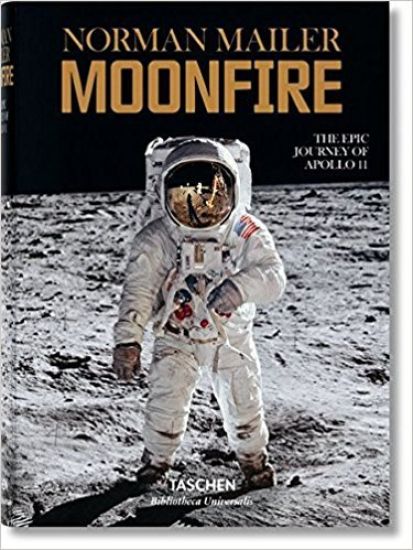
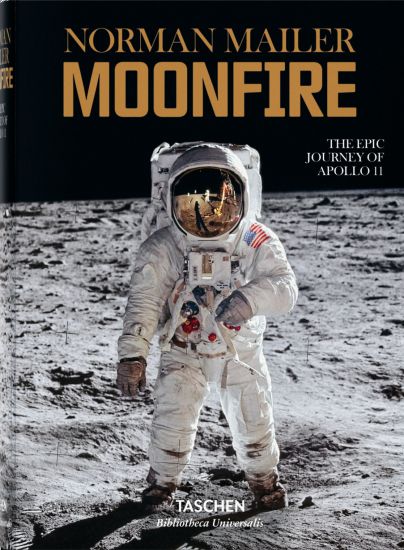
Norman Mailer. MoonFire. The Epic Journey of Apollo 11
It has been called the single most historic event of the 20th century: On July 20, 1969, after a decade of tests and training, supported by a staff of 400,000 engineers and scientists, and with a budget of billions, the most powerful rocket ever launched brought Neil Armstrong, Buzz Aldrin, and Michael Collins to the moon. Nobody captured the men, the mood, and the machinery like Norman Mailer, hired by LIFE magazine to cover the mission in a dazzling reportage he later enhanced into the brilliantly crafted book, Of a Fire on the Moon. Rediscover this epoch-making event with TASCHEN’s adaptation of Mailer’s account, now in our popular Reader's Edition so you can really curl up and travel not just back in time, but into outer space. The text is accompanied by hundreds of photographs from the NASA vaults, the archives of LIFE, and other leading magazines of the day, documenting the development of the agency and the mission, life inside the command module and on the moon’s surface, as well as the world’s jubilant reaction to the landing.Captions by leading Apollo 11 experts explain the history and science behind the images, citing the mission log, publications of the day, and postflight astronaut interviews, while an evocative introduction by Colum McCann celebrates Mailer’s incomparable skill at transforming “the science of space...the weight of history...the breadth of mythology” into prose.
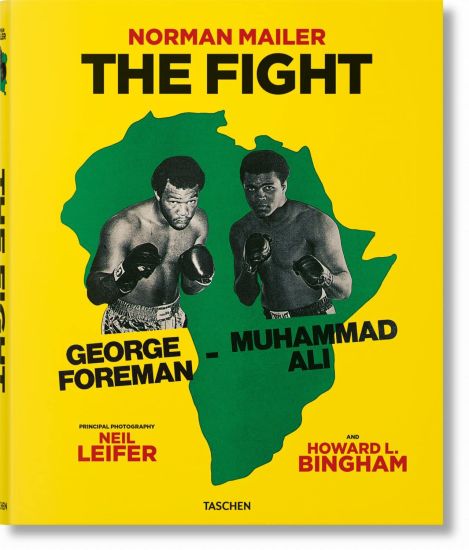
Norman Mailer. Neil Leifer. Howard L. Bingham. The Fight
On October 30, 1974, in Kinshasa, Zaire, at the virtual center of Africa, two boxers were paid five million dollars apiece to confront each other in an epic match. One was Muhammad Ali, who vowed to reclaim the championship he had lost. The other was George Foreman, who was as taciturn as Ali was voluble and who kept his hands in his pockets “the way a hunter lays his rifle back into its velvet case.” Observing them both was Norman Mailer, whose grasp of the titanic battle’s feints and stratagems—and sensitivity to their deeper symbolism—made his 1975 book The Fight a masterpiece of sportswriting. Whether analyzing the fighters’ moves, interpreting their characters, or weighing their competing claims on the African and American souls, Mailer was a commentator of unparalleled acumen—and surely one of the few intrepid enough to accompany Ali on a late-night run through the bush. Through The Fight he restores our tarnished notions of heroism to a blinding gleam, and establishes himself as a champion in his own right. Over four decades after its original publication, this edition of The Fight has been introduced and abridged by Mailer scholar J. Michael Lennon and illustrated for the first time with principal photography by the two men who captured Ali and Foreman in the ring and in private like no one else: Neil Leifer and Howard L. Bingham. Widely considered to be the greatest sports photographer of his generation, Neil Leifer’s vibrant color coverage dominates from ringside. It also serves as a living testimony to the pageantry, sheer physical power, and deep psychological interplay of the fighters, their camps, and their controversial host, Zaire’s President Mobutu Sese Seko. Behind the scenes, meanwhile, Howard Bingham was Ali’s constant companion, documenting his every move from the moment he stepped off the plane in Zaire, his daily training regime, right through to the dressing room tension as he prepared to face Foreman once and for all. Together with pictures from other photojournalists, reproductions of Mailer’s original manuscript pages, and additional visual documentation of the media frenzy surrounding the “Rumble in the Jungle,” the result is a dazzling tribute to The Champ and a vivid document of one of the most epic, adrenaline-laced events in sporting history.
Norman Mailer. Bert Stern. Marilyn Monroe
“This book is really two books. It is a biography, and it is also a pictorial retrospective of an actress whose greatest love affair was conceivably with the camera,” wrote Norman Mailer in his 1973 biography, Marilyn. TASCHEN has paired Mailer’s original text with Bert Stern’s photographs from the legendary Last Sitting—widely considered the most intimate photographs of Monroe ever taken—to create a fitting tribute to the woman who, at the time of her death in 1962, was the world’s most famous, a symbol of glamour and eroticism for an entire generation. But though she was feted and adored by her public, her private life was that of a little girl lost, desperate to find love and security. Mailer’s Marilyn is beautiful, tragic, and complex. As Mailer reflects upon her life—from her bleak childhood through to the mysterious circumstances of her death—she emerges as a symbol of the bizarre decade during which she reigned as Hollywood’s greatest female star. This book, conceived by Lawrence Schiller, Mailer’s collaborator on five works, combines the author’s masterful text with Stern’s penetrating images of the 36-year-old Marilyn. Photographed for Vogue magazine over three days at the Bel-Air Hotel, Marilyn had never allowed such unfettered access, nor had she looked so breathtakingly beautiful. Six weeks later, mysteriously, she was dead. In this bold synthesis of literary classic and legendary portrait-sitting, Mailer and Stern lift the veils of confusion surrounding Monroe—the woman, the star, the sex symbol—and offer profound insight into an iconic figure whose true personality remains an enigma even today.
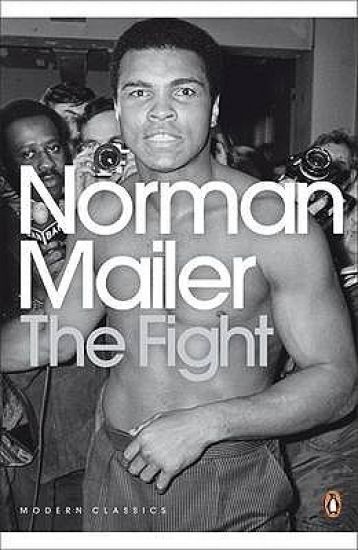
The Fight

The Fight

Norman Mailer

Penguin Classics
2000
pokkari
From one of the major innovators of New Journalism, Norman Mailer's The Fight is the real-life story of a clash between two of the world's greatest boxers, both in and out of the ring, published in Penguin Modern Classics.Norman Mailer's The Fight focuses on the 1974 World Heavyweight Boxing Championship in Kinshasa, Zaire. Muhammad Ali met George Foreman in the ring. Foreman's genius employed silence, serenity and cunning. He had never been defeated. His hands were his instrument, and 'he kept them in his pockets the way a hunter lays his rifle back into its velvet case'. Together the two men made boxing history in an explosive meeting of two great minds, two iron wills and monumental egos.'"If ever a fighter had been able to demonstrate that boxing was a twentieth-century art, it must be Ali", says Norm, and his achievement in this masterly book is of a similar order, demonstrating that writing about sport can also be a twentieth-century art'Geoff Dyer, New Statesman'Probably no one has written about boxing better than Mailer has'Guardian
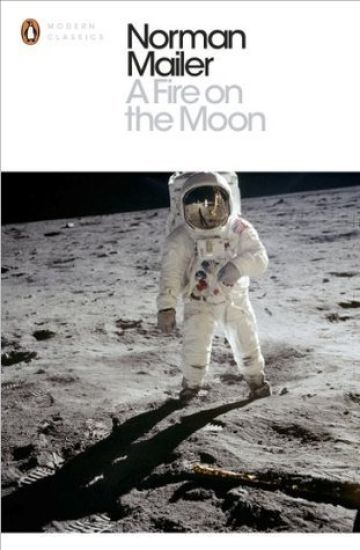
A Fire on the Moon

A Fire on the Moon

Norman Mailer

Penguin Classics
2014
pokkari
Mailer's superb account, written as it was happening, of the first attempt to land men on the moon'Houston, Tranquility Base here. The Eagle has landed.'A Fire on the Moon tells the scarcely credible story of the Apollo 11 mission. It is suffused with Mailer's obsession both with the astronauts themselves and with his own anxieties and terrors about the extremity of what they were trying to achieve. Mailer is both admiring and appalled and the result is a book which is both a gripping narrative and a brilliant depiction of the now-forgotten technical issues and uncertainties around the mission. A Fire on the Moon is also a matchless portrait of an America caught in a morass of introspection and misery, torn apart by the war in Vietnam. But for one, extraordinary week in the summer of 1969 all eyes were on the fates of three men in a rocket, travelling a quarter of a million miles away from Earth.With an introduction by Geoff Dyer.
Mind of an Outlaw

Mind of an Outlaw

Norman Mailer

Penguin Classics
2014
pokkari
The definitive Norman Mailer collection, as he writes on Marilyn Monroe, culture, ideology, boxing, Hemingway, politics, sex, celebrity and - of course - Norman MailerFrom his early 'A Credo for the Living', published in 1948, when the author was twenty-five, to his final writings in the year before his death, Mailer wrestled with the big themes of his times. He was one of the most astute cultural commentators of the postwar era, a swashbuckling intellectual provocateur who never pulled a punch and was rarely anything less than interesting. Mind of an Outlaw spans the full arc of Mailer's evolution as a writer, including such essential pieces as his acclaimed 1957 meditation on hipsters, 'The White Negro'; multiple selections from his wonderful Advertisements for Myself; and a never-before-published essay on Freud. The book is introduced by Jonathan Lethem.
Advertisements for Myself

Advertisements for Myself

Norman Mailer

Penguin Classics
2018
pokkari
Advertisements for Myself is a comprehensive collection of the best of Norman Mailer's essays, stories, interviews and journalism from the Forties and Fifties, linked by anarchic and riotous autobiographical commentary. Laying bare the heart of a witty, belligerent and vigorous writer, this manifesto of Mailer's key beliefs contains pieces on his war experiences in the Philippines (the basis for his famous first novel The Naked and the Dead), tributes to fellow novelists William Styron, Saul Bellow, Truman Capote and Gore Vidal and magnificent polemics against pornography, advertising, drugs and politics. Also included is his notorious exposition of the phenomenon of the 'White Negro', the Beat Generation's existentialist hero whose life, like Mailer's, is 'an unchartered journey into the rebellious imperatives of the self'
The Armies of the Night

The Armies of the Night

Norman Mailer

Penguin Classics
2018
pokkari
October 21, 1967, Washington, D.C. 20,000 to 200,000 protesters are marching to end the war in Vietnam, while helicopters hover overhead and federal marshals and soldiers with fixed bayonets await them on the Pentagon steps. Among the marchers is Norman Mailer. From his own singular participation in the day's events and his even more extraordinary perceptions comes a classic work that shatters the mould of traditional reportage. Intellectuals and hippies, clergymen and cops, poets and army MPs crowd the pages of a book in which facts are fused with techniques of fiction to create the nerve-end reality of experiential truth.The Armies of the Night uniquely and unforgettably captures the Sixties' tidal wave of love and rage at its crest and a towering genius at his peak.
The Naked and the Dead

The Naked and the Dead

Norman Mailer

Penguin Classics
2018
pokkari
Based on Mailer's own experience of military service in the Philippines during World War Two, The Naked and the Dead' is a graphically truthful and shattering portrayal of ordinary men in battle. First published in 1949, as America was still basking in the glories of the Allied victory, it altered forever the popular perception of warfare.Focusing on the experiences of a fourteen-man platoon stationed on a Japanese-held island in the South Pacific during World War II, and written in a journalistic style, it tells the moving story of the soldiers' struggle to retain a sense of dignity amidst the horror of warfare, and to find a source of meaning in their lives amisdst the sounds and fury of battle.
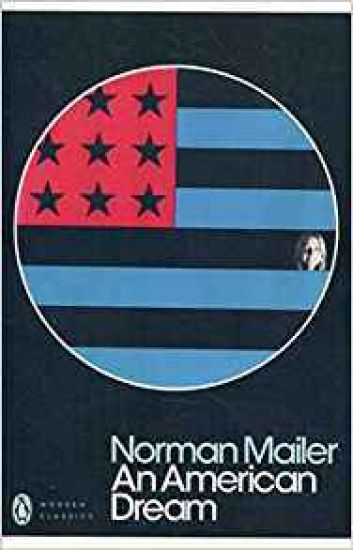
An American Dream

An American Dream

Norman Mailer

Penguin Classics
2018
pokkari
As Stephen Rojack, a decorated war hero and former congressman who murders his wife in a fashionable New York City high-rise, runs amok through the city in which he was once a privileged citizen, Mailer peels away the layers of our social norms to reveal a world of pure appetite and relentless cruelty. One part Nietzsche, one part de Sade, and one part Charlie Parker, An American Dream grabs the reader by the throat and refuses to let go.
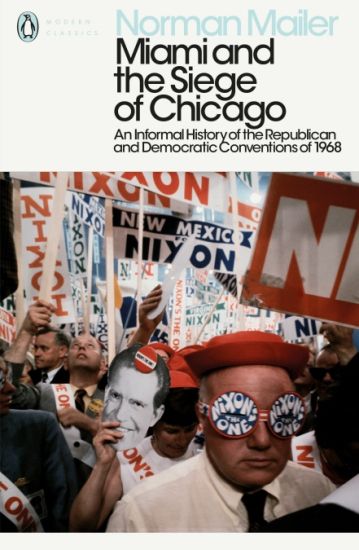
Miami and the Siege of Chicago

Miami and the Siege of Chicago

Norman Mailer

Penguin Classics
2018
pokkari
Miami, Summer 1968. The Vietnam War is raging; Martin Luther King, Jr., and Bobby Kennedy have just been assassinated. The Republican Party meets in Miami and picks Richard Nixon as its candidate, to little fanfare. But when the Democrats back Lyndon Johnson's ineffectual vice president, Hubert Humphrey, the city of Chicago erupts. Antiwar protesters fill the streets and the police run amok, beating and arresting demonstrators and delegates alike, all broadcast on live television, and captured in these pages by one of America's fiercest intellects.
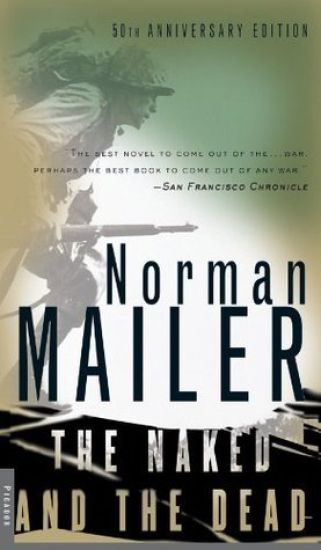
The Naked and the Dead: 50th Anniversary Edition, with a New Introduction by the Author
Hailed as one of the finest novels to come out of the Second World War, The Naked and the Dead received unprecedented critical acclaim upon its publication and has since become part of the American canon. This fiftieth anniversary edition features a new introduction created especially for the occasion by Norman Mailer. Written in gritty, journalistic detail, the story follows an army platoon of foot soldiers who are fighting for the possession of the Japanese-held island of Anopopei. Composed in 1948, The Naked and the Dead is representative of the best in twentieth-century American writing.
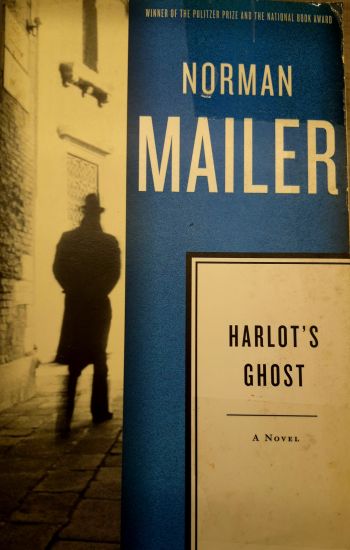
Harlot's Ghost

Harlot's Ghost

Norman Mailer

Random House Trade Paperbacks
1992
pokkari
With unprecedented scope and consummate skill, Norman Mailer unfolds a rich and riveting epic of an American spy. Harry Hubbard is the son and godson of CIA legends. His journey to learn the secrets of his society--and his own past--takes him through the Bay of Pigs, the Cuban Missile Crisis, and the "momentous catastrophe" of the Kennedy assassination. All the while, Hubbard is haunted by women who were loved by both his godfather and President Kennedy. Featuring a tapestry of unforgettable characters both real and imagined, "Harlot's Ghost "is a panoramic achievement in the tradition of Tolstoy, Melville, and Balzac, a triumph of Mailer's literary prowess. Praise for "Harlot's Ghost"" " " Norman Mailer is] the right man to exalt the history of the CIA into something better than history."--Anthony Burgess, "The Washington Post Book World" "Elegantly written and filled with almost electric tension . . . When I returned from the world of "Harlot's Ghost "to the present I wished to be enveloped again by Mailer's imagination."--Robert Wilson, "USA Today"" " "Immense, fascinating, and in large part brilliant."--Salman Rushdie, "The Independent on Sunday" "A towering creation . . . a fiction as real and as possible as actual history."--"The New York Times"" "Praise for Norman Mailer " Norman Mailer] loomed over American letters longer and larger than any other writer of his generation."--"The New York Times" "A writer of the greatest and most reckless talent."--"The New Yorker" "Mailer is indispensable, an American treasure."--"The Washington Post" "A devastatingly alive and original creative mind."--"Life" "Mailer is fierce, courageous, and reckless and nearly everything he writes has sections of headlong brilliance."--"The New York Review of Books" "The largest mind and imagination in modern] American literature . . . Unlike just about every American writer since Henry James, Mailer has managed to grow and become richer in wisdom with each new book."--"Chicago Tribune" "Mailer is a master of his craft. His language carries you through the story like a leaf on a stream."--"The Cincinnati Post"