Kirjojen hintavertailu. Mukana 11 699 587 kirjaa ja 12 kauppaa.

Kirjahaku

Etsi kirjoja tekijän nimen, kirjan nimen tai ISBN:n perusteella.

11 kirjaa tekijältä Norman Malcolm

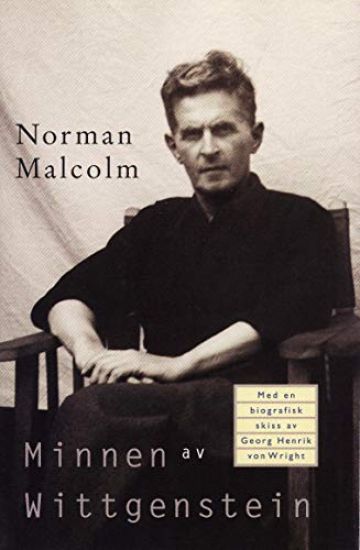
Ludwig Wittgenstein

Ludwig Wittgenstein

Norman Malcolm

Clarendon Press
2001
nidottu
This memoir of Ludwig Wittgenstein was written by his friend Norman Malcolm in 1958. This edition includes the complete text of the 57 letters which Wittgenstein wrote to Malcolm over a period of 11 years. The letters give an insight into how much friendships mattered to Wittgenstein.
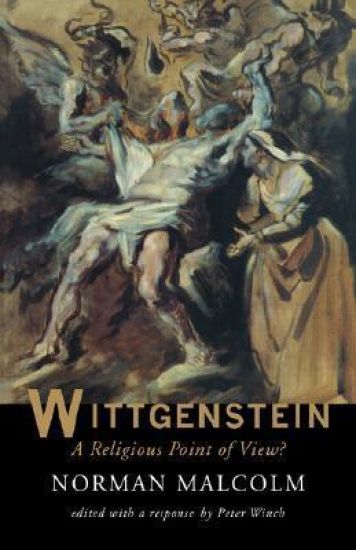
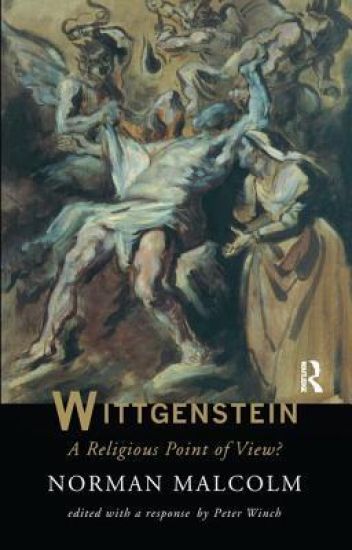
Wittgenstein: A Religious Point Of View?
Ludwig Wittgenstein once said: 'I am not a religious man, but I cannot help seeing every problem from a religious point of view.' This study, the last work of the distinguished philosopher Norman Malcolm, is a discussion of what Wittgenstein may have meant by this and its significance for philosophy. The book concludes with a critical discussion of Malcolm's essay by Peter Winch.
Wittgenstein

Wittgenstein

Norman Malcolm

Cornell University Press
1995
nidottu
Ludwig Wittgenstein once said to a friend, "I am not a religious man: but I cannot help seeing every problem from a religious point of view." This puzzling, but intriguing remark is the focus of Norman Malcolm's essay, which forms the centerpiece of this three-part work. Malcolm first draws together a large and illuminating collection of remarks made by Wittgenstein at various stages of his life and in many different contexts that express his attitude toward religion. He discusses some of the ways in which Wittgenstein was drawn to religious modes of thinking and speculates concerning the barriers which kept him from full religious commitment. With great vigor he discusses what be considers the most important features of Wittgenstein's philosophical work and the nature of and reasons for the changes which took place in his thinking between Tractatus Logico-Philosophicus and Philosophical Investigation. He concludes by offering four analogies between Wittgenstein's philosophical methods and his religions attitudes generally. Peter Winch, who opens the volume with an introduction that places Malcolm's essay in the context of his other writings, concludes with a substantial critique of the proposed analogies and suggests an alternative reading of the "spiritual" dimension in Wittgenstein's inquiries.
Problems of Mind

Problems of Mind

Norman Malcolm

Taylor Francis Ltd
2021
sidottu
First published in 1972, Problems of Mind begins with a consideration of the view that the human mind is an immaterial thing that does not require corporeal embodiment for its operations. It takes up the conception that "inner experiences" are "strictly identical" with brain processes. The book also deals exclusively with the doctrine called "Logical Behaviourism", which will always possess a compelling attraction for anyone who is perplexed by the psychological concepts, who has become aware of the worthlessness of an appeal to introspection as an account of how we learn those concepts, and who has no inclination to identify mind with brain. The three most plausible theories of mind-body dualism, mind-brain monism, and behaviourism are all rejected, and nothing is set forth as the true theory. Norman Malcolm states that this is 'only a drop in the bucket. It will serve its purpose if it leads the reader into the writings of Wittgenstein, who is easily the most important figure in the philosophy of mind.’ Problems of Mind will be an essential read for scholars and researchers of philosophy of mind, ethics, logic, and philosophy in general.
Problems of Mind

Problems of Mind

Norman Malcolm

TAYLOR FRANCIS LTD
2023
nidottu
First published in 1972, Problems of Mind begins with a consideration of the view that the human mind is an immaterial thing that does not require corporeal embodiment for its operations. It takes up the conception that "inner experiences" are "strictly identical" with brain processes. The book also deals exclusively with the doctrine called "Logical Behaviourism", which will always possess a compelling attraction for anyone who is perplexed by the psychological concepts, who has become aware of the worthlessness of an appeal to introspection as an account of how we learn those concepts, and who has no inclination to identify mind with brain. The three most plausible theories of mind-body dualism, mind-brain monism, and behaviourism are all rejected, and nothing is set forth as the true theory. Norman Malcolm states that this is 'only a drop in the bucket. It will serve its purpose if it leads the reader into the writings of Wittgenstein, who is easily the most important figure in the philosophy of mind.’ Problems of Mind will be an essential read for scholars and researchers of philosophy of mind, ethics, logic, and philosophy in general.
Wittgenstein: A Religious Point Of View?
Ludwig Wittgenstein once said: 'I am not a religious man, but I cannot help seeing every problem from a religious point of view.' This study, the last work of the distinguished philosopher Norman Malcolm, is a discussion of what Wittgenstein may have meant by this and its significance for philosophy. The book concludes with a critical discussion of Malcolm's essay by Peter Winch.
Dreaming

Dreaming

Norman Malcolm

Routledge
2017
sidottu
Originally published in 1959, with some corrections in 1962, the author examines the common view at the time that dreams are mental activities or mental occurrences taking place during sleep. He starts off by offering a proof that the sentence ‘I am asleep’ is a senseless form of words and cannot express a judgment. After commenting on various features of the concept of sleep, the author expands his argument to prove that the notion of making any judgment at all while asleep is without sense. He takes the further step of showing that this same conclusion holds for all other mental acts and mental occurrences, with the exception of dreams.
Dreaming

Dreaming

Norman Malcolm

Routledge
2019
nidottu
Originally published in 1959, with some corrections in 1962, the author examines the common view at the time that dreams are mental activities or mental occurrences taking place during sleep. He starts off by offering a proof that the sentence ‘I am asleep’ is a senseless form of words and cannot express a judgment. After commenting on various features of the concept of sleep, the author expands his argument to prove that the notion of making any judgment at all while asleep is without sense. He takes the further step of showing that this same conclusion holds for all other mental acts and mental occurrences, with the exception of dreams.
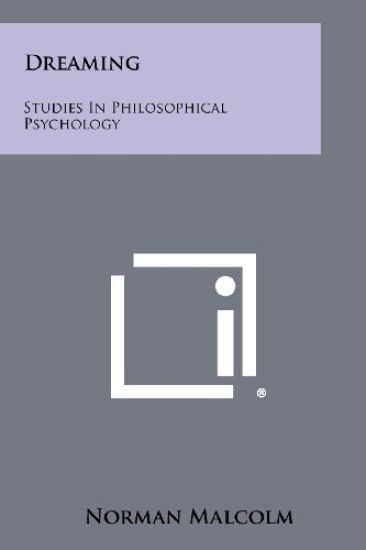
Dreaming: Studies in Philosophical Psychology

Dreaming: Studies in Philosophical Psychology

Norman Malcolm

Literary Licensing, LLC
2012
sidottu
Dreaming: Studies In Philosophical Psychology is a book written by Norman Malcolm that explores the nature of dreams and their significance in the field of philosophy and psychology. The book is divided into three parts, each of which delves into a different aspect of dreaming.The first part of the book discusses the nature of dreams and the different theories that have been proposed to explain them. Malcolm examines the idea that dreams are simply random and meaningless, as well as the Freudian theory that dreams are a manifestation of repressed desires and conflicts. He also considers the possibility that dreams have a deeper meaning and can provide insight into our unconscious thoughts and emotions.The second part of Dreaming: Studies In Philosophical Psychology focuses on the philosophical implications of dreaming. Malcolm explores the question of whether dreams can be considered a form of knowledge, and whether they can provide evidence for the existence of a higher reality beyond our waking experience.The final part of the book examines the relationship between dreaming and the self. Malcolm considers the idea that dreams can provide a window into our true selves, and that they can reveal aspects of our personality and character that are hidden from our conscious awareness.Overall, Dreaming: Studies In Philosophical Psychology is a thought-provoking and insightful exploration of the nature of dreams and their significance in the fields of philosophy and psychology. It is a must-read for anyone interested in the mysteries of the human mind and the nature of consciousness.This scarce antiquarian book is a facsimile reprint of the old original and may contain some imperfections such as library marks and notations. Because we believe this work is culturally important, we have made it available as part of our commitment for protecting, preserving, and promoting the world's literature in affordable, high quality, modern editions, that are true to their original work.