Kirjojen hintavertailu. Mukana 11 244 527 kirjaa ja 12 kauppaa.

Kirjahaku

Etsi kirjoja tekijän nimen, kirjan nimen tai ISBN:n perusteella.

39 kirjaa tekijältä Octavio Paz

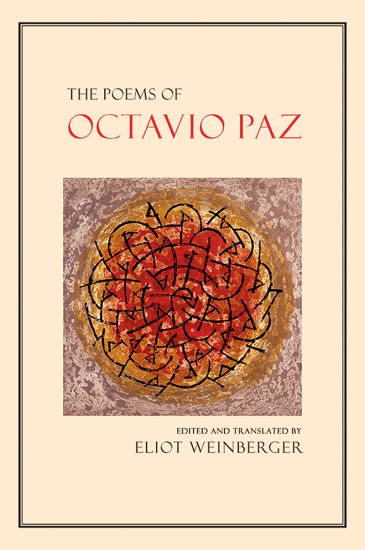
The Poems of Octavio Paz

The Poems of Octavio Paz

Octavio Paz

New Directions Publishing Corporation
2018
nidottu
The Poems of Octavio Paz is the first retrospective collection of Paz's poetry to span his entire writing career from his first published poem, at age seventeen, to his magnificent last poem. This landmark bilingual edition contains many poems that have never been translated into English before, plus new translations based on Paz's final revisions. Assiduously edited by Eliot Weinberger--who has been translating Paz for over forty years--The Poems of Octavio Paz also includes translations by the poet-luminaries Elizabeth Bishop, Paul Blackburn, Denise Levertov, Muriel Rukeyser, and Charles Tomlinson. Readers will also find Weinberger's capsule biography of Paz, as well as notes on many poems in Paz's own words, taken from various interviews he gave throughout his long and singular life.
Octavio Paz. Antología (Edición Conmemorativa de la Rae Y La Asale) / Octavio Paz. Anthology. (Commem Orative Edition)
Una antolog a definitiva para adentrarse en el universo literario del mayor poeta mexicano contempor neo: el premio Nobel de Literatura Octavio Paz. Nueva edici n conmemorativa de RAE y ASALE. La vida de Octavio Paz corre en paralelo a la historia pol tica y cultural del siglo XX. Su actividad literaria, diplom tica y art stica; su conocimiento de otras realidades externas a su pa s, y la relaci n con sus contempor neos lo convierten en una figura esencial de la cultura en espa ol. Esta antolog a propone un original itinerario cronol gico por los escritos de Paz que entrelaza la prosa con la poes a, las cartas con los ensayos y otros escritos, hasta conformar una biograf a vital y literaria del poeta a trav s de su obra. El libro se completa con estudios de especialistas y de escritores, coet neos del poeta y pertenecientes a generaciones posteriores, que ofrecen una visi n amplia y rica de la creaci n del premio Nobel mexicano. ENGLISH DESCRIPTION The definitive anthology for immersing oneself in the literary universe of Mexico's greatest modern poet: winner of the Nobel Prize in Literature winner Octavio Paz. New commemorative edition by RAE and ASALE. Octavio Paz's life ran parallel to the political and cultural history of the twentieth century. His literary, diplomatic and artistic activity, his understanding of realities outside Mexico, and his relationships with his contemporaries make him an essential figure in Spanish-language culture. This anthology plots an original, chronological journey through his canon, blending poetry and prose, letters, essays and other writings that add up to create a dynamic and literary biography of the poet through his work. Included are commentaries by experts on Paz's work as well as pieces by his peers and later writers, offering a rich overview of the legacy of Mexico's Nobel Prize-winning poet.
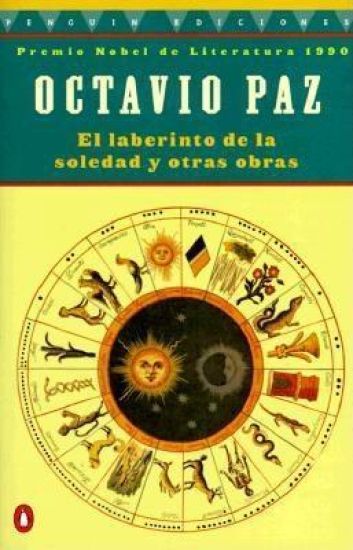
El Laberinto de la Soledad Y Otras Obras
Octavio Paz has written one of the most enduring and powerful works ever created on Mexico and its people, character, and culture. Compared to Ortega y Gasset's The Revolt of the Masses for its trenchant analysis, this collection contains Octavio Paz' most famous work, The Labyrinth of Solitude, a beautifully written and deeply felt discourse on Mexico's quest for identity that gives us an unequaled look at the country hidden behind the mask. Also included are Postscript, Return to the Labyrinth of Solitude, and Mexico and the United States, all of which develop the themes of the title essay and extend his penetrating commentary to the United States and Latin America.
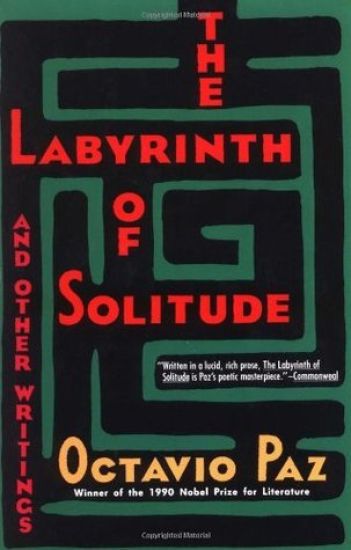
The Labyrinth of Solitude

The Labyrinth of Solitude

Octavio Paz

Penguin Classics
2005
pokkari
As well as the nine essays on his country's psyche and history that make up 'The Labyrinth of Solitude', this highly acclaimed volume also includes 'The Other Mexico', Paz's heartfelt response to the government massacre of over three hundred students in Mexico City in 1968, and 'Return to the Labyrinth of Solitude', in which he discusses his famous work with Claude Fell. The two final essays contain further reflections on the Mexican government.
In Search of the Present

In Search of the Present

Octavio Paz

CENGAGE LEARNING, INC
1991
nidottu
The speech delivered by Paz in acceptance of the 1990 Nobel Prize for Literature, in which he discusses gratitude, separateness, and modernity. Published in a handsome bilingual edition. Translated by Anthony Stanton.
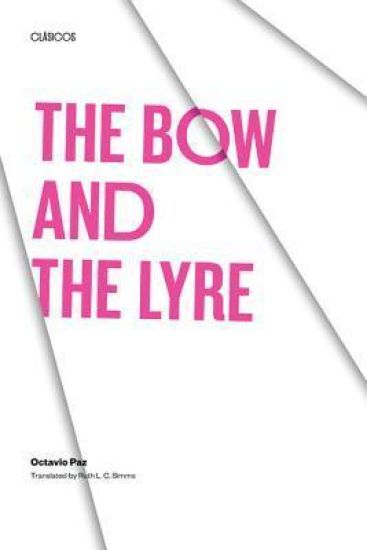
The Bow and the Lyre

The Bow and the Lyre

Octavio Paz

University of Texas Press
1973
pokkari
In The Bow and the Lyre Octavio Paz, one of the most important poets writing in Spanish, presents his sustained reflections on the poetic phenomenon and on the place of poetry in history and in our personal lives. It is written in the same prose style that distinguishes The Labyrinth of Solitude. The Bow and the Lyre will serve as an important complement to Paz's poetry. Paz's discussions of the different aspects of the poetic phenomenon are not limited to Spanish and Spanish American literature. He is almost as apt to choose an example from Homer, Vergil, Blake, Whitman, Rimbaud as he is from Lope de Vega, Jiménez, Darío, Neruda. In writing these essays, he draws on his vast storehouse of knowledge, revealing a world outlook of ample proportions. In reading these essays, we share the observations of a searching, original, highly cultivated mind.
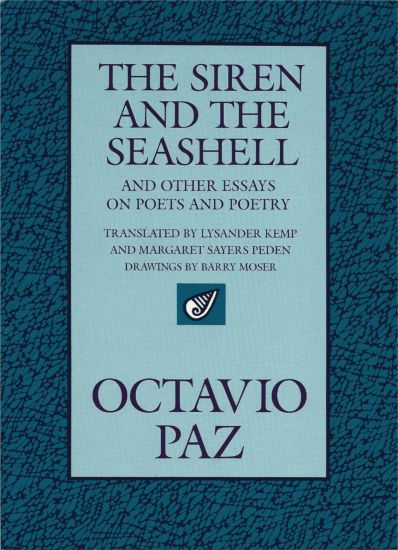
The Siren and the Seashell

The Siren and the Seashell

Octavio Paz

University of Texas Press
1976
pokkari
Octavio Paz has long been known for his brilliant essays as well as for his poetry. Through the essays, he has sought to confront the tensions inherent in the conflict between art and society and to achieve a unity of their polarities. The Siren and the Seashell is a collection of Paz’s essays, focusing on individual poets and on poetry in general. The first five poets he treats are Latin American: Sor Juana Inés de la Cruz, Rubén Darío, José Juan Tablada, Ramón López Velarde, and Alfonso Reyes. Then there are essays on Robert Frost, e. e. cummings, Saint-John Perse, Antonio Machado, and Jorge Guillén. Finally, there are Paz’s reflections on the poetry of solitude and communion and the literature of Latin America. Each essay is more than Paz’s impressions of one person or issue; each is the occasion for a wider discussion of cultural, historical, psychological, and philosophical themes. The essays were selected from Paz’s writing between 1942 and 1965 and provide an overview of the development of his thinking and an exploration of the ideas central in his works.
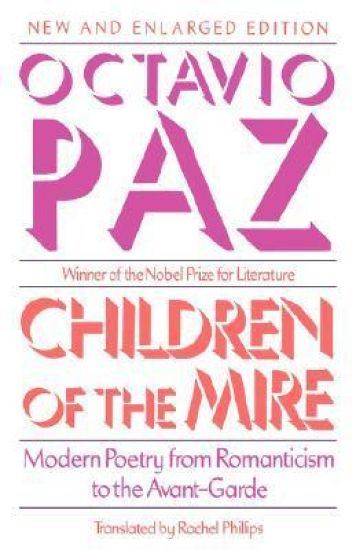
Children of the Mire

Children of the Mire

Octavio Paz

Harvard University Press
1991
nidottu
Octavio Paz launches a far-ranging excursion into the “incestuous and tempestuous” relations between modern poetry and the modern epoch. From the perspective of a Latin American poet, he explores the opposite meanings that the word “modern” has held for poets and philosophers, artists, and scientists. Tracing the beginnings of the modern poetry movement to the pre-Romantics, Paz outlines its course as a contradictory dialogue between the poetry of the Romance and Germanic languages. He discusses at length the unique character of Anglo-American “modernism” within the avant-garde movement, and especially vis-à-vis French and Spanish poetry. Finally he offers a critique of our era’s attitude toward the concept of time, affirming that we are at the “twilight of the idea of the future.” He proposes that we are living at the end of the avant-garde, the end of that vision of the world and of art born with the first Romantics.
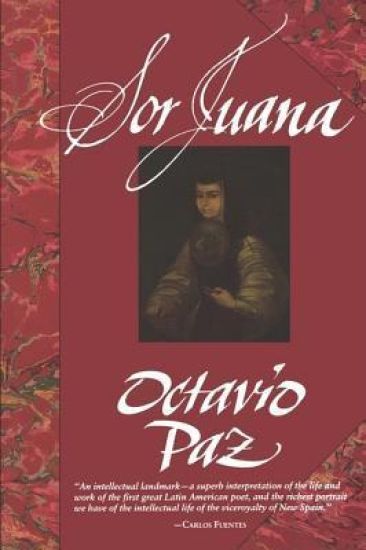
Sor Juana

Sor Juana

Octavio Paz

The Belknap Press
1990
nidottu
Mexico’s leading poet, essayist, and cultural critic writes of a Mexican poet of another time and another world, the world of seventeenth-century New Spain. His subject is Sor Juana Inés de la Cruz, the most striking figure in all of Spanish-American colonial literature and one of the great poets of her age.Her life reads like a novel. A spirited and precocious girl, one of six illegitimate children, is sent to live with relatives in the capital city. She becomes known for her beauty, wit, and amazing erudition, and is taken into the court as the Vicereine’s protégée. For five years she enjoys the pleasures of life at court—then abruptly, at twenty, enters a convent for life. Yet, no recluse, she transforms the convent locutory into a literary and intellectual salon; she amasses an impressive library and collects scientific instruments, reads insatiably, composes poems, and corresponds with literati in Spain. To the consternation of the prelates of the Church, she persists in circulating her poems, redolent more of the court than the cloister. Her plays are performed, volumes of her poetry are published abroad, and her genius begins to be recognized throughout the Hispanic world. Suddenly she surrenders her books, forswears all literary pursuits, and signs in blood a renunciation of secular learning. The rest is silence. She dies two years later, at forty-six.Octavio Paz has long been intrigued by the enigmas of Sor Juana’s personality and career. Why did she become a nun? How could she renounce her lifelong passion for writing and learning? Such questions can be answered only in the context of the world in which she lived. Paz gives a masterly portrayal of the life and culture of New Spain and the political and ideological forces at work in that autocratic, theocratic, male-dominated society, in which the subjugation of women was absolute.Just as Paz illuminates Sor Juana’s life by placing it in its historical setting, so he situates her work in relation to the traditions that nurtured it. With critical authority he singles out the qualities that distinguish her work and mark her uniqueness as a poet. To Paz her writings, like her life, epitomize the struggle of the individual, and in particular the individual woman, for creative fulfillment and self-expression.
Eagle or Sun?: Poems

Eagle or Sun?: Poems

Octavio Paz

NEW DIRECTIONS PUBLISHING CORPORATION
1976
nidottu
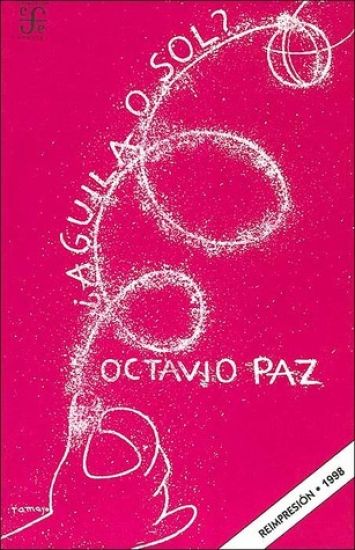
The first major book of short prose poetry in Spanish, Eagle or Sun? (Aguila o Sol?) exerted an enormous influence on modern Latin American writing. Written in 1949-50 by Nobel Laureate Octavio Paz, Eagle or Sun? has as its mythopoeic "place" Mexico--a country caught up in its pre-Columbian past, the world of modern imperialism, and an apocalyptic future foretold by the Aztec calendar. Indeed, three personae of the book--the goddess Itzapaplotl, the prophet clerk, the poet--are manifestations of the threefold aspects of the land. Paz himself explains: "Eagle or Sun? is an exploration of Mexico, yes, but at the same time, and above all, it is an exploration of the relations between language and the poet, reality and language, the poet and history."
A Draft of Shadows and Other Poems

A Draft of Shadows and Other Poems

Octavio Paz

NEW DIRECTIONS PUBLISHING CORPORATION
1980
nidottu
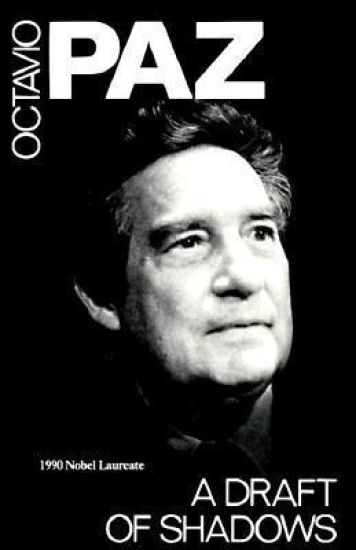
A Draft of Shadows and Other Poems is the most recent collection of the work of Mexico's leading poet and essayist, Octavio Paz. The first section of poems, from Ladera este (East Slope, 1969), reflects some of Paz's experiences as his country's ambassador to India (1962-68). Following stays in England, France, and the United States, he returned to Mexico in 1971, reacting to the urban sprawl and violence of Mexico City with the four long poems of disaster and rage that, together with shorter poems more familiar in tone, make up Vuelta ("Return," 1976). A long meditation on the poet's childhood and adolescence, Pasado en claro ("A Draft of Shadows," 1975) forms the third section of this volume and represents a further departure from the self-contained surreal images many associate with Paz. This bilingual selection concludes with a sampling of his most recent lyrics, and the promise of further experimentation. Paz, winner in 1981 of both the Neustadt Prize and the Cervantes Award, stated in a recent interview: "When I am writing a poem, it is to make something, an object or organism that will be whole and living, something that will have a life independent of me," and throughout this book the poet's abiding concern for language as a living force is revealed. For Paz, poetry is a way of reinventing the self, and appropriately, the reflective. "A Draft of Shadows" concludes: "I am the shadow my words cast."
Piedra de Sol = Sunstone

Piedra de Sol = Sunstone

Octavio Paz

NEW DIRECTIONS PUBLISHING CORPORATION
1991
nidottu
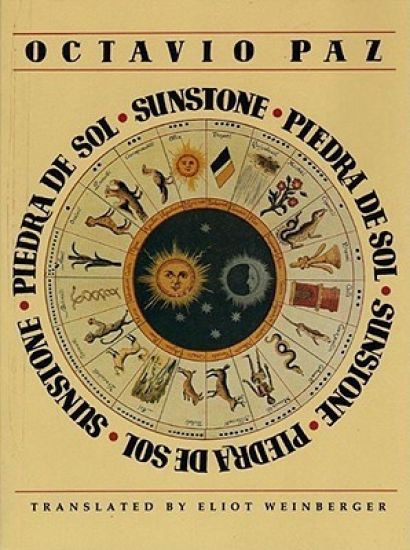
Presented in Eliot Weinberger's excellent new translation with the Spanish texts en face, this is the 1957 poem "that definitively established Paz as a major international figure" (Sagetrieb). Written as a single cyclical sentence (at the end of the poem the first six lines are written again), Sunstone is a tour de force of momentum. It takes as its structural basis the circular Aztec calendar, which measured the synodic period of the planet Venus (584 days--the number of lines of Sunstone). But, as The New Republic noted, "this esoteric correlative design...does not circumscribe its subject. It is] a lyrically discursive exploration of time and memory, of erotic love, or art and writing."
A Tale of Two Gardens

A Tale of Two Gardens

Octavio Paz

New Directions Publishing Corporation
1997
nidottu
Despite having written many acclaimed non-fiction books on the region, he has always considered those writings to be footnotes to the poems. From the long work "Mutra," written in 1952 and accompanied here by a new commentary by the author, to the celebrated poems of East Slope, and his recent adaptations from the classical Sanskrit, Paz scripts his India with a mixture of deft sensualism and hands-on politics.
El Laberinto de la Soledad

El Laberinto de la Soledad

Octavio Paz

Createspace Independent Publishing Platform
2016
nidottu
El laberinto de la soledad contiene nueve ensayos que constituyen una profunda reflexi n de su autor sobre la naturaleza y constituci n del mexicano actual, concebido por Paz como el producto de un largo proceso de mestizaje, que le otorgan condiciones psicol gicas, morales, culturales e hist ricas particulares. As , analizando el sujeto en micro, Paz trata de abordar el macro del pueblo mexicano, como sujeto hist rico colectivo, con el nico objetivo de poder concebir una identidad nacional.