Kirjojen hintavertailu. Mukana 11 342 296 kirjaa ja 12 kauppaa.

Kirjahaku

Etsi kirjoja tekijän nimen, kirjan nimen tai ISBN:n perusteella.

6 kirjaa tekijältä Ole Bruun

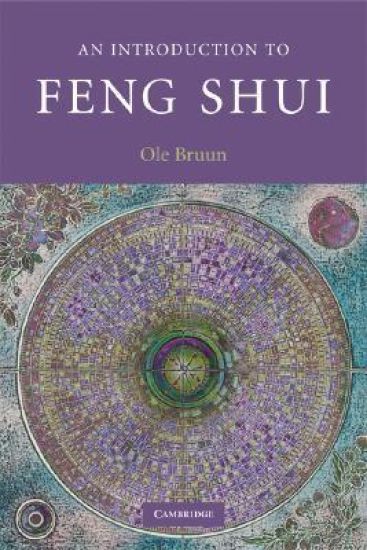
An Introduction to Feng Shui

An Introduction to Feng Shui

Ole Bruun

Cambridge University Press
2008
pokkari
Feng Shui has been known in the West for the last 150 years but has mostly been regarded as a primitive superstition. During the modern period successive regimes in China have suppressed its practice. However, in the last few decades Feng Shui has become a global spiritual movement with professional associations, thousands of titles published on the subject, countless websites devoted to it and millions of users. In this book Ole Bruun explains Feng Shui's Chinese origins and meanings as well as its more recent Western interpretations and global appeal. Unlike the abundance of popular manuals, his Introduction treats Chinese Feng Shui as an academic subject, bridging religion, history and sociology. Individual chapters explain the Chinese religious-philosophical background, Chinese uses in rural and urban areas, the history of Feng Shui's reinterpretation in the West, and environmental perspectives and other issues.
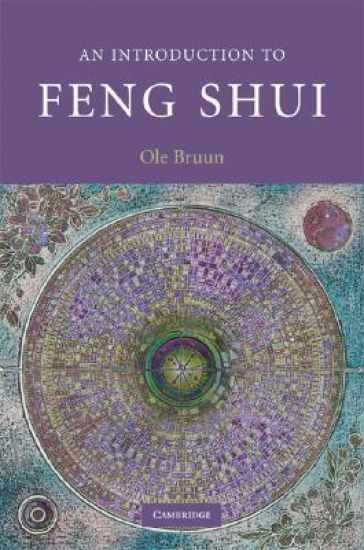
An Introduction to Feng Shui

An Introduction to Feng Shui

Ole Bruun

Cambridge University Press
2008
sidottu
Feng Shui has been known in the West for the last 150 years but has mostly been regarded as a primitive superstition. During the modern period successive regimes in China have suppressed its practice. However, in the last few decades Feng Shui has become a global spiritual movement with professional associations, thousands of titles published on the subject, countless websites devoted to it and millions of users. In this book Ole Bruun explains Feng Shui's Chinese origins and meanings as well as its more recent Western interpretations and global appeal. Unlike the abundance of popular manuals, his Introduction treats Chinese Feng Shui as an academic subject, bridging religion, history and sociology. Individual chapters explain the Chinese religious-philosophical background, Chinese uses in rural and urban areas, the history of Feng Shui's reinterpretation in the West, and environmental perspectives and other issues.
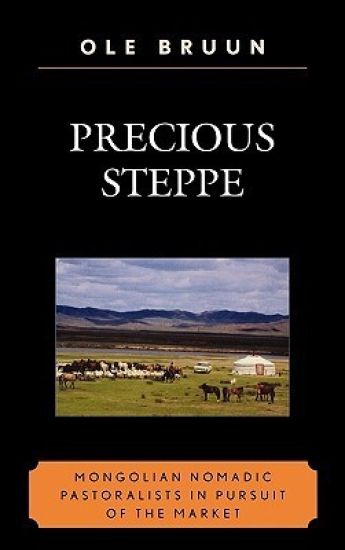
Precious Steppe

Precious Steppe

Ole Bruun

Lexington Books
2006
sidottu
Ole Bruun focuses on a community of nomadic livestock herders in present-day Mongolia. He depicts their transition from a contained, Soviet-era collective to modern times and addresses the most essential conditions for their continued survival and prosperity in the age of the market: the adaptability of their own culture and working strategies, government policy, and international attention. By studying the nomadic practice of animal husbandry in the context of family farms, Bruun points out the similarity to the peasant economy defined by the Russian agricultural economist Alexander Chayanov nearly a century ago. In both economies, the labor-consumer balance and life-cycle variations commonly set the term for economic strategies, yet the pastoral economy involves a highly specialized form of agriculture in which the scale of exchange determines wealth and lifestyle. In a vast territory such as Mongolia, infrastructure, social benefits, and other means of state support are crucial to prevent herders from sliding into a subsistence orientation, eventually leading to poverty.
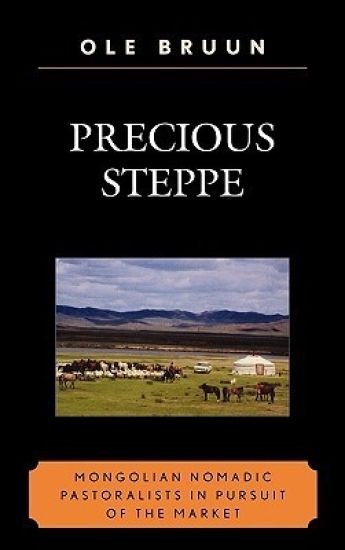
Precious Steppe

Precious Steppe

Ole Bruun

Lexington Books
2008
nidottu
Ole Bruun focuses on a community of nomadic livestock herders in present-day Mongolia. He depicts their transition from a contained, Soviet-era collective to modern times and addresses the most essential conditions for their continued survival and prosperity in the age of the market: the adaptability of their own culture and working strategies, government policy, and international attention. By studying the nomadic practice of animal husbandry in the context of family farms, Bruun points out the similarity to the peasant economy defined by the Russian agricultural economist Alexander Chayanov nearly a century ago. In both economies, the labor-consumer balance and life-cycle variations commonly set the term for economic strategies, yet the pastoral economy involves a highly specialized form of agriculture in which the scale of exchange determines wealth and lifestyle. In a vast territory such as Mongolia, infrastructure, social benefits, and other means of state support are crucial to prevent herders from sliding into a subsistence orientation, eventually leading to poverty.
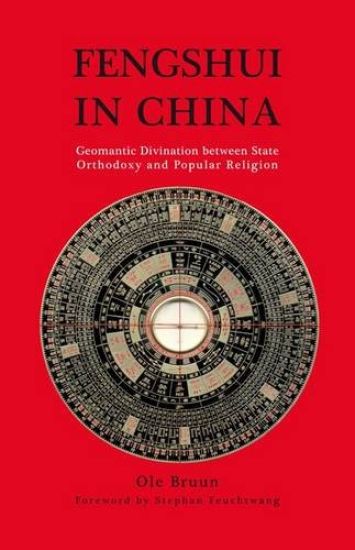
Fengshui in China

Fengshui in China

Ole Bruun

NIAS Press
2011
nidottu
For well over a century Chinese fengshui, or geomancy, has fascinated western laymen and scholars. The focus of this academic study is on fengshui's significance in China and the author's argument that fengshui serves as an alternative tradition of cosmological knowledge which is used to explain a range of everyday occurrences in rural areas such as disease, mental disorders, accidents and common mischief.For well over a century, Chinese fengshui - or 'geomancy' - has interested Western laymen and scholars. Today, hundreds of popular manuals claim to use its principles in their advice on how people can increase their wealth, happiness, longevity, etc. This study is quite different, approaching fengshui from an academic angle. The focus is on fengshui's significance in China, but the recent history of its reinterpretation in the West is also depicted.The author argues that fengshui serves as an alternative tradition of cosmological knowledge, which is used to explain a range of everyday occurrences in rural areas such as disease, mental disorders, accidents and common mischief. Although Chinese authorities have opposed the tradition for centuries, nonetheless it has been used by almost everyone as an aspect of popular cosmology. Opposing the Chinese collectivist ethos and moralizing from above, fengshui represents an alternative vision of reality, while interpreting essential Chinese values in a way that sanctions selfish motivations and behaviour.The study includes a historical account of fengshui over the last 150 years augmented by the results of anthropological fieldwork on contemporary practices in two Chinese rural areas. Aiming to eschew Western intellectual preconceptions and to penetrate the confused mass of old texts and divergent local practices, the book will be of interest to all scholars seeking to understand an undercurrent of modern China's transformation.
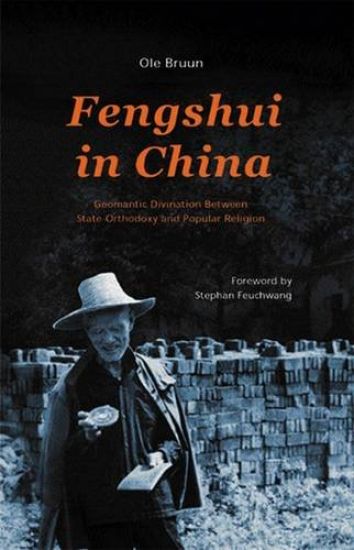
Fengshui in China

Fengshui in China

Ole Bruun

NIAS Press
2004
sidottu
For well over a century Chinese fengshui, or geomancy, has fascinated western laymen and scholars. The focus of this academic study is on fengshui's significance in China and the author's argument that fengshui serves as an alternative tradition of cosmological knowledge which is used to explain a range of everyday occurrences in rural areas such as disease, mental disorders, accidents and common mischief.For well over a century, Chinese fengshui - or 'geomancy' - has interested Western laymen and scholars. Today, hundreds of popular manuals claim to use its principles in their advice on how people can increase their wealth, happiness, longevity, etc. This study is quite different, approaching fengshui from an academic angle. The focus is on fengshui's significance in China, but the recent history of its reinterpretation in the West is also depicted.The author argues that fengshui serves as an alternative tradition of cosmological knowledge, which is used to explain a range of everyday occurrences in rural areas such as disease, mental disorders, accidents and common mischief. Although Chinese authorities have opposed the tradition for centuries, nonetheless it has been used by almost everyone as an aspect of popular cosmology. Opposing the Chinese collectivist ethos and moralizing from above, fengshui represents an alternative vision of reality, while interpreting essential Chinese values in a way that sanctions selfish motivations and behaviour.The study includes a historical account of fengshui over the last 150 years augmented by the results of anthropological fieldwork on contemporary practices in two Chinese rural areas. Aiming to eschew Western intellectual preconceptions and to penetrate the confused mass of old texts and divergent local practices, the book will be of interest to all scholars seeking to understand an undercurrent of modern China's transformation.