Kirjojen hintavertailu. Mukana 11 627 067 kirjaa ja 12 kauppaa.

Kirjahaku

Etsi kirjoja tekijän nimen, kirjan nimen tai ISBN:n perusteella.

6 kirjaa tekijältä Oliver Davis

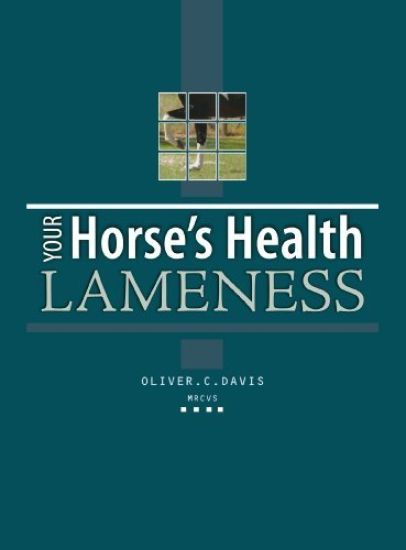
Your Horses Health Lameness

Your Horses Health Lameness

Oliver Davis

David Charles
2008
nidottu
In depth diagnosis and treatment of the most common problem affecting horses' health. Written by a veterinary expert with current hands-on experience and the latest research in care and rehabilitation This book is a thorough examination of all causes of lameness, the most common and frustrating problem faced by horse owners. Lameness is the primary cause for a horse to be out of action and unrideable. Its cause can be difficult to diagnose and the problem can drag on for weeks, months or even years if the treatment is wrong. All horses are occasionally lame from the regularly ridden and competed horse to the pony left in the field and only ridden at weekends. Its causes are diverse and many ranging from a simple briused sole to difficult to treat tendon injuries and potentially fatal laminitis. All horse owners need to be able to assess lameness, even a small wound can result in the death of a horse if it leads to an infected joint. On the other hand, horse owners can hardly afford to call out the vet everytime their horse stumbles and tweaks a muscle when out in the field.This book gives readers the skills they need to understand the causes of lamness and make well informed decisions on how to address the problem

Jacques Rancière

Jacques Rancière

Oliver Davis

Polity Press
2010
sidottu
This book is a critical introduction to contemporary French philosopher Jacques Rancière. It is the first introduction in any language to cover all of his major work and offers an accessible presentation and searching evaluation of his significant contributions to the fields of politics, pedagogy, history, literature, film theory and aesthetics. This book traces the emergence of Rancière’s thought over the last forty-five years and situates it in the diverse intellectual contexts in which it intervenes. Beginning with his egalitarian critique of his former teacher Louis Althusser, the book tracks the subsequent elaboration of Rancière’s highly original conception of equality. This approach reveals that a grasp of his early archival and historiographical work is vital for a full understanding both of his later politics and his ongoing investigation of art and aesthetics. Along the way, this book explains and analyses key terms in Rancière’s very distinctive philosophical lexicon, including the ‘police’ order, ‘disagreement’, ‘political subjectivation’, ‘literarity’, the ‘part which has no part’, the ‘regimes of art’ and ‘the distribution of the sensory’. This book argues that Rancière’s work sets a new standard in contestatory critique and concludes by reflecting on the philosophical and policy implications of his singular project.
Jacques Rancière

Jacques Rancière

Oliver Davis

Polity Press
2010
nidottu
This book is a critical introduction to contemporary French philosopher Jacques Rancière. It is the first introduction in any language to cover all of his major work and offers an accessible presentation and searching evaluation of his significant contributions to the fields of politics, pedagogy, history, literature, film theory and aesthetics. This book traces the emergence of Rancière’s thought over the last forty-five years and situates it in the diverse intellectual contexts in which it intervenes. Beginning with his egalitarian critique of his former teacher Louis Althusser, the book tracks the subsequent elaboration of Rancière’s highly original conception of equality. This approach reveals that a grasp of his early archival and historiographical work is vital for a full understanding both of his later politics and his ongoing investigation of art and aesthetics. Along the way, this book explains and analyses key terms in Rancière’s very distinctive philosophical lexicon, including the ‘police’ order, ‘disagreement’, ‘political subjectivation’, ‘literarity’, the ‘part which has no part’, the ‘regimes of art’ and ‘the distribution of the sensory’. This book argues that Rancière’s work sets a new standard in contestatory critique and concludes by reflecting on the philosophical and policy implications of his singular project.
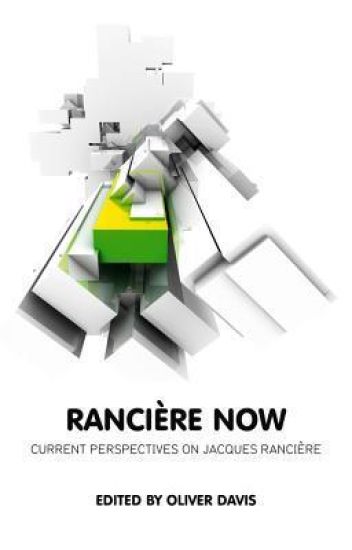
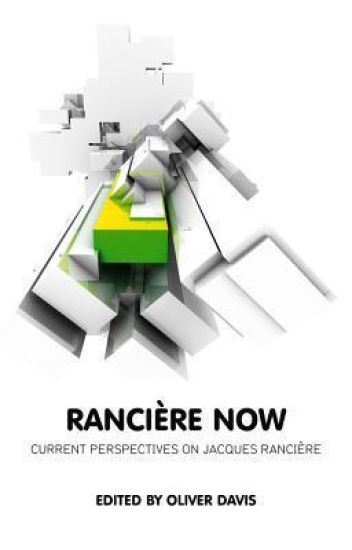
Ranciere Now

Ranciere Now

Oliver Davis

Polity Press
2013
sidottu
The French philosopher Jacques Rancière is well known across the world for his groundbreaking contributions to aesthetic and political theory and for his radical rethinking of the question of equality. This much-needed new collection situates Rancière's thought in a range of practical and theoretical contexts. These specially commissioned essays cover the complete history of Rancière's work and reflect its interdisciplinary reach. They span his early historical research of the 1960s and '70s, his celebrated critique of pedagogy and his later political theory of dissensus and disagreement, as well as his ongoing analysis of literature and 'the aesthetic regime of art'. Rancière's resistance to psychoanalytic thinking is also explored, as are his most recent publications on film and film theory. Contributors include Tom Conley, Carolyn Steedman, Geneviève Fraisse, Jean-Luc Nancy, Jeremy Lane, and many more. The book also includes a brand new interview with Rancière, reflecting on his intellectual project and developing new lines of thought from his latest major work, Aisthesis. Rancière Now will be essential reading for students and scholars across the humanities and social sciences; it will stimulate and inspire discussion of Rancière’s work for years to come.
Ranciere Now

Ranciere Now

Oliver Davis

Polity Press
2013
nidottu
The French philosopher Jacques Rancière is well known across the world for his groundbreaking contributions to aesthetic and political theory and for his radical rethinking of the question of equality. This much-needed new collection situates Rancière's thought in a range of practical and theoretical contexts. These specially commissioned essays cover the complete history of Rancière's work and reflect its interdisciplinary reach. They span his early historical research of the 1960s and '70s, his celebrated critique of pedagogy and his later political theory of dissensus and disagreement, as well as his ongoing analysis of literature and 'the aesthetic regime of art'. Rancière's resistance to psychoanalytic thinking is also explored, as are his most recent publications on film and film theory. Contributors include Tom Conley, Carolyn Steedman, Geneviève Fraisse, Jean-Luc Nancy, Jeremy Lane, and many more. The book also includes a brand new interview with Rancière, reflecting on his intellectual project and developing new lines of thought from his latest major work, Aisthesis. Rancière Now will be essential reading for students and scholars across the humanities and social sciences; it will stimulate and inspire discussion of Rancière’s work for years to come.