Kirjojen hintavertailu. Mukana 11 342 296 kirjaa ja 12 kauppaa.

Kirjahaku

Etsi kirjoja tekijän nimen, kirjan nimen tai ISBN:n perusteella.

85 kirjaa tekijältä Oliver Sacks

Oliver Sacks: The Last Interview

Oliver Sacks: The Last Interview

Oliver Sacks

Melville House Publishing
2016
nidottu
An extraordinary collection of interviews with the beloved doctor and author, whose research and books inspired generations of readers. Oliver Sacks ?called "the poet laureate of medicine" by the New York Times?illuminated the mysteries of the brain for a wide audience in a series of richly acclaimed books, including Awakenings and The Man Who Mistook His Wife for a Hat, and numerous The New Yorker articles. In this collection of interviews, Sacks is at his most candid and disarming, rich with insights about his life and work. Any reader of Oliver Sacks will find in this book an entirely new way of looking at a brilliant writer.
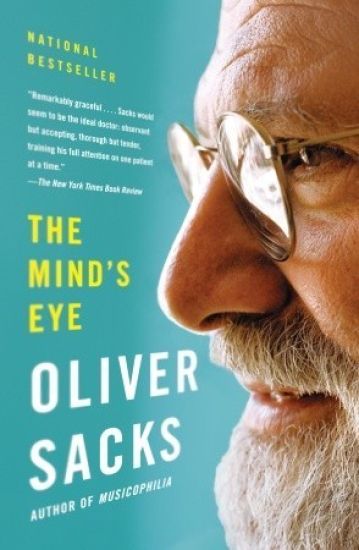
The Mind's Eye

The Mind's Eye

Oliver Sacks

VINTAGE
2011
nidottu
NATIONAL BESTSELLER - From "the poet laureate of medicine" (The New York Times) and the author of the classic The Man Who Mistook his Wife for a Hat comes a fascinating exploration of the remarkable, unpredictable ways that our brains cope with the loss of sight by finding rich new forms of perception. "Elaborate and gorgeously detailed.... Again and again, Sacks invites readers to imagine their way into minds unlike their own, encouraging a radical form of empathy." --Los Angeles TimesWith compassion and insight, Dr. Oliver Sacks again illuminates the mysteries of the brain by introducing us to some remarkable characters, including Pat, who remains a vivacious communicator despite the stroke that deprives her of speech, and Howard, a novelist who loses the ability to read. Sacks investigates those who can see perfectly well but are unable to recognize faces, even those of their own children. He describes totally blind people who navigate by touch and smell; and others who, ironically, become hyper-visual. Finally, he recounts his own battle with an eye tumor and the strange visual symptoms it caused. As he has done in classics like The Man Who Mistook his Wife for a Hat and Awakenings, Dr. Sacks shows us that medicine is both an art and a science, and that our ability to imagine what it is to see with another person's mind is what makes us truly human.
Hallucinations

Hallucinations

Oliver Sacks

VINTAGE
2013
nidottu
NATIONAL BESTSELLER - The "poet laureate of medicine" (The New York Times) and author of The Man Who Mistook His Wife for a Hat weaves together stories of mind-altering experiences to reveal what they tell us about our brains, our folklore and culture, and why the potential for hallucination exists in us all. "Sacks has turned hallucinations from something bizarre and frightening into something that seems part of what it means to be a person. His book, too, is a medical and human triumph." --The Washington Post "An absorbing plunge into a mystery of the mind." --Entertainment Weekly To many people, hallucinations imply madness, but in fact they are a common part of the human experience. These sensory distortions range from the shimmering zigzags of a visual migraine to powerful visions brought on by fever, injuries, drugs, sensory deprivation, exhaustion, or even grief. Hallucinations doubtless lie behind many mythological traditions, literary inventions, and religious epiphanies. Drawing on his own experiences, a wealth of clinical cases from among his patients, and famous historical examples ranging from Dostoevsky to Lewis Carroll, the legendary neurologist Oliver Sacks investigates the mystery of these sensory deceptions: what they say about the working of our brains, how they have influenced our folklore and culture, and why the potential for hallucination is present in all humans.
Oaxaca Journal

Oaxaca Journal

Oliver Sacks

VINTAGE
2012
nidottu
From "the poet laureate of medicine" and national bestselling author of Awakenings comes a fascinating investigation of Southern Mexico that explores the origins of chocolate and mescal, pre-Columbian culture and hallucinogens, and the peculiar passions of botanists. "Light and fast-moving. . . . Among the botanical and anthropological observations, one catches glimpses of Sacks's inner life: his preoccupation with dualities, his nearly Victorian sense of modesty, his fascination with the world around him." --The New YorkerSince childhood, Oliver Sacks was fascinated by ferns: an ancient class of plants able to survive and adapt in many climates. Along with a delightful group of fellow fern aficionados--mathematicians, poets, artists, and assorted botanists and birders--he embarked on an exploration of Southern Mexico, a region that is also rich in human history and culture. Combining Sacks's enthusiasm for natural history and the richness of humanity with his sharp and observant eye for detail, Oaxaca Journal is a rare treat.
The Mind's Eye

The Mind's Eye

Oliver Sacks

Picador
2011
pokkari
How does the brain perceive and interpret information from the eye? And what happens when the process is disrupted? In The Mind’s Eye, Oliver Sacks tells the stories of people who are able to navigate the world and communicate with others despite losing what many of us consider indispensable senses and abilities: the capacity to recognize faces, the sense of three-dimensional space, the ability to read, the sense of sight. For all of these people, the challenge is to adapt to a radically new way of being in the world – and The Mind’s Eye is testament to the myriad ways that we, as humans, are capable of rising to this challenge.‘Oliver Sacks is a perfect antidote to the anaesthetic of familiarity. His writing turns brains and minds transparent’ – Observer
Musicophilia

Musicophilia

Oliver Sacks

Picador
2011
pokkari
‘A humane discourse on the fragility of our minds, of the bodies that give rise to them, and of the world they create for us. This book is filled with wonders’ – Daily Telegraph Oliver Sacks’ compassionate tales of people struggling to adapt to different neurological conditions have fundamentally changed the way we think of our own minds. In Musicophilia, he examines the powers of music through the individual experiences of patients, musicians and everyday people – those struck by affliction, unusual talent and even, in one case, by lightning – to show not only that music occupies more areas of our brain than language does, but also that it can torment, calm, organize and heal. Always wise and compellingly readable, these stories alter our conception of who we are and how we function, and show us an essential part of what it is to be human.
An Anthropologist on Mars

An Anthropologist on Mars

Oliver Sacks

Picador
2012
pokkari
As with his previous bestseller, The Man Who Mistook His Wife for a Hat, in An Anthropologist on Mars Oliver Sacks uses case studies to illustrate the myriad ways in which neurological conditions can affect our sense of self, our experience of the world, and how we relate to those around us. Writing with his trademark blend of scientific rigour and human compassion, he describes patients such as the colour-blind painter or the surgeon with compulsive tics that disappear in the operating theatre; patients for whom disorientation and alienation – but also adaptation – are inescapable facts of life.'An inexhaustible tourist at the farther reaches of the mind, Sacks presents, in sparse, unsentimental prose, the stories of seven of his patients. The result is as rich, vivid and compelling as any collection of short fictional stories' – Independent on Sunday
Seeing Voices

Seeing Voices

Oliver Sacks

Picador
2012
pokkari
'Seeing Voices is both a history of the deaf and an account of the development of an extraordinary and expressive language' – Evening Standard Imaginative and insightful, Seeing Voices by Oliver Sacks offers a way into a world that is, for many people, alien and unfamiliar – for to be profoundly deaf is not just to live in a world of silence, but also to live in a world where the visual is paramount. In this remarkable book, Sacks explores the consequences of this, including the different ways in which the deaf and the hearing impaired learn to categorize their respective worlds – and how they convey and communicate those experiences to others.
The Island of the Colour-blind
'Sacks is rightly renowned for his empathy . . . anyone with a taste for the exotic will find this beautifully written book highly engaging' – Sunday Times Always fascinated by islands, Oliver Sacks is drawn to the Pacific by reports of the tiny atoll of Pingelap, with its isolated community of islanders born totally colour-blind; and to Guam, where he investigates a puzzling paralysis endemic there for a century. Along the way, he re-encounters the beautiful, primitive island cycad trees – and these become the starting point for a meditation on time and evolution, disease and adaptation, and islands both real and metaphorical in The Island of the Colour-Blind.
The Island of the Colorblind

The Island of the Colorblind

Oliver Sacks

Knopf Doubleday Publishing Group
1998
nidottu
Part travelogue, part autobiography, part medical mystery, this moving book by the "poet laureate of medicine" (The New York Times) and bestselling author of Awakenings takes us to a tiny Pacific atoll and the island of Guam to explore the genesis of disease, the wonders of botany, and the complexities of being human. "Sacks's total immersion in island life makes this luminous, beautifully written report a wonderous voyage of discovery. As a travel writer, Sacks ranks with Paul Theroux and Bruce Chatwin. As an investigator of the mind's mysteries, he is in a class by himself." --Publishers WeeklyFor Oliver Sacks, islands conjure up equally the romance of Melville and Stevenson, the adventure of Magellan and Cook, and the scientific wonder of Darwin and Wallace. Drawn to the tiny Pacific atoll of Pingelap by intriguing reports of an isolated community of islanders born totally color-blind, Sacks finds himself setting up a clinic in a one-room island dispensary, where he listens to these achromatopic islanders describe their colorless world in rich terms of pattern and tone, luminance and shadow. And on Guam, where he goes to investigate the puzzling neurodegenerative paralysis endemic there for a century, he becomes, for a brief time, an island neurologist, making house calls with his colleague John Steele, amid crowing cockerels, cycad jungles, and the remains of a colonial culture. Out of this unexpected journey, Sacks has woven an unforgettable narrative which immerses us in the romance of island life, and shares his own compelling vision of the mysteries of being human.
Uncle Tungsten: Memories of a Chemical Boyhood
The scientific wonder of youth is skillfully evoked in this intriguing memoir by the distinguished neurologist and author of Awakenings in which he describes his fascination with metals, gases, and chemicals, especially "Uncle Tungsten," and with unravelling the complex mysteries of the world around him. Reprint. 100,000 first printing.
Awakenings

Awakenings

Oliver Sacks

VINTAGE
1999
nidottu
The classic account of survivors of the sleeping-sickness during the great epidemic just after World War I--and their return to the world after decades of "sleep." - From the distinguished neurologist and the bestselling author of The Man Who Mistook His Wife for a Hat "One of the most beautifully composed and moving works of our time." --The Washington PostAwakenings--which inspired the major motion picture starring Robert DeNiro and Robin Williams--is the remarkable story of a group of patients who contracted sleeping-sickness during the great epidemic just after World War I. Frozen for decades in a trance-like state, these men and women were given up as hopeless until 1969, when Dr. Oliver Sacks gave them the then-new drug L-DOPA, which had an astonishing, explosive, "awakening" effect. Dr. Sacks recounts the moving case histories of his patients, their lives, and the extraordinary transformations which went with their reintroduction to a changed world.
Migraine

Migraine

Oliver Sacks

VINTAGE
1999
nidottu
From the renowned neurologist and bestselling author of Awakenings and The Man Who Mistook His Wife for a Hat comes a fascinating investigation of the many manifestations of migraine, including the visual hallucinations and distortions of space, time, and body image which migraineurs can experience. "So erudite, so gracefully written, that even those people fortunate enough never to have had a migraine in their lives should find it equally compelling." --The New York Times The many manifestations of migraine can vary dramatically from one patient to another, even within the same patient at different times. Among the most compelling and perplexing of these symptoms are the strange visual hallucinations and distortions of space, time, and body image which migraineurs sometimes experience. Portrayals of these uncanny states have found their way into many works of art, from the heavenly visions of Hildegard von Bingen to Alice in Wonderland. Dr. Oliver Sacks argues that migraine cannot be understood simply as an illness, but must be viewed as a complex condition with a unique role to play in each individual's life.
Seeing Voices

Seeing Voices

Oliver Sacks

Knopf Doubleday Publishing Group
2000
nidottu
The renowned neurologist and bestselling author of The Man Who Mistook His Wife for a Hat takes us on a journey into the world of deaf culture, and the underpinnings of the remarkable visual language of the congenitally deaf. "This book will shake your preconceptions about the deaf, about language and about thought.... One of the finest and most thoughtful writers of our time." --Los Angeles Times Book ReviewLike The Man Who Mistook His Wife for a Hat, this is a fascinating voyage into a strange and wonderful land, a provocative meditation on communication, biology, adaptation, and culture. In Seeing Voices, Oliver Sacks turns his attention to the subject of deafness, and the result is a deeply felt portrait of a minority struggling for recognition and respect--a minority with its own rich, sometimes astonishing, culture and unique visual language, an extraordinary mode of communication that tells us much about the basis of language in hearing people as well. Seeing Voices is, as Studs Terkel has written, "an exquisite, as well as revelatory, work."
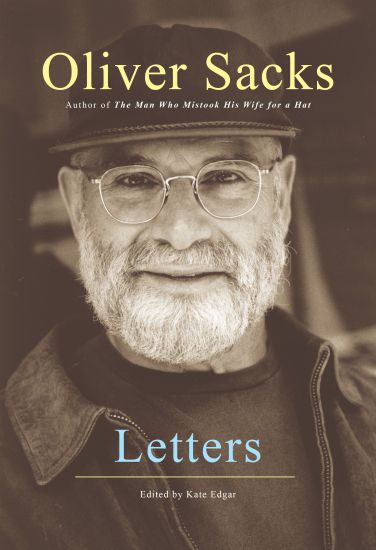
Letters

Letters

Oliver Sacks

Knopf Publishing Group
2024
sidottu
One of The New Statesman's Best Books of the YearOne of Kirkus Reviews' Best Nonfiction Books of 2024One of The New Yorker's 'Best Books We've Read in 2024 So Far' THE NEW YORK TIMES BOOK REVIEW EDITORS' CHOICE - The letters of one of the greatest observers of the human species, revealing his passion for life and work, friendship and art, medicine and society, and the richness of his relationships with friends, family, and fellow intellectuals over the decades, collected here for the first time "Here is the unedited Oliver Sacks--struggling, passionate, a furiously intelligent misfit. And also endless interesting. He was a man like no other." --Atul Gawande, author of Being Mortal Dr. Oliver Sacks--who describes himself in these pages as a "philosophical physician" and a "neuropathological Talmudist"--wrote letters throughout his life: to his parents and his beloved Auntie Len, to friends and colleagues from London, Oxford, California, and around the world. The letters begin with his arrival in America as a young man, eager to establish himself away from the confines of postwar England, and carry us through his bumpy early career in medicine and the discovery of his writer's voice; his weight-lifting, motorcycle-riding years and his explosive seasons of discovery with the patients who populate his book Awakenings; his growing interest in matters of sight and the musical brain; his many friendships and exchanges with writers, artists, and scientists (to say nothing of astronauts, botanists, and mathematicians), and his deep gratitude for all these relationships at the end of his life. Sensitively introduced and edited by Kate Edgar, Sacks's longtime editor, the letters deliver a portrait of Sacks as he wrestles with the workings of the brain and mind. We see, through his eyes, the beginnings of modern neuroscience, following the thought processes of one of the great intellectuals of our time, whose words, as evidenced in these pages, were unfailingly shaped with generosity and wonder toward other people.
Gratitude

Gratitude

Oliver Sacks

Knopf Publishing Group
2015
sidottu
A deeply moving testimony and celebration of how to embrace life. No writer has succeeded in capturing the medical and human drama of illness as honestly and as eloquently as Oliver Sacks. During the last few months of his life, he wrote a set of essays in which he movingly explored his feelings about completing a life and coming to terms with his own death. "A series of heart-rending yet ultimately uplifting essays....A lasting gift to readers." --The Washington Post "It is the fate of every human being," Sacks writes, "to be a unique individual, to find his own path, to live his own life, to die his own death." Together, these four essays form an ode to the uniqueness of each human being and to gratitude for the gift of life. "My predominant feeling is one of gratitude. I have loved and been loved. I have been given much and I have given something in return. Above all, I have been a sentient being, a thinking animal, on this beautiful planet, and that in itself has been an enormous privilege and adventure." --Oliver Sacks "Oliver Sacks was like no other clinician, or writer. He was drawn to the homes of the sick, the institutions of the most frail and disabled, the company of the unusual and the 'abnormal.' He wanted to see humanity in its many variants and to do so in his own, almost anachronistic way--face to face, over time, away from our burgeoning apparatus of computers and algorithms. And, through his writing, he showed us what he saw." --Atul Gawande, author of Being Mortal
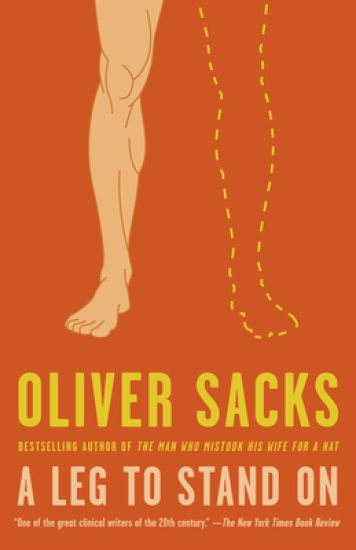
A Leg to Stand on

A Leg to Stand on

Oliver Sacks

VINTAGE
2020
nidottu
From the bestselling author of The Man Who Mistook His Wife for a Hat - Here the doctor becomes the patient as Dr. Sacks chronicles the mountaineering accident which left him with the uncanny feeling of being "legless," and raises profound questions of the physical basis of identity. "One of the great clinical writers of the 20th century." --The New York Times Book ReviewIn A Leg to Stand On, it is Sacks himself who is the patient: an encounter with a bull on a desolate mountain in Norway has left him with a severely damaged leg. But what should be a routine recuperation is actually the beginning of a strange medical journey when he finds that his leg uncannily no longer feels like part of his body. Sacks's brilliant description of his crisis and eventual recovery is not only an illuminating examination of the experience of patienthood and the inner nature of illness and health but also a fascinating exploration of the physical basis of identity. This 1984 classic is now available in an expanded edition with a new foreword, written by Kate Edgar, executive director of the Oliver Sacks Foundation.
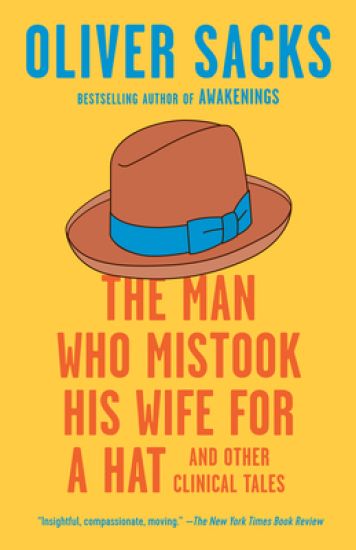
The Man Who Mistook His Wife for a Hat: And Other Clinical Tales
THE INSPIRATION FOR THE NBC SERIES BRILLIANT MINDS - In his most extraordinary book, the bestselling author of Awakenings and "poet laureate of medicine" (The New York Times) recounts the case histories of patients inhabiting the compelling world of neurological disorders, from those who are no longer able to recognize common objects to those who gain extraordinary new skills. "Oliver Sacks has become the world's best-known neurologist. His case studies of broken minds offer brilliant insight into the mysteries of consciousness."--The Guardian Featuring a new preface, Oliver Sacks's The Man Who Mistook His Wife for a Hat tells the stories of individuals afflicted with perceptual and intellectual disorders: patients who have lost their memories and with them the greater part of their pasts; who are no longer able to recognize people and common objects; whose limbs seem alien to them; who lack some skills yet are gifted with uncanny artistic or mathematical talents. In Dr. Sacks's splendid and sympathetic telling, his patients are deeply human and his tales are studies of struggles against incredible adversity. A great healer, Sacks never loses sight of medicine's ultimate responsibility: "the suffering, afflicted, fighting human subject."
An Anthropologist on Mars: Seven Paradoxical Tales
THE INSPIRATION FOR THE NBC SERIES BRILLIANT MINDS - From the bestselling author of The Man Who Mistook His Wife for a Hat - Fascinating portraits of neurological disorder in which men, women, and one extraordinary child emerge as brilliantly adaptive personalities, whose conditions have not so much debilitated them as ushered them into another reality. Here are seven detailed narratives of neurological patients, including a surgeon consumed by the compulsive tics of Tourette's syndrome unless he is operating; an artist who loses all sense of color in a car accident, but finds a new sensibility and creative power in black and white; and an autistic professor who cannot decipher the simplest social exchange between humans, but has built a career out of her intuitive understanding of animal behavior. Sacks combines the well honed mind of an academician with the verve of a true storyteller.