Kirjojen hintavertailu. Mukana 11 627 624 kirjaa ja 12 kauppaa.

Kirjahaku

Etsi kirjoja tekijän nimen, kirjan nimen tai ISBN:n perusteella.

6 kirjaa tekijältä Olivia Landry

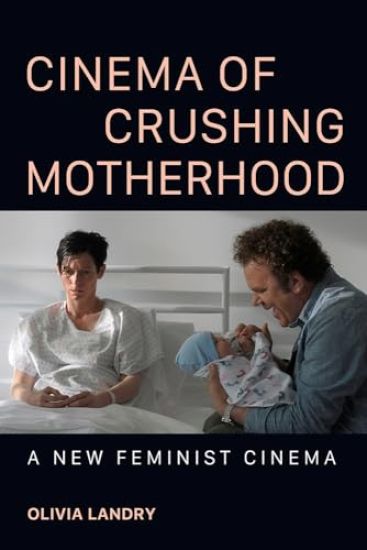
Cinema of Crushing Motherhood

Cinema of Crushing Motherhood

Olivia Landry

UNIVERSITY OF ILLINOIS PRESS
2025
sidottu
Breaking down recent films about the dark side of motherhood Twenty-first century contemporary films like Emily Atef’s Das Fremde in mir and Savannah Leaf’s Earth Mama portray motherhood as a source of regret, exhaustion, rage, shame, guilt, and disgust. Olivia Landry analyzes this new feminist cinema and the ways it embraces and explores the crushing burden of mothering children. Landry surveys films released in North America, Europe, and Australia over a period beginning in 2007. As she shows, revelation and the expression of negative feelings upend the traditional image of the perfect, self-sacrificial, and happy mother. Landry tracks how radical positions like maternal regret and family abolition have replaced age-old tropes while also going beyond portrayals of maternal ambivalence. Her feminist method casts off psychoanalysis and renounces pathological approaches to motherhood to show how a generation of filmmakers have insisted on the subjective position and experience of the mother rather than that of the child. Bold and groundbreaking, Cinema of Crushing Motherhood looks at taboo-breaking films and illuminates the emotions and affects that make them so powerful.
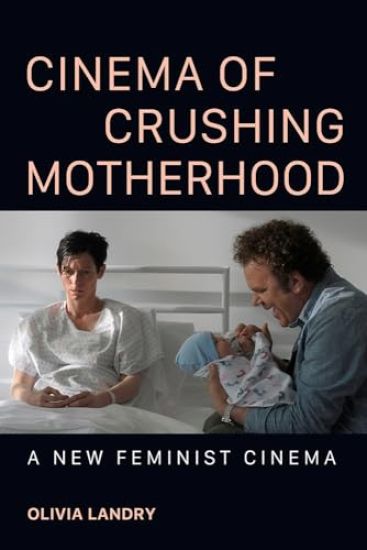
Cinema of Crushing Motherhood

Cinema of Crushing Motherhood

Olivia Landry

UNIVERSITY OF ILLINOIS PRESS
2025
nidottu
Breaking down recent films about the dark side of motherhood Twenty-first century contemporary films like Emily Atef’s Das Fremde in mir and Savannah Leaf’s Earth Mama portray motherhood as a source of regret, exhaustion, rage, shame, guilt, and disgust. Olivia Landry analyzes this new feminist cinema and the ways it embraces and explores the crushing burden of mothering children. Landry surveys films released in North America, Europe, and Australia over a period beginning in 2007. As she shows, revelation and the expression of negative feelings upend the traditional image of the perfect, self-sacrificial, and happy mother. Landry tracks how radical positions like maternal regret and family abolition have replaced age-old tropes while also going beyond portrayals of maternal ambivalence. Her feminist method casts off psychoanalysis and renounces pathological approaches to motherhood to show how a generation of filmmakers have insisted on the subjective position and experience of the mother rather than that of the child. Bold and groundbreaking, Cinema of Crushing Motherhood looks at taboo-breaking films and illuminates the emotions and affects that make them so powerful.
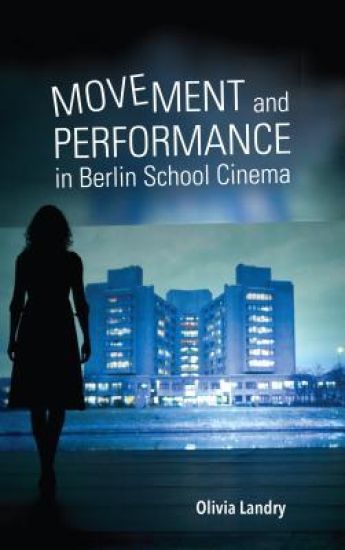
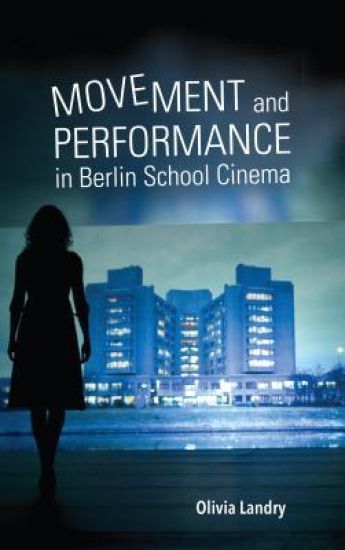
Movement and Performance in Berlin School Cinema

Movement and Performance in Berlin School Cinema

Olivia Landry

Indiana University Press
2019
sidottu
Through a study of the contemporary German film movement the Berlin School, Olivia Landry examines how narrative film has responded to our highly digitalized and mediatized age, not with a focus on stasis and realism, but by turning back to movement, spectacle, and performance. She argues that a preoccupation with presence, liveness, and affect—all of which are viewed as critical components of live performance—can be found in many of the films of the Berlin School. Challenging the perception that the Berlin School is a sheer adherent of "slow cinema," Landry closely analyzes the use of movement, dynamism, presence, and speed in a broad selection of films to show how filmmakers such as Christian Petzold, Angela Schanelec, Thomas Arslan, and Christoph Hochhäusler invoke the pulse of the kinesthetic and the tangibly affective. Her analysis draws on an array of film theories from early materialism to body theories, phenomenology, and contemporary affect theories. Arguing that these theories readily and energetically forge a path from film to performance, Landry traces a trajectory between the two through which live experience, presence, spectacle, intersubjectivity, and the body in motion emerge and powerfully intersect. Ultimately, Movement and Performance in Berlin School Cinema expands the methodological and disciplinary boundaries of film studies by offering new ways of articulating and understanding movement in cinema.
Movement and Performance in Berlin School Cinema

Movement and Performance in Berlin School Cinema

Olivia Landry

Indiana University Press
2019
pokkari
Through a study of the contemporary German film movement the Berlin School, Olivia Landry examines how narrative film has responded to our highly digitalized and mediatized age, not with a focus on stasis and realism, but by turning back to movement, spectacle, and performance. She argues that a preoccupation with presence, liveness, and affect—all of which are viewed as critical components of live performance—can be found in many of the films of the Berlin School. Challenging the perception that the Berlin School is a sheer adherent of "slow cinema," Landry closely analyzes the use of movement, dynamism, presence, and speed in a broad selection of films to show how filmmakers such as Christian Petzold, Angela Schanelec, Thomas Arslan, and Christoph Hochhäusler invoke the pulse of the kinesthetic and the tangibly affective. Her analysis draws on an array of film theories from early materialism to body theories, phenomenology, and contemporary affect theories. Arguing that these theories readily and energetically forge a path from film to performance, Landry traces a trajectory between the two through which live experience, presence, spectacle, intersubjectivity, and the body in motion emerge and powerfully intersect. Ultimately, Movement and Performance in Berlin School Cinema expands the methodological and disciplinary boundaries of film studies by offering new ways of articulating and understanding movement in cinema.
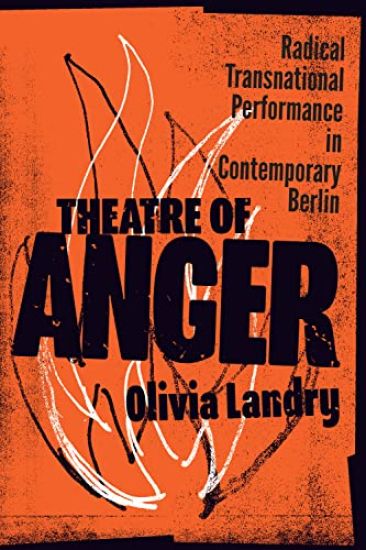
Theatre of Anger

Theatre of Anger

Olivia Landry

University of Toronto Press
2020
sidottu
In Theatre of Anger, Olivia Landry offers a provocative new vision of anger as more than just hate and violence. Studying the work of a new generation of transnational theatre practitioners in Berlin, she illuminates how anger can be an affirmative and critical tool in the project of social justice and resistance. To develop her theory of anger, Landry delves into philosophical texts, theatre history, and Black feminist theory from Aristotle, Gotthold Ephraim Lessing, and Bertolt Brecht to Audre Lorde, bell hooks, and Sara Ahmed. Landry focuses not only on the social and political significance of the theatre of anger and the ways in which it rages against racism, antisemitism, Islamophobia, sexism, and homophobia, but also on its aesthetic and theoretical innovation. Through readings of key works, Theatre of Anger asks what it means in our present world to construct political theatre.
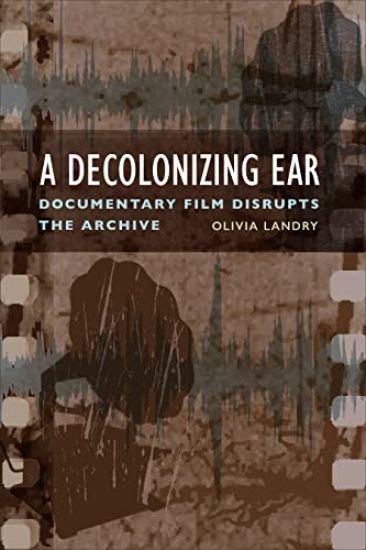
A Decolonizing Ear

A Decolonizing Ear

Olivia Landry

UNIVERSITY OF TORONTO PRESS
2022
sidottu
The recording of Indigenous voices is one of the most well-known methods of colonial ethnography. In A Decolonizing Ear, Olivia Landry offers a sceptical account of listening as a highly mediated and extractive act, influenced by technology and ideology. Returning to early ethnographic practices of voice recording and archiving at the turn of the twentieth century, with a particular focus on the German paradigm, she reveals the entanglement of listening in the logic of Euro-American empire and the ways in which contemporary films can destabilize the history of colonial sound reproduction. Landry provides close readings of several disparate documentary films from the late 1990s and the early 2000s. The book pays attention to technology and knowledge production to examine how these films employ recordings plucked from different colonial sound archives and disrupt their purposes. Drawing on film and documentary studies, sound studies, German studies, archival studies, postcolonial studies, and media history, A Decolonizing Ear develops a method of decolonizing listening from the insights provided by the films themselves.