Kirjojen hintavertailu. Mukana 11 244 527 kirjaa ja 12 kauppaa.

Kirjahaku

Etsi kirjoja tekijän nimen, kirjan nimen tai ISBN:n perusteella.

151 kirjaa tekijältä Ovid

The Metamorphoses of Ovid

The Metamorphoses of Ovid

Ovid

Mariner Books
1995
nidottu
Through National Book Award-winning translator Allen Mandelbaum's poetic artistry, this gloriously entertaining achievement of literature -- classical myths filtered through the worldly and far from reverent sensibility of the Roman poet Ovid -- is revealed anew.Savage and sophisticated, mischievious and majestic, witty and wicked, The Metamorphoses weaves together every major mythological story to display a dazzling array of miraculous changes, from the time chaos is transformed into order at the moment of creation, to the time when the soul of Julius Caeser is turned into a star and set in the heavens. In its earthiness, its psychological acuity, this classic work continues to speak over the centuries to our time. "Reading Mandelbaum's extraordinary translation, one imagines Ovid in his darkest moods with the heart of Baudelaire...Brilliant."--Booklist
Ovid's Fasti

Ovid's Fasti

Ovid

Indiana University Press
1995
pokkari
"In her extended introduction, Nagle offers illuminating information and commentary . . . This verse translation, internally glossed for clarification, is as accurate as modern English will allow. . . . Highly recommended." —Choice "An excellent rendition in English of Ovid's poetic calendar of the Roman religious year, with an original introduction and useful notes as well as a glossary . . . The translation is elegant and geared to the modern reader." —The Journal of Indo-European Studies This elegant translation brings Ovid's poetic calendar of the Roman religious year to a new generation of students and scholars. A valuable source of information about the Roman calendar, it complements Ovid's masterwork, the Metamorphoses.
Ovid: Metamorphoses Book XIV

Ovid: Metamorphoses Book XIV

Ovid

Cambridge University Press
2009
pokkari
In Book XIV of the Metamorphoses Ovid takes his epic for the first time into Italy and continues from book XIII his close intertextual engagement with Virgil's Aeneid. His tendentious treatment of his model subordinates Virgil's epic plot to fantastic tales of metamorphosis, including the erotic Italian tales of Circe Glaucus, and Scylla, and Picus, and Canens. Other Roman myths include Pomona and Vertumnus, as well as events from Romulus' reign. The deifications of Aeneas and Romulus anticipate the poem's closing episodes of imperial apotheosis. This commentary provides guidance to advanced undergraduate and graduate students for understanding Ovid's language, style, artistry, and allusive techniques. The introduction discusses the major structures, themes, and stylistic features of book XIV, its place within the poem as a whole, and Ovid's interpretive imitation of Virgil's Aeneid.
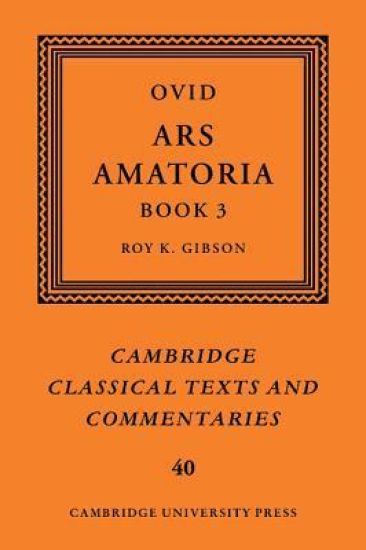
Ovid: Ars Amatoria, Book III

Ovid: Ars Amatoria, Book III

Ovid

Cambridge University Press
2009
pokkari
This is a full-scale commentary devoted to the third book of Ovid's Ars Amatoria. It includes an Introduction, a revision of E. J. Kenney's Oxford text of the book, and detailed line-by-line and section-by-section commentary on the language and ideas of the text. Combining traditional philological scholarship with some of the concerns of more recent critics, both Introduction and commentary place particular emphasis on: the language of the text; the relationship of the book to the didactic, 'erotodidactic' and elegiac traditions; Ovid's usurpation of the lena's traditional role of erotic instructor of women; the poet's handling of the controversial subjects of cosmetics and personal adornment; and the literary and political significances of Ovid's unexpected emphasis in the text of Ars III on restraint and 'moderation'. The book will be of interest to all postgraduates and scholars working on Augustan poetry.
Ovid: Heroides XVI-XXI

Ovid: Heroides XVI-XXI

Ovid

Cambridge University Press
1996
pokkari
This is Ovid’s wittily imagined version of the letters exchanged by three famous pairs of lovers. Heroides XVI-XXI constitute an artfully constructed triptych: Hero and Leander’s tragedy of high romance and fleeting happiness framed by two ironic comedies, that of Paris and Helen distinctly black, that of Acontius and Cydippe ending the book on a note of tantalising ambiguity. This is the first edition of these poems with commentary in any language since 1898. It provides a substantially improved text, together with all the guidance needed by students for the understanding of Ovid’s Latin and the appreciation of his poetic art. The Introduction offers the first adequate discussion ever published of the poet’s treatment of his literary sources and models, and deals succinctly but decisively with the question of authorship.
Ovid: Epistulae ex Ponto Book I

Ovid: Epistulae ex Ponto Book I

Ovid

Cambridge University Press
2014
pokkari
When Ovid, already renowned for his love poetry, the Metamorphoses and other works, was exiled by Augustus to Tomis on the Black Sea in AD 8, he continued to write. After five books of Tristia, he composed a collection of verse letters, the Epistulae ex Ponto, in which he appeals to his friends and supporters in Rome, lamenting his lot and begging for their help in mitigating it. In these epistolary elegies his inventiveness flourishes no less than before and his imaginative self-fashioning is as ingenious and engaging as ever, although in a minor key. This commentary on Book I assists intermediate and advanced students in understanding Ovid's language and style, while guiding them in the appreciation of his poetic art. The introduction examines the literary background of the Epistulae ex Ponto, their relation to Ovid's earlier works, and their special interest and appeal to readers of Augustan poetry.
Ovid: Metamorphoses Book XIII

Ovid: Metamorphoses Book XIII

Ovid

Cambridge University Press
2000
pokkari
Book XIII of Ovid’s Metamorphoses presents a wide variety of brilliant episodes, from the rhetorically charged contest between Ulysses and Ajax over the arms of Achilles, to the tragic tale of Hecuba and her gruesome revenge, to the amusing story of Polyphemus’ unrequited love for Galatea and its bloody conclusion. This edition discusses in detail Ovid’s treatment of his sources and sets out the ways in which he has adapted earlier literature as material for his novel work. Guidance is offered on points of language and style, and the Introduction treats in general terms the themes of metamorphosis and the structure of the poem as a whole.
Ovid: Metamorphoses Book XIV

Ovid: Metamorphoses Book XIV

Ovid

Cambridge University Press
2009
sidottu
In Book XIV of the Metamorphoses Ovid takes his epic for the first time into Italy and continues from book XIII his close intertextual engagement with Virgil's Aeneid. His tendentious treatment of his model subordinates Virgil's epic plot to fantastic tales of metamorphosis, including the erotic Italian tales of Circe Glaucus, and Scylla, and Picus, and Canens. Other Roman myths include Pomona and Vertumnus, as well as events from Romulus' reign. The deifications of Aeneas and Romulus anticipate the poem's closing episodes of imperial apotheosis. This commentary provides guidance to advanced undergraduate and graduate students for understanding Ovid's language, style, artistry, and allusive techniques. The introduction discusses the major structures, themes, and stylistic features of book XIV, its place within the poem as a whole, and Ovid's interpretive imitation of Virgil's Aeneid.
Ovid: Ars Amatoria, Book III

Ovid: Ars Amatoria, Book III

Ovid

Cambridge University Press
2003
sidottu
This is a full-scale commentary devoted to the third book of Ovid's Ars Amatoria. It includes an Introduction, a revision of E. J. Kenney's Oxford text of the book, and detailed line-by-line and section-by-section commentary on the language and ideas of the text. Combining traditional philological scholarship with some of the concerns of more recent critics, both Introduction and commentary place particular emphasis on: the language of the text; the relationship of the book to the didactic, 'erotodidactic' and elegiac traditions; Ovid's usurpation of the lena's traditional role of erotic instructor of women; the poet's handling of the controversial subjects of cosmetics and personal adornment; and the literary and political significances of Ovid's unexpected emphasis in the text of Ars III on restraint and 'moderation'. The book will be of interest to all postgraduates and scholars working on Augustan poetry.
Ovid: Epistulae ex Ponto Book I

Ovid: Epistulae ex Ponto Book I

Ovid

Cambridge University Press
2014
sidottu
When Ovid, already renowned for his love poetry, the Metamorphoses and other works, was exiled by Augustus to Tomis on the Black Sea in AD 8, he continued to write. After five books of Tristia, he composed a collection of verse letters, the Epistulae ex Ponto, in which he appeals to his friends and supporters in Rome, lamenting his lot and begging for their help in mitigating it. In these epistolary elegies his inventiveness flourishes no less than before and his imaginative self-fashioning is as ingenious and engaging as ever, although in a minor key. This commentary on Book I assists intermediate and advanced students in understanding Ovid's language and style, while guiding them in the appreciation of his poetic art. The introduction examines the literary background of the Epistulae ex Ponto, their relation to Ovid's earlier works, and their special interest and appeal to readers of Augustan poetry.
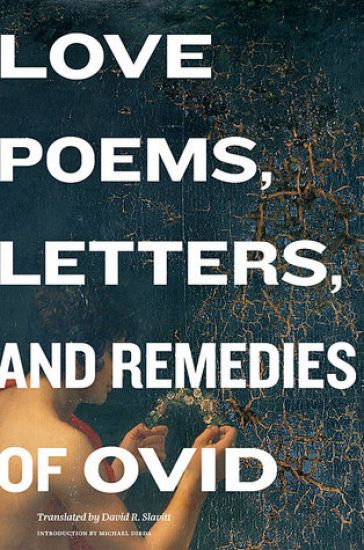
Love Poems, Letters, and Remedies of Ovid

Love Poems, Letters, and Remedies of Ovid

Ovid

Harvard University Press
2011
sidottu
Widely praised for his recent translations of Boethius and Ariosto, David R. Slavitt returns to Ovid, once again bringing to the contemporary ear the spirited, idiomatic, audacious charms of this master poet. The love described here is the anguished, ruinous kind, for which Ovid was among the first to find expression. In the Amores, he testifies to the male experience, and in the companion Heroides—through a series of dramatic monologues addressed to absent lovers—he imagines how love goes for women. “You think she is ardent with you? So was she ardent with him,” cries Oenone to Paris. Sappho, revisiting the forest where she lay with Phaon, sighs, “The place / without your presence is just another place. / You were what made it magic.” The Remedia Amoris sees love as a sickness, and offers curative advice: “The beginning is your best chance to resist”; “Try to avoid onions, / imported or domestic. And arugula is bad. / Whatever may incline your body to Venus / keep away from.” The voices of men and women produce a volley of extravagant laments over love’s inconstancy and confusions, as though elegance and vigor of expression might compensate for heartache.Though these love poems come to us across millennia, Slavitt’s translations, introduced by Pulitzer Prize winner Michael Dirda, ensure that their sentiments have not faded with the passage of time. They delight us with their wit, even as we weep a little in recognition.
Ovid's Erotic Poems

Ovid's Erotic Poems

Ovid

University of Pennsylvania Press
2014
sidottu
The most sophisticated and daring poetic ironist of the early Roman Empire, Publius Ovidius Naso, is perhaps best known for his oft-imitated Metamorphoses. But the Roman poet also wrote lively and lewd verse on the subjects of love, sex, marriage, and adultery-a playful parody of the earnest erotic poetry traditions established by his literary ancestors. The Amores, Ovid's first completed book of poetry, explores the conventional mode of erotic elegy with some subversive and silly twists: the poetic narrator sets up a lyrical altar to an unattainable woman only to knock it down by poking fun at her imperfections. Ars Amatoria takes the form of didactic verse in which a purportedly mature and experienced narrator instructs men and women alike on how to best play their hands at the long con of love. Ovid's Erotic Poems offers a modern English translation of the Amores and Ars Amatoria that retains the irreverent wit and verve of the original. Award-winning poet Len Krisak captures the music of Ovid's richly textured Latin meters through rhyming couplets that render the verse as playful and agile as it was meant to be. Sophisticated, satirical, and wildly self-referential, Ovid's Erotic Poems is not just a wickedly funny send-up of romantic and sexual mores but also a sharp critique of literary technique and poetic convention.
Ovid: Metamorphoses I

Ovid: Metamorphoses I

Ovid

Bristol Classical Press
1991
nidottu
The first book of Ovid's Metamorphoses contains an interesting variety of material. It begins with myths related to the creation of the world and man, decline from the golden age, the flood and the story of Deucalion and Pyrrha. In the second half it deals primarily with two main metamorphosis myths - Apollo's love for Daphne and the story of Io. Guy Lee's edition, first published by CUP in 1952, supplies a detailed commentary of explanatory notes (with useful index) and, separately, a number of critical notes on the readings adopted by his text. the substantial introduction deals with Ovid himself, with the Metamorphoses and Ovid's other works; there is also a practical section on the Ovidian hexameter and (as one might expect from an editor who is himself a consummate translator of Latin poetry) a sensitive section on translations of the Metamorphoses, in particular Golding, Sandys and Dryden.
Ovid: Metamorphoses III

Ovid: Metamorphoses III

Ovid

Bristol Classical Press
1991
nidottu
This simple, utilitarian edition offers sixth-form and undergraduate students an introduction to the enchanted, sometimes violent, often sad, often funny world of the "Metamorphoses". Book III is ideal in this respect, for it possesses a homogeneity unusual among the fifteen books of the poem and follows the fortunes of the royal house of Thebes in episodes which are related at some length, allowing the reader to savour the individual quality of each story and fix its 'dramatis personae' in mind and memory. The brief introduction places the book in its ancient context. Notes serve primarily to aid comprehension of the Latin but also give aesthetic and antiquarian information. A vocabulary is included.
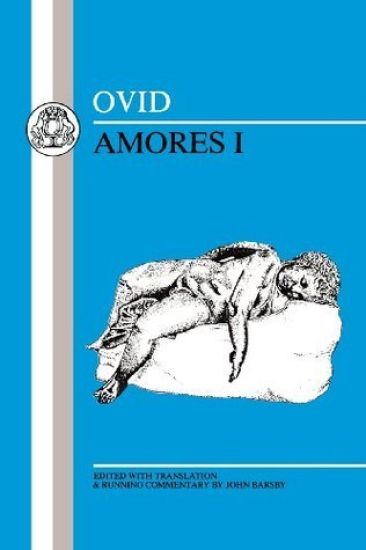
Ovid: Amores I

Ovid: Amores I

Ovid

Bristol Classical Press
1991
nidottu
This edition of the first book of Ovid's "Amores" was first published in 1973 by OUP. It has been kept in print by BCP because it remains an outstandlingly useful volume. It was one of two editions (the other being Gordon Williams' "Horace 'Odes' III", 1969) in which OUP pioneered a new kind of continuous running commentary particularly suited to short poems, one 'likely to be more illuminating than a series of disconnected notes on isolated problems, which may contribute little to the total understanding of the poem as the poet conceived it'. This approach was intended to promote in sixth-formers and undergraduates not just an understanding of the Latin but a critical appreciation of literary quality. In this aim, the edition has been a continued success.