This book describes how neural networks operate from the mathematical point of view. As a result, neural networks can be interpreted both as function universal approximators and information processors. The book bridges the gap between ideas and concepts of neural networks, which are used nowadays at an intuitive level, and the precise modern mathematical language, presenting the best practices of the former and enjoying the robustness and elegance of the latter.This book can be used in a graduate course in deep learning, with the first few parts being accessible to senior undergraduates. In addition, the book will be of wide interest to machine learning researchers who are interested in a theoretical understanding of the subject.
This book describes how neural networks operate from the mathematical point of view. As a result, neural networks can be interpreted both as function universal approximators and information processors. The book bridges the gap between ideas and concepts of neural networks, which are used nowadays at an intuitive level, and the precise modern mathematical language, presenting the best practices of the former and enjoying the robustness and elegance of the latter.This book can be used in a graduate course in deep learning, with the first few parts being accessible to senior undergraduates. In addition, the book will be of wide interest to machine learning researchers who are interested in a theoretical understanding of the subject.
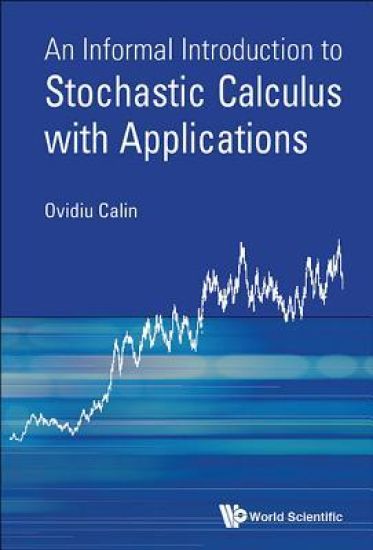
Most branches of science involving random fluctuations can be approached by Stochastic Calculus. These include, but are not limited to, signal processing, noise filtering, stochastic control, optimal stopping, electrical circuits, financial markets, molecular chemistry, population dynamics, etc. All these applications assume a strong mathematical background, which in general takes a long time to develop. Stochastic Calculus is not an easy to grasp theory, and in general, requires acquaintance with the probability, analysis and measure theory.The goal of this book is to present Stochastic Calculus at an introductory level and not at its maximum mathematical detail. The author's goal was to capture as much as possible the spirit of elementary deterministic Calculus, at which students have been already exposed. This assumes a presentation that mimics similar properties of deterministic Calculus, which facilitates understanding of more complicated topics of Stochastic Calculus.The second edition contains several new features that improved the first edition both qualitatively and quantitatively. First, two more chapters have been added, Chapter 12 and Chapter 13, dealing with applications of stochastic processes in Electrochemistry and global optimization methods.This edition contains also a final chapter material containing fully solved review problems and provides solutions, or at least valuable hints, to all proposed problems. The present edition contains a total of about 250 exercises.This edition has also improved presentation from the first edition in several chapters, including new material.
Most branches of science involving random fluctuations can be approached by Stochastic Calculus. These include, but are not limited to, signal processing, noise filtering, stochastic control, optimal stopping, electrical circuits, financial markets, molecular chemistry, population dynamics, etc. All these applications assume a strong mathematical background, which in general takes a long time to develop. Stochastic Calculus is not an easy to grasp theory, and in general, requires acquaintance with the probability, analysis and measure theory.The goal of this book is to present Stochastic Calculus at an introductory level and not at its maximum mathematical detail. The author's goal was to capture as much as possible the spirit of elementary deterministic Calculus, at which students have been already exposed. This assumes a presentation that mimics similar properties of deterministic Calculus, which facilitates understanding of more complicated topics of Stochastic Calculus.The second edition contains several new features that improved the first edition both qualitatively and quantitatively. First, two more chapters have been added, Chapter 12 and Chapter 13, dealing with applications of stochastic processes in Electrochemistry and global optimization methods.This edition contains also a final chapter material containing fully solved review problems and provides solutions, or at least valuable hints, to all proposed problems. The present edition contains a total of about 250 exercises.This edition has also improved presentation from the first edition in several chapters, including new material.
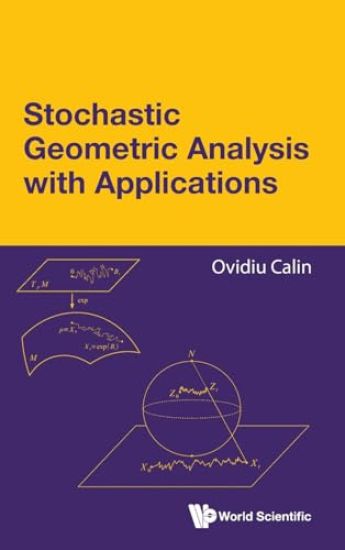
This book is a comprehensive exploration of the interplay between Stochastic Analysis, Geometry, and Partial Differential Equations (PDEs). It aims to investigate the influence of geometry on diffusions induced by underlying structures, such as Riemannian or sub-Riemannian geometries, and examine the implications for solving problems in PDEs, mathematical finance, and related fields. The book aims to unify the relationships between PDEs, nonholonomic geometry, and stochastic processes, focusing on a specific condition shared by these areas known as the bracket-generating condition or Hörmander's condition. The main objectives of the book are:The intended audience for this book includes researchers and practitioners in mathematics, physics, and engineering, who are interested in stochastic techniques applied to geometry and PDEs, as well as their applications in mathematical finance and electrical circuits.
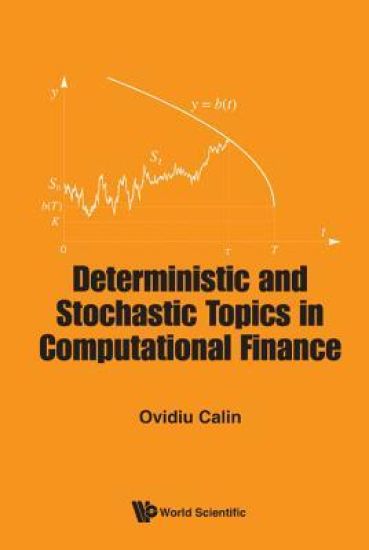
What distinguishes this book from other texts on mathematical finance is the use of both probabilistic and PDEs tools to price derivatives for both constant and stochastic volatility models, by which the reader has the advantage of computing explicitly a large number of prices for European, American and Asian derivatives.The book presents continuous time models for financial markets, starting from classical models such as Black-Scholes and evolving towards the most popular models today such as Heston and VAR.A key feature of the textbook is the large number of exercises, mostly solved, which are designed to help the reader to understand the material.The book is based on the author's lectures on topics on computational finance for senior and graduate students, delivered in USA (Princeton University and EMU), Taiwan and Kuwait. The prerequisites are an introductory course in stochastic calculus, as well as the usual calculus sequence.The book is addressed to undergraduate and graduate students in Masters of Finance programs as well as to those who wish to become more efficient in their practical applications.Topics covered:
What distinguishes this book from other texts on mathematical finance is the use of both probabilistic and PDEs tools to price derivatives for both constant and stochastic volatility models, by which the reader has the advantage of computing explicitly a large number of prices for European, American and Asian derivatives.The book presents continuous time models for financial markets, starting from classical models such as Black-Scholes and evolving towards the most popular models today such as Heston and VAR.A key feature of the textbook is the large number of exercises, mostly solved, which are designed to help the reader to understand the material.The book is based on the author's lectures on topics on computational finance for senior and graduate students, delivered in USA (Princeton University and EMU), Taiwan and Kuwait. The prerequisites are an introductory course in stochastic calculus, as well as the usual calculus sequence.The book is addressed to undergraduate and graduate students in Masters of Finance programs as well as to those who wish to become more efficient in their practical applications.Topics covered:
The goal of this book is to present Stochastic Calculus at an introductory level and not at its maximum mathematical detail. The author aims to capture as much as possible the spirit of elementary deterministic Calculus, at which students have been already exposed. This assumes a presentation that mimics similar properties of deterministic Calculus, which facilitates understanding of more complicated topics of Stochastic Calculus.
The goal of this book is to present Stochastic Calculus at an introductory level and not at its maximum mathematical detail. The author aims to capture as much as possible the spirit of elementary deterministic Calculus, at which students have been already exposed. This assumes a presentation that mimics similar properties of deterministic Calculus, which facilitates understanding of more complicated topics of Stochastic Calculus.
This book explores three computational formalisms for solving geometric problems. Part I introduces a trigonometric-based formalism, enabling calculations of distances, angles, and areas using basic trigonometry. Part II focuses on complex numbers, representing points in the plane to manipulate geometric properties like collinearity and concurrency, making it particularly useful for planar problems and rotations. Part III covers vector formalism, applying linear algebra to both plane and solid geometry. Vectors are effective for solving problems related to perpendicularity, collinearity, and the calculation of distances, areas, and volumes.Each formalism has its strengths and limitations, with complex numbers excelling in the plane and vectors being more versatile in three-dimensional space. This book equips readers to choose the best approach for various geometric challenges. This book, designed for math majors, especially future educators, is also valuable for gifted high school students and educators seeking diverse proofs and teaching inspiration.
This book explores three computational formalisms for solving geometric problems. Part I introduces a trigonometric-based formalism, enabling calculations of distances, angles, and areas using basic trigonometry. Part II focuses on complex numbers, representing points in the plane to manipulate geometric properties like collinearity and concurrency, making it particularly useful for planar problems and rotations. Part III covers vector formalism, applying linear algebra to both plane and solid geometry. Vectors are effective for solving problems related to perpendicularity, collinearity, and the calculation of distances, areas, and volumes.Each formalism has its strengths and limitations, with complex numbers excelling in the plane and vectors being more versatile in three-dimensional space. This book equips readers to choose the best approach for various geometric challenges. This book, designed for math majors, especially future educators, is also valuable for gifted high school students and educators seeking diverse proofs and teaching inspiration.