Kirjojen hintavertailu. Mukana 12 408 571 kirjaa ja 12 kauppaa.

Kirjahaku

Etsi kirjoja tekijän nimen, kirjan nimen tai ISBN:n perusteella.

21 kirjaa tekijältä Owen Hopkins

The Manifesto House

The Manifesto House

Owen Hopkins

YALE UNIVERSITY PRESS
2025
sidottu
Manifesto houses reflect new visions for how we can live. Often extreme and uncompromising, they are vehicles for innovation, new ideas, and new ways of doing things. Most houses are the product of multiple layers of norms and expectations built up over time, whether methods, materials, and technologies or social, cultural, economic, and political pressures. Yet at various moments houses have been built that break with the past and do something different—houses that stand outside of these expectations and instead are conceived to embody whole new theories or agendas. We call these “manifesto houses.” For the first time, this compelling thread in the history of architecture is surveyed by Owen Hopkins. He brings together a collection of twenty-one such manifesto houses, exploring the visions for architecture conjured by Andrea Palladio, Eileen Gray, Frank Lloyd Wright, Harry Seidler, Lina Bo Bardi, Anupama Kundoo, and Sou Fujimoto, among others. The Manifesto House looks in detail at the ideas and ambitions embodied in each house, the contexts that shaped them, and their impact and influence on the future of architecture.
The Museum

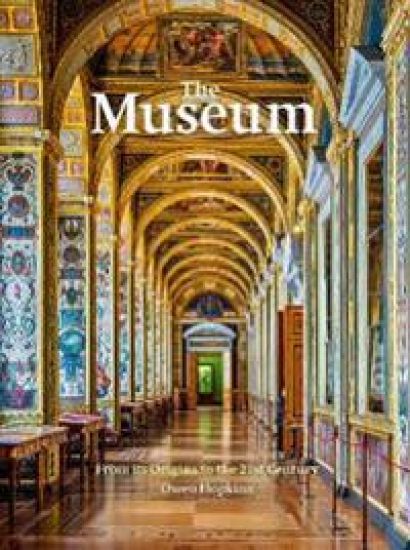
The Museum

Owen Hopkins

Frances Lincoln Publishers Ltd
2021
sidottu
This beautiful and visually immersive book charts the fascinating story of the institution of the Museum, from its origins to the present. Visited by millions around the world every year, museums are one of mankind’s most essential creations. They tell stories, shape cultural identities and hold valuable insight about the past and about the future. This captivating works charts a path from the very first collection through to the latest developments in cultural curation, interweaving Using examples of the greatest cultural institutions to shape the narrative, historian and academic Owen Hopkins draws on his deep knowledge of the field to outline the history of the museum movement. Tracking the evolution from princely collections in Europe and the Enlightenment’s classically inspired temples of curiosities, via the public museums of the late nineteenth century, on to today’s global era oficonic buildings designed by the world’s leading architects, this book is a vital work for anyone seeking to understand the development of the museum into what it is today. Over the course of five chapters filled with stunning imagery that highlights the beauty of these venerated buildings, the origins of key institutions are revealed, including: Louvre Metropolitan Museum of Art British Museum Tate Modern The Hermitage Guggenheim Smithsonian Institute Acropolis Museum Also outlined are the motivations of the architects, curators and patrons who have shaped how we experience the modern museum, a cast that includes names such as King George II, Napoleon, Henry Clay Frick, Peggy Guggenheim, Andrew Carnegie, Alfred Barr, Frank Lloyd Wright, Le Corbusier, Frank Gehry, Richard Rogers, Nicholas Serota and Zaha Hadid. By examining how these venues became intrinsic to our shared cultural experience, analysing the changing roles they play in society and questioning what the future holds in a digital age, this book is for anyone who has stood in awe at the spectacle of a museum.
Postmodern Architecture

Postmodern Architecture

Owen Hopkins

Phaidon Press Ltd
2020
sidottu
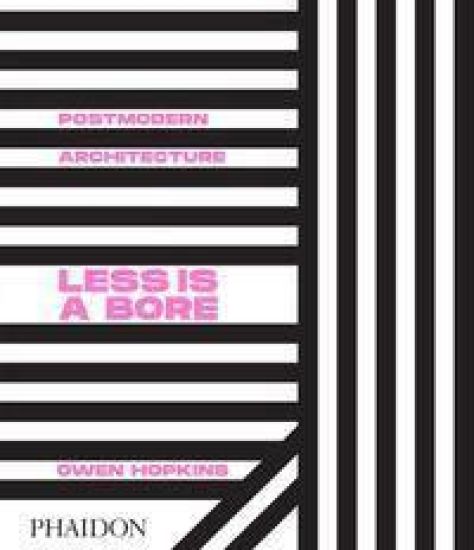
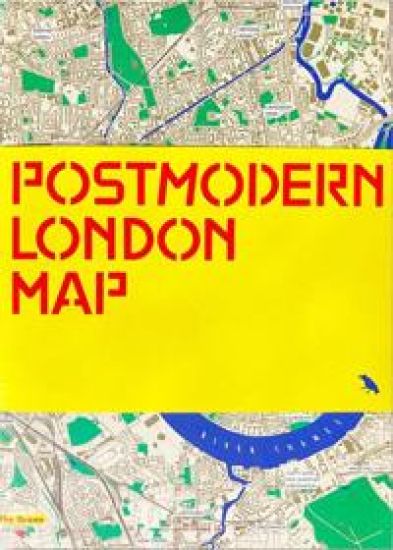
A curated collection of Postmodern architecture in all its glorious array of vivid non-conformity This unprecedented book takes its subtitle from Postmodernist icon Robert Venturi's spirited response to Mies van der Rohe's dictum that ‘less is more'. One of the 20th century's most controversial styles, Postmodernism began in the 1970s, reached a fever pitch of eclectic non-conformity in the 1980s and 90s, and after nearly 40 years is now enjoying a newfound popularity. Postmodern Architecture showcases examples of the movement in a rainbow of hues and forms from around the globe.
Reading Architecture Second Edition

Reading Architecture Second Edition

Owen Hopkins

Quercus Publishing
2023
pokkari
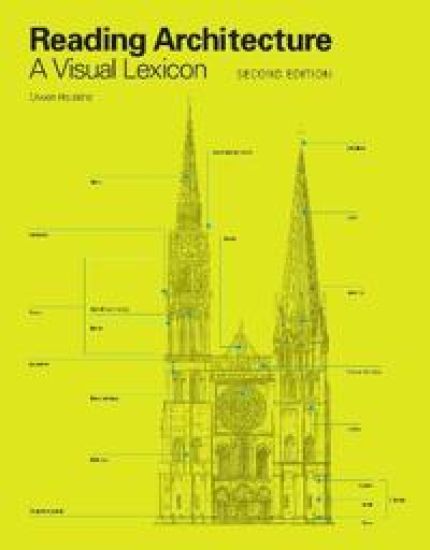
Anyone with an interest in buildings and the built environment would do well to purchase a copy of Owen Hopkins' book. - MonocleThis innovative and unique book is a visual guide to the buildings that surround us. Architectural features are pinpointed and labelled on images of buildings so that, unlike with other architectural dictionaries, you don't have to know the name before looking it up. Clear line drawings and extensive colour photographs illustrate each of the main building types, from forts to churches, stately homes to skyscrapers. The individual structural elements and materials common to all buildings are then explained, whether in Classical, Gothic or Modernist style. A comprehensive glossary completes the book. This revised edition includes an expanded section on modern structures and materials, as well as the latest styles and concepts from the last ten years. A must for all lovers of architecture and those who would like to learn moreOver 11,000 copies sold in English worldwide Covers all key building types and styles, from cathedrals to skyscrapers, Classical to contemporary. Each building type is illustrated with extensive photographs and annotated drawings Contains a comprehensive glossary of architectural terms
From the Shadows

From the Shadows

Owen Hopkins

Reaktion Books
2015
sidottu
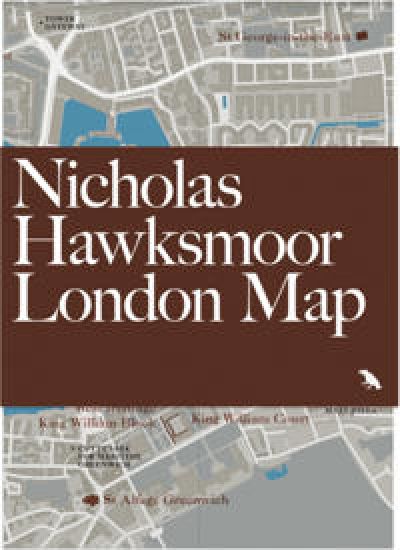
Nicholas Hawksmoor (1662–1736) is considered one of Britain’s greatest architects. He was involved in the grandest architectural projects of his age and today is best known for his London churches – six idiosyncratic edifices of white Portland stone that remain standing today, proud and tall in the otherwise radically changed cityscape. Until comparatively recently, however, Hawksmoor was thought to be, at best, a second-rate talent: merely Sir Christopher Wren’s slightly odd apprentice, or the practically minded assistant to Sir John Vanbrugh. This book brings to life the dramatic story of Hawksmoor’s resurrection from the margins of history.Charting Hawksmoor’s career and the decline of his reputation, Owen Hopkins offers fresh interpretations of many of his famous works – notably his three East End churches – and shows how over their history Hawksmoor’s buildings have been ignored, abused, altered, recovered and celebrated. Hopkins also charts how, as Hawksmoor returned to prominence during the twentieth century, his work caught the eye of observers as diverse as T. S. Eliot, James Stirling, Robert Venturi and, most famously, Peter Ackroyd, whose novel Hawksmoor (1985) popularized the mythical association of his work with the occult. Meanwhile, passionate campaigns were mounted to save and restore Hawksmoor’s churches, reflecting the strange hold his architecture can have over observers. There is surely no other body of work in British architectural history with the same capacity to intrigue and inspire, perplex and provoke as Hawksmoor’s has done for nearly three centuries.
Architectural Styles

Architectural Styles

Owen Hopkins

Laurence King Publishing
2014
nidottu
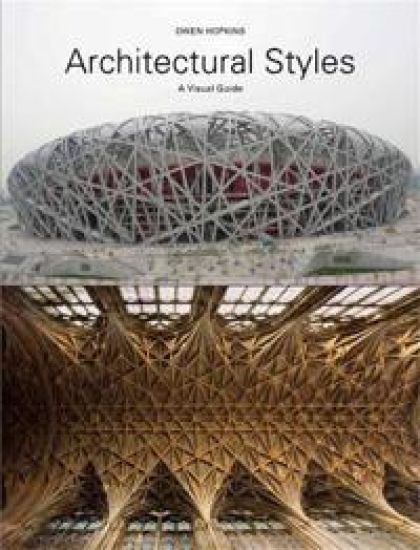
Have you ever wondered what the difference is between Gothic and Gothic Revival, or how to distinguish between Baroque and Neoclassical? This guide makes extensive use of photographs to identify and explain the characteristic features of nearly 300 buildings. The result is a clear and easy-to-navigate guide to identifying the key styles of western architecture from the classical age to the present day.
The Brutalists

The Brutalists

Owen Hopkins

PHAIDON PRESS LTD
2023
sidottu
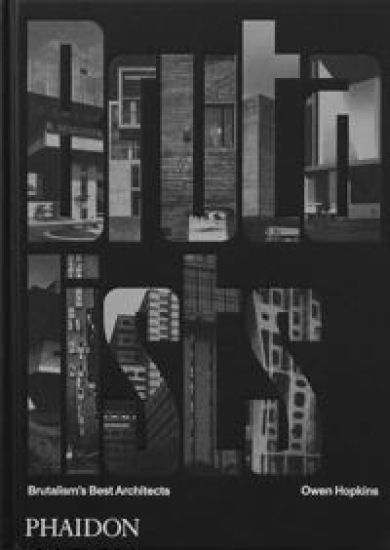
As seen in The New York Times, Architectural Digest, Forbes, ELLE Decoration, and Design Milk An unprecedented survey of more than 250 architects who continue to define one of the most polarizing yet celebrated of styles Brutalist architecture inspires a passionate response, be it adulation or contempt. There is no disputing, however, that the style produces some of the world’s most breathtaking buildings. This landmark volume documents the movement as never before, by profiling the architects behind the style. Featuring more than 250 historic and contemporary architects (organised alphabetically) along with specially selected examples of their work, this book includes international icons alongside those who are less well known or who have for too long been neglected, providing a unique record of this influential global architecture movement. The book includes 350 stunning images of more than 200 iconic Brutalist buildings, alongside fresh and surprising masterworks from 1936 to the present day, creating the ultimate companion to the Brutalist masters. Featured architects include: John Andrews; João Batista Vilanova Artigas; Lina Bo Bardi; Bogdan Bogdanovic; Marcel Breuer; Douglas Cardinal; André-Jacques Dunoyer de Segonzac; Bertrand Goldberg; Erno Goldfinger; Jadwiga Grabowska-Hawrylak; Agustín Hernández Navarro; John M. Johansen; Louis I. Kahn; Denys Lasdun; Le Corbusier; João da Gama Filgueiras Lima; Alberto Linner Díaz; Owen Luder; Paulo Mendes da Rocha; Oscar Niemeyer; William L. Pereira; Affonso Eduardo Reidy; Paul Rudolph; Moshe Safdie; Alison Smithson; Clorindo Testa; Decio Tozzi; and John Carl Warnecke
Mavericks

Mavericks

Owen Hopkins

Royal Academy of Arts
2017
sidottu
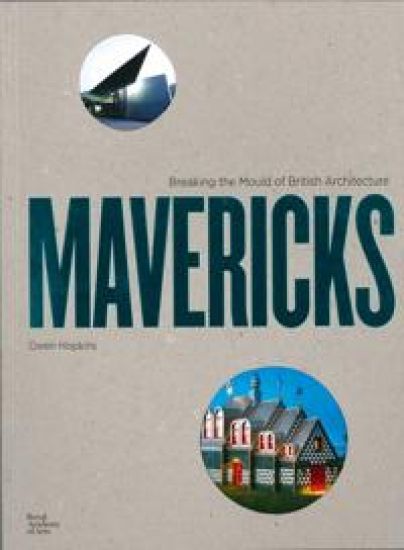
The history of architecture is a story of continual innovation, and yet at certain points within that story comes an architect whose vision completely defies convention. Mavericks: Architects who Broke the Mould of British Architecture focuses on twelve such figures from the history of British architecture, including Sir John Soane, Charles Rennie Mackintosh, Cedric Price and Zaha Hadid. From the stripped-back classicism of Soane's Dulwich Picture Gallery to Hadid's neofuturistic Olympic Aquatics Centre in London, their work is bold, frequently controversial, often radical; it is architecture that actively resists being pigeon-holed into a particular style or period. What connects this naturally disparate group of free creative spirits is the way each has charted their own course, often deliberately evading conventions of taste, fashion and ways of working. This book will offer a fresh take on their work, establishing new and sometimes surprising historical connections, while posing an intriguing alternative narrative to the history of British Architecture.
Lost Futures

Lost Futures

Owen Hopkins

Royal Academy of Arts
2021
sidottu
Lost Futures looks in detail at the wide range of buildings constructed in Britain between 1945 and 1979. Although their bold architectural aspirations reflected the forward-looking social ethos of the postwar era, many have since been either demolished or altered beyond recognition.Photographs taken at the time of their completion are accompanied by expertly researched captions that examine the buildings' design, creation, the ideals they embodied and the reasons for their eventual destruction. Lost Futures covers many building types, from housing to factories, commercial spaces and power stations, and presents the work of both iconic and lesser-known architects. The author charts the complex reasons that led to the loss of these projects' ambitious futures, and assesses whether some might one day be recaptured.
The Return of the Past

The Return of the Past

Owen Hopkins; Erin McKellar

Sir John Soane's Museum
2018
nidottu
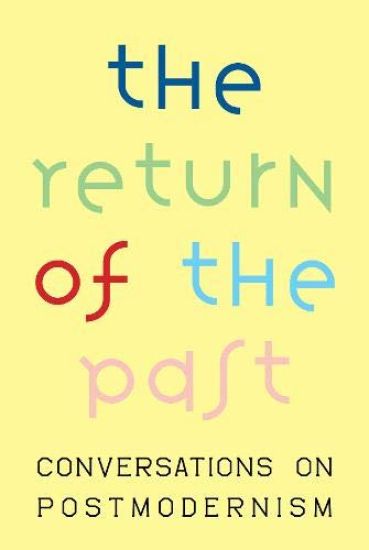
In the late 1970s a new movement emerged in British architecture. Driven by a feeling that modern architecture had run its course, architects associated with what became known as postmodernism began to explore how architecture might once again draw from historical styles, re-engage with cities as they existed, and employ colour, symbol and decoration in ways that were meaningful and popular. This book features interviews with eight figures associated with postmodernism, reflecting on the inspiration, ideas and influence of a pivotal moment in British architecture. Featuring: Laurence Bain, Jeremy Dixon, Terry Farrell, Piers Gough and Rex Wilkinson, Charles Jencks, Edward Jones, John Outram and Michael Wilford.
A History of Western Architecture Seventh Edition

A History of Western Architecture Seventh Edition

Owen Hopkins; David Watkin

Quercus Publishing
2023
pokkari
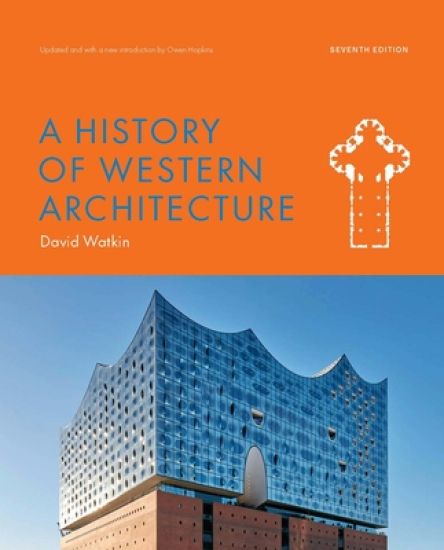
Far and away the best narrative of western architecture in existence...it stands out as an intellectual triumph. - Sir John SummersonIn this highly acclaimed, classic reference work David Watkin traces the history of western architecture from the earliest times in Mesopotamia and Egypt to the late twentieth century. For this seventh edition, revising author Owen Hopkins provides a new introduction contextualizing Watkin's approach. The final chapter on the twenty-first century has been completely rewritten by Hopkins, who brings the story right up to date with the inclusion of such topics as re-use, digital cities and virtual architecture.
Chris Dyson Architects

Chris Dyson Architects

Dominic Bradbury; Owen Hopkins

LUND HUMPHRIES PUBLISHERS LTD
2023
sidottu
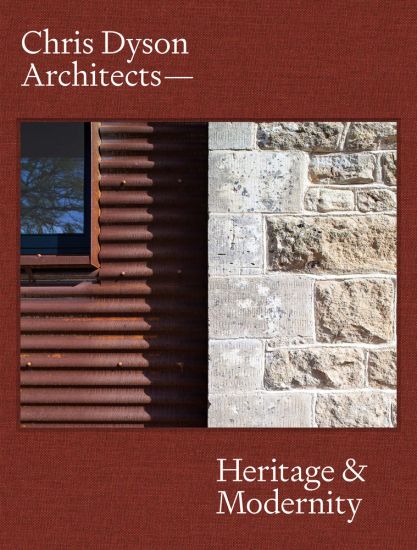
This volume is the first sustained critical analysis of Chris Dyson Architects' philosophy, approach and body of work, focusing on their particular expertise in being sensitive to a sense of place, history and heritage. Since Chris Dyson set up his own practice in 2004, he has gained a reputation as one of the foremost historic conservation architects, poetically adapting listed buildings for the 21st century. Yet the vigour and originality he brings to his work is far from a conventional conservation approach. Dyson’s is an architecture seemingly with no rules, yet at the same time marked by a recurring interest in the interactions between people and city, culture and community. Dyson’s work is indelibly associated with Spitalfields, having lived and worked there since 1990, and it’s a place that provides a fitting metaphor for his architecture. Over its history Spitalfields has been subject to recurring waves of new people and cultures, which has created somewhere defined by its rich cultural and material layers. And so with Dyson’s architecture, in which, even with new-build projects, there’s an overriding sense of different elements – be they material, temporal or cultural – coming together into coherent wholes. Dyson’s is that rare thing: architecture that feels old and new at the same time.
Eric Parry

Eric Parry

Eric Parry; Owen Hopkins; David Leatherbarrow

Sir John Soane's Museum
2019
nidottu
Eric Parry is an architect who draws. This book is about the interaction and relationship of those two practices – of drawing as design tool, and as a way of engaging with the world in which buildings exist and which they play a part in shaping The text comprises a dialogue between Parry and Owen Hopkins, Senior Curator at Sir John Soane’s Museum, London, which is the venue for an exhibition of Parry’s drawings in spring 2019. The dialogue is arranged across ten episodes relating to themes and ideas that emerged over a series of conversations during the creation of the exhibition. At once self-contained and part of a broader whole, these episodes meditate on the meaning, medium and culture of architectural drawing. An essay by David Leatherbarrow, Professor of Architecture and Chairman of the Graduate Group in Architecture at the University of Pennsylvania, offers a counterpoint, providing both a detailed analysis of Parry’s drawing practice and context for the preceding dialogue.