Kirjojen hintavertailu. Mukana 11 699 587 kirjaa ja 12 kauppaa.

Kirjahaku

Etsi kirjoja tekijän nimen, kirjan nimen tai ISBN:n perusteella.

10 kirjaa tekijältä P. A. Davidson

An Introduction to Electrodynamics

An Introduction to Electrodynamics

P. A. Davidson

Oxford University Press
2019
sidottu
An Introduction to Electrodynamics provides an excellent foundation for those undertaking a course on electrodynamics, providing an in-depth yet accessible treatment of topics covered in most undergraduate courses, but goes one step further to introduce advanced topics in applied physics, such as fusions plasmas, stellar magnetism and planetary dynamos. Some of the central ideas behind electromagnetic waves, such as three-dimensional wave propagation and retarded potentials, are first explored in the introductory background chapters and explained in the much simpler context of acoustic waves. The inclusion of two chapters on magnetohydrodynamics provides the opportunity to illustrate the basic theory of electromagnetism with a wide variety of physical applications of current interest. Davidson places great emphasis on the pedagogical development of ideas throughout the text, and includes many detailed illustrations and well-chosen exercises to complement the material and encourage student development.

An Introduction to Electrodynamics

An Introduction to Electrodynamics

P. A. Davidson

Oxford University Press
2019
nidottu
An Introduction to Electrodynamics provides an excellent foundation for those undertaking a course on electrodynamics, providing an in-depth yet accessible treatment of topics covered in most undergraduate courses, but goes one step further to introduce advanced topics in applied physics, such as fusions plasmas, stellar magnetism and planetary dynamos. Some of the central ideas behind electromagnetic waves, such as three-dimensional wave propagation and retarded potentials, are first explored in the introductory background chapters and explained in the much simpler context of acoustic waves. The inclusion of two chapters on magnetohydrodynamics provides the opportunity to illustrate the basic theory of electromagnetism with a wide variety of physical applications of current interest. Davidson places great emphasis on the pedagogical development of ideas throughout the text, and includes many detailed illustrations and well-chosen exercises to complement the material and encourage student development.
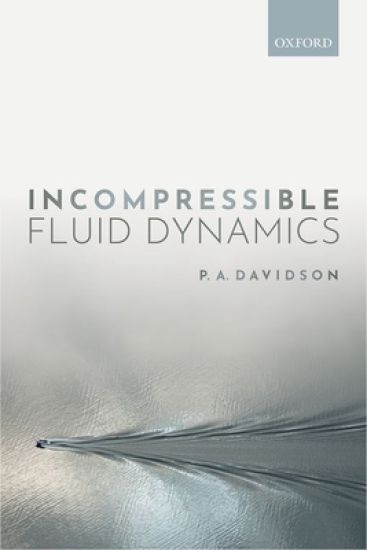
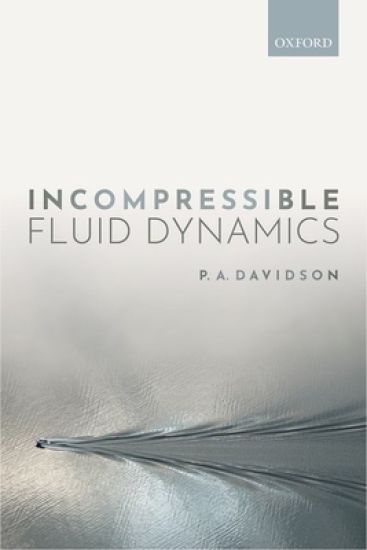
Incompressible Fluid Dynamics

Incompressible Fluid Dynamics

P. A. Davidson

Oxford University Press
2021
sidottu
Incompressible Fluid Dynamics is a textbook for graduate and advanced undergraduate students of engineering, applied mathematics, and geophysics. The text comprises topics that establish the broad conceptual framework of the subject, expose key phenomena, and play an important role in the myriad of applications that exist in both nature and technology. The first half of the book covers topics that include the inviscid equations of Euler and Bernoulli, the Navier-Stokes equation and some of its simpler exact solutions, laminar boundary layers and jets, potential flow theory with its various applications to aerodynamics, the theory of surface gravity waves, and flows with negligible inertia, such as suspensions, lubrication layers, and swimming micro-organisms. The second half is more specialised. Vortex dynamics, which is so essential to many natural phenomena in fluid mechanics, is developed in detail. This is followed by chapters on stratified fluids and flows subject to a strong background rotation, both topics being central to our understanding of atmospheric and oceanic flows. Fluid instabilities and the transition to turbulence are also covered, followed by two chapters on fully developed turbulence. The text is largely self-contained, and aims to combine mathematical precision with a breadth of engineering and geophysical applications. Throughout, physical insight is given priority over mathematical detail.
Incompressible Fluid Dynamics

Incompressible Fluid Dynamics

P. A. Davidson

Oxford University Press
2021
nidottu
Incompressible Fluid Dynamics is a textbook for graduate and advanced undergraduate students of engineering, applied mathematics, and geophysics. The text comprises topics that establish the broad conceptual framework of the subject, expose key phenomena, and play an important role in the myriad of applications that exist in both nature and technology. The first half of the book covers topics that include the inviscid equations of Euler and Bernoulli, the Navier-Stokes equation and some of its simpler exact solutions, laminar boundary layers and jets, potential flow theory with its various applications to aerodynamics, the theory of surface gravity waves, and flows with negligible inertia, such as suspensions, lubrication layers, and swimming micro-organisms. The second half is more specialised. Vortex dynamics, which is so essential to many natural phenomena in fluid mechanics, is developed in detail. This is followed by chapters on stratified fluids and flows subject to a strong background rotation, both topics being central to our understanding of atmospheric and oceanic flows. Fluid instabilities and the transition to turbulence are also covered, followed by two chapters on fully developed turbulence. The text is largely self-contained, and aims to combine mathematical precision with a breadth of engineering and geophysical applications. Throughout, physical insight is given priority over mathematical detail.
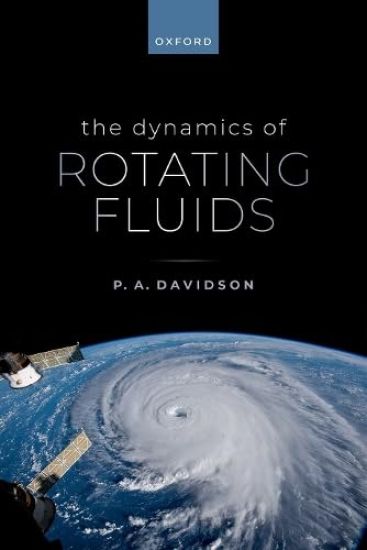
The Dynamics of Rotating Fluids

The Dynamics of Rotating Fluids

P. A. Davidson

Oxford University Press
2024
sidottu
This textbook on rotating fluid dynamics combines a pedagogical development of theoretical ideas with a description and analysis of many of the fascinating examples of rotating flows found in nature. The book is self-contained, starting in Part I with introductory chapters on fluid dynamics and waves. The largest section of the book is Part II, where a broad theoretical framework is developed for rotating flows, including Ekman layers, inertial waves, Taylor columns, Rossby waves, precession, instabilities, rotating convection, vortex breakdown, and rotating turbulence. The book ends, in Part III, with an analysis of some naturally occurring rotating flows, including tornadoes and dust devils, tidal vortices, tropical cyclones, convection in planetary cores, zonal winds in planetary atmospheres, and astrophysical accretion discs. Davidson presents a unique combination of a deep but broad theoretical framework with a detailed discussion of many naturally occurring flows. Moreover, the book places great emphasis on the pedagogical development of theoretical ideas and the physical insight that brings.
The Dynamics of Rotating Fluids

The Dynamics of Rotating Fluids

P. A. Davidson

Oxford University Press
2024
nidottu
This textbook on rotating fluid dynamics combines a pedagogical development of theoretical ideas with a description and analysis of many of the fascinating examples of rotating flows found in nature. The book is self-contained, starting in Part I with introductory chapters on fluid dynamics and waves. The largest section of the book is Part II, where a broad theoretical framework is developed for rotating flows, including Ekman layers, inertial waves, Taylor columns, Rossby waves, precession, instabilities, rotating convection, vortex breakdown, and rotating turbulence. The book ends, in Part III, with an analysis of some naturally occurring rotating flows, including tornadoes and dust devils, tidal vortices, tropical cyclones, convection in planetary cores, zonal winds in planetary atmospheres, and astrophysical accretion discs. Davidson presents a unique combination of a deep but broad theoretical framework with a detailed discussion of many naturally occurring flows. Moreover, the book places great emphasis on the pedagogical development of theoretical ideas and the physical insight that brings.
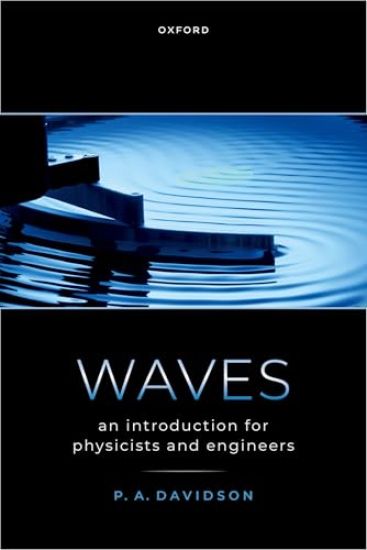
Waves

Waves

P. A. Davidson

Oxford University Press
2025
nidottu
Waves are ubiquitous in nature. Waves: An Introduction for Physicists and Engineers focuses primarily on the classical fields of elasticity, fluid mechanics, and electrodynamics, also exploring waves in biology, chemistry, and modern physics, such as waves in quantum mechanics and general relativity. Common themes emerge which can lead to a cross-fertilisation of the sciences. Starting with Part I, the textbook provides an overview of the fundamental properties of wave propagation. This is followed by a discussion of elastic waves in or on solids, including seismic waves. Waves in fluids are then covered in Part III, which includes a detailed discussion of linear and nonlinear surface gravity waves, internal waves in rotating and stratified fluids, and acoustic waves. Electromagnetic waves are discussed in Part IV, where an overview of Maxwell's equations is followed by a detailed discussion of confined waves in transmission lines and waveguides, free-space waves in three dimensions, radiation from compact dipole sources, and radiation from relativistic charges. The book ends, in Part V, with an overview of more specialized wave types. The topics covered include gravitational waves in astrophysics, chemical waves, traffic waves, and waves in biology, including the propagation of nerve impulses along neurons and pulsatile blood flow. Throughout, Davidson seeks to combine a pedagogical development of theoretical ideas, and the physical insights which that brings, with a description and analysis of the many fascinating examples of waves found in nature.
Waves

Waves

P. A. Davidson

Oxford University Press
2025
sidottu
Waves are ubiquitous in nature. Waves: An Introduction for Physicists and Engineers focuses primarily on the classical fields of elasticity, fluid mechanics, and electrodynamics, also exploring waves in biology, chemistry, and modern physics, such as waves in quantum mechanics and general relativity. Common themes emerge which can lead to a cross-fertilisation of the sciences. Starting with Part I, the textbook provides an overview of the fundamental properties of wave propagation. This is followed by a discussion of elastic waves in or on solids, including seismic waves. Waves in fluids are then covered in Part III, which includes a detailed discussion of linear and nonlinear surface gravity waves, internal waves in rotating and stratified fluids, and acoustic waves. Electromagnetic waves are discussed in Part IV, where an overview of Maxwell's equations is followed by a detailed discussion of confined waves in transmission lines and waveguides, free-space waves in three dimensions, radiation from compact dipole sources, and radiation from relativistic charges. The book ends, in Part V, with an overview of more specialized wave types. The topics covered include gravitational waves in astrophysics, chemical waves, traffic waves, and waves in biology, including the propagation of nerve impulses along neurons and pulsatile blood flow. Throughout, Davidson seeks to combine a pedagogical development of theoretical ideas, and the physical insights which that brings, with a description and analysis of the many fascinating examples of waves found in nature.
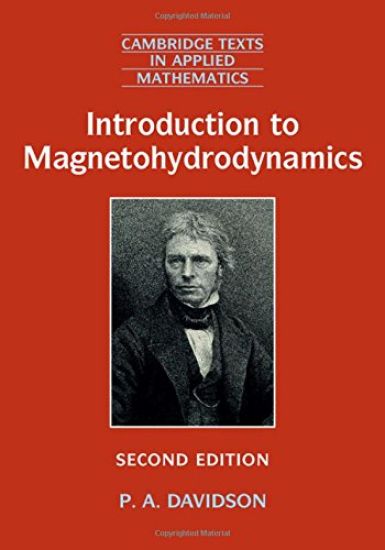
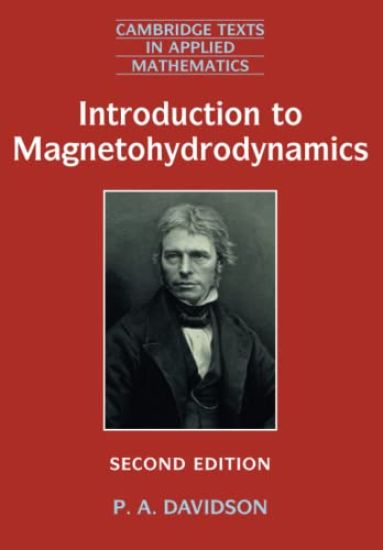
Introduction to Magnetohydrodynamics

Introduction to Magnetohydrodynamics

P. A. Davidson

Cambridge University Press
2016
sidottu
Magnetohydrodynamics (MHD) plays a crucial role in astrophysics, planetary magnetism, engineering and controlled nuclear fusion. This comprehensive textbook emphasizes physical ideas, rather than mathematical detail, making it accessible to a broad audience. Starting from elementary chapters on fluid mechanics and electromagnetism, it takes the reader all the way through to the latest ideas in more advanced topics, including planetary dynamos, stellar magnetism, fusion plasmas and engineering applications. With the new edition, readers will benefit from additional material on MHD instabilities, planetary dynamos and applications in astrophysics, as well as a whole new chapter on fusion plasma MHD. The development of the material from first principles and its pedagogical style makes this an ideal companion for both undergraduate students and postgraduate students in physics, applied mathematics and engineering. Elementary knowledge of vector calculus is the only prerequisite.
Introduction to Magnetohydrodynamics

Introduction to Magnetohydrodynamics

P. A. Davidson

Cambridge University Press
2016
pokkari
Magnetohydrodynamics (MHD) plays a crucial role in astrophysics, planetary magnetism, engineering and controlled nuclear fusion. This comprehensive textbook emphasizes physical ideas, rather than mathematical detail, making it accessible to a broad audience. Starting from elementary chapters on fluid mechanics and electromagnetism, it takes the reader all the way through to the latest ideas in more advanced topics, including planetary dynamos, stellar magnetism, fusion plasmas and engineering applications. With the new edition, readers will benefit from additional material on MHD instabilities, planetary dynamos and applications in astrophysics, as well as a whole new chapter on fusion plasma MHD. The development of the material from first principles and its pedagogical style makes this an ideal companion for both undergraduate students and postgraduate students in physics, applied mathematics and engineering. Elementary knowledge of vector calculus is the only prerequisite.