Kirjojen hintavertailu. Mukana 11 717 486 kirjaa ja 12 kauppaa.

Kirjahaku

Etsi kirjoja tekijän nimen, kirjan nimen tai ISBN:n perusteella.

9 kirjaa tekijältä Pascal Boyer

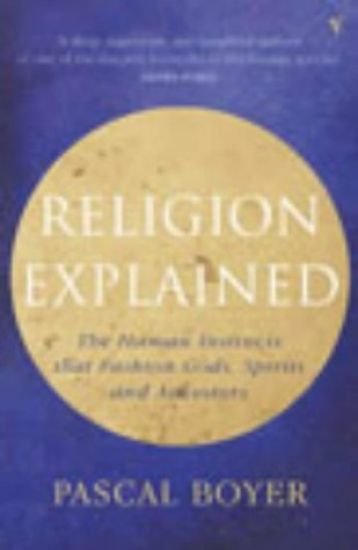
Religion Explained

Religion Explained

Pascal Boyer

Vintage
2002
pokkari
Do they have features in common and why does religion persist in the face of science? Pascal Boyer shows how experimental findings in cognitive science, evolutionary biology and cultural anthropology are now providing precise answers to these general questions, and providing, for the first time, real answers to the question: Why do we believe?
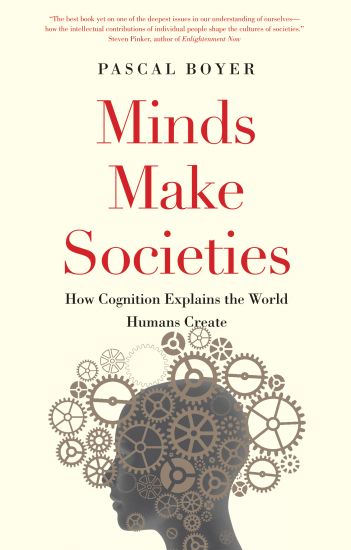
Minds Make Societies

Minds Make Societies

Pascal Boyer

Yale University Press
2020
pokkari
A watershed book that masterfully integrates insights from evolutionary biology, genetics, psychology, economics, and more to explore the development and workings of human societies “There is no good reason why human societies should not be described and explained with the same precision and success as the rest of nature.” Thus argues evolutionary psychologist Pascal Boyer in this uniquely innovative book. Integrating recent insights from evolutionary biology, genetics, psychology, economics, and other fields, Boyer offers precise models of why humans engage in social behaviors such as forming families, tribes, and nations, or creating gender roles. In fascinating, thought-provoking passages, he explores questions such as, Why is there conflict between groups? Why do people believe low-value information such as rumors? Why are there religions? What is social justice? What explains morality? Boyer provides a new picture of cultural transmission that draws on the pragmatics of human communication, the constructive nature of memory in human brains, and human motivation for group formation and cooperation.
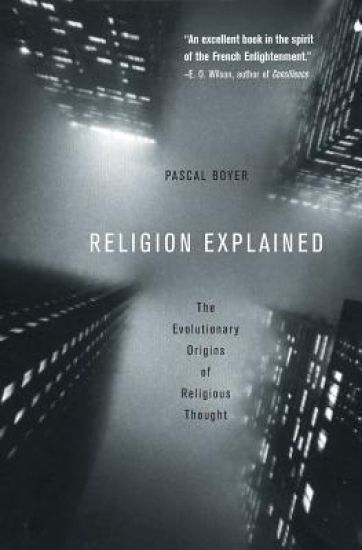
Religion Explained

Religion Explained

Pascal Boyer

Basic Books
2002
pokkari
Many of our questions about religion, says renowned anthropologist Pascal Boyer, are no longer mysteries. We are beginning to know how to answer questions such as "Why do people have religion?" Using findings from anthropology, cognitive science, linguistics, and evolutionary biology, Religion Explained shows how this aspect of human consciousness is increasingly admissible to coherent, naturalistic explanation. This brilliant and controversial book gives readers the first scientific explanation for what religious feeling is really about, what it consists of, and where it comes from.
The Naturalness  of Religious Ideas

The Naturalness of Religious Ideas

Pascal Boyer

University of California Press
1994
sidottu
Why do people have religious ideas? And why thosereligious ideas? The main theme of Pascal Boyer's work is that important aspects of religious representations are constrained by universal properties of the human mind-brain. Experimental results from developmental psychology, he says, can explain why certain religious representations are more likely to be acquired, stored, and transmitted by human minds. Considering these universal constraints, Boyer proposes an exciting new answer to the question of why similar religious representations are found in so many different cultures. His work will be widely discussed by cultural anthropologists, psychologists, and students of religion, history, and philosophy.
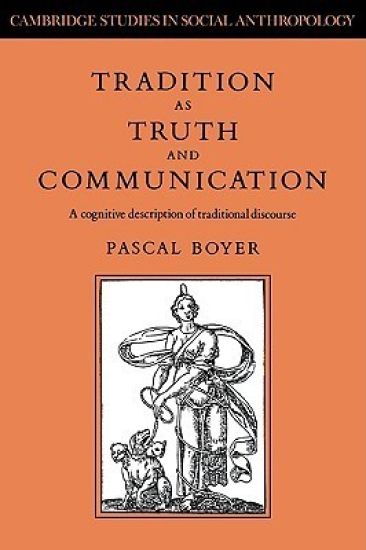
Tradition as Truth and Communication

Tradition as Truth and Communication

Pascal Boyer

Cambridge University Press
2006
pokkari
Tradition is a central concept in the social sciences, but it is commonly treated as unproblematic. Dr Boyer insists that social anthropology requires a theory of tradition, its constitution and transmission. He treats tradition 'as a type of interaction which results in the repetition which results in the repetition of certain communicative events', and therefore as a form of social action. Tradition as Truth and Communication deals particularly with oral communication and focuses on the privileged role of licensed speakers and the ritual contexts in which certain aspects of tradition are characteristically transmitted. Drawing on cognitive psychology, Dr Boyer proposes a set of general hypotheses to be tested by ethnographic field research. He has opened up an important new field for investigation within social anthropology.
Tradition as Truth and Communication

Tradition as Truth and Communication

Pascal Boyer

Cambridge University Press
1990
sidottu
Tradition is a central concept in the social sciences, but it is commonly treated as unproblematic. Dr Boyer insists that social anthropology requires a theory of tradition, its constitution and transmission. He treats tradition 'as a type of interaction which results in the repetition which results in the repetition of certain communicative events', and therefore as a form of social action. Tradition as Truth and Communication deals particularly with oral communication and focuses on the privileged role of licensed speakers and the ritual contexts in which certain aspects of tradition are characteristically transmitted. Drawing on cognitive psychology, Dr Boyer proposes a set of general hypotheses to be tested by ethnographic field research. He has opened up an important new field for investigation within social anthropology.
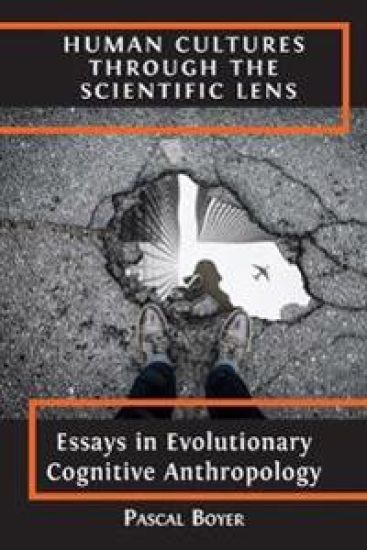
Human Cultures through the Scientific Lens

Human Cultures through the Scientific Lens

Pascal Boyer

Open Book Publishers
2021
pokkari
This volume brings together a collection of seven articles previously published by the author, with a new introduction reframing the articles in the context of past and present questions in anthropology, psychology and human evolution. It promotes the perspective of 'integrated' social science, in which social science questions are addressed in a deliberately eclectic manner, combining results and models from evolutionary biology, experimental psychology, economics, anthropology and history. It thus constitutes a welcome contribution to a gradually emerging approach to social science based on E. O. Wilson's concept of 'consilience'.Human Cultures through the Scientific Lens spans a wide range of topics, from an examination of ritual behaviour, integrating neuro-science, ethology and anthropology to explain why humans engage in ritual actions (both cultural and individual), to the motivation of conflicts between groups. As such, the collection gives readers a comprehensive and accessible introduction to the applications of an evolutionary paradigm in the social sciences. This volume will be a useful resource for scholars and students in the social sciences (particularly psychology, anthropology, evolutionary biology and the political sciences), as well as a general readership interested in the social sciences.
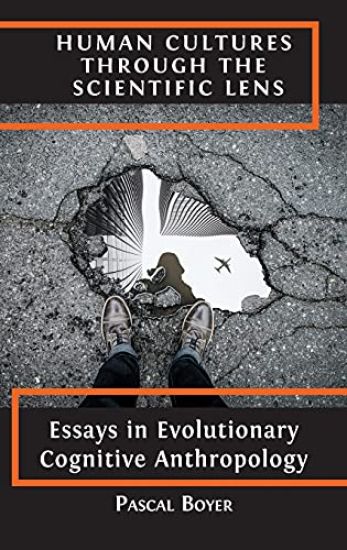
Human Cultures through the Scientific Lens

Human Cultures through the Scientific Lens

Pascal Boyer

Open Book Publishers
2021
sidottu
This volume brings together a collection of seven articles previously published by the author, with a new introduction reframing the articles in the context of past and present questions in anthropology, psychology and human evolution. It promotes the perspective of 'integrated' social science, in which social science questions are addressed in a deliberately eclectic manner, combining results and models from evolutionary biology, experimental psychology, economics, anthropology and history. It thus constitutes a welcome contribution to a gradually emerging approach to social science based on E. O. Wilson's concept of 'consilience'.Human Cultures through the Scientific Lens spans a wide range of topics, from an examination of ritual behaviour, integrating neuro-science, ethology and anthropology to explain why humans engage in ritual actions (both cultural and individual), to the motivation of conflicts between groups. As such, the collection gives readers a comprehensive and accessible introduction to the applications of an evolutionary paradigm in the social sciences. This volume will be a useful resource for scholars and students in the social sciences (particularly psychology, anthropology, evolutionary biology and the political sciences), as well as a general readership interested in the social sciences.