Kirjojen hintavertailu. Mukana 11 238 995 kirjaa ja 12 kauppaa.

Kirjahaku

Etsi kirjoja tekijän nimen, kirjan nimen tai ISBN:n perusteella.

3 kirjaa tekijältä Pascal Menoret

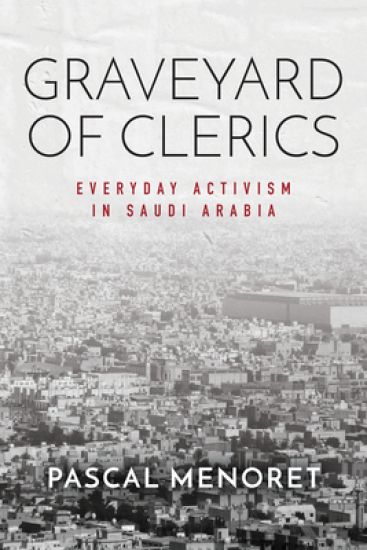
Graveyard of Clerics

Graveyard of Clerics

Pascal Menoret

Stanford University Press
2020
sidottu
The inside story of political protest in Saudi Arabia—on the ground, in the suburbs, and in the face of increasing state repression. Graveyard of Clerics takes up two global phenomena intimately linked in Saudi Arabia: urban sprawl and religious activism. Saudi suburbia emerged after World War II as citizens fled crowded inner cities. Developed to encourage a society of docile, isolated citizens, suburbs instead opened new spaces for political action. Religious activists in particular turned homes, schools, mosques, and summer camps into resources for mobilization. With the support of suburban grassroots networks, activists won local elections and found opportunities to protest government actions—until they faced a new wave of repression under the current Saudi leadership. Pascal Menoret spent four years in Saudi Arabia in the places where today's Islamic activism first emerged. With this book, he tells the stories of the people actively countering the Saudi state and highlights how people can organize and protest even amid increasingly intense police repression. This book changes the way we look at religious activism in Saudi Arabia. It also offers a cautionary tale: the ongoing repression by Saudi elites—achieved often with the complicity of the international community—is shutting down grassroots political movements with significant consequences for the country and the world.
Joyriding in Riyadh

Joyriding in Riyadh

Pascal Menoret

Cambridge University Press
2014
sidottu
Why do young Saudis, night after night, joyride and skid cars on Riyadh's avenues? Who are these 'drifters' who defy public order and private property? What drives their revolt? Based on four years of fieldwork in Riyadh, Pascal Menoret's Joyriding in Riyadh explores the social fabric of the city and connects it to Saudi Arabia's recent history. Car drifting emerged after Riyadh was planned, and oil became the main driver of the economy. For young rural migrants, it was a way to reclaim alienating and threatening urban spaces. For the Saudi state, it jeopardized its most basic operations: managing public spaces and enforcing law and order. A police crackdown soon targeted car drifting, feeding a nation-wide moral panic led by religious activists who framed youth culture as a public issue. This book retraces the politicization of Riyadh youth and shows that, far from being a marginal event, car drifting is embedded in the country's social violence and economic inequality.
Graveyard of Clerics

Graveyard of Clerics

Pascal Menoret

Stanford University Press
2020
pokkari
The inside story of political protest in Saudi Arabia—on the ground, in the suburbs, and in the face of increasing state repression. Graveyard of Clerics takes up two global phenomena intimately linked in Saudi Arabia: urban sprawl and religious activism. Saudi suburbia emerged after World War II as citizens fled crowded inner cities. Developed to encourage a society of docile, isolated citizens, suburbs instead opened new spaces for political action. Religious activists in particular turned homes, schools, mosques, and summer camps into resources for mobilization. With the support of suburban grassroots networks, activists won local elections and found opportunities to protest government actions—until they faced a new wave of repression under the current Saudi leadership. Pascal Menoret spent four years in Saudi Arabia in the places where today's Islamic activism first emerged. With this book, he tells the stories of the people actively countering the Saudi state and highlights how people can organize and protest even amid increasingly intense police repression. This book changes the way we look at religious activism in Saudi Arabia. It also offers a cautionary tale: the ongoing repression by Saudi elites—achieved often with the complicity of the international community—is shutting down grassroots political movements with significant consequences for the country and the world.