Kirjojen hintavertailu. Mukana 11 605 268 kirjaa ja 12 kauppaa.

Kirjahaku

Etsi kirjoja tekijän nimen, kirjan nimen tai ISBN:n perusteella.

26 kirjaa tekijältä Pat Mora

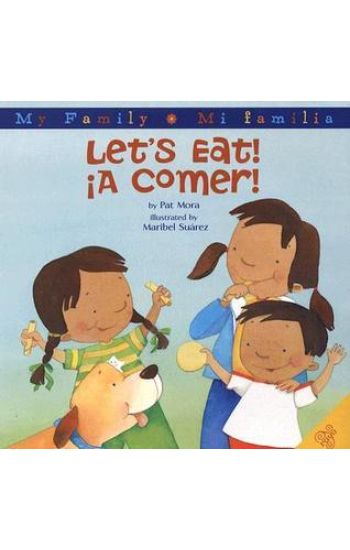
Let's Eat!/A Comer!: Bilingual Spanish-English
It's dinnertime. Look at all the food Es la hora de cenar. Cu nta comida There are beans, tortillas, Hay frijoles, tortillas, cheese, and even a green salad. queso y hasta una ensalada de lechuga. Enough for the whole family. Suficiente para toda la familia. Let's sit down and enjoy it together. Vamos a sentarnos y disfrutarla juntos. Let's eat A comer This first book in the new bilingual My Family/Mi familia series will charm readers with its close-knit family--a family that is grateful for its many blessings. ste es el primer libro de la nueva serie My Family/ Mi familia. Los lectores quedar n encantados con esta familia unida que se siente agradecida por todas sus bendiciones.
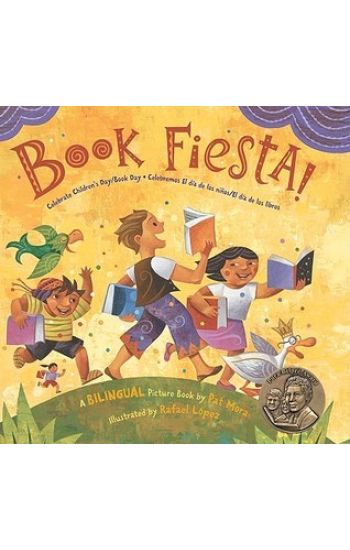
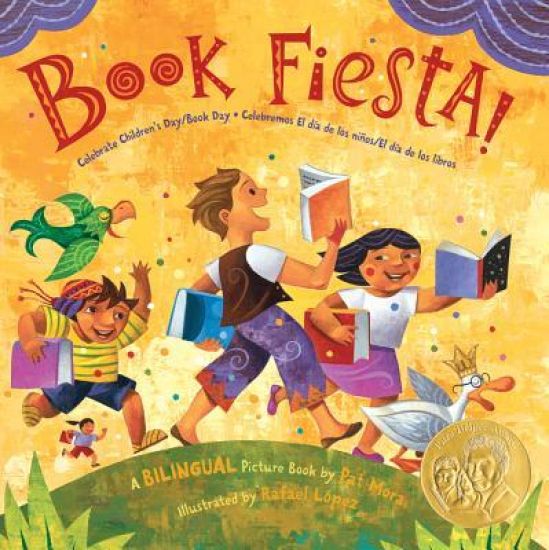
Book Fiesta!: Celebrate Children's Day/Book Day; Celebremos El Dia de Los Ninos/El Dia de Los Libros (Bilingual Spanish-English)
This Pura Belpr Award-winning picture book is a bilingual ride through the joyous history of Children's Day/El d a de los ni os.Children's Day/Book Day; El d a de los ni os/El d a de los libros has been observed on April 30th for over twelve years. Founder Pat Mora's jubilant celebration of this day features imaginative text and lively illustrations by award-winning illustrator Rafael L pez that will turn this bilingual fiesta into a hit for story time Toon Toon The book includes a letter from the author and suggestions for celebrating Children's Day /El d a de los ni os.
Book Fiesta!: Celebrate Children's Day/Book Day; Celebremos El Dia de Los Ninos/El Dia de Los Libros (Bilingual Spanish-English)
This beautiful Pura Belpr Award-winning picture book is a bilingual ride through the joyous history of Children's Day/El d a de los ni os.Children's Day/Book Day; El d a de los ni os/El d a de los libros is observed each year on April 30. Founder Pat Mora's jubilant celebration of this day features imaginative text and lively illustrations by award-winning illustrator Rafael L pez that will turn this bilingual fiesta into a hit for story time Toon Toon The book includes a letter from the author and suggestions for celebrating Children's Day /El d a de los ni os, making the book perfect for gifting, family celebrations, and classroom sharing.
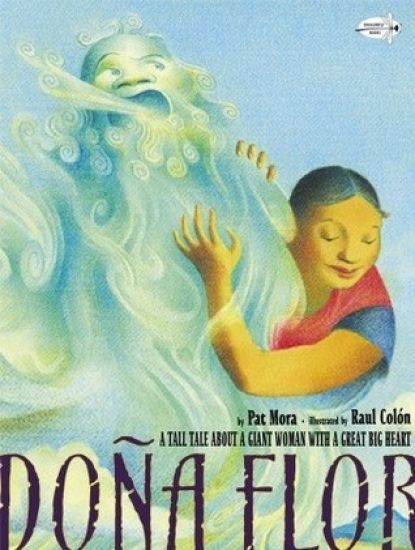
Dona Flor: A Tall Tale about a Giant Woman with a Great Big Heart
Do a Flor is a giant lady who lives in a tiny village in the American Southwest. Popular with her neighbors, she lets the children use her flowers as trumpets and her leftover tortillas as rafts. Flor loves to read, too, and she can often be found reading aloud to the children. One day, all the villagers hear a terrifying noise: it sounds like a huge animal bellowing just outside their village. Everyone is afraid, but not Flor. She wants to protect her beloved neighbors, so with the help of her animal friends, she sets off for the highest mesa to find the creature. Soon enough, though, the joke is on Flor and her friends, who come to rescue her, as she discovers the small secret behind that great big noise. The creators of Tom s and the Library Lady, Pat Mora and Raul Col n, have once again joined together. This time they present a heartwarming and humorous original tall tale--peppered with Spanish words and phrases--about a giant lady with a great big heart.
Doña Flor

Doña Flor

Pat Mora

Dragonfly Books
2005
nidottu
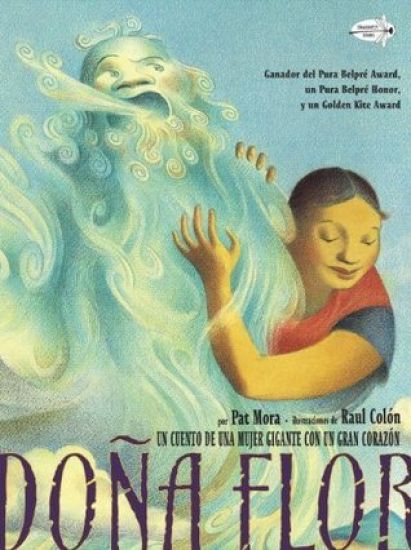
Do a Flor, una se ora gigante, vive en un pueblo peque ito. Los vecinos la adoran y ella adora a sus vecinos. Deja que los ni os utilicen las flores de su jard n como trompetas y las tortillas como balsas. A Do a Flor le encanta leer y con frecuencia puedes verla rodeada de ni os que escuchan atentos las historias de sus libros. Un d a un tremendo aullido de animal proveniente de las afueras del pueblo asusta a todos, incluida a Do a Flor. Quiere proteger a sus queridos vecinos y con ayuda de sus amigos los animales, se dirige hacia la meseta m s alta, en busca de la terrible fiera. Pero cu l no ser su sorpresa cuando descubre que tras semejante estruendo se esconde una peque a criatura. Pat Mora y Raul Col n colaboran nuevamente para traernos una tierna historia sobre una mujer gigante con un coraz n muy grande. El ltimo trabajo de Pat Mora y Raul Col n, Tom s y la se ora de la biblioteca, fue galardonado con el premio Tom s Rivera.
A Piñata in a Pine Tree: A Latino Twelve Days of Christmas: A Christmas Holiday Book for Kids
An award-winning author and a rising star artist have put a festive Latino twist on "The Twelve Days of Christmas," populating it with pi atas in place of partridges, plus burritos bailando (dancing donkeys), lunitas cantando (singing moons), and much more, all displayed in the most vivid colors imaginable. In this version a little girl receives gifts from a secret amiga, whose identity is a sweet surprise at the book's conclusion. There are things to find and count in Spanish on every page, with pronunciations provided right in the pictures and a glossary and music following the story. This joyous fiesta will warm even the coldest of hearts.
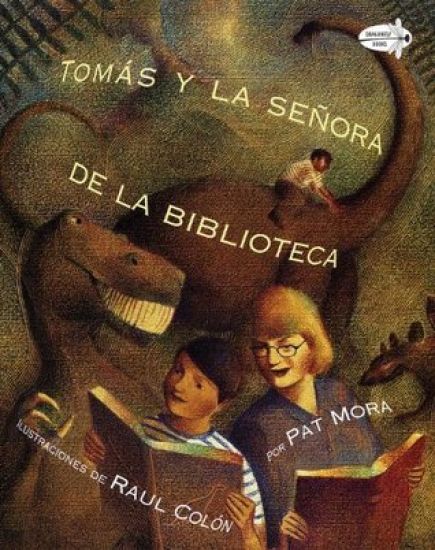
Tomas y la Senora De la Biblioteca (Tomas and the Library Lady Spanish Edition)
Tom s es hijo de trabajadores migratorios. Cada verano, l y su familia viajan a Iowa, desde Tejas, donde pasan largos y dif ciles d as en el campo, durante la temporada de la cosecha de frutas y verduras. Por las noches, a veces, se re nen a escuchar los maravillosos cuentes de pap grande, el abuelo de Tom s. Con el tiempo, Tom s se aprende todos los cuentos de memoria. Hay muchos otros cuentos en la biblioteca - le dice pap grande. Y al d a siguiente, Tom s conoce a la se ora de la biblioteca, quien le abre las puertas a un nuevo mundo. Este alentador cuento de Pat Mora es acerca de la ni ez de Tom s Rivera, quien lleg a ser rector de la Universidad de California en Riverside.
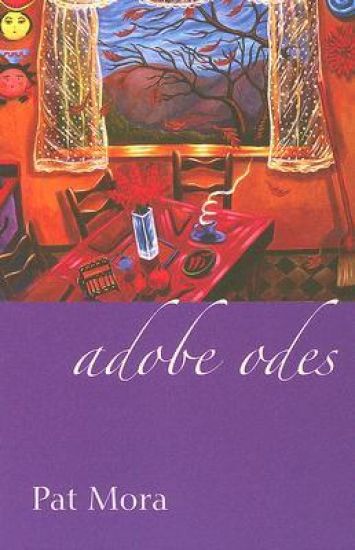
Adobe Odes

Adobe Odes

Pat Mora

University of Arizona Press
2006
nidottu
Wine-sipping syllables, a communion of bones, impetuous pinches of chile, and parrot-sassy guacamole. With a melange of aromas and tastes, colors and sounds, award-winning poet Pat Mora invites readers into her home in this new collection of forty-nine odes. Inspired by Pablo Neruda's Odas Elemantales and reinvented with a Latina identity, Mora celebrates the ordinary in lyrics that are anything but. Her poetry is the poetry of space?house patterns and adobe constructions, nd the human rhythms that happen inside. It is also the poetry of what she loves?chocolate, books, dandelions, church bells, hope, courage, and even rain. Thick with the microcultures of foodstuffs, family, places, regions, deities, spirits, and literary figures, Mora's adobe universe is luscious and tactile, elemental and dynamic. From family gossip and beauty secrets, to women darning hand-me-downs, to reluctant hands carrying bodies across borders, Mora traverses the tangled threads of culture, community, family, gender, and injustice. Her vivid observations together with her deft handling of symmetry and meter make her poetry uniquely insightful, subtle, and elegant. Sprinkled with Spanish and plenty of spice, each ode is a sensory flurry of mind and body. Together they make a cauldron of flavorful, simmering language. They are meant to be savored as they slowly stir the soul.
Agua Santa / Holy Water

Agua Santa / Holy Water

Pat Mora

University of Arizona Press
2007
nidottu
Drawing on oral and lyrical traditions, this book honors the grace and spirit of mothers, daughters, lovers, and goddesses. From a tribute to Frida Kahlo to advice from an Aztec goddess, the poems explore the intimate and sacred spaces of borderlands through many voices: a revolutionary, a domestic worker, a widow.
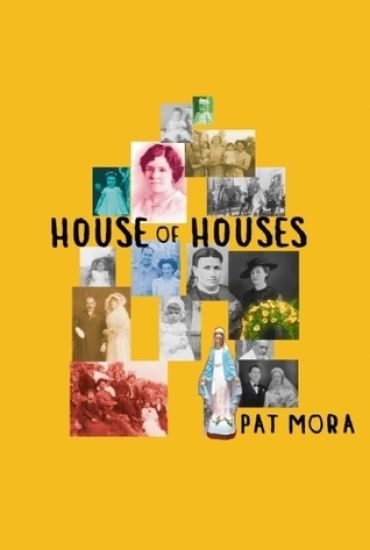
House of Houses

House of Houses

Pat Mora

University of Arizona Press
2008
nidottu
Combining poetic language and the traditions of magic realism to paint a vivid portrait of her family, Pat Mora's House of Houses is an unconventional memoir that reads as if every member, death notwithstanding, is in one room talking, laughing, and crying. In a salute to the Day of the Dead, the story begins with a visit to the cemetery in which all of her deceased relatives come alive to share stories of the family, literally bringing the food to their own funerals. From there the book covers a year in the life of her clan, revealing the personalities and events that Mora herself so desperately yearns to know and understand. ?Poet Mora's complex and dramatic family history comprises more than personal reminiscences: it also embraces resonant aspects of Mexican American history. Mora recounts her family's traumatic exodus from Mexico to escape the violence of Pancho Villa and his forces and their struggles to begin new lives in another country. To anchor her psychologically rich, dramatic, sometimes funny, often touching multigenerational tale, Mora uses the image of a house the house of houses during a single year, a fruitful metaphor that allows her to dwell on the bright beauty of flowers, birds, and trees, emblems of the loving legacy of her nurturing family.??Booklist ?Mora has created an ingenious structure for these recollections of her extended family, of their lives and the tales they share about the family's history. Woven in with these memories are recipes, fragments of songs and poetry, folk remedies, and jokes, all of the small matters that most reveal a family's identity. In a language deftly mingling the natural cadences of speech and precise, poetic imagery, Mora believably summons up both a group of tough, loving, idiosyncratic survivors and a vivid, detailed portrait of life in the Southwest in [the last] century.? ?Kirkus Reviews
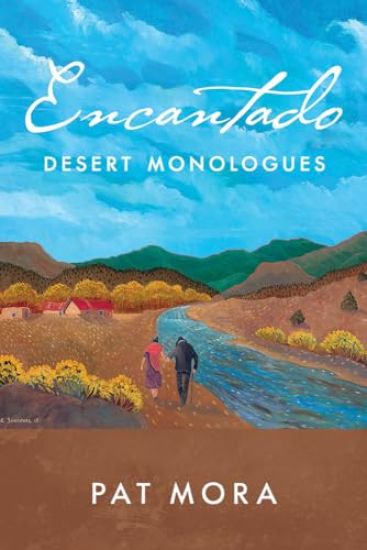
Encantado

Encantado

Pat Mora

University of Arizona Press
2025
nidottu
Inspired by Edgar Lee Masters's Spoon River Anthology and Thornton Wilder's Our Town, Pat Mora brings us the poetic monologues of Encantado, an imagined southwestern town. Each poem forms a story that reveals the complex and emotional journeys we take through life. Mora meanders through the thoughts of Encantado's residents - the mothers and sisters, brothers and fathers in whom we see slivers of ourselves and our loved ones - and paints a portrait of a community through its inhabitants' own diverse voices. Even the river has a voice we understand. Inspired by both the real and imagined stories around her, Mora transports us to the heart of what it means to join in a chorus of voices. A community. A town. Encantado.
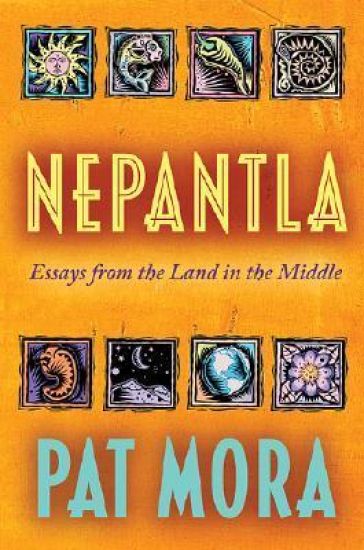
Nepantla

Nepantla

Pat Mora

University of New Mexico Press
2008
nidottu
A Latina poet, educator, mother, national speaker, and literacy advocate, Pat Mora is a cultural resident of nepantla - a Nahuatl word meaning 'land in the middle.' In this important collection of essays, Mora explores personal issues and political responsibilities. Characterized by a keen sense of community, ""Nepantla"" is an important contribution to American letters.
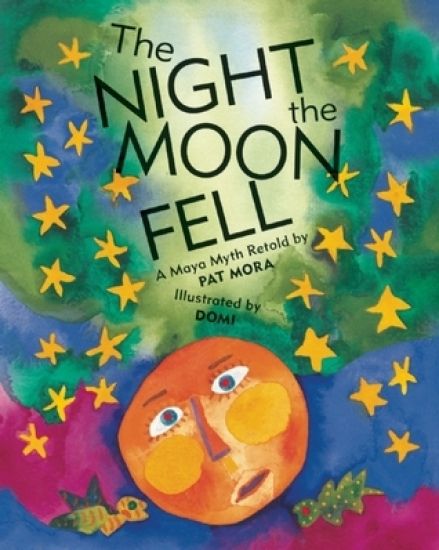
The Night the Moon Fell

The Night the Moon Fell

Pat Mora

Groundwood Books Ltd ,Canada
2009
pokkari
A whoosh from her grandfather’s blowgun causes Luna, the moon, to tumble from the sky and fall to pieces in the dark ocean. To save herself, she enlists the help of little fish to glue her back together. At last she rises, beautiful and round again, taking her new friends with her to create the Milky Way. Pat Mora and artist Domi have taken the traditional Mopan Maya (Belize) myth ? in which the moon is a young weaver and the Milky Way a fish ? and transformed it into a magical story of friendship and imagination.
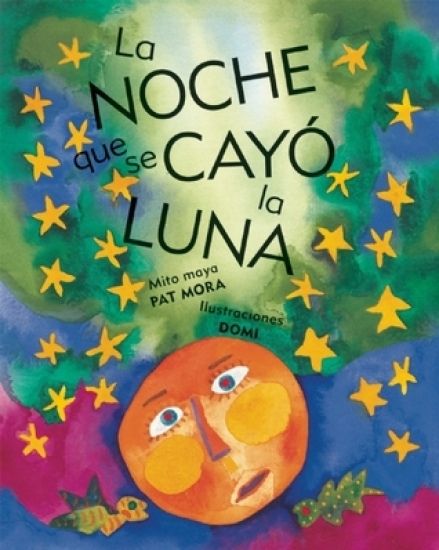
La noche que se cay la luna

La noche que se cay la luna

Pat Mora

Groundwood Books Ltd ,Canada
2009
pokkari
Un uuchchcht de la cerbatana del abuelo, hace que Luna se caiga del cielo y se parta en pedazos sobre el fondo del mar. Esta leyenda maya, llena de hermosos detalles, cuenta cómo la luna debe rescatarse a sí misma, con la ayuda de los pececitos quienes la pegan de nuevo. Cuando al fin se levanta, hermosa y redonda otra vez, invita a sus amigos a vivir en el cielo y a formar la Vía Láctea.
My Singing Nana

My Singing Nana

Pat Mora

Magination Press, (American Psychological Association)
2019
sidottu
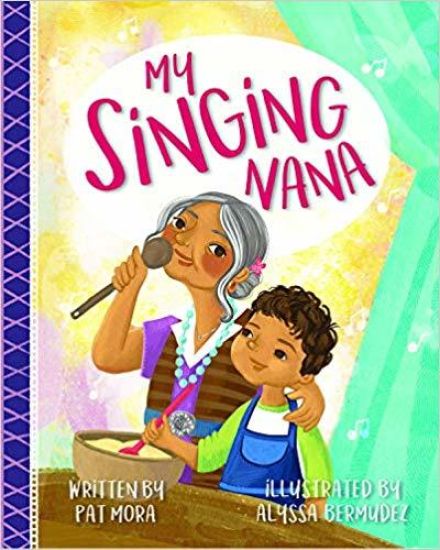
My Singing Nana is a compassionate tribute to families dealing with Alzheimer's Disease. This story celebrates the ideals of family, heritage, and happy memories, showing kids that no matter how their loved one might change they always have ways to maintain their special connection. “In a context perfect for the understanding of elementary-aged children, award-winning author and acclaimed literary critic Pat Mora sheds light on the everyday experiences of a family member living with dementia. In My Singing Nana Mora eloquently demonstrates that, despite the hefty toll this devastating disease can take, grandchildren and children alike can still enjoy meaningful and heartfelt relationships with those affected.” —San Francisco Book Review
Abuelos

Abuelos

Pat Mora

Groundwood Books Ltd ,Canada
2011
pokkari
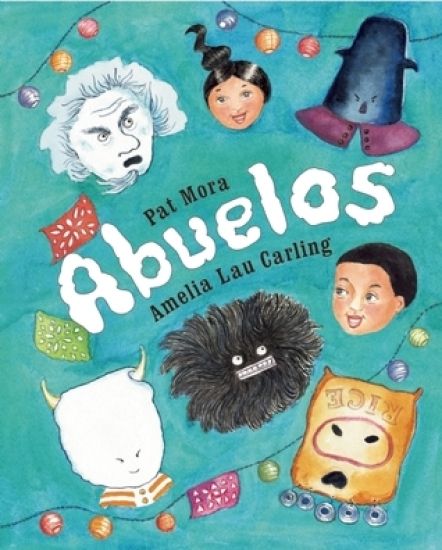
International Latino Book Award for Best English Picture Book In this delightful story two young children, Ray and Amelia, discover the old New Mexican tradition of los abuelos for the first time. Long ago, in the cold midwinter of northern New Mexico, village men would go up into the mountains, disguise themselves as scary old men and then go down to the village to see who had been good and who had been bad. The abuelos -- wearing masks and covered with soot -- would tease the children and then have them sing or dance around the fire. This midwinter masquerade, which contains elements of Spanish and indigenous Pueblo culture, as well as sharing features common to solstice celebrations in other parts of the world, died out in New Mexico for a time, but has been occasionally revived in recent years.
Abuelos

Abuelos

Pat Mora

Groundwood Books Ltd ,Canada
2011
pokkari
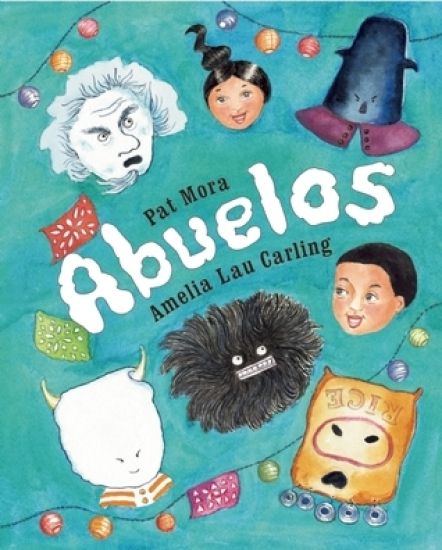
This edition is in Spanish. In this delightful story two young children, Ray and Amelia, discover the old New Mexican tradition of "los abuelos" for the first time. Long ago, in the cold midwinter of northern New Mexico, village men would go up into the mountains, disguise themselves as scary old men and then go down to the village to see who had been good and who had been bad. The abuelos -- wearing masks and covered with soot -- would tease the children and then have them sing or dance around the fire. This midwinter masquerade, which contains elements of Spanish and indigenous Pueblo culture, as well as sharing features common to solstice celebrations in other parts of the world, died out in New Mexico for a time, but has been occasionally revived in recent years.