Kirjojen hintavertailu. Mukana 11 708 476 kirjaa ja 12 kauppaa.

Kirjahaku

Etsi kirjoja tekijän nimen, kirjan nimen tai ISBN:n perusteella.

14 kirjaa tekijältä Pat Thomson

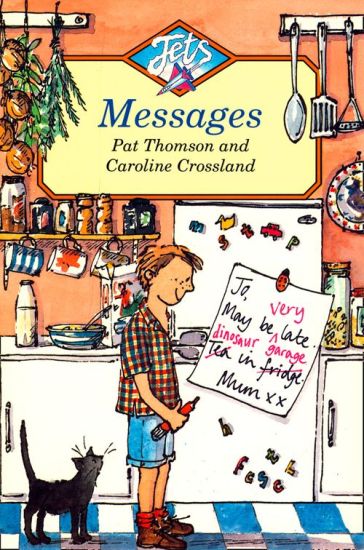
Messages

Messages

Pat Thomson

HARPERCOLLINS PUBLISHERS
1993
nidottu
Jo always keeps his marker-pen handy for sending messages, but when he and his friends try to rescue the boy down the road they may have sent one message too many. "Jets" is a series of simple stories with lots of pictures, for children who are just beginning to enjoy reading.
Lost Property

Lost Property

Pat Thomson

HARPERCOLLINS PUBLISHERS
1995
pokkari
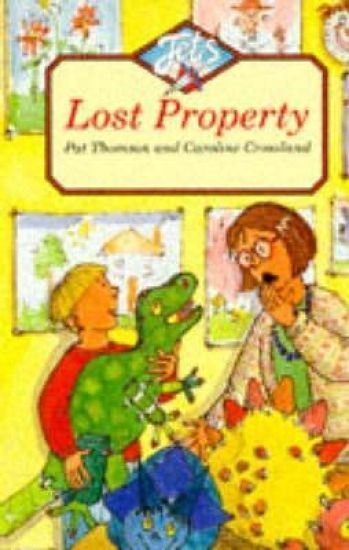
Alex has got some explaining to do. Everything he takes to school disappears, but Mrs Etheridge, Alex's teacher, isn't at all prepared for some of his explanations.
Read with Oxford: Stage 6: Badcats

Read with Oxford: Stage 6: Badcats

Pat Thomson

Oxford University Press
2018
nidottu
The Badcat gang are the hairiest, scariest animals around! At least they think they are, until they meet a little hamster called Hattie Books with chapters are a great way for children who are reading independently to extend reading stamina and progress to the next step of their reading journey. This Read with Oxford Stage 6 book has short chapters, an engaging story and humorous illustrations. Tips for parents and fun after-reading activities help you to get the most out of the story. Featuring much-loved characters, great authors, engaging storylines and fun activities, Read with Oxford offers an exciting range of carefully levelled reading books to build your child's reading confidence. Find practical advice, free eBooks and fun activities to help your child progress on oxfordowl.co.uk. Let's get them flying!
Refining Your Academic Writing

Refining Your Academic Writing

Pat Thomson

TAYLOR FRANCIS LTD
2022
sidottu
Revision is often taken as a largely instrumental process which happens after the real work of writing is done – it is an unavoidable and tedious process. Refining by contrast is imaginative work, it requires craft, connoisseurship and courage, and builds knowledge about academic writing purposes and practices. Refining Your Academic Writing will help you complete your writing project and provides a reading, revising and rewriting repertoire that you can adapt and add to. It offers ways to think about revision and a basic tool kit which will help you to identify what needs your attention and why.This accessible book draws on and extends some of the most heavily used posts on Thomson’s popular academic writing blog Patter, as well as tried and tested writing workshops. Exercises and templates are grounded in research and theory on doctoral experience and academic writing. The wider context of academic writing is clearly explained, and the terms used to describe text refinement build understanding while challenging taken-for-granted assumptions about revision, editing and proof-reading.Written with a light touch, this book is ideal reading for doctoral and early career researchers, and provides strategies needed to support the writing revision process. The ‘Insider Guides to Success in Academia’ offers support and practical advice to doctoral students and early-career researchers. Covering the topics that really matter, but which often get overlooked, this indispensable series provides practical and realistic guidance to address many of the needs and challenges of trying to operate, and remain, in academia.These neat pocket guides fill specific and significant gaps in current literature. Each book offers insider perspectives on the often implicit rules of the game – the things you need to know but usually aren’t told by institutional postgraduate support, researcher development units, or supervisors – and will address a practical topic that is key to career progression. They are essential reading for doctoral students, early-career researchers, supervisors, mentors, or anyone looking to launch or maintain their career in academia.
Refining Your Academic Writing

Refining Your Academic Writing

Pat Thomson

TAYLOR FRANCIS LTD
2022
nidottu
Revision is often taken as a largely instrumental process which happens after the real work of writing is done – it is an unavoidable and tedious process. Refining by contrast is imaginative work, it requires craft, connoisseurship and courage, and builds knowledge about academic writing purposes and practices. Refining Your Academic Writing will help you complete your writing project and provides a reading, revising and rewriting repertoire that you can adapt and add to. It offers ways to think about revision and a basic tool kit which will help you to identify what needs your attention and why.This accessible book draws on and extends some of the most heavily used posts on Thomson’s popular academic writing blog Patter, as well as tried and tested writing workshops. Exercises and templates are grounded in research and theory on doctoral experience and academic writing. The wider context of academic writing is clearly explained, and the terms used to describe text refinement build understanding while challenging taken-for-granted assumptions about revision, editing and proof-reading.Written with a light touch, this book is ideal reading for doctoral and early career researchers, and provides strategies needed to support the writing revision process. The ‘Insider Guides to Success in Academia’ offers support and practical advice to doctoral students and early-career researchers. Covering the topics that really matter, but which often get overlooked, this indispensable series provides practical and realistic guidance to address many of the needs and challenges of trying to operate, and remain, in academia.These neat pocket guides fill specific and significant gaps in current literature. Each book offers insider perspectives on the often implicit rules of the game – the things you need to know but usually aren’t told by institutional postgraduate support, researcher development units, or supervisors – and will address a practical topic that is key to career progression. They are essential reading for doctoral students, early-career researchers, supervisors, mentors, or anyone looking to launch or maintain their career in academia.
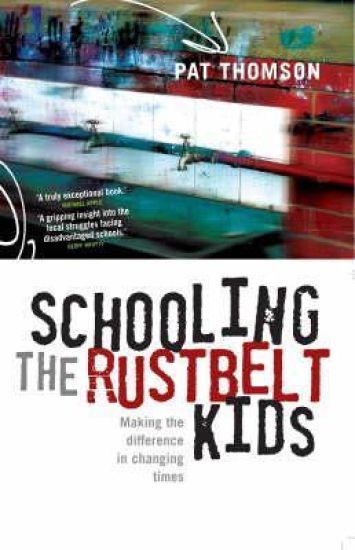
Schooling the Rustbelt Kids

Schooling the Rustbelt Kids

Pat Thomson

Routledge
2021
sidottu
'A truly exceptional book.' - Michael W. Apple, University of Wisconsin, Madison'A gripping insight into the local struggles facing disadvantaged schools and a compelling account of the injustice of their place in the bigger picture.' - Professor Geoff Whitty, Director, Institute of Education, University of LondonSchools in disadvantaged areas are struggling in the current economic and political environment. Like schools everywhere they are being asked to do more with less, but they face more obstacles.In recent years education policy has shifted from a holistic approach to learning to a focus on narrow educational outcomes: spelling, reading and writing. Thomson shows that this approach penalises disadvantaged schools and argues that educational and social disadvantage are inextricably linked in children's everyday lives.Examining primary and secondary schools in disadvantaged areas in a post-industrial ('rustbelt') city, Schooling the Rustbelt Kids reopens the debate about inequality in schooling. It provides concrete evidence that typical government policies in the Western world are not working, and that they are helping to create a permanent underclass. Thomson outlines an alternative whole of government approach to policy, which builds on those school programs that do make a real difference to educational outcomes.Thomson also emphasises the influence of local geography. Schools are coloured by particular neighbourhoods, permeated by national and global events, and tangled in complex networks of social relations. Interventions which work in one school may not work in others.
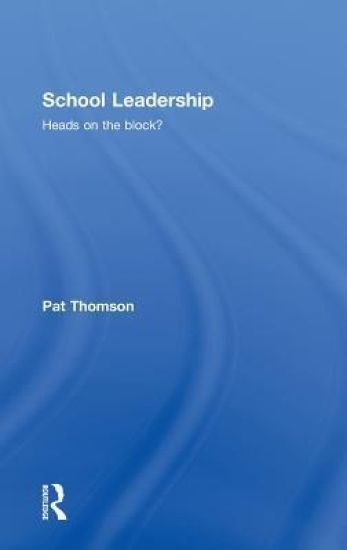
School Leadership - Heads on the Block?
Most teachers become heads for idealistic reasons, wanting to make a difference to the lives of children and young people. Yet serving heads suggest the job is getting harder, talking openly about stress and leaving the job. Many teachers now see headship as a risky business, and succession planning, while necessary, will not on its own be sufficient to attract the diverse range of applicants required to satisfactorily fill leadership positions. School Leadership: Heads on the Block addresses this shortage. It suggests there is no crisis in supply per se, but that schools in some locations find it difficult to attract the ‘right people with the right stuff’. The book examines the expectations of heads, the hours they are expected to work and the nature of everyday demands. It proposes that ‘sudden death’ accountabilities act as a major disincentive to potential applicants, and outlines a series of policy measures to tackle the kinds of daily pressures heads now experience.Key features of the book: draws on a wide range of material, ranging from published research, interviews and media clippings to popular films and children’s novels makes extensive use of headteachers’ words and stories based in the author’s own experiences of headship, tackling issues that leadership books often ignore.The book will be of interest to headteachers, headteachers’ professional associations, teachers and those who study teaching. It will be useful to policy makers, those responsible for the education of potential heads and for headteacher professional development.
School Leadership - Heads on the Block?
Most teachers become heads for idealistic reasons, wanting to make a difference to the lives of children and young people. Yet serving heads suggest the job is getting harder, talking openly about stress and leaving the job. Many teachers now see headship as a risky business, and succession planning, while necessary, will not on its own be sufficient to attract the diverse range of applicants required to satisfactorily fill leadership positions. School Leadership: Heads on the Block addresses this shortage. It suggests there is no crisis in supply per se, but that schools in some locations find it difficult to attract the ‘right people with the right stuff’. The book examines the expectations of heads, the hours they are expected to work and the nature of everyday demands. It proposes that ‘sudden death’ accountabilities act as a major disincentive to potential applicants, and outlines a series of policy measures to tackle the kinds of daily pressures heads now experience.Key features of the book: draws on a wide range of material, ranging from published research, interviews and media clippings to popular films and children’s novels makes extensive use of headteachers’ words and stories based in the author’s own experiences of headship, tackling issues that leadership books often ignore.The book will be of interest to headteachers, headteachers’ professional associations, teachers and those who study teaching. It will be useful to policy makers, those responsible for the education of potential heads and for headteacher professional development.
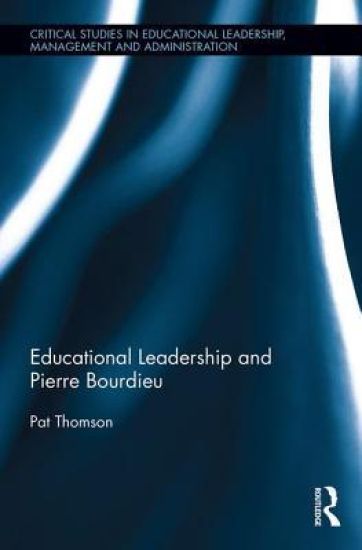
Educational Leadership and Pierre Bourdieu
Pierre Bourdieu was one of the most important thinkers of the twentieth century. He argued for, and practiced, rigorous and reflexive scholarship, interrogating the inequities and injustices of modern societies. Through a lifetime’s explication of the ways in which schooling both produces and reproduces the status quo, Bourdieu offered a powerful critique and method of analysis of the history of schooling, and of contemporary educational polices and trends. Though frequently used in educational research, Bourdieu’s work has had much less take up in Educational Leadership, Management and Administration. Educational Leadership and Pierre Bourdieu argues that ELMA scholars have much to gain by engaging more thoroughly with his work. The book explains each of the key terms in Bourdieu’s thinking tool kit, showing how the tripartite concepts of field, habitus and capitals offer a way through which to understand the interaction of structure and agency, and the limits on the freedom of an individual – in this case an educational leader – to act. Educational Leadership and Pierre Bourdieu offers an analysis of dominant trends in ELMA research, examining the kinds of questions asked, projects undertaken and methods used. It provides alternative questions and methods based on a Bourdieusian approach, further readings and a range of exemplars of the application of these tools. The book will be of interest to those whose primary focus is the utility of Bourdieu’s social theory.
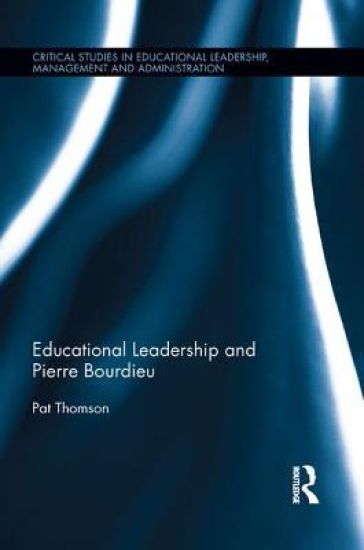
Educational Leadership and Pierre Bourdieu
Pierre Bourdieu was one of the most important thinkers of the twentieth century. He argued for, and practiced, rigorous and reflexive scholarship, interrogating the inequities and injustices of modern societies. Through a lifetime’s explication of the ways in which schooling both produces and reproduces the status quo, Bourdieu offered a powerful critique and method of analysis of the history of schooling, and of contemporary educational polices and trends. Though frequently used in educational research, Bourdieu’s work has had much less take up in Educational Leadership, Management and Administration. Educational Leadership and Pierre Bourdieu argues that ELMA scholars have much to gain by engaging more thoroughly with his work. The book explains each of the key terms in Bourdieu’s thinking tool kit, showing how the tripartite concepts of field, habitus and capitals offer a way through which to understand the interaction of structure and agency, and the limits on the freedom of an individual – in this case an educational leader – to act. Educational Leadership and Pierre Bourdieu offers an analysis of dominant trends in ELMA research, examining the kinds of questions asked, projects undertaken and methods used. It provides alternative questions and methods based on a Bourdieusian approach, further readings and a range of exemplars of the application of these tools. The book will be of interest to those whose primary focus is the utility of Bourdieu’s social theory.
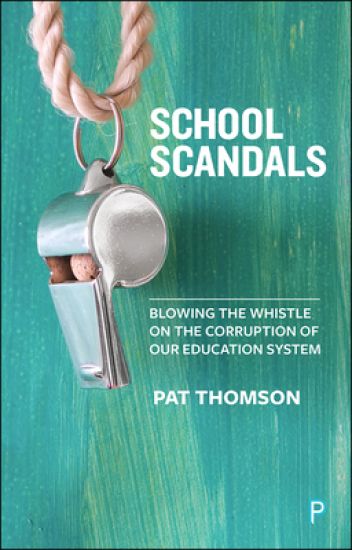
School scandals

School scandals

Pat Thomson

Policy Press
2020
nidottu
With almost daily reports of failings in school management, school discipline and the curriculum, what can be done to improve educational outcomes for everyone? Pat Thomson takes on England’s muddled education system, highlighting failings caused by the actions of ministers in successive governments. While corrupt actions are taken by some, it is predominantly the corruption of the system that is at fault. Using the lens of school scandals, she exposes fraudulent and unethical practices, including the skewing of the curriculum and manipulation of results. Thomson argues for an urgent review of current practices, leading to a revitalised education system that has the public good at its heart.
Under Cover of Darkness

Under Cover of Darkness

Pat Thomson

Barrington Stoke Ltd
2013
nidottu
Michel hatches a plan to join the resistance in Nazi-occupied France in this thrilling WWll drama, edited to a reading age of 6.5. The Nazis have occupied France. Michel knows that there are Resistance fighters in his town and he's desperate to join them. Will his mother agree to it? After all with his father AWOL, she needs a man around the house. But when someone's injured, Michel gets his chance. Can he help without being shot by the Nazis? Particularly suitable for readers aged 11+ with a reading age of 6.5.
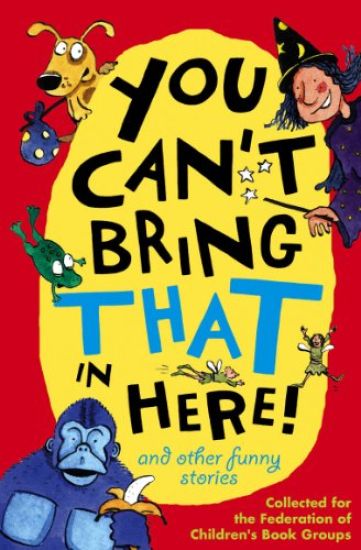
You Can't Bring That in Here!

You Can't Bring That in Here!

Pat Thomson

Penguin Random House Children's UK
2013
pokkari
Find out how Bozo the gorilla helps Jimmy deal with his lazy big brother, what Dinah Price does when she finds the three bears tucked up in her bed and what fate Agnethia Toadfax, trainee witch, has in store for Mr Smike the rude librarian .
Schooling the Rustbelt Kids

Schooling the Rustbelt Kids

Pat Thomson

Allen Unwin
2002
nidottu
'A truly exceptional book.' - Michael W. Apple, University of Wisconsin, Madison 'A gripping insight into the local struggles facing disadvantaged schools and a compelling account of the injustice of their place in the bigger picture.' - Professor Geoff Whitty, Director, Institute of Education, University of London Schools in disadvantaged areas are struggling in the current economic and political environment. Like schools everywhere they are being asked to do more with less, but they face more obstacles. In recent years education policy has shifted from a holistic approach to learning to a focus on narrow educational outcomes: spelling, reading and writing. Thomson shows that this approach penalises disadvantaged schools and argues that educational and social disadvantage are inextricably linked in children's everyday lives. Examining primary and secondary schools in disadvantaged areas in a post-industrial ('rustbelt') city, Schooling the Rustbelt Kids reopens the debate about inequality in schooling. It provides concrete evidence that typical government policies in the Western world are not working, and that they are helping to create a permanent underclass. Thomson outlines an alternative whole of government approach to policy, which builds on those school programs that do make a real difference to educational outcomes. Thomson also emphasises the influence of local geography. Schools are coloured by particular neighbourhoods, permeated by national and global events, and tangled in complex networks of social relations. Interventions which work in one school may not work in others.