Kirjojen hintavertailu. Mukana 11 244 527 kirjaa ja 12 kauppaa.

Kirjahaku

Etsi kirjoja tekijän nimen, kirjan nimen tai ISBN:n perusteella.

13 kirjaa tekijältä Patricia Emison

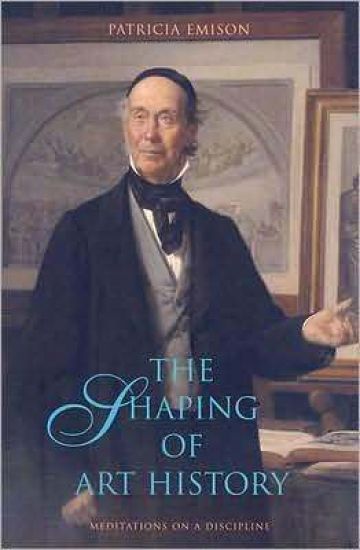
The Shaping of Art History

The Shaping of Art History

Patricia Emison

Pennsylvania State University Press
2008
sidottu
In this provocative book, Patricia Emison invites the reader to consider and reconsider how past thinkers—from Pliny and Alberti to Freud and Fried—have conceptualized the history of Western art. What a book review attempts to be for a book, this extended essay attempts to be for several hundred years’ worth of books in a field: an indicator of problems with the old attempts and hopes for the new ones. It is a defense of art history for those outside the field who question its reliability or even its importance; it is a critique of art history for those in the field who may have been preoccupied with looking at trees but who might be interested in trying to see the forest.
The Shaping of Art History

The Shaping of Art History

Patricia Emison

Pennsylvania State University Press
2009
pokkari
In this provocative book, Patricia Emison invites the reader to consider and reconsider how past thinkers—from Pliny and Alberti to Freud and Fried—have conceptualized the history of Western art. What a book review attempts to be for a book, this extended essay attempts to be for several hundred years’ worth of books in a field: an indicator of problems with the old attempts and hopes for the new ones. It is a defense of art history for those outside the field who question its reliability or even its importance; it is a critique of art history for those in the field who may have been preoccupied with looking at trees but who might be interested in trying to see the forest.
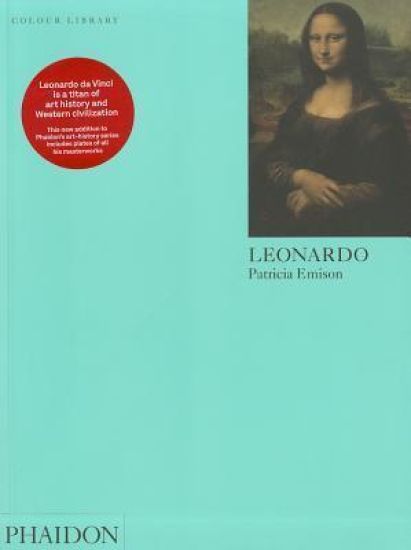
Leonardo

Leonardo

Patricia Emison

Phaidon Press Ltd
2011
nidottu
The latest addition to the best-selling Colour Library series of introductory books on the great masters and movements in art features all Leonardo's painted works and a detailed illustrated introduction.
Low and High Style in Italian Renaissance Art
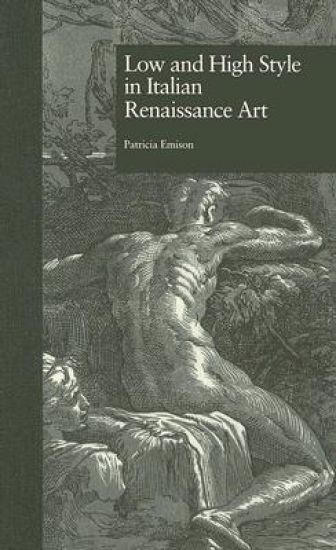
During the later 15th and in the 16th centuries pictures began to be made without action, without place for heroism, pictures more rueful than celebratory. In part, Renaissance art adjusted to the social and economic pressures with an art we may be hard pressed to recognize under that same rubric-an art not so much of perfected nature as simply artless. Granted, the heroic and epic mode of the Renaissance was that practiced most self-consciously and proudly. Yet it is one of the accomplishments of Renaissance art that heroic and epic subjects and style occasionally made way for less affirmative subjects and compositional norms, for improvisation away from the Vitruvian ideal. The limits of idealizing art, during the very period denominated as High Renaissance, is a topic that involves us in the history of class prejudice, of gender stereotypes, of the conceptualization of the present, of attitudes toward the ordinary, and of scruples about the power of sight Exploring the low style leads us particularly to works of art intended for display in private settings as personally owned objects, potentially as signs of quite personal emotions rather than as subscriptions to publicly vaunted ideologies. Not all of them show shepherds or peasants; none of them-not even Giorgione's La tempesta -is a classic pastoral idyll. The rosso stile is to be understood as more comprehensive than that. The issue is not only who is represented, but whether the work can or cannot be fit into the mold of a basically affirmative art.
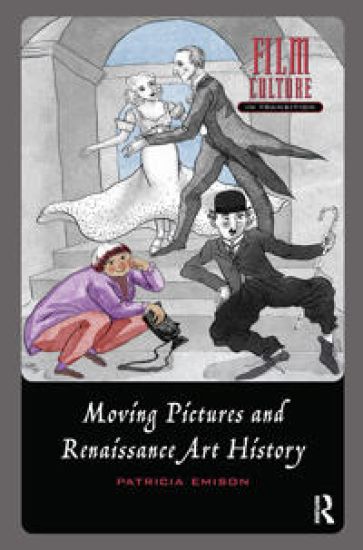
Moving Pictures and Renaissance Art History

Moving Pictures and Renaissance Art History

Patricia Emison

TAYLOR FRANCIS LTD
2025
nidottu
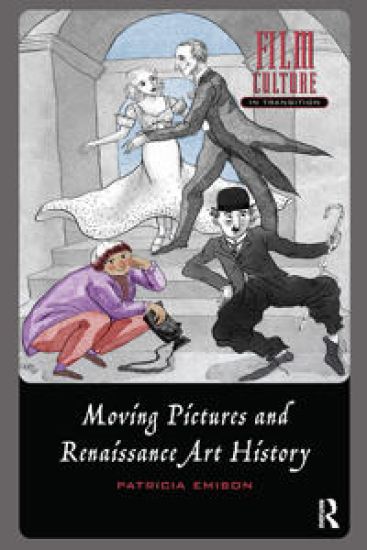
Film, like the printed imagery inaugurated during the Renaissance, spread ideas – not least the idea of the power of visual art – across not only geographical and political divides but also strata of class and gender. Moving Pictures and Renaissance Art History examines the early flourishing of film, from the 1920s to the mid-1960s, as partly reprising the introduction of mass media in the Renaissance, allowing for innovation that reflected an art free of the control of a patron though required to attract a broad public. Rivalry between word and image, between the demands of narrative and those of visual composition, spurred new ways of addressing the compelling nature of the visual. The twentieth century also saw the development of the discipline of art history; transfusions between cinematic practice and art historical postulates are part of the story told here.
The Italian Renaissance and Cultural Memory

The Italian Renaissance and Cultural Memory

Patricia Emison

Cambridge University Press
2011
sidottu
Why did Renaissance art come to matter so much, so widely, and for so long? Patricia Emison's answer draws on a recalibrated view of the long Renaissance – from 1300 to 1600 – synthesizing the considerable evolution in our understanding of the epoch since the foundational nineteenth-century studies of Jacob Burckhardt and Heinrich Wölfflin. Demonstrating that the imitation of nature and of antiquity must no longer define its limits, she exposes the self-consciously modern aspect of Renaissance style. She sets the art against the literary and political interests of time and analyzes works of both very familiar artists – Leonardo, Michelangelo, and Raphael – and lesser-known figures, such as Cima da Conegliano and Federico Barocci, as well as various printmakers. Succinct yet expansive, this treatment of the period also explores its layered significance for subsequent generations, from the Old Masters to the Post-Modernists.
Low and High Style in Italian Renaissance Art
During the later 15th and in the 16th centuries pictures began to be made without action, without place for heroism, pictures more rueful than celebratory. In part, Renaissance art adjusted to the social and economic pressures with an art we may be hard pressed to recognize under that same rubric-an art not so much of perfected nature as simply artless. Granted, the heroic and epic mode of the Renaissance was that practiced most self-consciously and proudly. Yet it is one of the accomplishments of Renaissance art that heroic and epic subjects and style occasionally made way for less affirmative subjects and compositional norms, for improvisation away from the Vitruvian ideal. The limits of idealizing art, during the very period denominated as High Renaissance, is a topic that involves us in the history of class prejudice, of gender stereotypes, of the conceptualization of the present, of attitudes toward the ordinary, and of scruples about the power of sight Exploring the low style leads us particularly to works of art intended for display in private settings as personally owned objects, potentially as signs of quite personal emotions rather than as subscriptions to publicly vaunted ideologies. Not all of them show shepherds or peasants; none of them-not even Giorgione's La tempesta -is a classic pastoral idyll. The rosso stile is to be understood as more comprehensive than that. The issue is not only who is represented, but whether the work can or cannot be fit into the mold of a basically affirmative art.
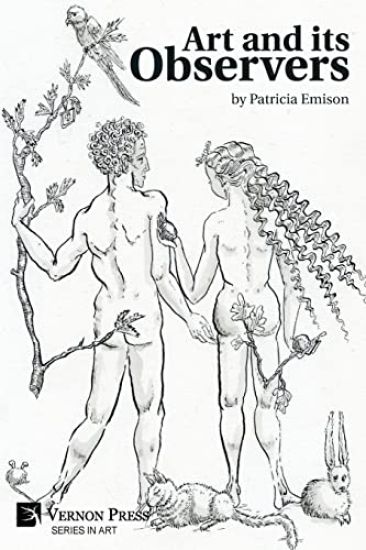
Art and its Observers (Color)

Art and its Observers (Color)

Patricia Emison

Vernon Press
2022
pokkari
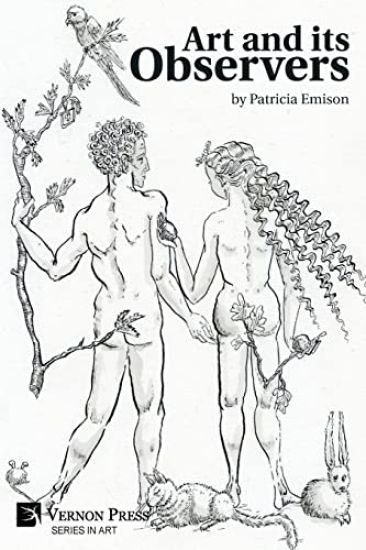
What ties western art together? This extended essay attempts to distill some of the basic ideas with which artists and observers of their art have grappled, ideas worthy of ongoing consideration and debate. The fostering of visual creativity as it has morphed from ancient Greece to the present day, the political and economic forces underpinning the commissioning and displacement of art, and the ways in which contemporary art relates to past periods of art history (and in particular, the Renaissance), are among the topics broached. Architecture, drawings, prints, films, painting, sculpture, and decorative arts from Europe and the US are considered and examined, often including nonstandard examples, occasionally including ones from the immediate surroundings of the author (who is based in New England). Although this book is primarily geared to those who would like a brief introduction to some basic aspects of a visual tradition spanning thousands of years, students of aesthetics might also discover useful benchmarks in this concise overview. The author places the emphasis on how art has been used and loved (or sometimes despised or ignored) more than on which works should be most famous.
Art and its Observers (B&W)

Art and its Observers (B&W)

Patricia Emison

Vernon Press
2022
pokkari
What ties western art together? This extended essay attempts to distill some of the basic ideas with which artists and observers of their art have grappled, ideas worthy of ongoing consideration and debate. The fostering of visual creativity as it has morphed from ancient Greece to the present day, the political and economic forces underpinning the commissioning and displacement of art, and the ways in which contemporary art relates to past periods of art history (and in particular, the Renaissance), are among the topics broached. Architecture, drawings, prints, films, painting, sculpture, and decorative arts from Europe and the US are considered and examined, often including nonstandard examples, occasionally including ones from the immediate surroundings of the author (who is based in New England). Although this book is primarily geared to those who would like a brief introduction to some basic aspects of a visual tradition spanning thousands of years, students of aesthetics might also discover useful benchmarks in this concise overview. The author places the emphasis on how art has been used and loved (or sometimes despised or ignored) more than on which works should be most famous.
The Long Picturesque, or Unraveling the Rules of Art

The Long Picturesque, or Unraveling the Rules of Art

Patricia Emison

Springer International Publishing AG
2024
sidottu
This book provides a Renaissance art historian’s view of how the picturesque aesthetic developed from roots in the sixteenth century (mostly in painting, but with ramifications for printmaking, landscape design, and architecture), and further, how the picturesque aesthetic fundamentally changed the relationship between art and nature, between viewer and image. The book's argument is based on wide reading of obscure yet piquant critical texts, mostly of the seventeenth and eighteenth centuries, together with consideration of varied works of art, ranging from Fra Angelico to Raphael and Michelangelo, and from Rubens to Canaletto, and from James Gibbs to Jacques Demy, all of them studied not for their place in the history of style, but for their spatial imagination.
Moving Pictures and Renaissance Art History

Moving Pictures and Renaissance Art History

Patricia Emison

Amsterdam University Press
2021
sidottu
Film, like the printed imagery inaugurated during the Renaissance, spread ideas – not least the idea of the power of visual art – across not only geographical and political divides but also strata of class and gender. Moving Pictures and Renaissance Art History examines the early flourishing of film, from the 1920s to the mid-1960s, as partly reprising the introduction of mass media in the Renaissance, allowing for innovation that reflected an art free of the control of a patron though required to attract a broad public. Rivalry between word and image, between the demands of narrative and those of visual composition, spurred new ways of addressing the compelling nature of the visual. The twentieth century also saw the development of the discipline of art history; transfusions between cinematic practice and art historical postulates are part of the story told here.