Kirjojen hintavertailu. Mukana 12 129 527 kirjaa ja 12 kauppaa.

Kirjahaku

Etsi kirjoja tekijän nimen, kirjan nimen tai ISBN:n perusteella.

15 kirjaa tekijältä Patricia Fara

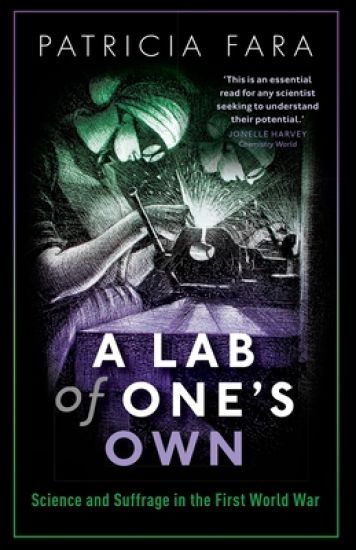
A Lab of One's Own

A Lab of One's Own

Patricia Fara

Oxford University Press
2018
sidottu
Many extraordinary female scientists, doctors, and engineers tasted independence and responsibility for the first time during the First World War. How did this happen? Patricia Fara reveals how suffragists, such as Virginia Woolf's sister, Ray Strachey, had already aligned themselves with scientific and technological progress, and that during the dark years of war they mobilized women to enter conventionally male domains such as science and medicine. Fara tells the stories of women such as: mental health pioneer Isabel Emslie, chemist Martha Whiteley, a co-inventor of tear gas, and botanist Helen Gwynne Vaughan. Women were now carrying out vital research in many aspects of science, but could it last? Though suffragist Millicent Fawcett declared triumphantly that 'the war revolutionised the industrial position of women. It found them serfs, and left them free', the outcome was very different. Although women had helped the country to victory and won the vote for those over thirty, they had lost the battle for equality. Men returning from the Front reclaimed their jobs, and conventional hierarchies were re-established even though the nation now knew that women were fully capable of performing work traditionally reserved for men. Fara examines how the bravery of these pioneer women scientists, temporarily allowed into a closed world before the door clanged shut again, paved the way for today's women scientists. Yet, inherited prejudices continue to limit women's scientific opportunities.
A Lab of One's Own

A Lab of One's Own

Patricia Fara

Oxford University Press
2019
nidottu
2018 marked a double centenary: peace was declared in war-wracked Europe, and women won the vote after decades of struggle. A Lab of One's Own commemorates both anniversaries by revealing the untold lives of female scientists, doctors, and engineers who undertook endeavours normally reserved for men. It tells fascinating and extraordinary stories featuring initiative, determination, and isolation, set against a backdrop of war, prejudice, and disease. Patricia Fara investigates the enterprising careers of these pioneering women and their impact on science, medicine, and the First World War. Suffrage campaigners aligned themselves with scientific and technological progress. Defying protests about their intellectual inferiority and child-bearing responsibilities, during the War they won support by mobilizing women to enter conventionally male domains. A Lab of One's Own focuses on the female experts who carried out vital research. They had already shown exceptional resilience by challenging accepted norms to pursue their careers, now they played their part in winning the War at home and overseas. In 1919, the suffragist Millicent Fawcett declared triumphantly that 'The war revolutionised the industrial position of women. It found them serfs, and left them free.' She was wrong: Women had helped the country to victory, had won the vote for those over thirty - but had lost the battle for equality. A Lab of One''s Own is essential reading to understand and eliminate the inequalities still affecting professional women today.
Life after Gravity

Life after Gravity

Patricia Fara

Oxford University Press
2021
sidottu
The story of Isaac Newton's decades in London - as ambitious cosmopolitan gentleman, President of London's Royal Society, Master of the Mint, and investor in the slave trade. Isaac Newton is celebrated throughout the world as a great scientific genius who conceived the theory of gravity. But in his early fifties, he abandoned his life as a reclusive university scholar to spend three decades in London, a long period of metropolitan activity that is often overlooked. Enmeshed in Enlightenment politics and social affairs, Newton participated in the linked spheres of early science and imperialist capitalism. Instead of the quiet cloisters and dark libraries of Cambridge's all-male world, he now moved in fashionable London society, which was characterized by patronage relationships, sexual intrigues and ruthless ambition. Knighted by Queen Anne, and a close ally of influential Whig politicians, Newton occupied a powerful position as President of London's Royal Society. He also became Master of the Mint, responsible for the nation's money at a time of financial crisis, and himself making and losing small fortunes on the stock market. A major investor in the East India Company, Newton benefited from the global trading networks that relied on selling African captives to wealthy plantation owners in the Americas, and was responsible for monitoring the import of African gold to be melted down for English guineas. Patricia Fara reveals Newton's life as a cosmopolitan gentleman by focussing on a Hogarth painting of an elite Hanoverian drawing room. Gazing down from the mantelpiece, a bust of Newton looms over an aristocratic audience watching their children perform a play about European colonialism and the search for gold. Packed with Newtonian imagery, this conversation piece depicts the privileged, exploitative life in which this eminent Enlightenment figure engaged, an uncomfortable side of Newton's life with which we are much less familiar.
Erasmus Darwin

Erasmus Darwin

Patricia Fara

Oxford University Press
2020
nidottu
Dr Erasmus Darwin seemed an innocuous Midlands physician, a respectable stalwart of eighteenth-century society. But there was another side to him. Botanist, physician, Lunar inventor and popular poet, Darwin was internationally renowned for extraordinary poems explaining his theories about sex and science. Yet he became a target for the political classes, the victim of a sustained and vitriolic character assassination by London's most savage satirists. Intrigued, prize-winning historian Patricia Fara set out to investigate why Darwin had provoked such fierce intellectual and political reaction. Inviting her readers to accompany her, she embarked on what turned out to be a circuitous and serendipitous journey. Her research led her to discover a man who possessed, according to Samuel Taylor Coleridge, 'perhaps a greater range of knowledge than any other man in Europe.' His evolutionary ideas influenced his grandson Charles, were banned by the Vatican, and scandalized his reactionary critics. But for modern readers he shines out as an impassioned Enlightenment reformer who championed the abolition of slavery, the education of women, and the optimistic ideals of the French Revolution. As she tracks down her quarry, Patricia Fara uncovers a ferment of dangerous ideas that terrified the establishment, inspired the Romantics, and laid the ground for Victorian battles between faith and science.
Science

Science

Patricia Fara

Oxford University Press
2010
nidottu
Science: A Four Thousand Year History rewrites science's past. Instead of focussing on difficult experiments and abstract theories, Patricia Fara shows how science has always belonged to the practical world of war, politics, and business. Rather than glorifying scientists as idealized heroes, she tells true stories about real people - men (and some women) who needed to earn their living, who made mistakes, and who trampled down their rivals in their quest for success. Fara sweeps through the centuries, from ancient Babylon right up to the latest hi-tech experiments in genetics and particle physics, illuminating the financial interests, imperial ambitions, and publishing enterprises that have made science the powerful global phenomenon that it is today. She also ranges internationally, illustrating the importance of scientific projects based around the world, from China to the Islamic empire, as well as the more familiar tale of science in Europe, from Copernicus to Charles Darwin and beyond. Above all, this four thousand year history challenges scientific supremacy, arguing controversially that science is successful not because it is always right - but because people have said that it is right.
Newton

Newton

Patricia Fara

Columbia University Press
2002
sidottu
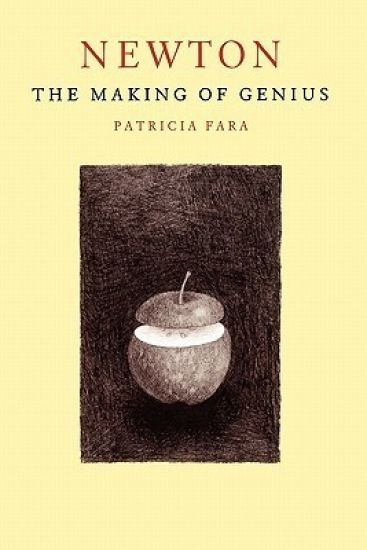
Isaac Newton has become an intellectual avatar for our modern age, the man who, as even children know, was inspired to codify nature's laws by watching an apple fall from a tree. Yet Newton devoted much of his energy to deciphering the mysteries of alchemy, theology, and ancient chronology. How did a man who was at first obscure to all but a few esoteric natural philosophers and Cambridge scholars, was preoccupied with investigations of millennial prophecies, and spent decades as Master of the London Mint become famous as the world's first great scientist? Patricia Fara demonstrates that Newton's reputation, surprisingly limited in his day, was carefully cultivated by devoted followers so that Newton's prestige became inseparable from the explosive growth of science itself. Newton: The Making of Genius is not a conventional biography of the man but a cultural history of the interrelated origins of modern science, the concept of genius, and the phenomenon of fame. Beginning with the eighteenth century, when the word "scientist" had not even been coined, Fara reveals how the rise of Isaac Newton's status was inextricably linked to the development of science. His very surname has acquired brand-name-like associations with science, genius, and Britishness-Apple Computers used it for an ill-fated companion to the Mac, and Margaret Thatcher has his image in her coat of arms. Fara argues that Newton's escalating fame was intertwined with larger cultural changes: promoting him posthumously as a scientific genius was strategically useful for ambitious men who wanted to advertise the power of science. Because his reputation has been repeatedly reinterpreted, Newton has become an iconic figure who exists in several forms. His image has been so malleable, in fact, that we do not even reliably know what he looked like. Newton's apotheosis was made possible by the consumer revolution that swept through the Atlantic world in the eighteenth century. His image adorned the walls, china, and ornamental coinage of socially aspiring British consumers seeking to identify themselves with this very smart man. Traditional impulses to saint worship were transformed into altogether new phenomena: commercialized fame and scientific genius, a secularized version of sanctity. Handsomely illustrated and engagingly written, this is an eye-opening history of the way Newton became a cultural icon whose ideas spread throughout the world and pervaded every aspect of life.
Newton

Newton

Patricia Fara

Columbia University Press
2004
pokkari
Isaac Newton has become an intellectual avatar for our modern age, the man who, as even children know, was inspired to codify nature's laws by watching an apple fall from a tree. Yet Newton devoted much of his energy to deciphering the mysteries of alchemy, theology, and ancient chronology. How did a man who was at first obscure to all but a few esoteric natural philosophers and Cambridge scholars, was preoccupied with investigations of millennial prophecies, and spent decades as Master of the London Mint become famous as the world's first great scientist? Patricia Fara demonstrates that Newton's reputation, surprisingly limited in his day, was carefully cultivated by devoted followers so that Newton's prestige became inseparable from the explosive growth of science itself. Newton: The Making of Genius is not a conventional biography of the man but a cultural history of the interrelated origins of modern science, the concept of genius, and the phenomenon of fame. Beginning with the eighteenth century, when the word "scientist" had not even been coined, Fara reveals how the rise of Isaac Newton's status was inextricably linked to the development of science. His very surname has acquired brand-name-like associations with science, genius, and Britishness-Apple Computers used it for an ill-fated companion to the Mac, and Margaret Thatcher has his image in her coat of arms. Fara argues that Newton's escalating fame was intertwined with larger cultural changes: promoting him posthumously as a scientific genius was strategically useful for ambitious men who wanted to advertise the power of science. Because his reputation has been repeatedly reinterpreted, Newton has become an iconic figure who exists in several forms. His image has been so malleable, in fact, that we do not even reliably know what he looked like. Newton's apotheosis was made possible by the consumer revolution that swept through the Atlantic world in the eighteenth century. His image adorned the walls, china, and ornamental coinage of socially aspiring British consumers seeking to identify themselves with this very smart man. Traditional impulses to saint worship were transformed into altogether new phenomena: commercialized fame and scientific genius, a secularized version of sanctity. Handsomely illustrated and engagingly written, this is an eye-opening history of the way Newton became a cultural icon whose ideas spread throughout the world and pervaded every aspect of life.
An Entertainment for Angels

An Entertainment for Angels

Patricia Fara

Columbia University Press
2003
sidottu
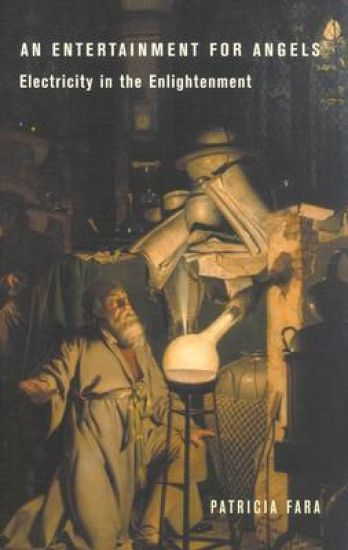
An Entertainment for Angels, rather than for Men, one observer called electricity, and it proved to be the most significant scientific discovery of the Enlightenment. Lecturers attracted huge audiences who marveled at sparkling fountains, flaming drinks, pirouetting dancers, and electrified boys. Flamboyant experimenters made chains of soldiers leap into the air, while wealthy women titillated their admirers with a sensational electric kiss. Optimists predicted that this strange power of nature would cure illnesses, improve crop production, even bring the dead back to life. An Entertainment for Angels tells the story of how electricity charged the eighteenth-century imagination. With contemporary illustrations and engaging prose, Patricia Fara vividly portrays the struggles to understand the unusual and exciting effects that electrical experiments were producing. One of the heroes of the story is Benjamin Franklin, renowned on both sides of the Atlantic as an expert on electricity, who introduced lightning rods to protect tall buildings, pioneered techniques to treat paralyzed patients, and developed one of the most successful explanations of this mysterious phenomenon. Others include Luigi Galvani, whose electrical research on frogs and animals makes for grisly reading but led to the discovery of direct current electricity; and Alessandro Volta, who-with Napoleon's enthusiastic support-became one of Europe's leading scientific practitioners and invented the world's first battery.
Sex, Botany, and Empire

Sex, Botany, and Empire

Patricia Fara

Columbia University Press
2004
sidottu
Enlightenment botany was replete with sexual symbolism-to the extent that many botanical textbooks were widely considered pornographic. Carl Linnaeus's controversial new system for classifying plants based on their sexual characteristics, as well as his use of language resonating with erotic allusions, provoked intense public debate over the morality of botanical study. And the renowned Tahitian exploits of Joseph Banks-whose trousers were reportedly stolen while he was inside the tent of Queen Oberea of Tahiti-reinforced scandalous associations with the field. Yet Linnaeus and Banks became powerful political and scientific figures who were able to promote botanical exploration alongside the exploitation of territories, peoples, and natural resources. Sex, Botany, and Empire explores the entwined destinies of these two men and how their influence served both science and imperialism. Patricia Fara reveals how Enlightenment botany, under the veil of rationality, manifested a drive to conquer, subdue, and deflower-all in the name of British empire. Linnaeus trained his traveling disciples in a double mission-to bring back specimens for the benefit of the Swedish economy and to spread the gospel of Linnaean taxonomy. Based in London at the hub of an international exchange and correspondence network, Banks ensured that Linnaeus's ideas became established throughout the world. As the president of the Royal Society for more than forty years, Banks revolutionized British science, and his innovations placed science at the heart of trade and politics. He made it a policy to collect and control resources not only for the sake of knowledge but also for the advancement of the empire. Although Linnaeus is often celebrated as modern botany's true founder, Banks has had a greater long-term impact. It was Banks who ensured that science and imperialism flourished together, and it was he who first forged the interdependent relationship between scientific inquiry and the state that endures to this day.
Sympathetic Attractions

Sympathetic Attractions

Patricia Fara

Princeton University Press
2014
pokkari
In this interdisciplinary study of eighteenth-century England, Patricia Fara explores how natural philosophers constructed magnetism as a science, appropriating the skills and knowledge of experienced navigators. For people of this period, magnetic phenomena reverberated with the symbolism of occult mystery, sexual attraction, and universal sympathies; in this maritime nation, magnetic instruments such as navigational compasses heralded imperial expansion, commercial gain, and scientific progress. By analyzing such multiple associations, Fara reconstructs cultural interactions in the days just prior to the creation of disciplinary science. Not only does this illustrated book provide a kaleidoscopic view of a changing society, but it also portrays the emergence of public science. Linking this rise in interest to the utility and mysteriousness of magnetism, Fara organizes her discussion into themes, including commercialization, imperialism, instruments and invention, the role of language, attitudes toward the past, and the relationship between religion and natural philosophy. Fara shows that natural philosophers, proclaiming themselves as the only true experts on magnetism, actively participated in massive transformations of English life. In their bids for public recognition as elite specialists, they engaged in controversies that resonated with religious, economic, moral, gender, and political implications. These struggles for social and scientific authority in the eighteenth century provide the background for better understanding the cultural topography of modern society. Originally published in 1996. The Princeton Legacy Library uses the latest print-on-demand technology to again make available previously out-of-print books from the distinguished backlist of Princeton University Press. These editions preserve the original texts of these important books while presenting them in durable paperback and hardcover editions. The goal of the Princeton Legacy Library is to vastly increase access to the rich scholarly heritage found in the thousands of books published by Princeton University Press since its founding in 1905.
Sympathetic Attractions

Sympathetic Attractions

Patricia Fara

Princeton University Press
2016
sidottu
In this interdisciplinary study of eighteenth-century England, Patricia Fara explores how natural philosophers constructed magnetism as a science, appropriating the skills and knowledge of experienced navigators. For people of this period, magnetic phenomena reverberated with the symbolism of occult mystery, sexual attraction, and universal sympathies; in this maritime nation, magnetic instruments such as navigational compasses heralded imperial expansion, commercial gain, and scientific progress. By analyzing such multiple associations, Fara reconstructs cultural interactions in the days just prior to the creation of disciplinary science. Not only does this illustrated book provide a kaleidoscopic view of a changing society, but it also portrays the emergence of public science. Linking this rise in interest to the utility and mysteriousness of magnetism, Fara organizes her discussion into themes, including commercialization, imperialism, instruments and invention, the role of language, attitudes toward the past, and the relationship between religion and natural philosophy. Fara shows that natural philosophers, proclaiming themselves as the only true experts on magnetism, actively participated in massive transformations of English life. In their bids for public recognition as elite specialists, they engaged in controversies that resonated with religious, economic, moral, gender, and political implications. These struggles for social and scientific authority in the eighteenth century provide the background for better understanding the cultural topography of modern society. Originally published in 1996. The Princeton Legacy Library uses the latest print-on-demand technology to again make available previously out-of-print books from the distinguished backlist of Princeton University Press. These editions preserve the original texts of these important books while presenting them in durable paperback and hardcover editions. The goal of the Princeton Legacy Library is to vastly increase access to the rich scholarly heritage found in the thousands of books published by Princeton University Press since its founding in 1905.
Sex, Botany and Empire (Icon Science)

Sex, Botany and Empire (Icon Science)

Patricia Fara

Icon Books Ltd
2017
pokkari
When the imperial explorer James Cook returned from his first voyage to Australia, scandal writers mercilessly satirised the amorous exploits of his botanist Joseph Banks, whose trousers were reportedly stolen while he was inside the tent of Queen Oberea of Tahiti. Was the pursuit of scientific truth really what drove Enlightenment science?In Sweden and Britain, both imperial powers, Banks and Carl Linneaus ruled over their own small scientific empires, promoting botanical exploration to justify the exploitation of territories, peoples and natural resources. Regarding native peoples with disdain, these two scientific emperors portrayed the Arctic North and the Pacific Ocean as uncorrupted Edens, free from the shackles of Western sexual mores.In this 'absorbing' (Observer) book, Patricia Fara reveals the existence, barely concealed under Banks' and Linnaeus' camouflage of noble Enlightenment, of the altogether more seedy drives to conquer, subdue and deflower in the name of the British Imperial state.
Pandora's Breeches

Pandora's Breeches

Patricia Fara

Pimlico
2017
pokkari
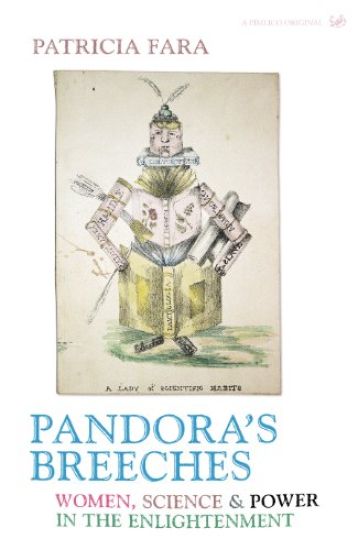
'Had God intended Women merely as a finer sort of cattle, he would not have made them reasonable.' Writing in 1673, Bathsua Makin was one of the first women to insist that girls should receive a scientific education. Despite the efforts of Makin and her successors, women were excluded from universities until the end of the nineteenth century, yet they found other ways to participate in scientific projects.Taking a fresh look at history, Pandora's Breeches investigates how women contributed to scientific progress. As well as collaborating in home-based research, women corresponded with internationally-renowned scholars, hired tutors, published their own books and translated and simplified important texts, such as Newton's book on gravity. They played essential roles in work frequently attributed solely to their husbands, fathers or friends.
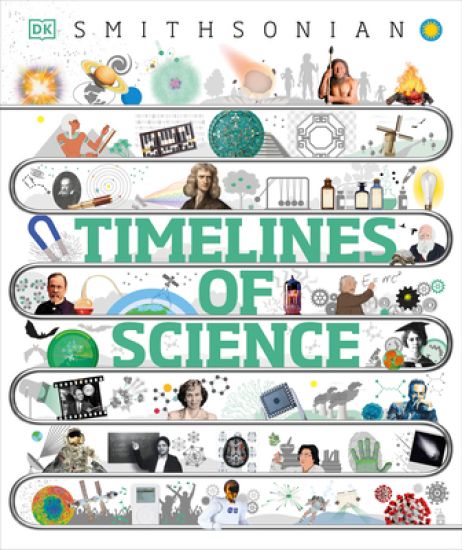
Timelines of Science: From Fossils to Quantum Physics

Timelines of Science: From Fossils to Quantum Physics

Leo Ball; Patricia Fara

DK Publishing (Dorling Kindersley)
2022
sidottu
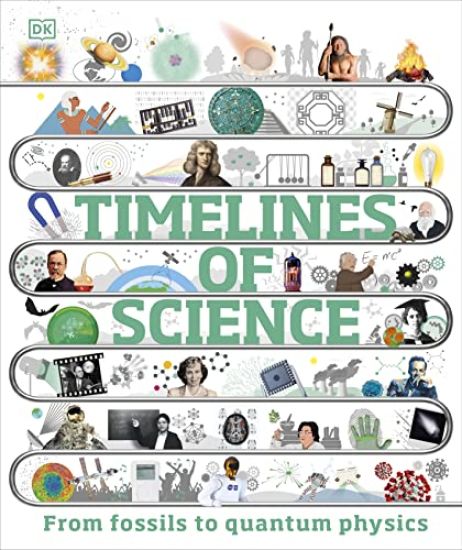
Explore spectacular visual timelines that tell the story of science, from fossils to quantum physics, and discover exactly how science has changed the world - one discovery at a time. SI Timelines of Science takes you on an astonishing journey through history, showing how dedication, disasters, and eureka moments have brought us antibiotics, electricity, space exploration, and so much more Packed with fascinating facts, amazing images, and some seriously staggering science, this science history book shows how thousands of years of human endeavor have expanded our knowledge and shaped our lives. Find out why the fruitless search for a potion of eternal life led to the birth to chemistry. See how the invention of magnifying lenses opened new windows into the cosmos and microcosmos. And learn how happy accidents led to the discovery of X-rays, batteries, pulsars, and even the big bang. Dive deep into the pages of this sublime science book to discover: Timeline features show how scientific ideas developed over timeEasy-to-read explanations of general science topics, such as the life cycle of a star or the history of Earth's changing climateSupporting boxes explain modern scientific concepts, adding educational value and aiding understandingFeature spreads highlight specific breakthroughs, with the story presented as running text in a newspaper-style layoutBiographies showcase the lives of key men and women who reshaped scientific thoughtSI Timelines of Science is not just about science - it's also a book about people The stories of discovery are told through the lives of extraordinary men and women who often dared to challenge conventional wisdom in their trailblazing pursuit of scientific truth. Filled with dazzling illustrations, spectacular photography, and easy-to-follow storytelling, Timelines of Science is guaranteed to capture the imagination of children and adults of all ages and abilities.A must-have volume for children 9+ interested in science, technology, and invention, doubling up as the perfect gift to for budding scientists, SI Timelines of Science is sure to delight.