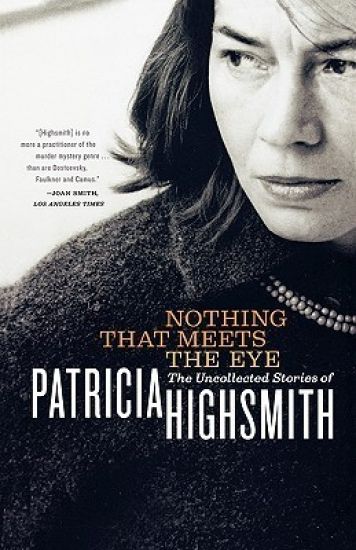
The Patricia Highsmith renaissance continues with Nothing That Meets the Eye, a brilliant collection of twenty-eight psychologically penetrating stories, a great majority of which are published for the first time in this collection. This volume spans almost fifty years of Highsmith's career and establishes her as a permanent member of our American literary canon, as attested by recent publication of two of these stories in The New Yorker and Harper's. The stories assembled in Nothing That Meets the Eye, written between 1938 and 1982, are vintage Highsmith: a gigolo-like psychopath preys on unfulfilled career women; a lonely spinster's fragile hold on reality is tethered to the bottle; an estranged postal worker invents homicidal fantasies about his coworkers. While some stories anticipate the diabolical narratives of the Ripley novels, others possess a Capra-like sweetness that forces us to see the author in a new light. From this new collection, a remarkable portrait of the American psyche at mid-century emerges, unforgettably distilled by the inimitable eye of Patricia Highsmith. A New York Times Notable Book and a Washington Post Rave of 2002.
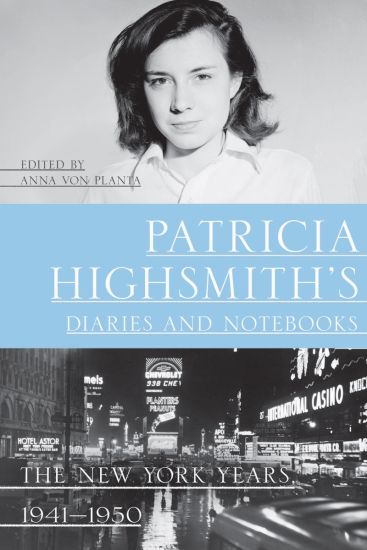
Relegated to the genre of mystery during her lifetime, Patricia Highsmith is now recognized as one of "our greatest modernist writers" (Gore Vidal). Beloved by fans who were unaware of the real psychological turmoil behind her prose, the famously secretive Highsmith refused to authorize a biography, instead sequestering herself in her Switzerland home in her final years. Posthumously, her devoted editor Anna von Planta discovered her diaries and notebooks in 1995, tucked in a closet--with tantalizing instructions to be read.For years thereafter, von Planta meticulously culled from over eight thousand pages to help reveal the inscrutable figure behind the legendary pen. Beginning with her junior year at Barnard in 1941, Highsmith ritualistically kept a diary and notebook--the former to catalog her day, the latter to brainstorm stories and hone her craft. This volume weaves diary and notebook simultaneously, exhibiting precisely how Highsmith's personal affairs seeped into her fiction--and the sheer darkness of her own imagination.Charming yet teetering on the egotistical, young "Pat" lays bare her dizzying social life in 1940s Greenwich Village, barhopping with Judy Holliday and Jane Bowles, among others. Alongside Flannery O'Conner and Chester Himes, she attended--at the recommendation of Truman Capote--the Yaddo artist colony in 1948, where she drafted Strangers on a Train. Published in 1950 and soon adapted by Alfred Hitchcock, this debut novel brought recognition and brief financial security, but left a heartsick Highsmith agonizing: "What is the life I choose?"Providing extraordinary insights into gender and sexuality in mid-twentieth-century America, Highsmith's diaries convey her euphoria writing The Price of Salt (1951). Yet her sophomore novel would have to be published under a pseudonym, so as not to tarnish her reputation. Indeed, no one could anticipate commercial reception for a novel depicting love between two women in the McCarthy era. Seeking relief from America, Highsmith catalogs her peripatetic years in Europe, subsisting on cigarettes and growing more bigoted and satirical with age. After a stay in Positano with a new lover, she reflects in her notebooks on being an expat, and gleefully conjures the unforgettable The Talented Mr. Ripley (1955); it would be this sociopathic antihero who would finally solidify her true fame.At once lovable, detestable, and mesmerizing, Highsmith put her turbulent life to paper for five decades, acutely aware there must be "a few usable things in literature." A memoir as significant in our own century as Sylvia Plath's journals and Simone de Beauvoir's writings were to another time, Patricia Highsmith: Her Diaries and Notebooks is an historic work that chronicles a woman's rise against the conventional tide to unparalleled literary prominence.
Before Alfred Hitchcock adapted her debut novel, Strangers on a Train, for the big screen; before her suave and sociopathic Thomas Ripley snaked his way into the canon of psychological suspense; and before The Price of Salt became a cult classic of romantic obsession, who was Patricia Highsmith? Focused on her formative years in Manhattan, this condensed edition of Highsmith's monumental Diaries and Notebooks reveals "Pat" at her most passionate and florescent. Beginning in 1941 at Barnard College and encompassing the Texas native's adventurous twenties, ?The New York Years intertwines scenes from her dizzying social life--rife with sleepless nights barhopping in the queer underground Greenwich Village scene, always juggling too many lovers--with an intimate self-portrait of a young artist who by day dispassionately wrote comics for a paycheck. Amid all the hangovers and the breakups, she read voraciously and honed her craft with verve. Laid bare in this perennial reader's edition are the bold, hilarious, romantic, tragic, and maddeningly contradictory observations of one of "our greatest modernist writers" (Gore Vidal).
'My secrets - the secrets that everyone has - are here, in black and white.'Before Alfred Hitchcock adapted her debut novel, Strangers on a Train, for the big screen; before Thomas Ripley snaked his way into the canon of psychological suspense; before Carol became a cult classic of romantic obsession, who was Patricia Highsmith?Beginning in 1941 and encompassing Highsmith's adventurous twenties, The New York Years is an intimate self-portrait of a young artist, reading voraciously and honing her craft, intertwined with scenes from her dizzying social life, rife with sleepless nights spent in the queer bars of Greenwich Village.This condensed edition of Highsmith's monumental Diaries and Notebooks offers all the pleasures of her fiction, along with an unparalleled insight into the life, mind and times of this enigmatic, iconic, trailblazing author. 'One of the most observant and ecstatic accounts . . . about being young and alive in New York City' New York Times
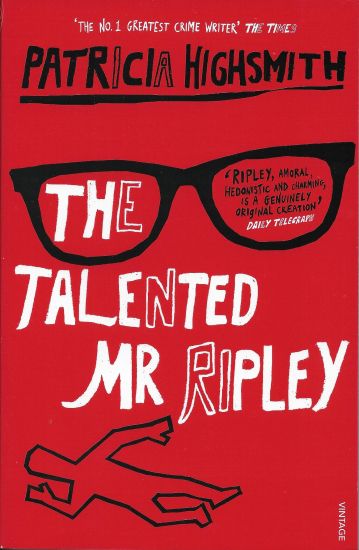
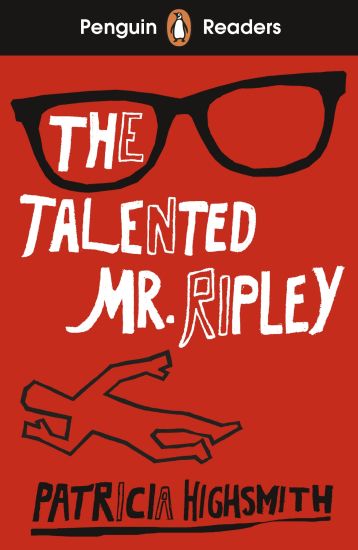
Tom Ripley is struggling to stay one step ahead of his creditors and the law, when an unexpected acquaintance offers him a free trip to Europe and a chance to start over. Ripley wants money, success and the good life and he's willing to kill for it. When his new-found happiness is threatened, his response is as swift as it is shocking.
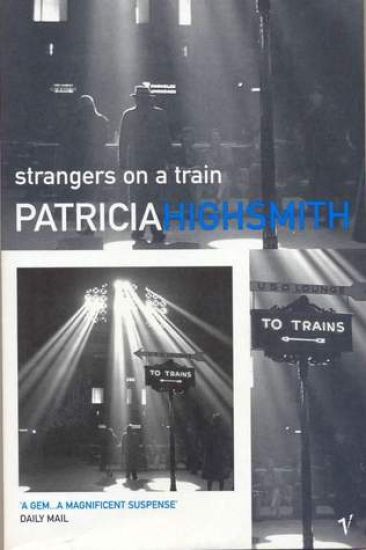
The psychologists would call it folie a deux... 'Bruno slammed his palms together. We meet on a train, see, and nobody knows we know each other! Catch?'' From this moment, almost against his conscious will, Guy Haines is trapped in a nightmare of shared guilt and an insidious merging of personalities.
The Buckmaster Gallery is staging another Derwatt exhibition, but now an American collector claims that the expensive masterpiece he bought three years ago is a fake. It is, of course, and he wants to talk to Derwatt, but Derwatt, inconveniently, is dead.
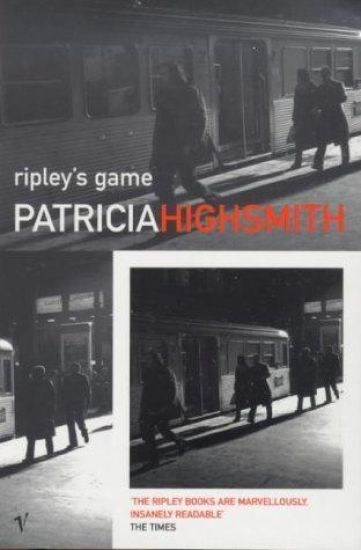
Tom Ripley detested murder. Unless it was absolutely necessary. Wherever possible, he preferred someone else to do the dirty work. In this case someone with no criminal record, who would commit 'two simple murders' for a very generous fee.
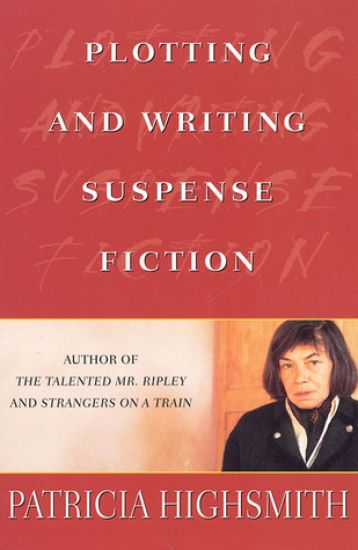
Patricia Highsmith, author of Strangers On a Train, The Talented Mr.Ripley, Found In The Street, and many other books, is known as one of the finest suspense novelists. In this book, she analyzes the key elements of suspense fiction, drawing upon her own experience in four decades as a working writer. She talks about, among other topics; how to develop a complete story from an idea; what makes a plot gripping; the use (and abuse) of coincidence; characterization and the "likeable criminal"; going from first draft to final draft; and writing the suspense short story.Throughout the book, Highsmith illustrates her points with plentiful examples from her own work, and by discussing her own inspirations, false starts, dead ends, successes, and failures, she presents a lively and highly readable picture of the novelist at work. Anyone who wishes to write crime and suspense fiction, or who enjoys reading it, will find this book an insightful guide to the craft and art of a modern master.
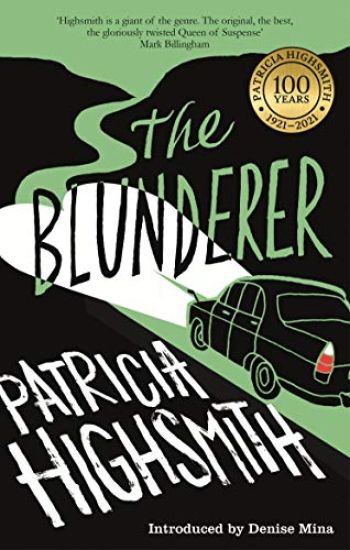
First published in 1953, The Blunderer is often hailed as Highsmith's finest novel, about the rise and fall of a faithful suburban husband who plots his wife's demise in fantasies gruesome and eerily serene.
Edith's Diary is not a thriller, but a tautly written tale of one ordinary woman whose life is slipping out of control and whose grip on reality is loosening. It is considered by many to be Highsmith's masterpiece.
A masterpiece of noir fantasy in which the bestselling author, Highsmith, revels in eliciting the unsettling psychological forces that lurk beneath the surface of everyday life.
Found in the Street is a haunting psychological thriller, by the bestselling queen of the genre, in which there is only a breath between nightmare and reality.
The great revival of interest in Patricia Highsmith continues with this novel that will give dog owners nightmares for years to come. Highsmith blends savage humour with brilliant social satire in this dark tale.
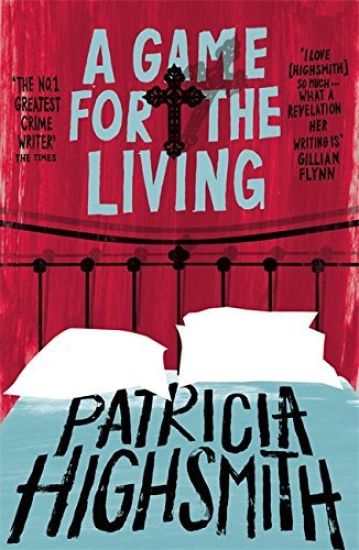
From one of the greatest crime novelists ever comes A Game for the Living, where threads of sexual jealousy and guilt are shot through with all of Patricia Highsmith's uncanny talent for the unexpected.